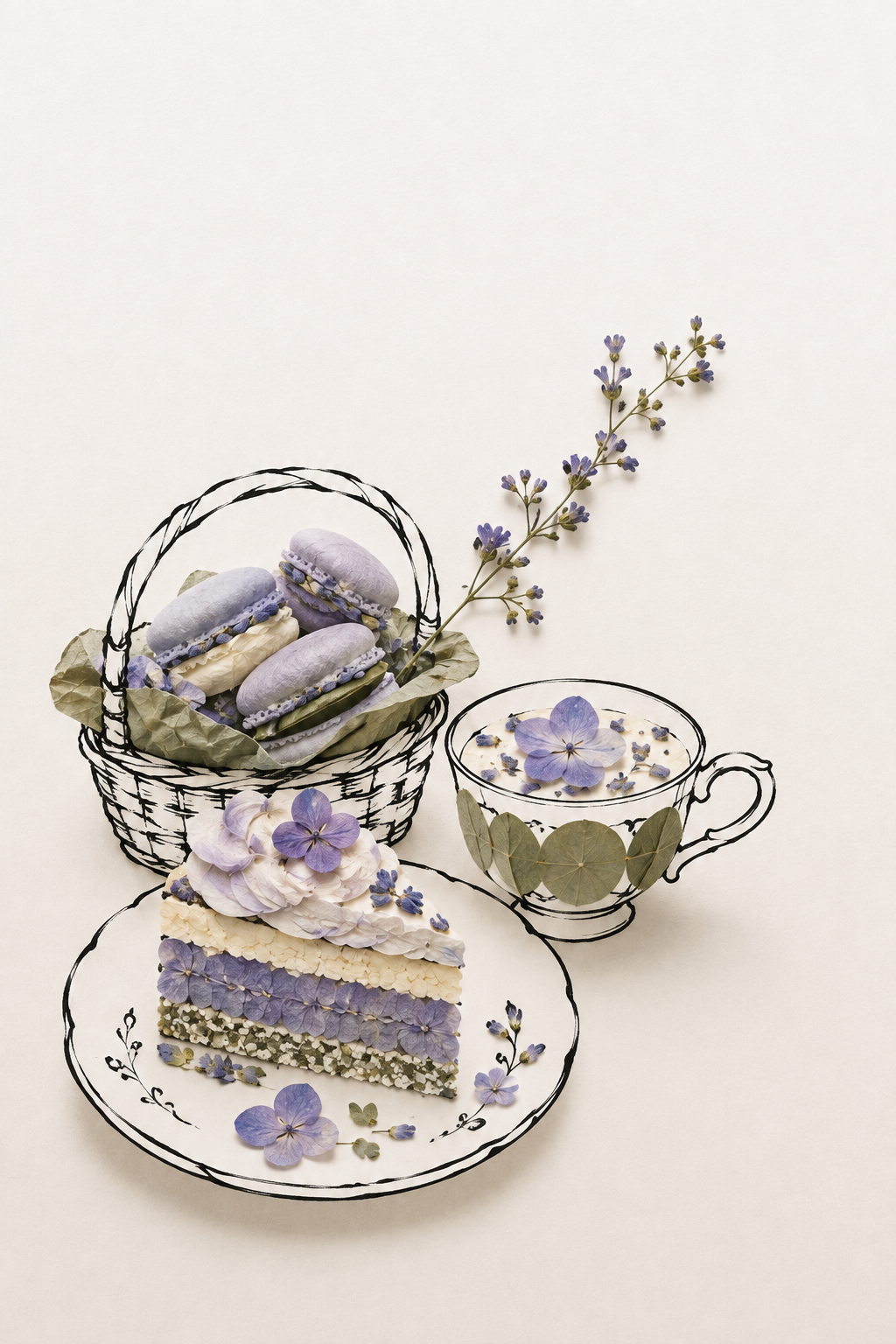
Lavender Macarons and Layered Cake at Teatime
Critique
Introduction This lavender tea setting includes macarons, cake, a cup, and an upright sprig. Plant materials and drawing are unified by violet, cream, and muted green. Description At the back left, an outlined woven basket holds lavender and ivory macarons wrapped among dry green leaves. A tall sprig rises diagonally from the basket. The foreground plate supports a triangular cake whose distinct bands consist of tiny white blossoms, green fragments, violet petals, cream flowers, and pale folded layers. A cup at right bears round leaves and contains a floating purple flower with scattered buds. Analysis The cake is the visual focus because its sharp triangular profile and horizontal strata contrast with the surrounding circular vessels. Violet flowers recur on the cake, plate, cup, and basket, leading the eye through a broad triangle. Cream prevents the cool palette from becoming severe, while dusty leaves add subdued counterweight. Petal grain, crumb-like clusters, woven ink, and smooth porcelain lines provide differentiated surfaces. Interpretation and Evaluation The image turns the conventions of afternoon tea into an exercise in collecting and preserving nature. Flowers become decoration, flavor, structure, and tableware ornament at once. The composition balances many objects without losing clarity, and its restricted palette creates cohesion across unlike textures. Meticulous layering shows descriptive skill, while the transformation of blossoms into pastry components and the union of material relief with drawing give the technique notable originality. Conclusion At first the scene appears simply elegant and appetizing, but closer attention reveals a systematic exchange between garden and table. The rising sprig releases the compact arrangement into the upper space, and scattered petals soften the plate's geometry. Delicacy here is not merely ornamental; it becomes a method for ordering color, touch, and ritual.
Same Subcategory
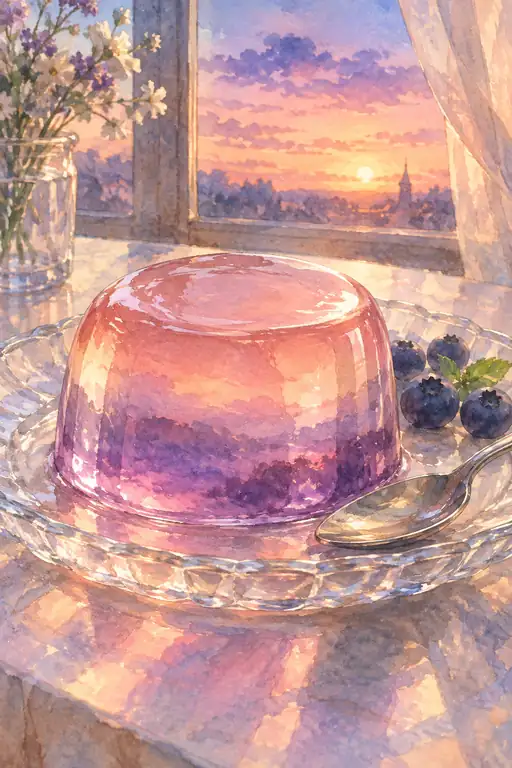 Twilight Preserved in Glass
Similar Artworks
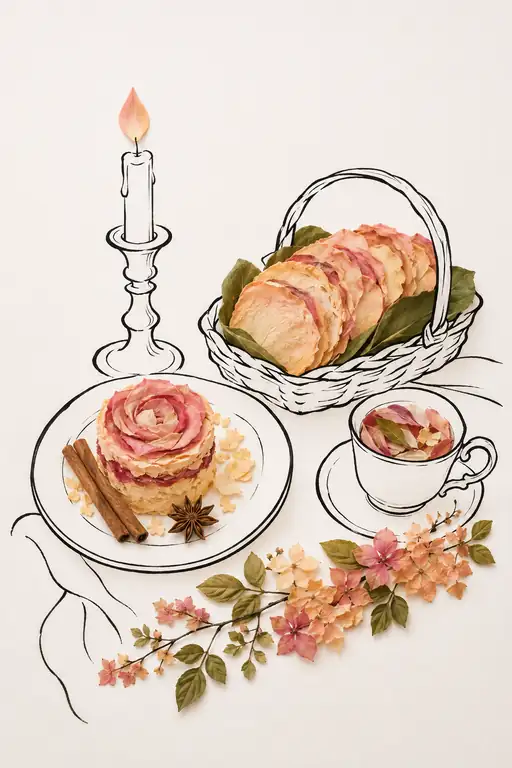 Tea Table of Petal Cake and Cinnamon Flame
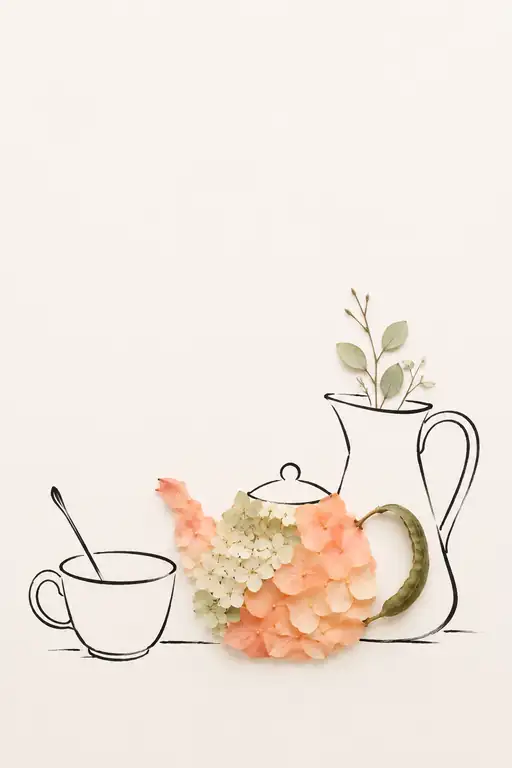 Teapot of Blossoms and the Graceful Pitcher
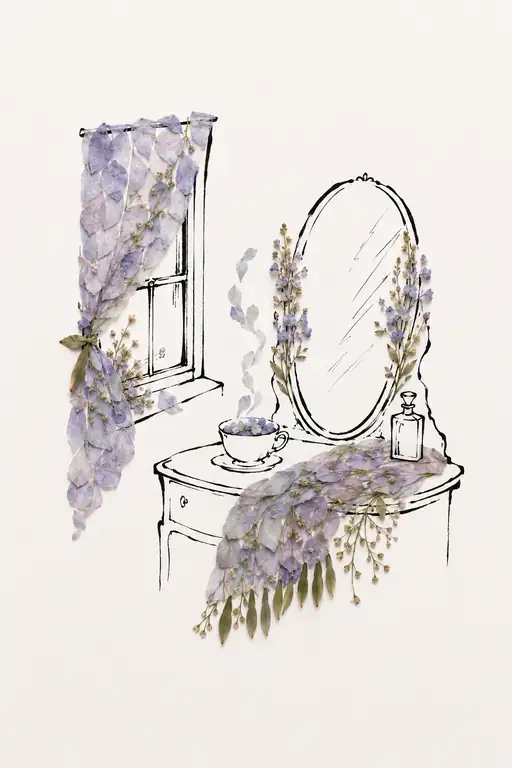 Vanity in Lilac Petals and the Steaming Cup
 Stars Gather for a Slice of the Galaxy
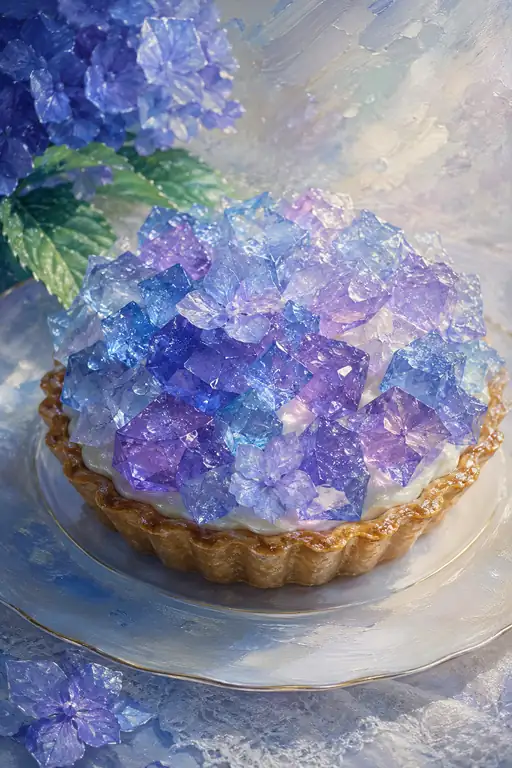 Hydrangeas Cut from Summer Glass
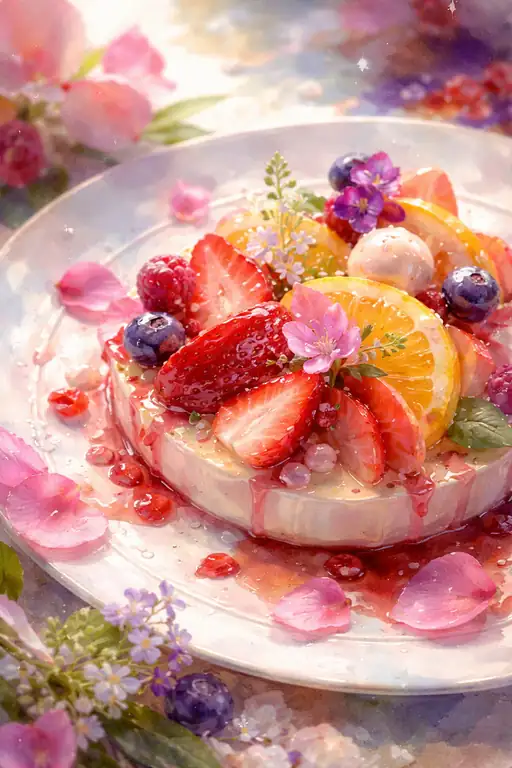 A Sun-Drenched Symphony of Eternal Sweetness
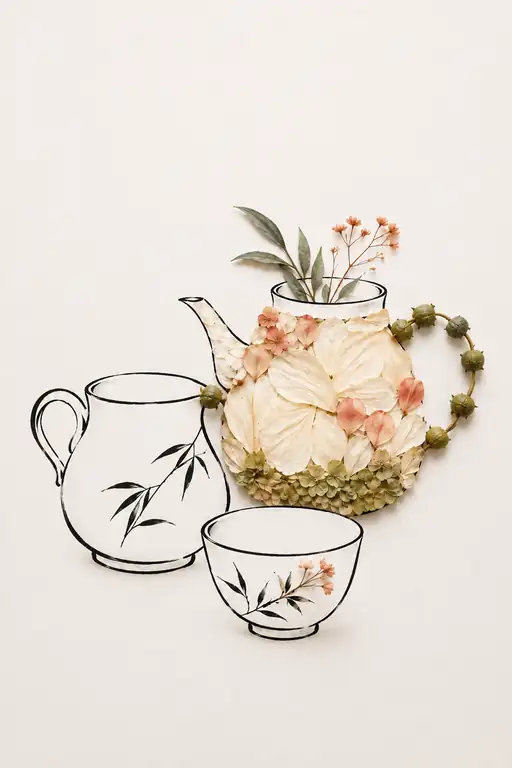 Ivory Blossom Teapot with Berry Handle
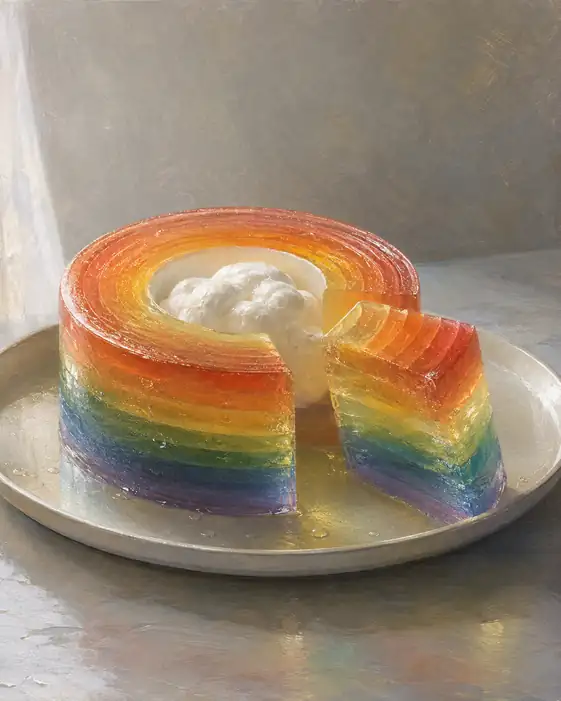 The Rainbow Keeps a Cloud at Heart
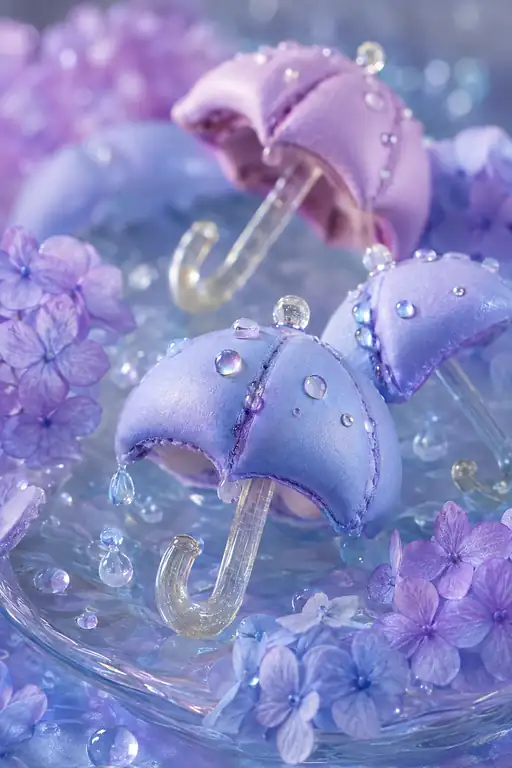 Purple Rain Opens Tiny Umbrellas
 Sheltering from the Rain at the Hydrangea Patisserie