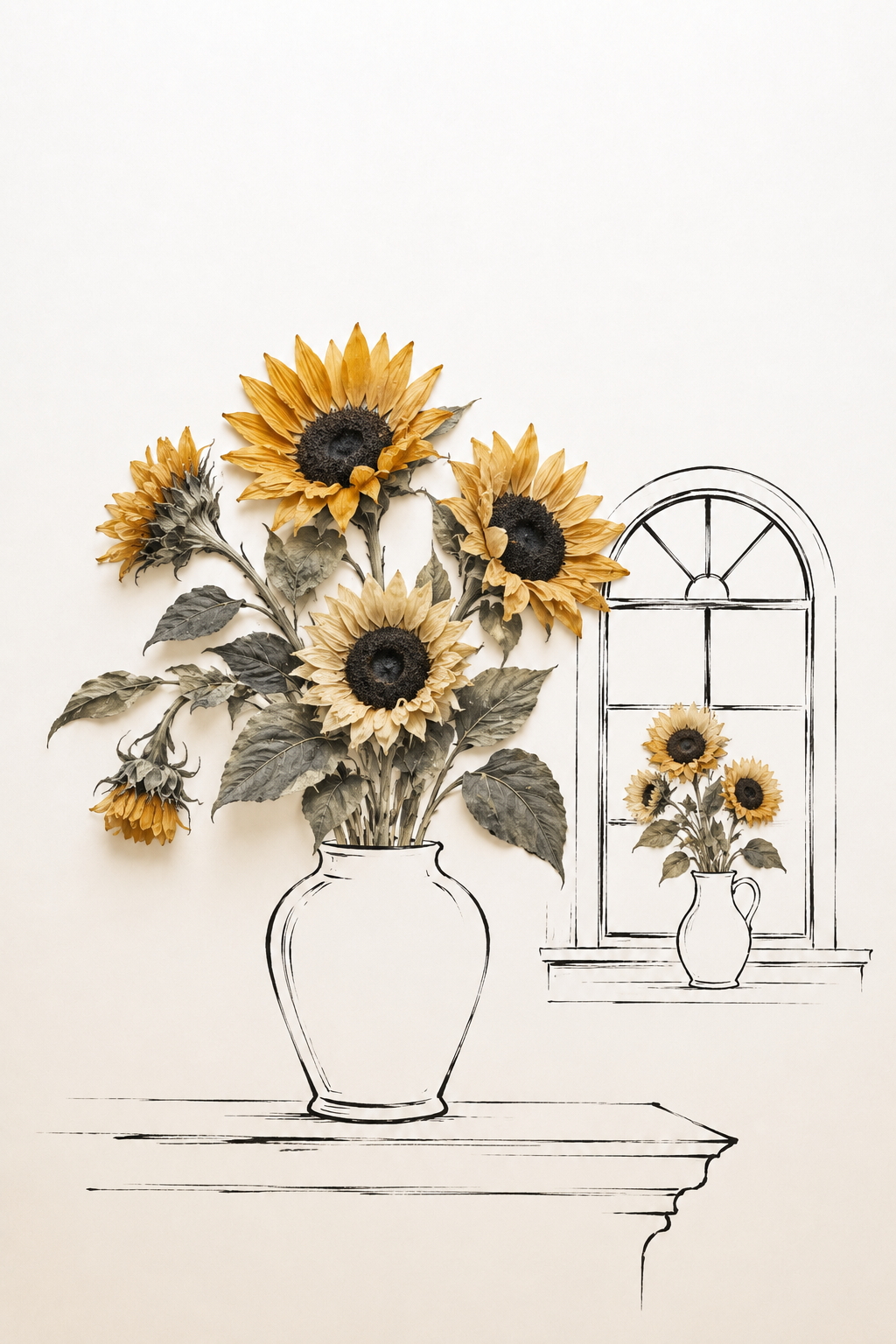
Sunflowers in Bloom and Their Mirrored Echo
Critique
Introduction This work arranges a monumental cluster of sunflowers in an outlined vase, accompanied by a smaller echo of the motif inside an arched window. Its vertical format and broad white ground turn a familiar domestic subject into a study of repetition, scale, and seasonal decline. Description Four large sunflower faces dominate the upper left and center, joined by one partially turned head and two drooping blooms. Their ochre petals surround dark, granular disks, while gray-green leaves overlap the stems below. At right, three smaller sunflowers stand in a handled pitcher on the sill, framed by the window's geometric divisions. Analysis The largest flower near the top establishes the primary focus, and the descending sequence of dark centers guides the eye toward the vase. Curving stems and bent heads counter the rigid arch and horizontal table edge. Saturated golden petals contrast with charcoal leaves and black ink, while shallow shadows give the botanical pieces relief against the open surface. Interpretation and Evaluation The paired bouquets suggest two views of one subject: an immediate, expansive presence and a distant, contained recollection. Upright and bowed heads register different stages of vitality without requiring narrative detail. The composition handles asymmetry confidently, the restricted color scheme clarifies form, and the crisp contrast between brittle petals, veined leaves, and economical contour displays both descriptive skill and technical invention. Conclusion At first the image reads as a cheerful sunflower display, but sustained viewing reveals a measured account of growth, turning, and fading. Repetition across unequal scales deepens the spatial idea, and the empty ground prevents the abundant flowers from becoming heavy. The result balances decorative appeal with a thoughtful awareness of time.
Same Subcategory
Similar Artworks
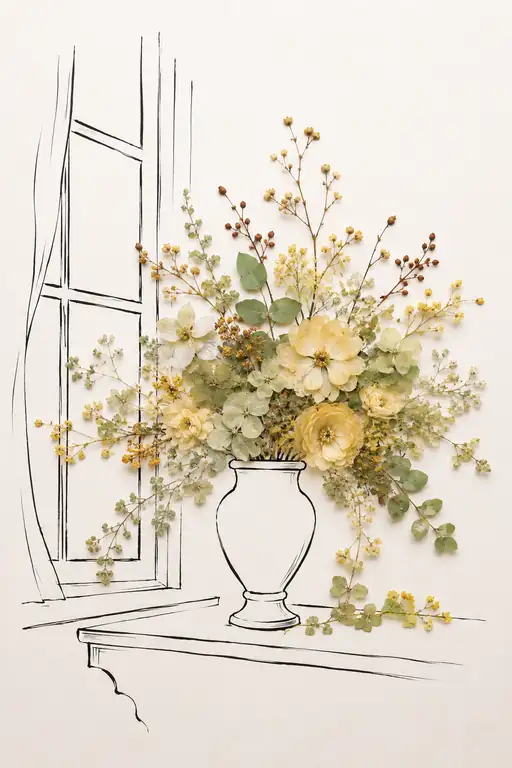 Abundance of Yellow Flowers by the Casement
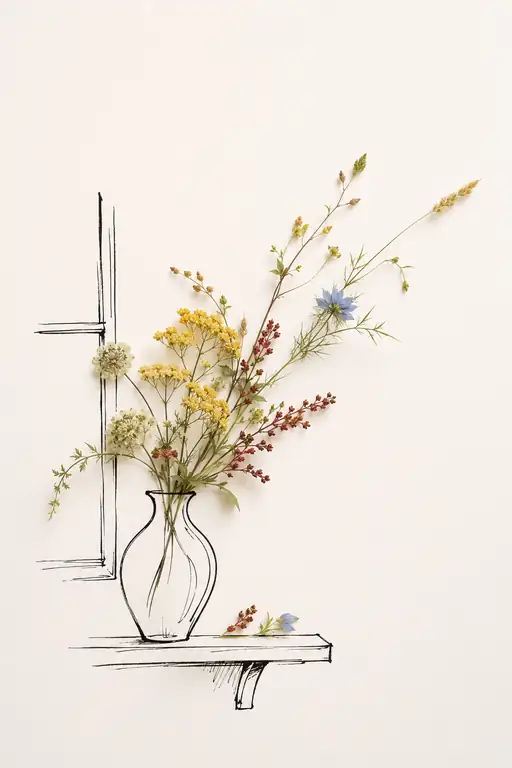 Meadow Blossoms and Fallen Petals on the Shelf
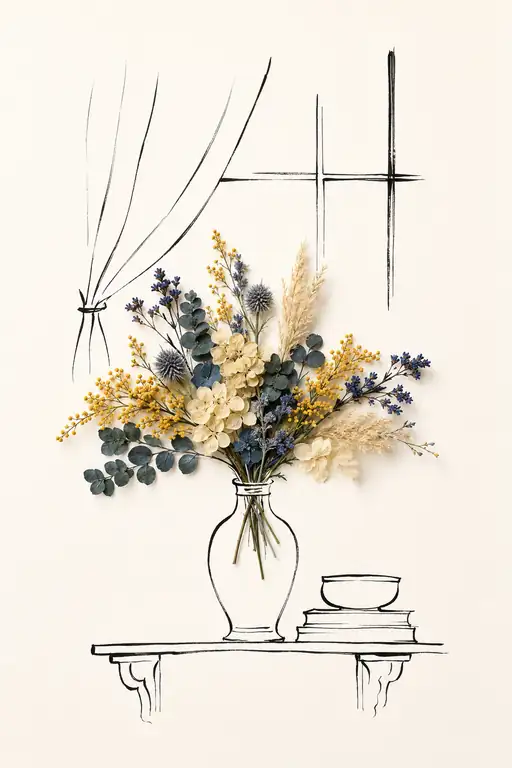 Yellow Flora and Thistles by the Window Drapery
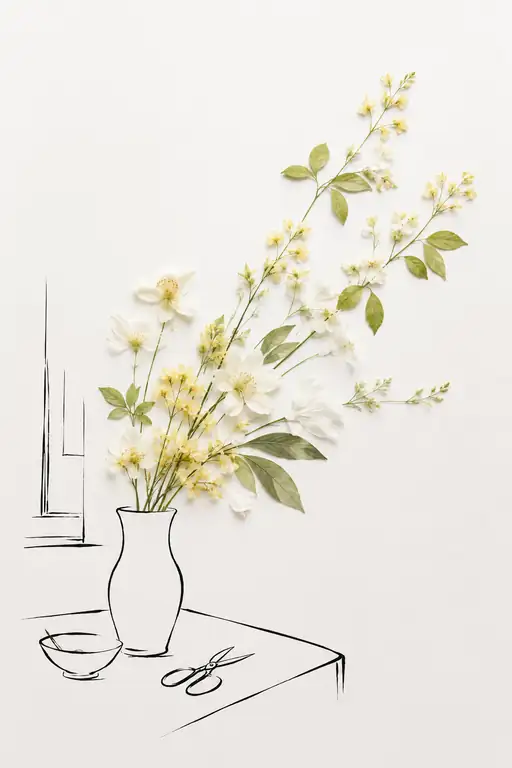 Wildflower Arrangement Resting in a Tabletop Vase
 Afternoon Leaves One Golden Word
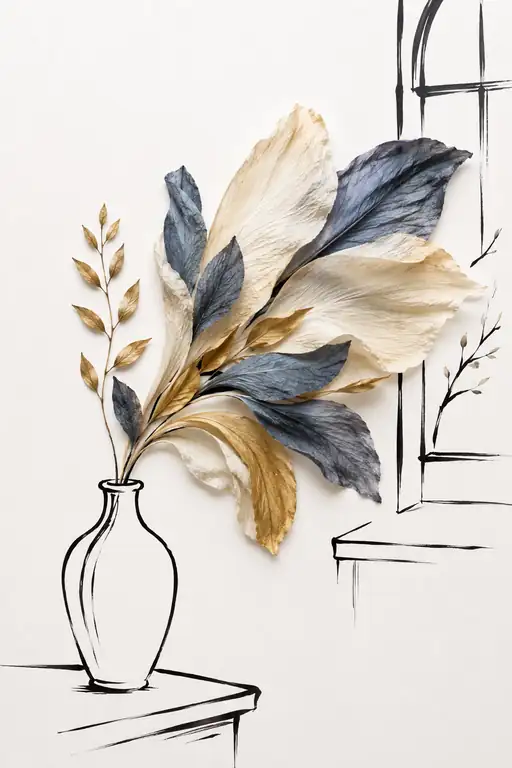 Triad of Blue, Ivory, and Gold Leaves
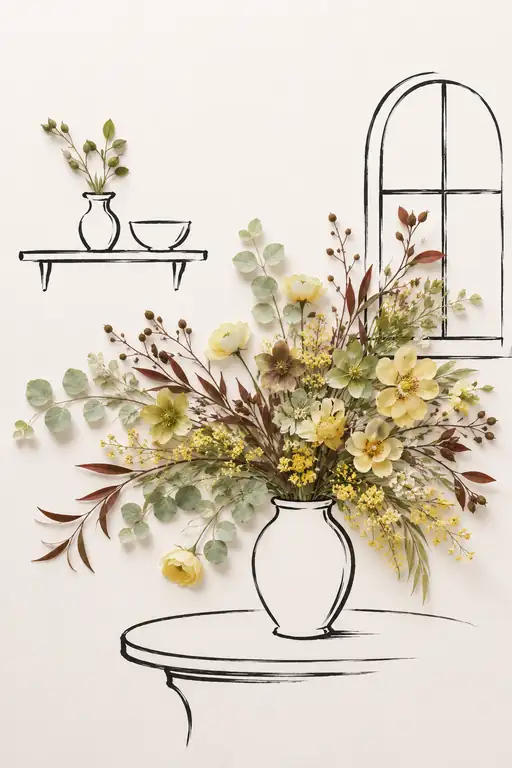 Autumn Flourish Beside the Arched Casement
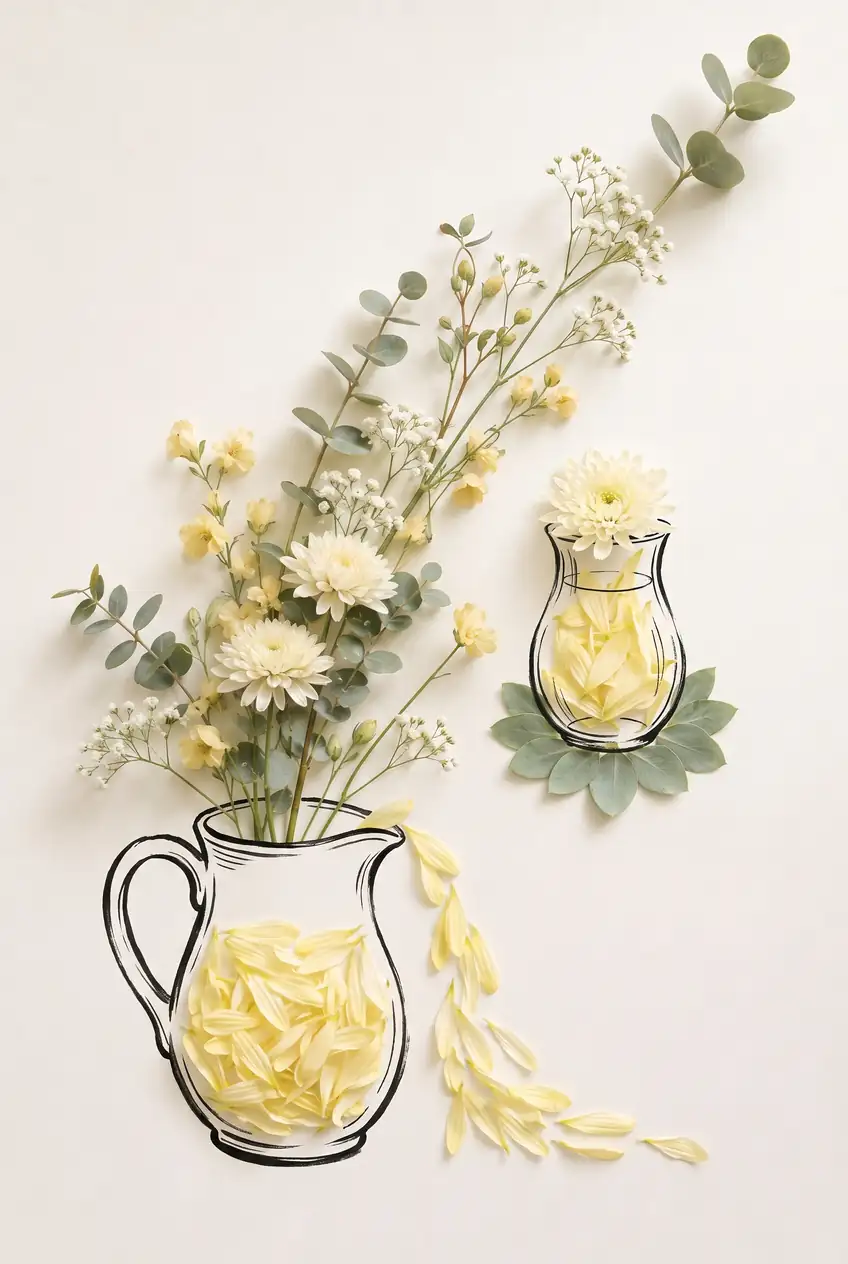 Resonance of Morning Pale
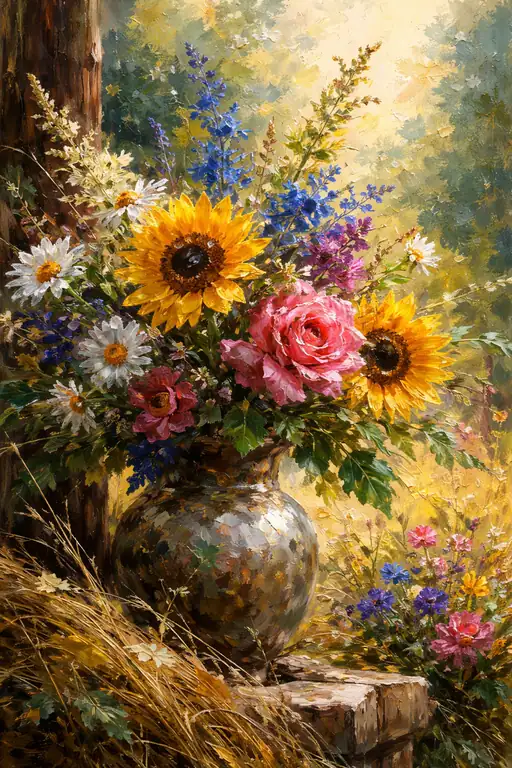 Sunlit Symphony of Summer Blooms
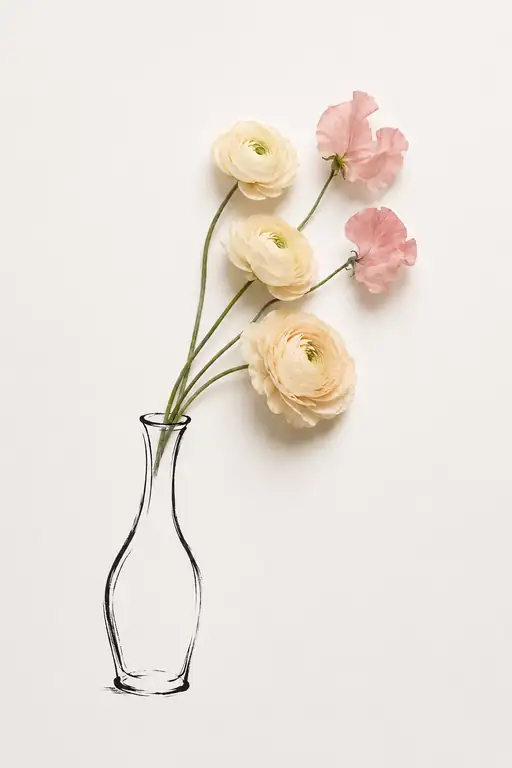 The Gentle Arch of Morning Blooms