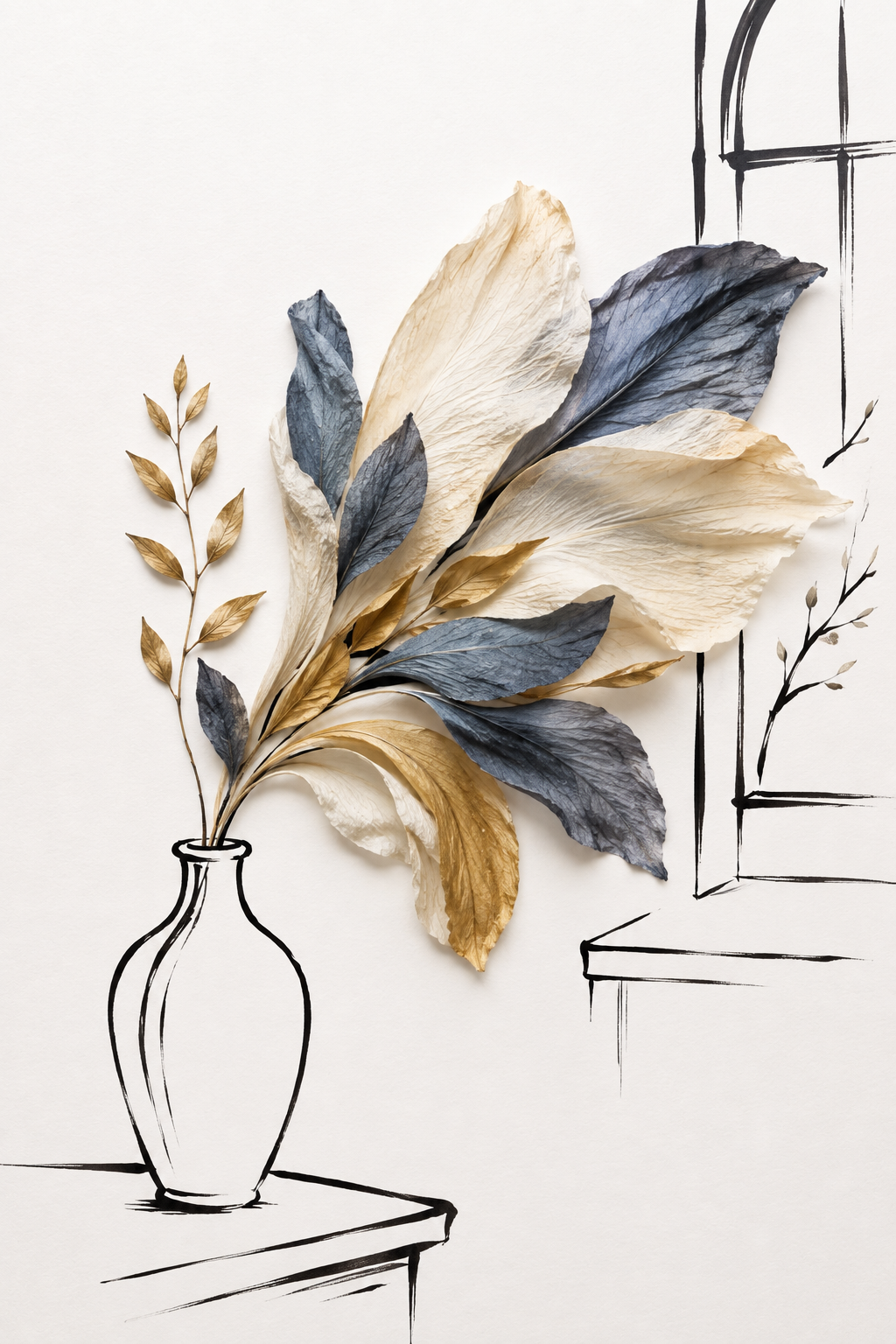
Triad of Blue, Ivory, and Gold Leaves
Critique
Introduction This vertical still life places a narrow vase beside a window and table, filling it with unusually large cream, slate-blue, and gold leaves. The botanical forms dominate their outlined room, creating a bold meditation on scale, surface, and restrained luxury. Description The vase stands at lower left, drawn with a rounded body and narrow neck. From it, oversized leaves fan toward the upper right, overlapping the black window frame. Cream blades expose fine veins and wrinkles; dark blue leaves fold between them, while metallic-gold sprigs extend upward and left. A few thin budded branches appear near the window. Analysis The bouquet forms a sweeping diagonal that counters the window’s verticals and the tabletop’s horizontal edge. Large leaves create broad alternating bands of light and dark, while slender gold stems supply finer rhythm. Their cast shadows and crumpled surfaces give strong relief. The relatively small vase exaggerates the bouquet’s expansion, and untouched white space prevents the scale from feeling oppressive. Interpretation and Evaluation Natural foliage is stylized into a ceremonial, almost heraldic display, yet visible veins preserve organic fragility. Blue and gold introduce dignity without overwhelming the cream field. The composition is daringly disproportionate, the color scheme concise, and the surface description highly controlled. Combining monumental leaves with skeletal architecture demonstrates technical assurance and distinctive invention. Conclusion Initially a dramatic bouquet, the work gradually reveals a careful negotiation between abundance and emptiness. Its power comes from allowing a few enlarged forms to command the room while remaining visibly delicate, folded, and temporary.
Same Subcategory
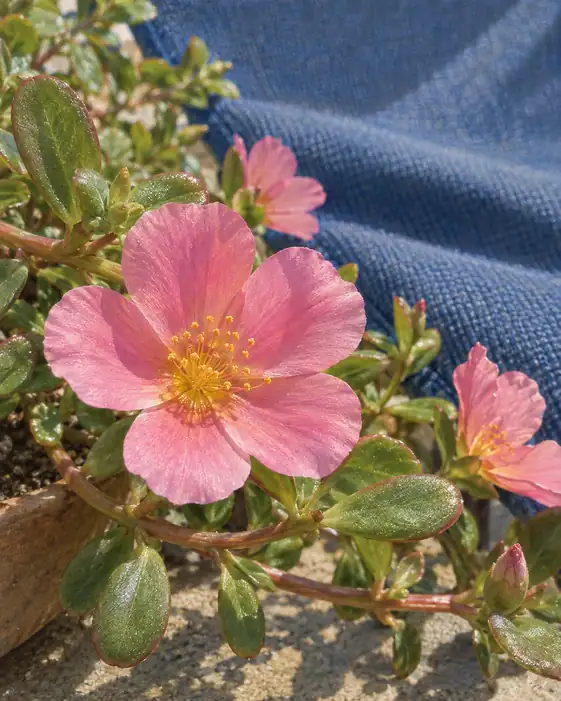 Pink Portulaca on Blue Denim
Similar Artworks
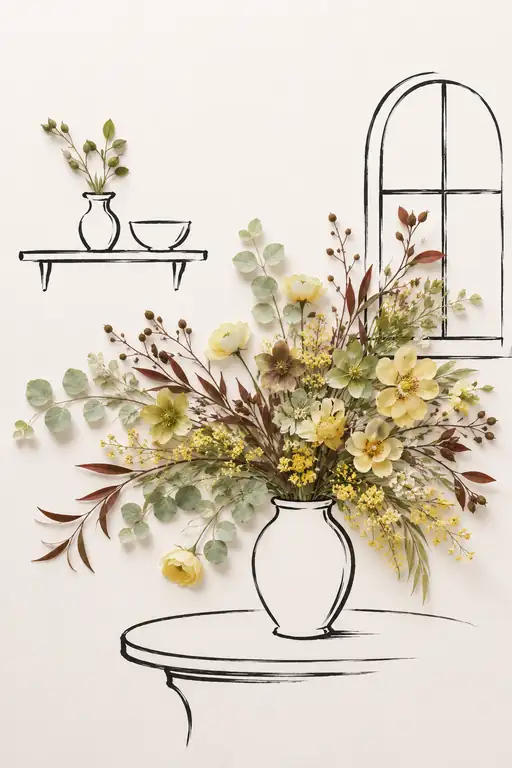 Autumn Flourish Beside the Arched Casement
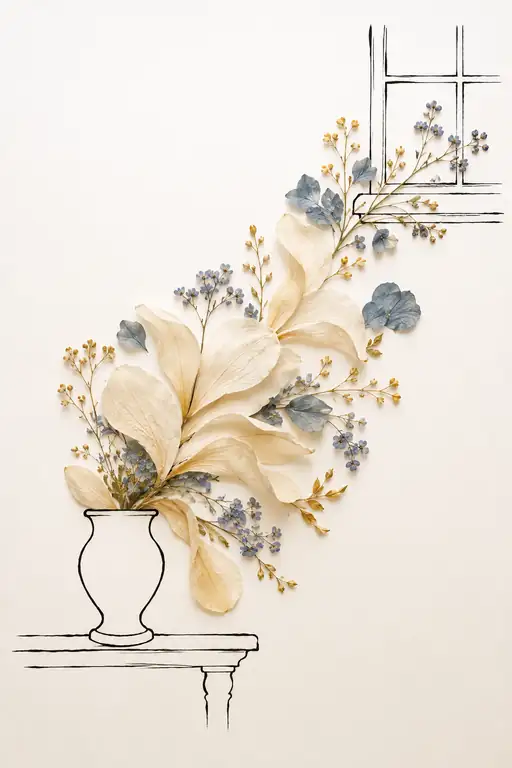 Ascent of Ivory Petals Toward the Light
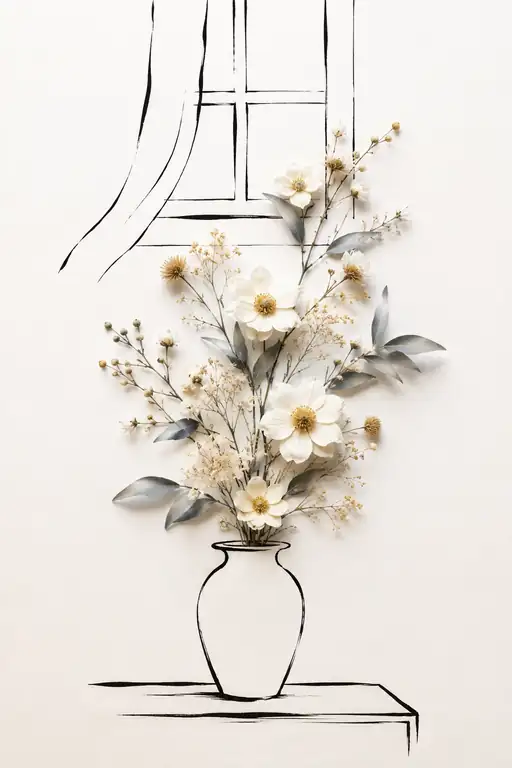 White Petals Whispering by the Curtain's Fold
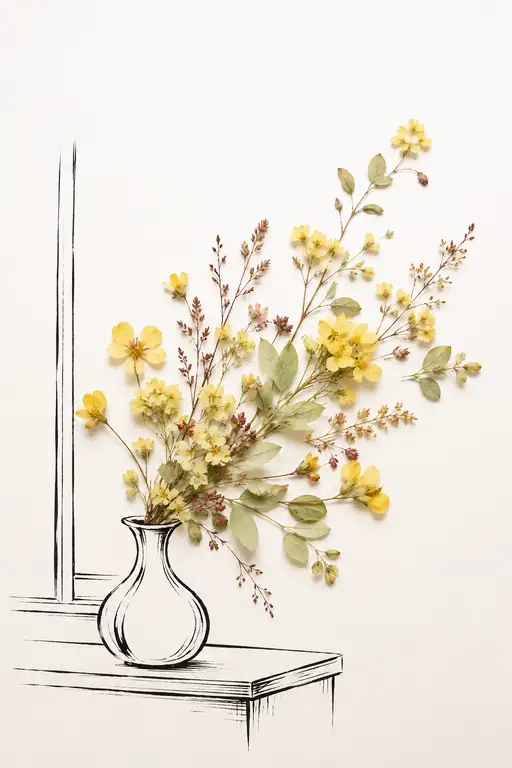 Wild Yellow Blossoms Reaching for the Breeze
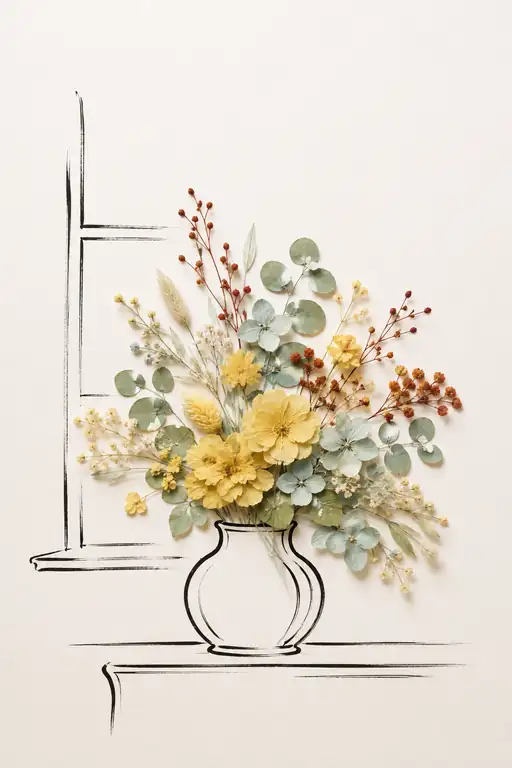 Sunlight Gathered in the Windowed Vase
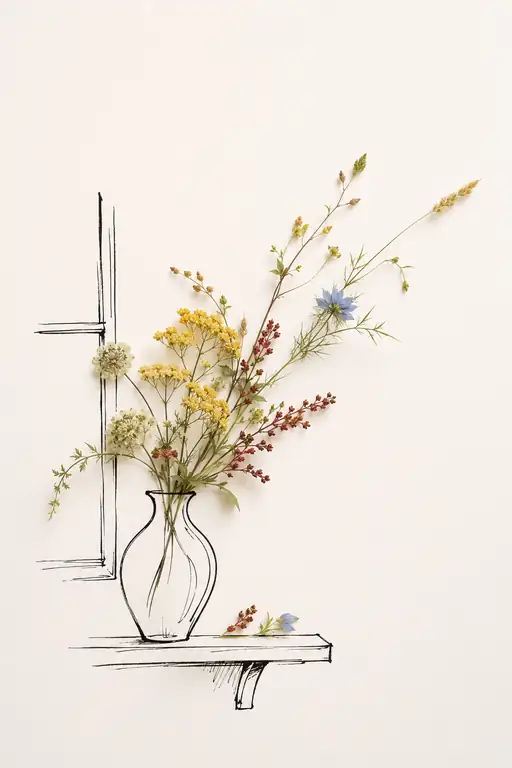 Meadow Blossoms and Fallen Petals on the Shelf
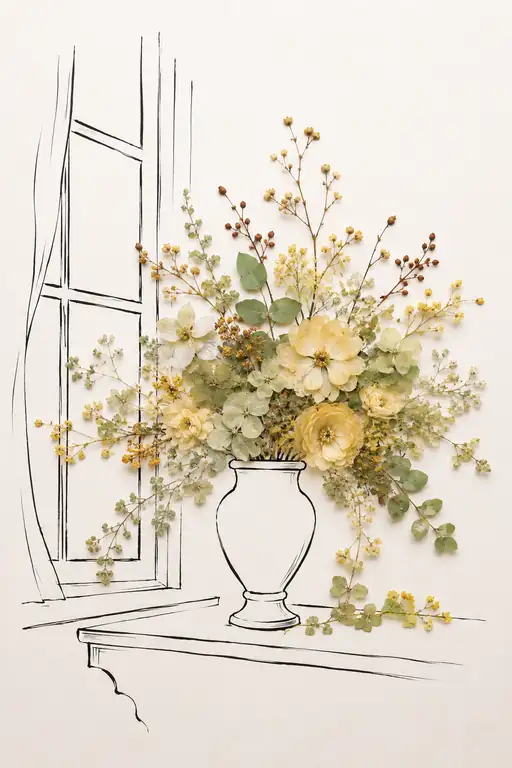 Abundance of Yellow Flowers by the Casement
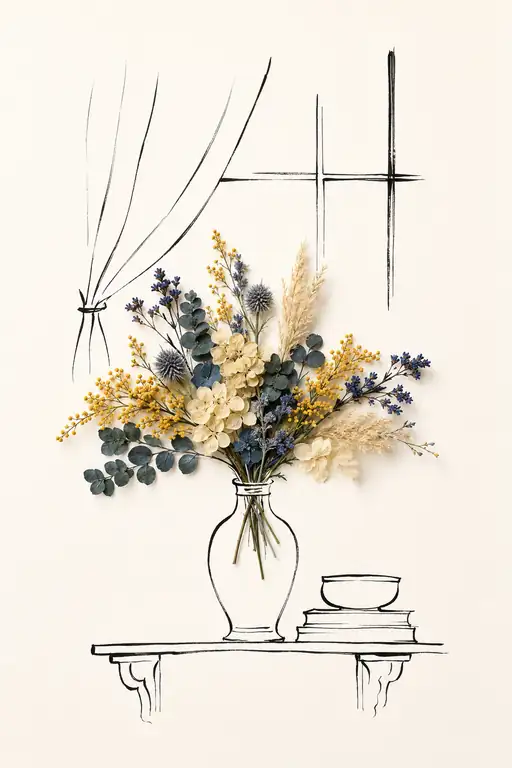 Yellow Flora and Thistles by the Window Drapery
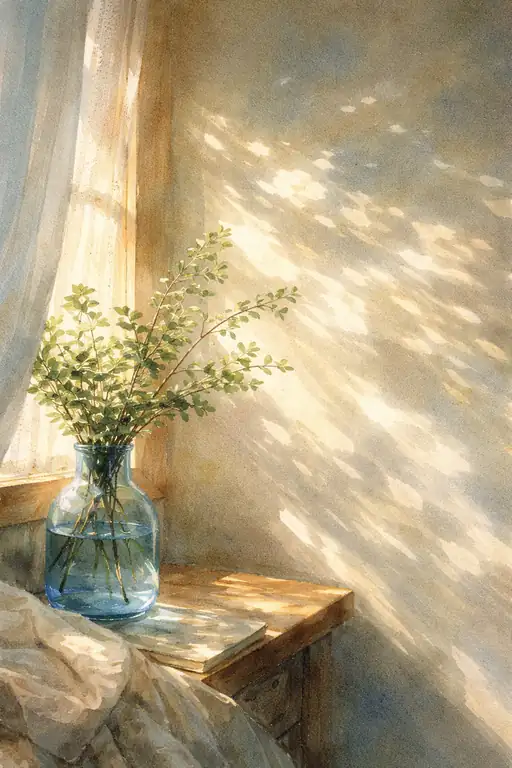 A Peaceful Corner in the Sunlight
 Blue Glass and Green Leaves