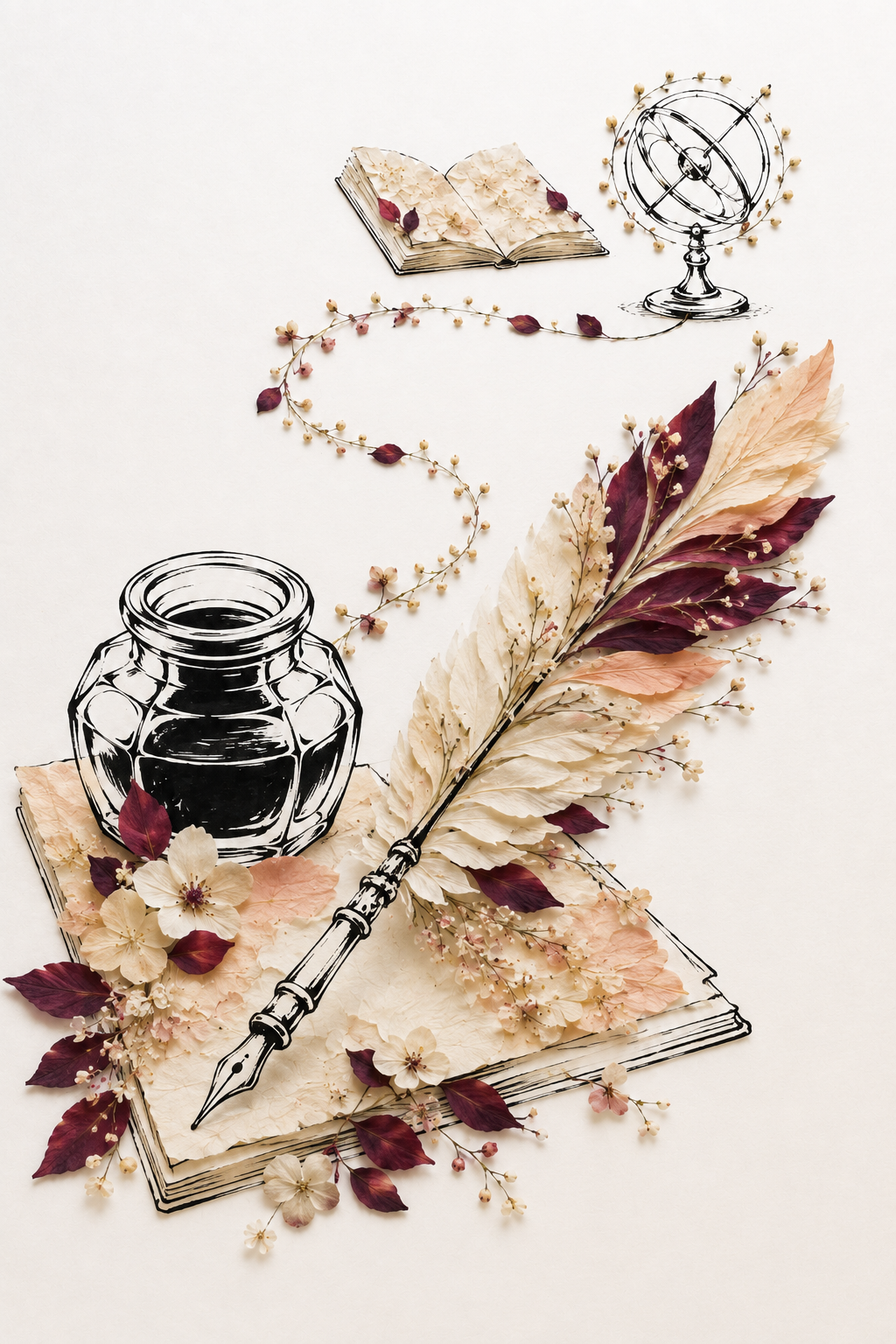
Quill of Petals and the Inkwell of Words
Critique
Introduction This literary still life assembles an open book, ink bottle, quill, flowers, and a small armillary instrument on a pale ground. Black graphic contours meet cream, peach, and burgundy plant forms, presenting writing as a meeting of observation, memory, and imagination. Description The foreground book tilts upward from the lower left, supporting a dark ink bottle and a long feather pen laid diagonally toward the center. Broad feather vanes are constructed from layered leaves and petals. A vine loops through the open space to a second book and the circular instrument above. Analysis The quill provides the dominant diagonal, linking the heavy bottle to the airy upper zone. Burgundy leaves repeat across book, feather, and vine, guiding the eye through otherwise separate objects. Cream paper and pale petals nearly merge, while forceful black outlines define glass, nib, page edges, and metal rings. The contrast between dense foreground and spacious top creates depth. Interpretation and Evaluation Botanical matter becoming both written page and writing tool suggests that language grows from the material world. The distant book and astronomical device extend this idea from private inscription toward wider knowledge. Precise object description, a strong diagonal composition, controlled color echoes, and the technically inventive floral feather give the work clarity and originality without sacrificing decorative richness. Conclusion Initially an elegant arrangement of scholarly objects, the image gradually reads as an argument about knowledge moving between nature and text. Its most persuasive achievement is the continuous visual path from ink, through quill and vine, to book and revolving circles.
Same Subcategory
 The Sanctuary of Silent Wisdom
Similar Artworks
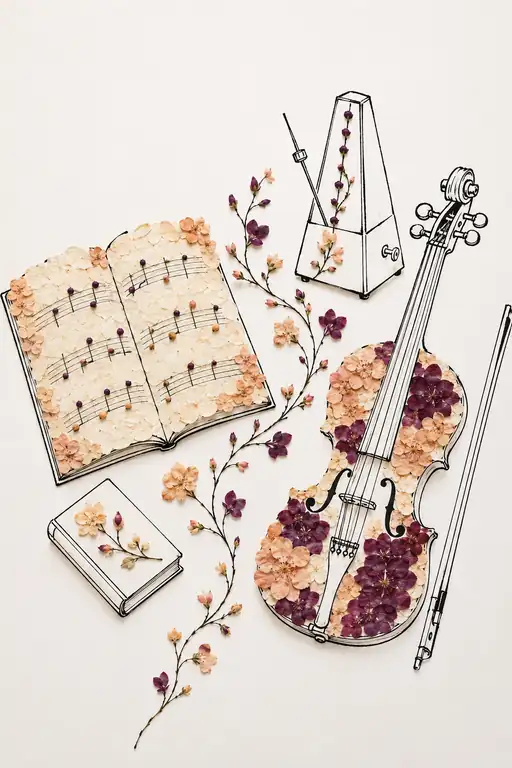 Violin of Petals and the Metronome of Beats
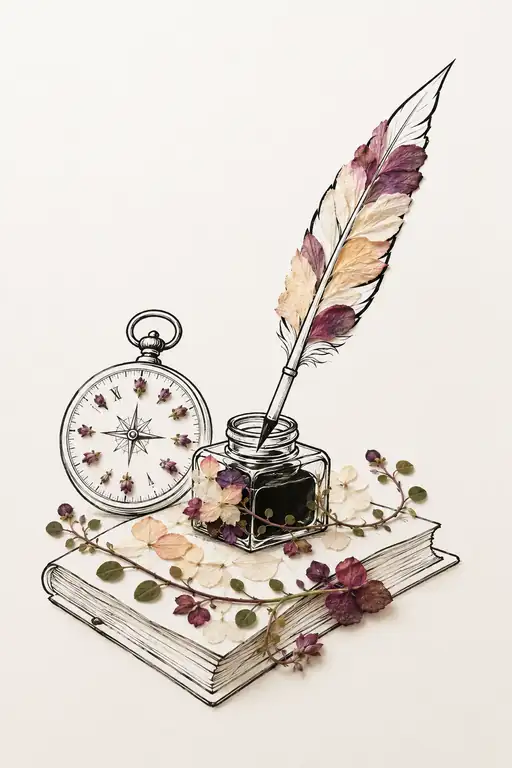 Inscription of Fleeting Hours
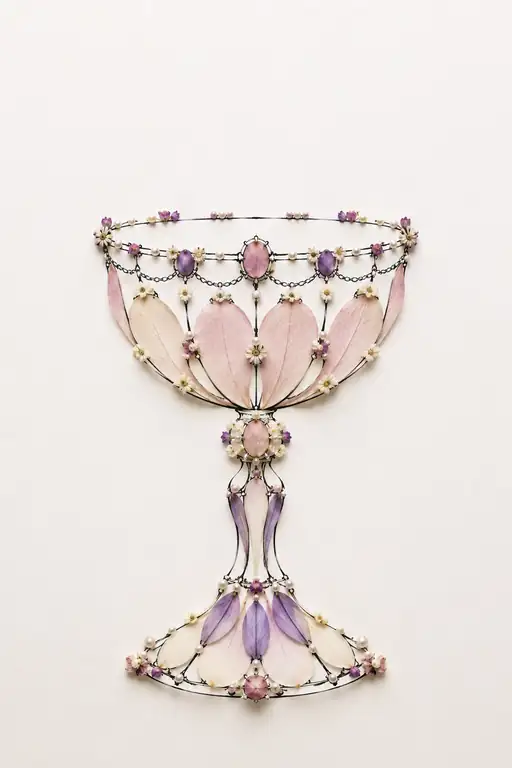 Vessel of Translucent Hours
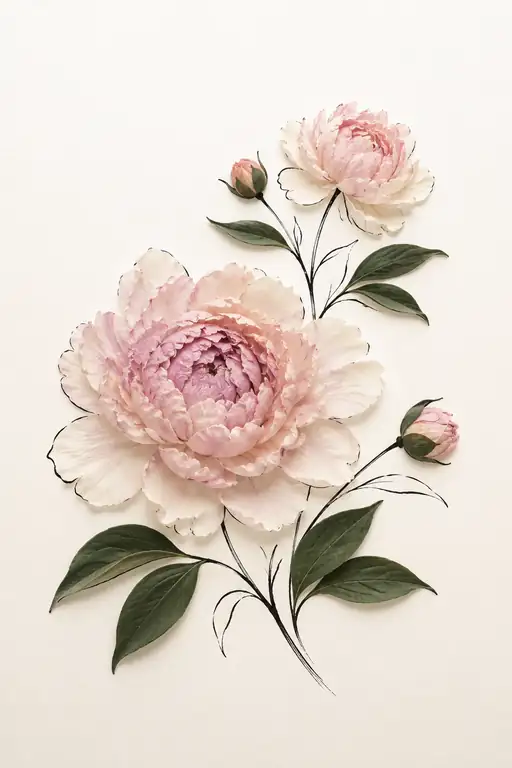 Bloom in Layered Rose
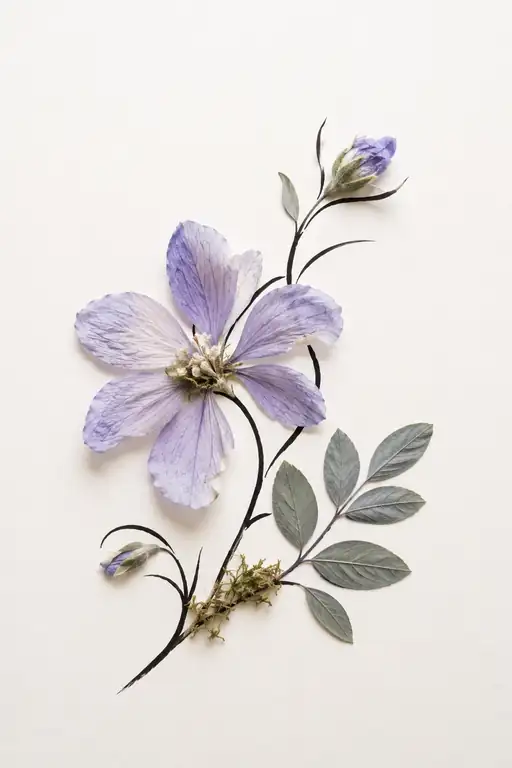 Grace in Solitary Bloom
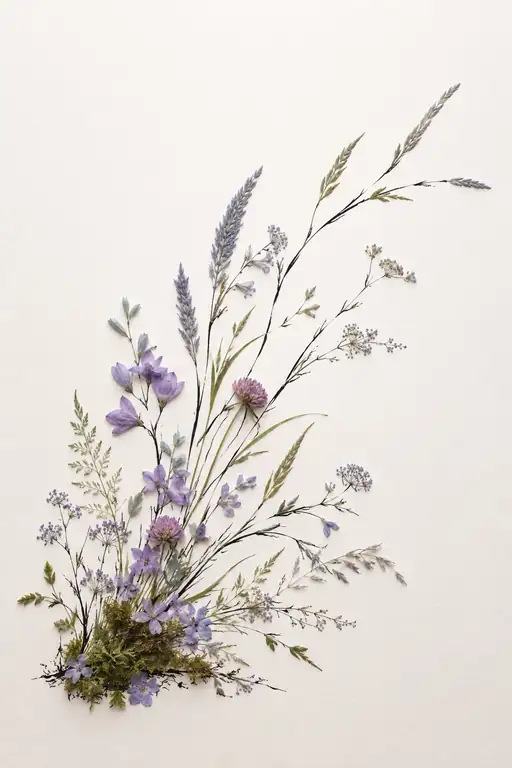 Meadow Winds in Lavender
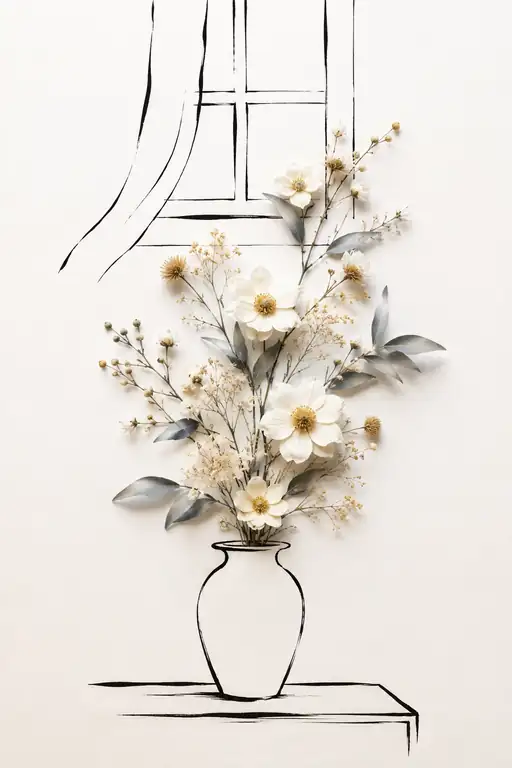 White Petals Whispering by the Curtain's Fold
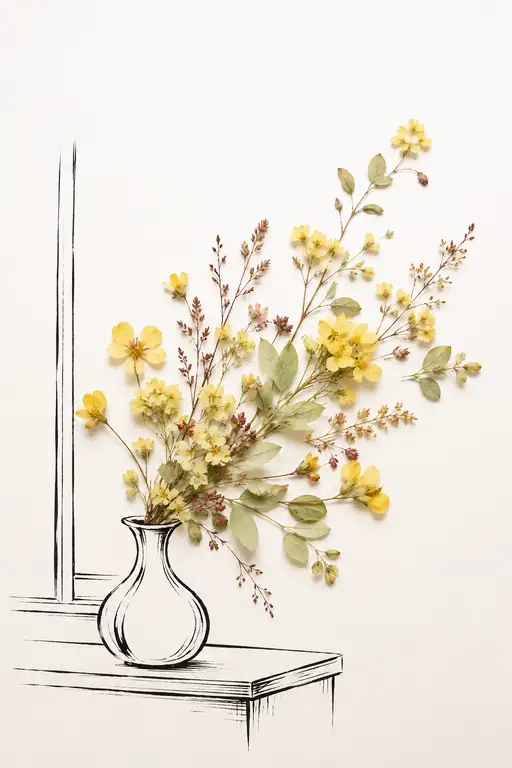 Wild Yellow Blossoms Reaching for the Breeze
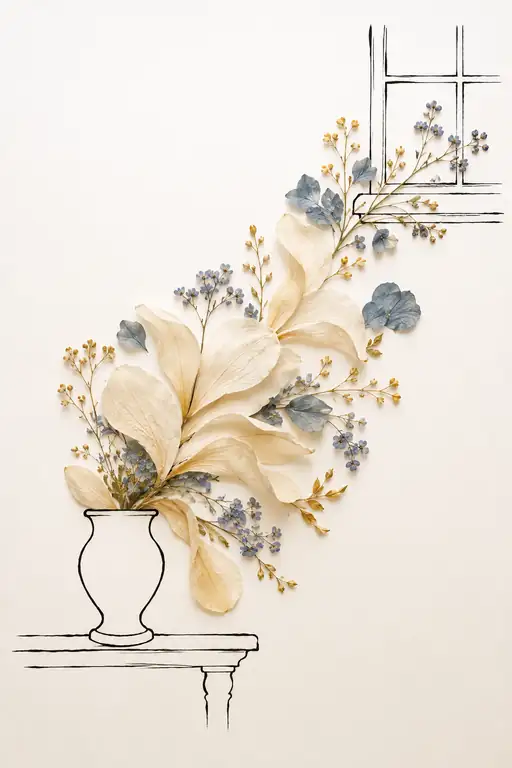 Ascent of Ivory Petals Toward the Light
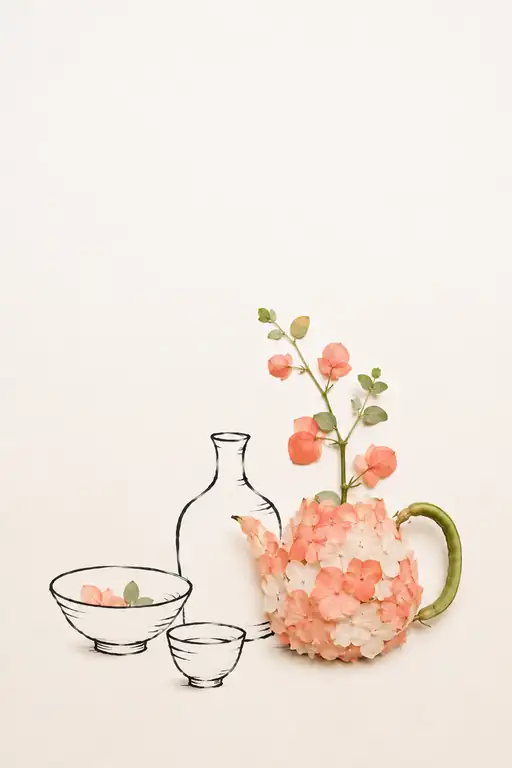 Teapot of Coral Hydrangeas and Quiet Vessels