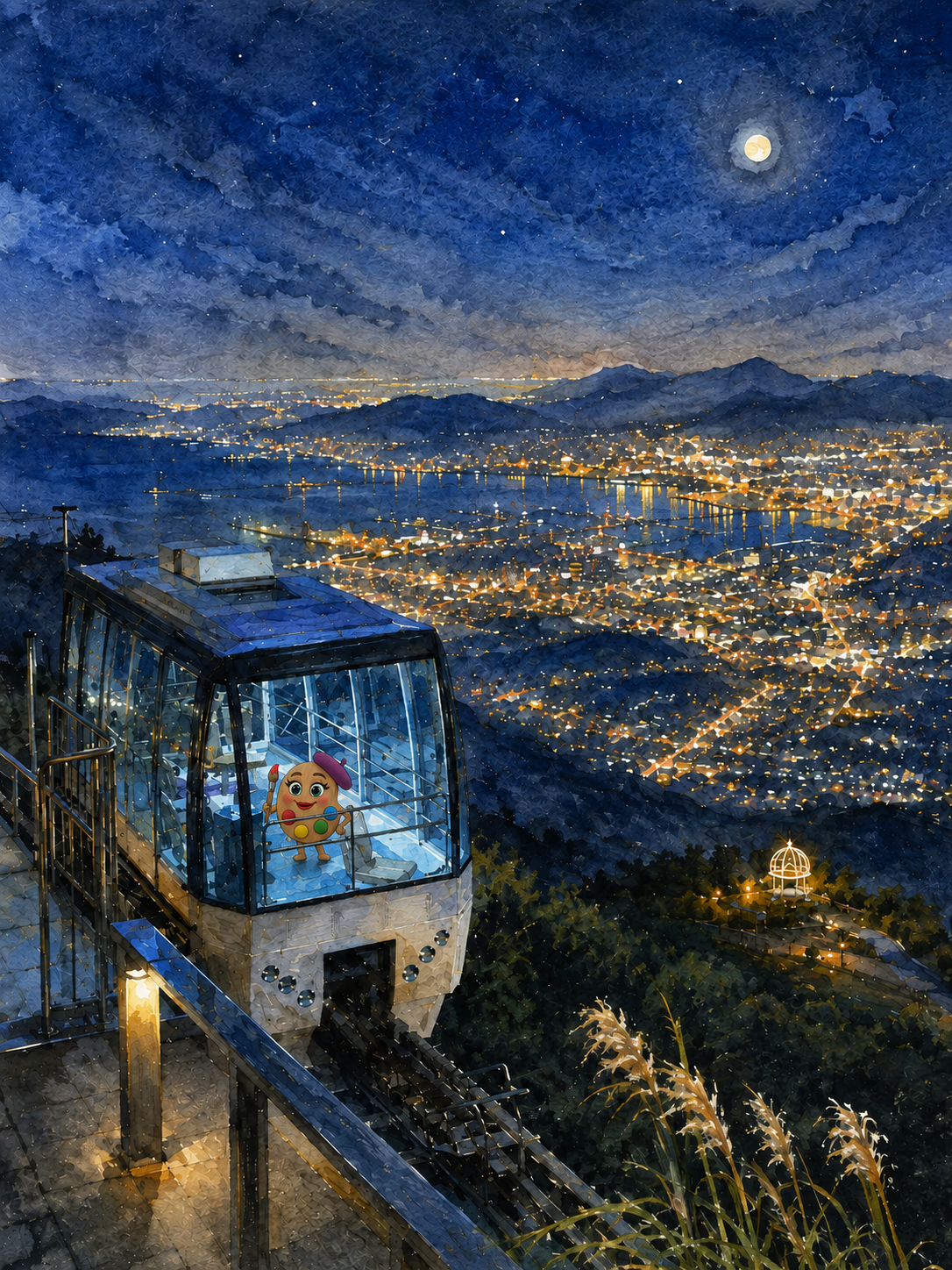
Quiet Gaze from the Midnight Tram
Critique
Introduction This nocturne shows a funicular above a coastal city, with a palette-shaped painter inside. The figure faces outward in a stable frontal pose, holding its brush upright. Its quiet stance counters the city’s light. Description The vehicle occupies the lower left and advances along steep rails beside a lit platform post. Framed by the central front window, the painter holds its brush close to one shoulder; colored paint circles align across its rounded body. Pale grasses fill the opposite corner, and a glowing gazebo sits among dark trees. Beyond, illuminated roads surround a bay and climb toward layered mountains beneath stars and moon. Analysis The frontal window creates a frame within the frame, making the figure the cabin’s visual anchor. Rails and railings converge toward it, while the open city expands in the reverse direction. Saturated paint circles answer the scattered warm lights but remain distinct against cold cyan glass. Dark foliage separates foreground machinery from the luminous basin. Broken, tilelike strokes unify surfaces, and recurring circular lights echo the character’s body and facial features. Interpretation and Evaluation The painter’s steady pose suggests readiness and self-possession rather than immediate action. It appears to absorb the panorama before choosing how to respond, turning stillness into disciplined observation. The composition controls multiple depths effectively, and architectural drawing gives the carriage convincing solidity. The blue-gold palette is coherent, while the integration of a comic figure through shape repetition is inventive. Textured handling sustains atmosphere without obscuring focal hierarchy. Conclusion The panorama dominates at first, yet the centered figure gradually becomes its interpretive key.
Same Subcategory
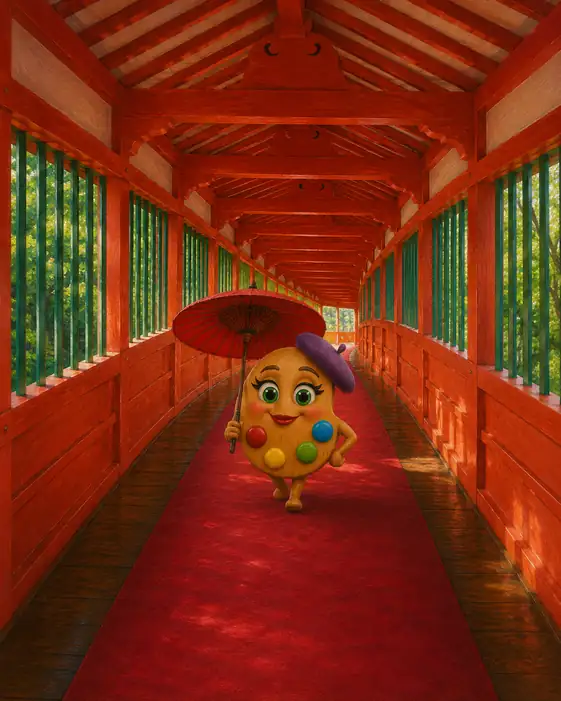 Promenade in the Vermilion Corridor
Similar Artworks
 Descent Across the Sea of Golden Lights
 Pointing the Brush to the Starlit City
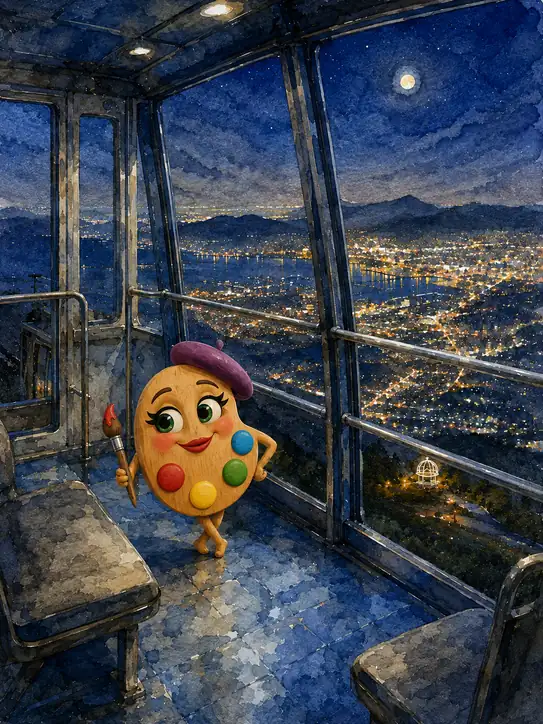 Little Painter Overlooking the City of Lights
 Conductor of the Twilight Mirror
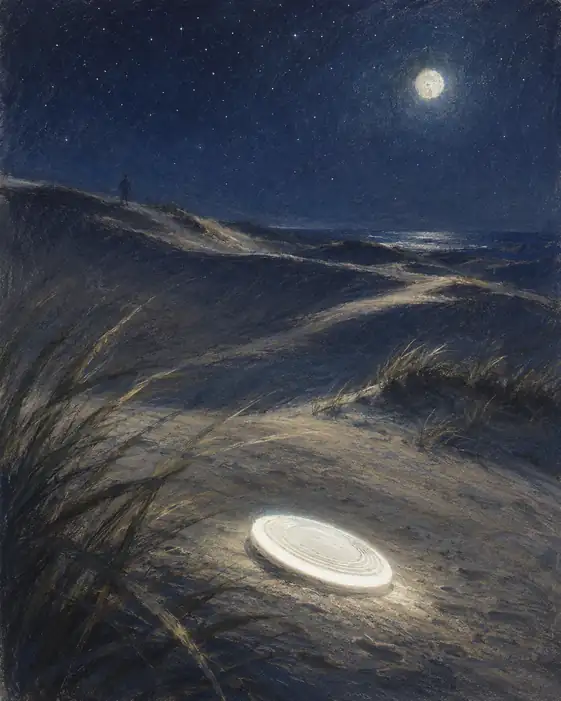 The Terrestrial Moon
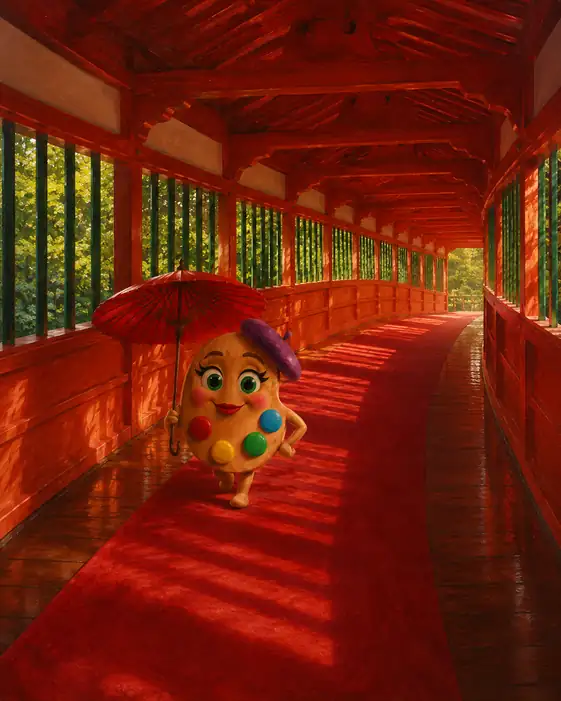 Curved Corridor of Dappled Light
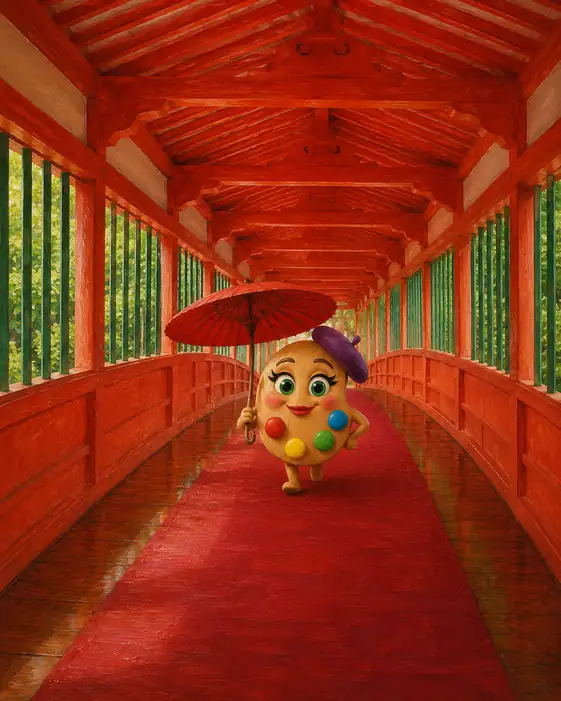 Forward Step on the Crimson Path
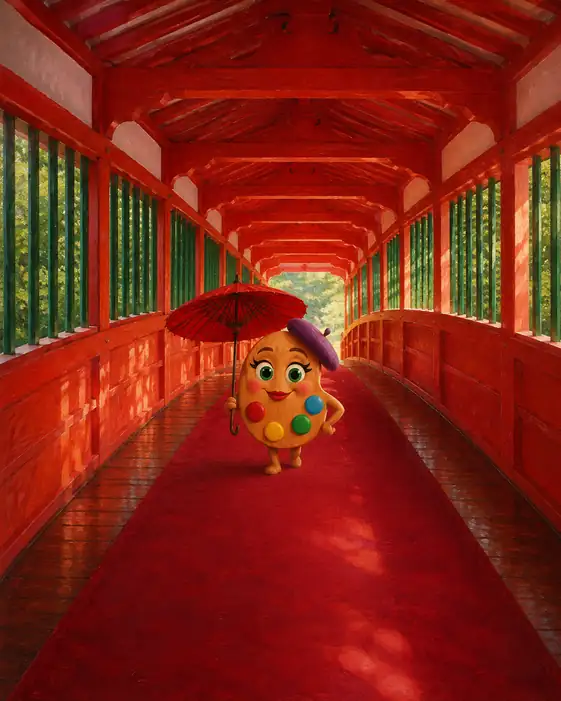 Passage of the Painted Traveler
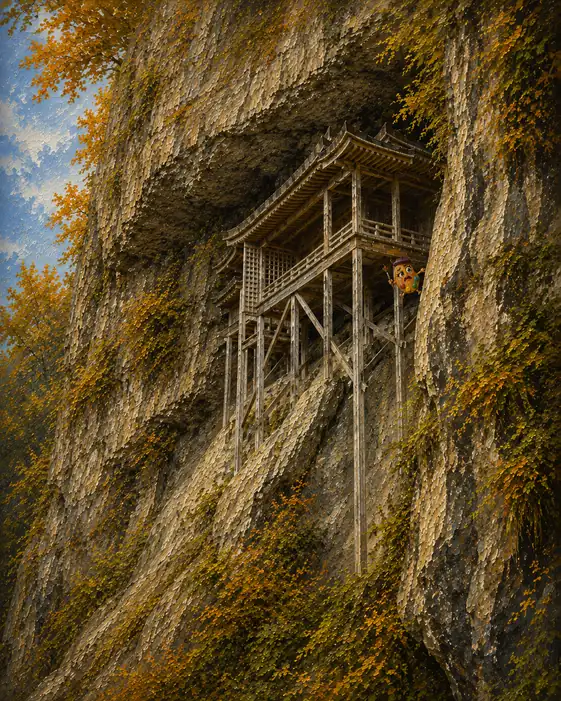 Trapped in the Cliff Crevice
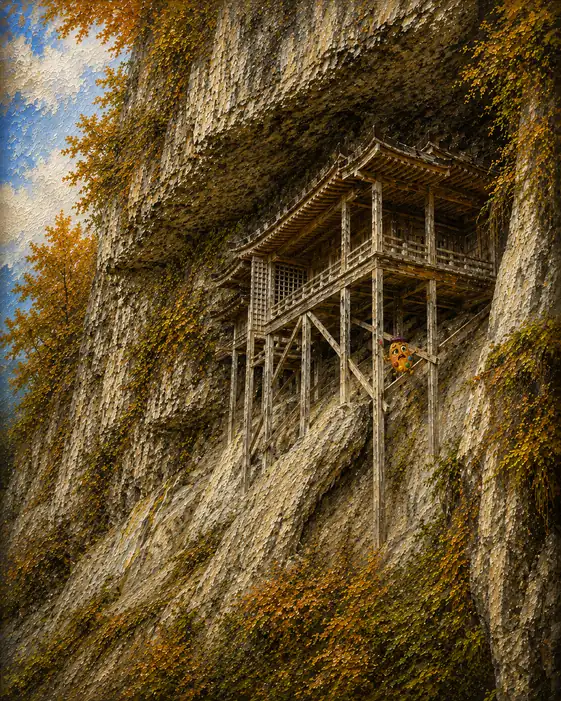 Perilous Balance on the Timber Frame