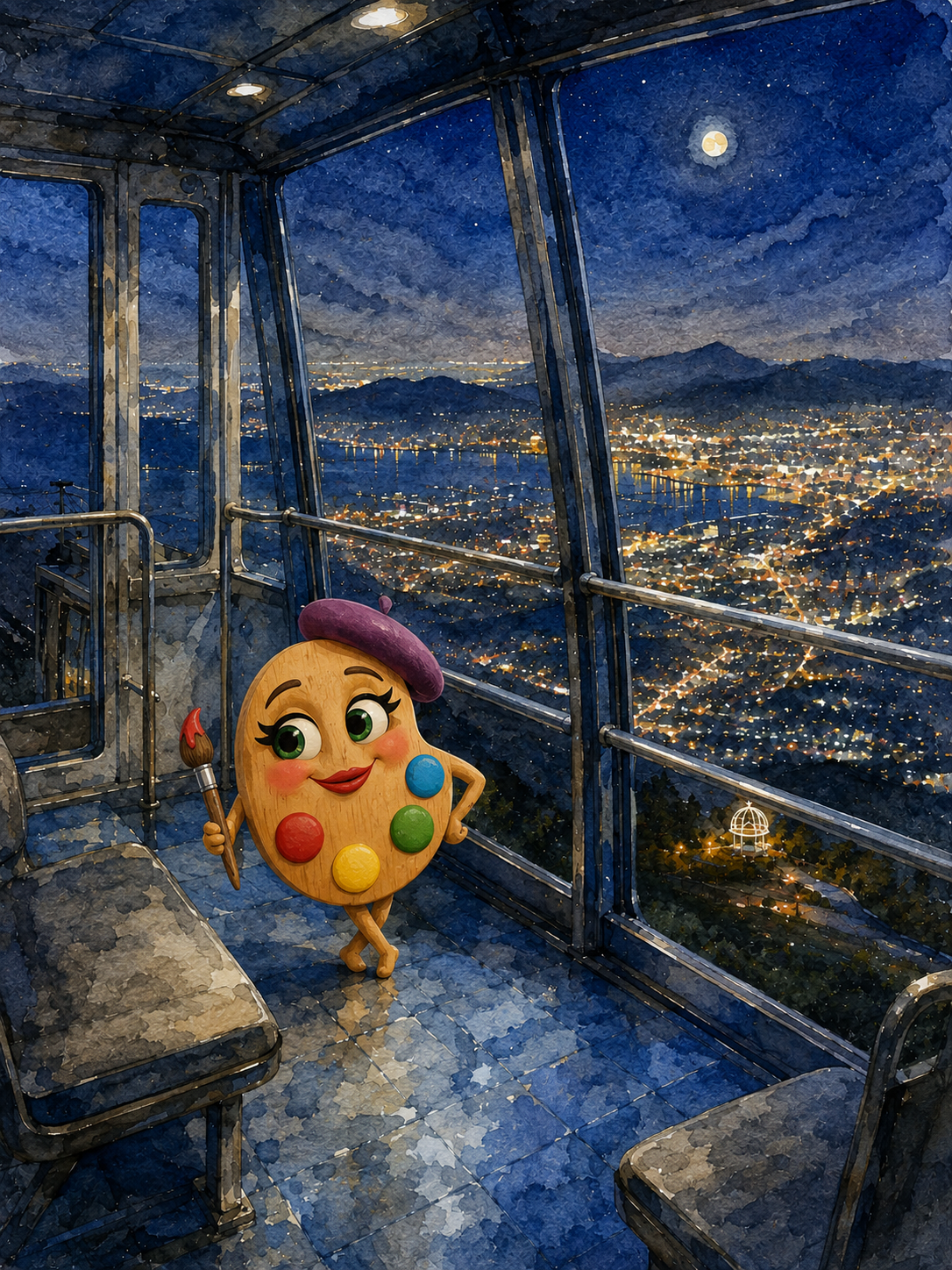
Little Painter Overlooking the City of Lights
Critique
Introduction This nocturnal image places an anthropomorphic painter inside a glass-walled mountain carriage above a luminous city. The compact figure, shaped like a wooden palette, holds a brush and wears a violet beret. Humor and expansive landscape are joined within a richly textured, blue-dominated scene. Description The painter stands near the lower center between worn benches, crossing its feet and resting one hand at its side. Red, yellow, green, and blue paint circles brighten its body. Metal rails and window frames divide the view into angled sections. Beyond them, a bay, mountain ridges, streets, and bridges sparkle beneath a moon and scattered stars. Analysis Strong window mullions create a perspectival cage that directs vision outward, while the small rounded character interrupts their severity. Cool navy and slate cover most surfaces; warm city lights and the palette’s saturated circles act as concentrated accents. Reflections on the tiled floor link interior lamps to the distant illumination. Rough, mosaic-like marks unify upholstery, sky, metal, and landscape without flattening their spatial order. Interpretation and Evaluation The painter appears both traveler and maker, poised before a city that resembles a vast field of luminous brushstrokes. Confined architecture makes the distant panorama feel more open, and the character’s confident stance turns observation into creative readiness. Spatial drawing is convincing, the composition balances enclosure with breadth, and the cool-warm color structure is effective. The playful personification and consistent faceted technique give the work a distinctive identity. Conclusion At first the figure seems merely comic, but closer viewing reveals a meditation on how artists gather images while moving through the world.
Same Subcategory
 Sentinel of the Mauve Twilight
Similar Artworks
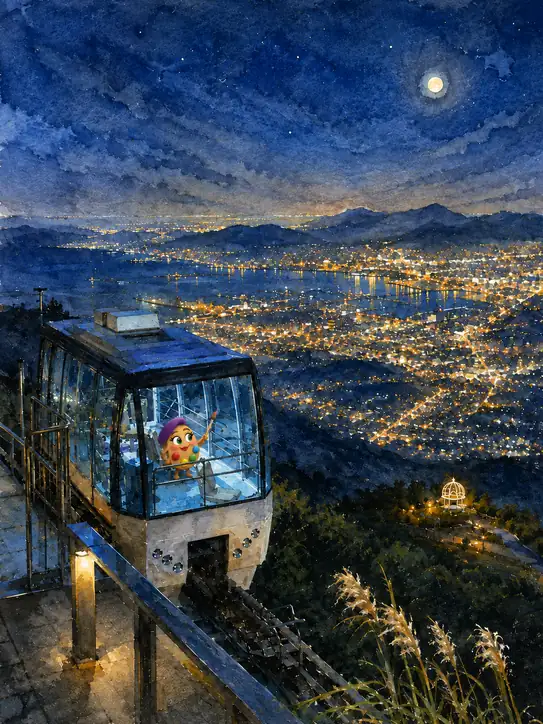 Pointing the Brush to the Starlit City
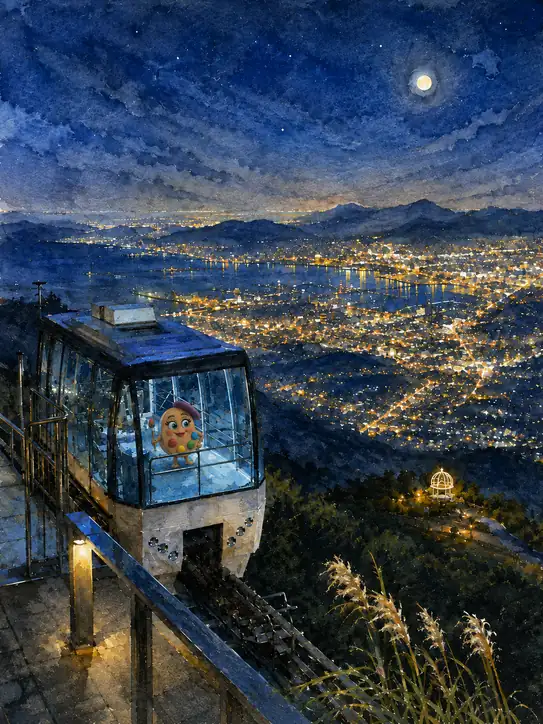 Descent Across the Sea of Golden Lights
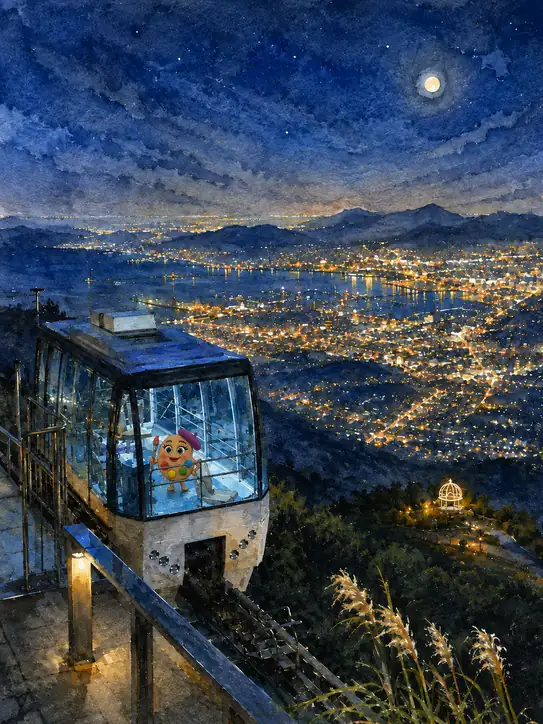 Quiet Gaze from the Midnight Tram
 Conductor of the Twilight Mirror
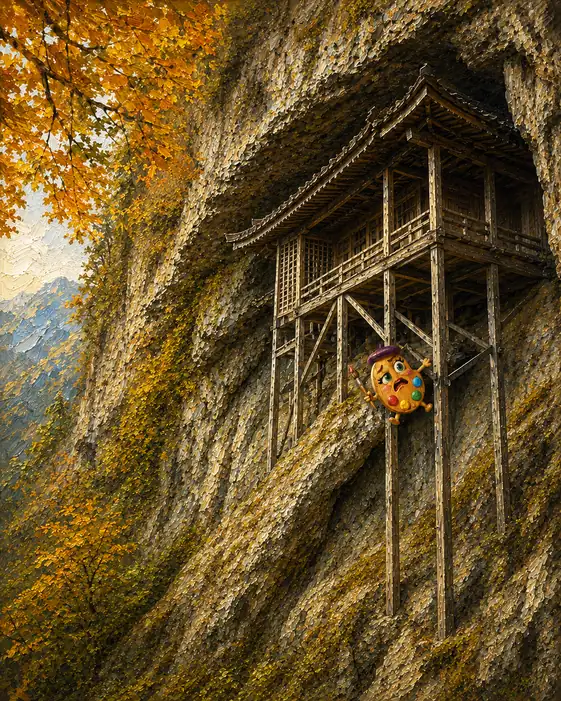 Grasping the Diagonal Brace
 Trapped in the Cliff Crevice
 Perilous Balance on the Timber Frame
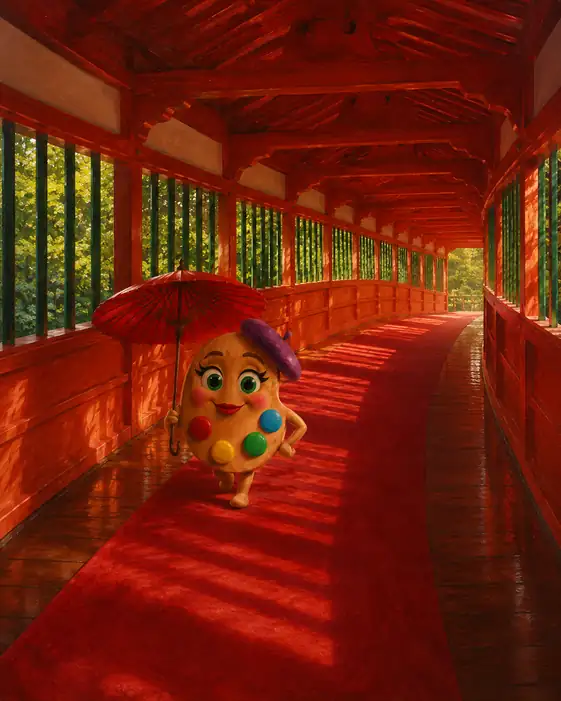 Curved Corridor of Dappled Light
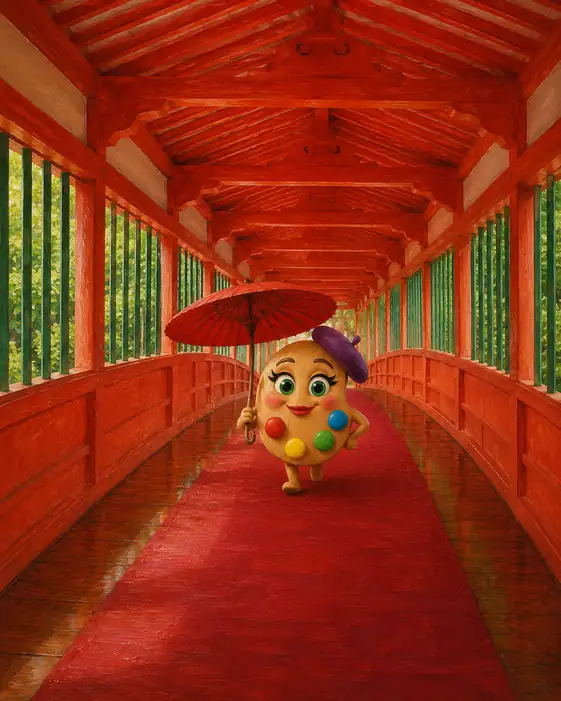 Forward Step on the Crimson Path
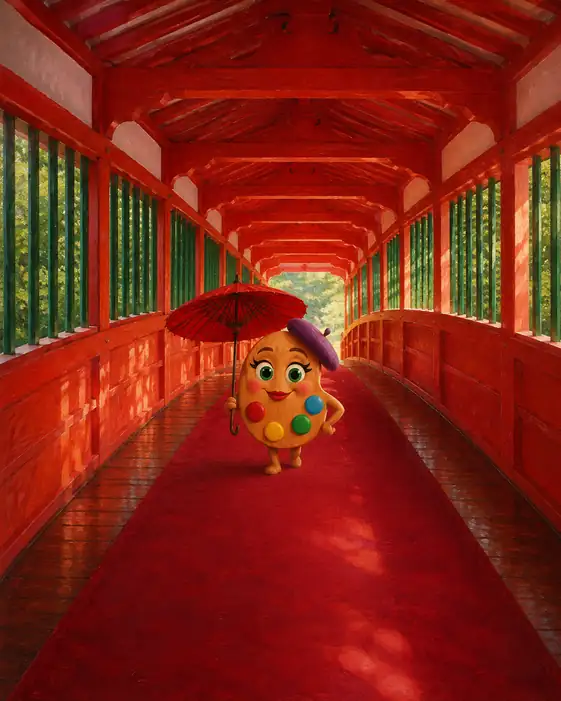 Passage of the Painted Traveler