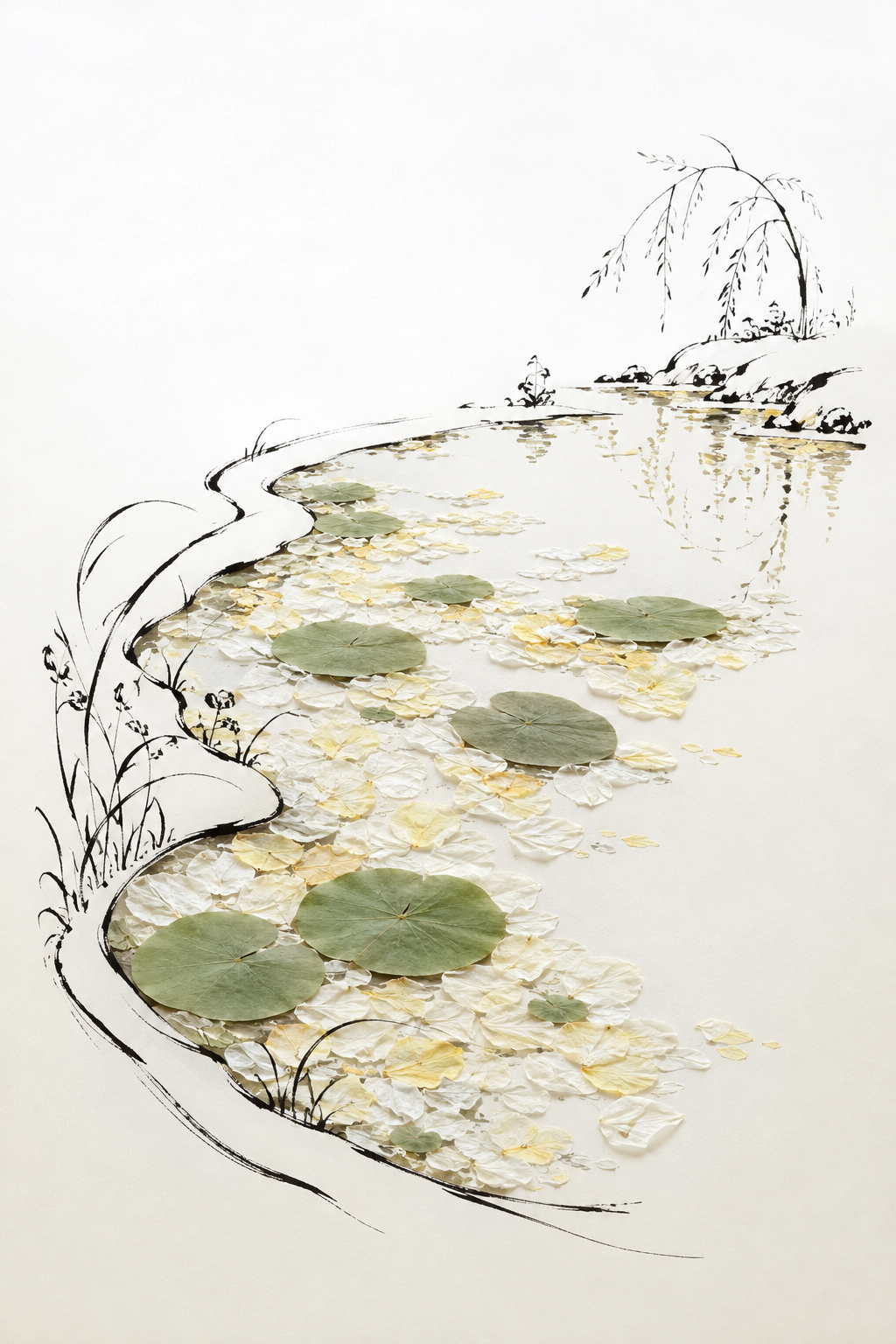
Willow Shadows and Floating Petals
Critique
Introduction This work depicts a curving pond whose surface is assembled from pale petals and broad green lily pads. Ink-drawn banks and a distant willow enclose the water, while the open upper left gives the intimate garden scene an unusual sense of breadth. Description The near bank sweeps from the lower edge around the left side and narrows toward the upper center. White and yellow petals cluster thickly along this curve, surrounding several round leaves that decrease in size with distance. At upper right, a willow bends over rocks and low plants; broken gold and black reflections repeat its hanging branches in the clearer water. Analysis The S-shaped shoreline directs the eye from the large foreground pads toward the remote bend. Dense petals occupy the shallows, whereas untouched paper forms the deeper central channel, creating space through contrasting abundance and vacancy. Black contours firmly define earth and grasses, while muted green disks stabilize the delicate cream textures. The shrinking pads and finer reflections reinforce recession without heavy perspective construction. Interpretation and Evaluation The pond appears calm, yet its surface records a slow gathering of fallen blossoms. Circular leaves resist the directional drift of the smaller petals, balancing continuity with pause. The composition is lucid, the pale yellow-green harmony conveys soft light, and the brushwork economically distinguishes rock, reed, and willow. Using wrinkled petals as floating reflections is both materially convincing and inventive. Conclusion At first this is a decorative pond study, but closer viewing reveals a precise negotiation between open water and accumulated matter. Its controlled curve and graded textures turn stillness into a visible process rather than an empty condition.
Same Subcategory
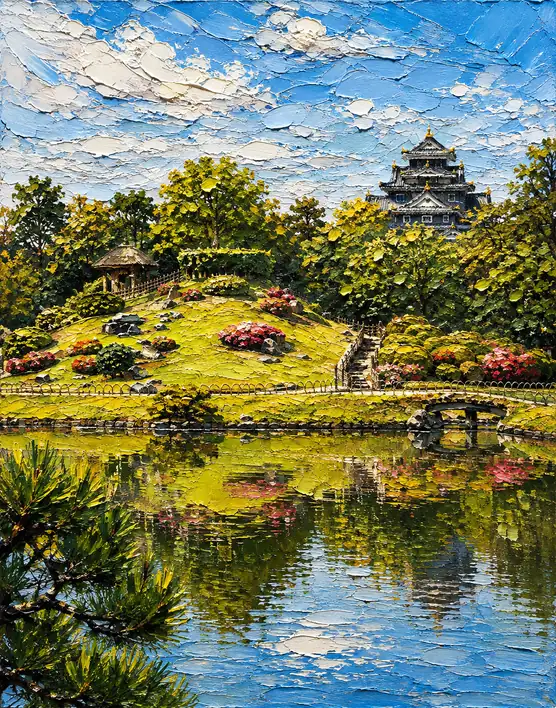 Summer Unfolds in the Water Mirror of Crow Castle
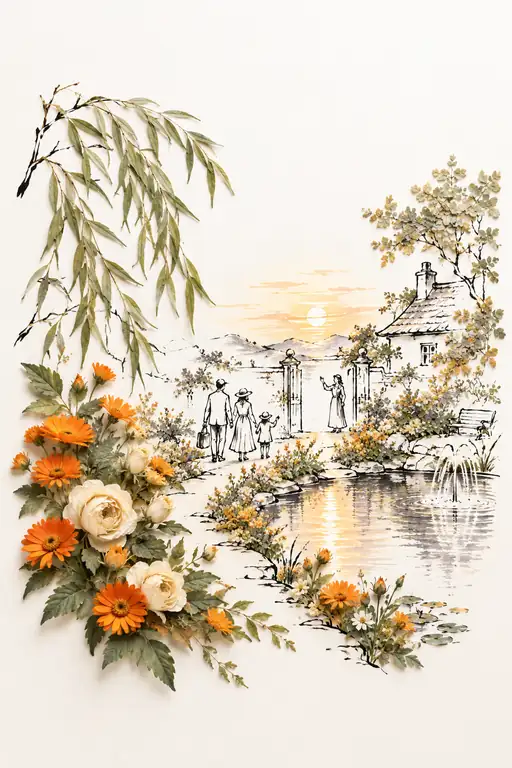 Homecoming in the Golden Twilight
Similar Artworks
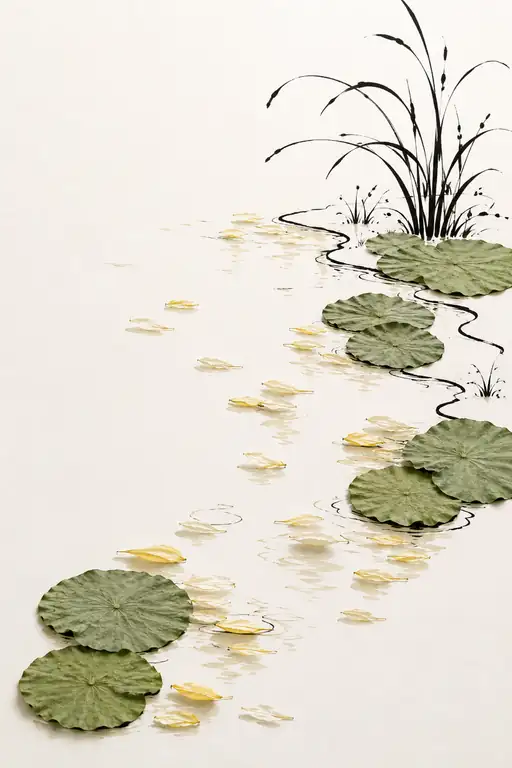 Drifting Lights on the Pond
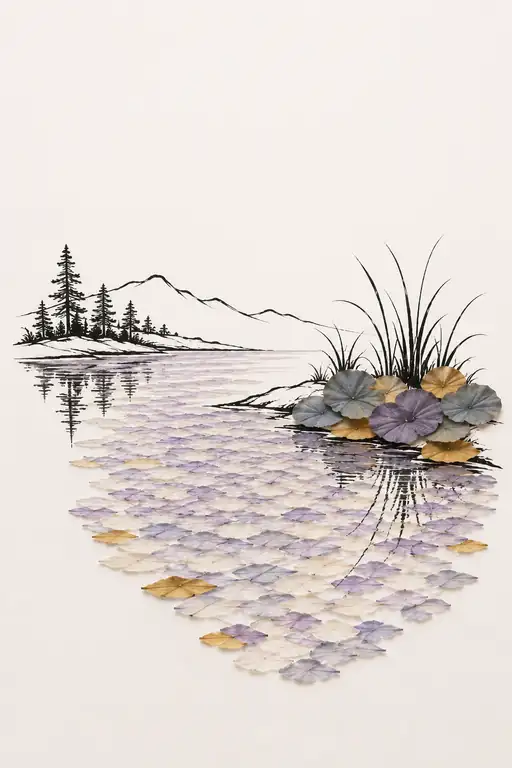 Purple Petals Drifting on Mirror Lake
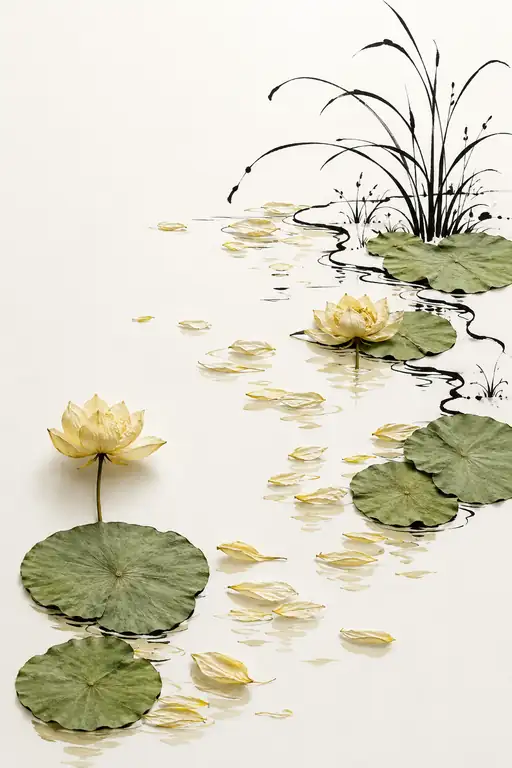 Golden Lotuses on Still Waters
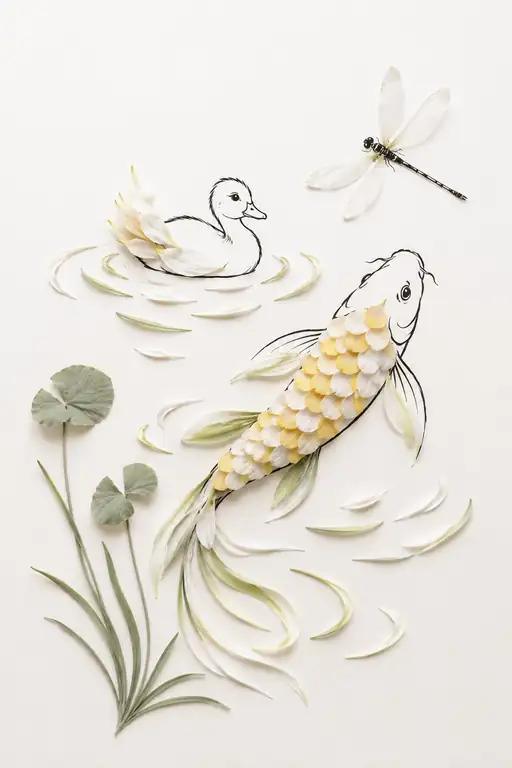 Ripples of the Pale Gold Koi
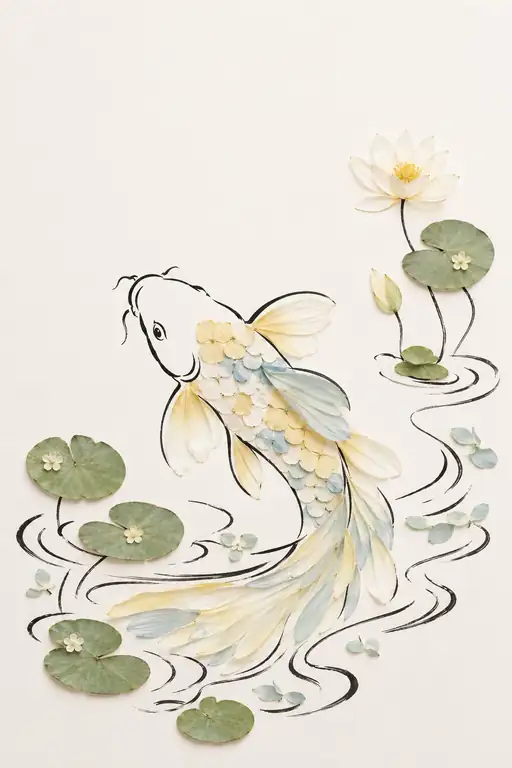 The Celestial Carp Clad in a Dream of Dawn
 Purity of the White Lotus
 Autumn Whispers on the Sloping Hill
 Water Lilies Slumbering on Mirror Lake
 Stream Beneath the Arched Bridge
 Blooming Blossoms on the Thawing Shore