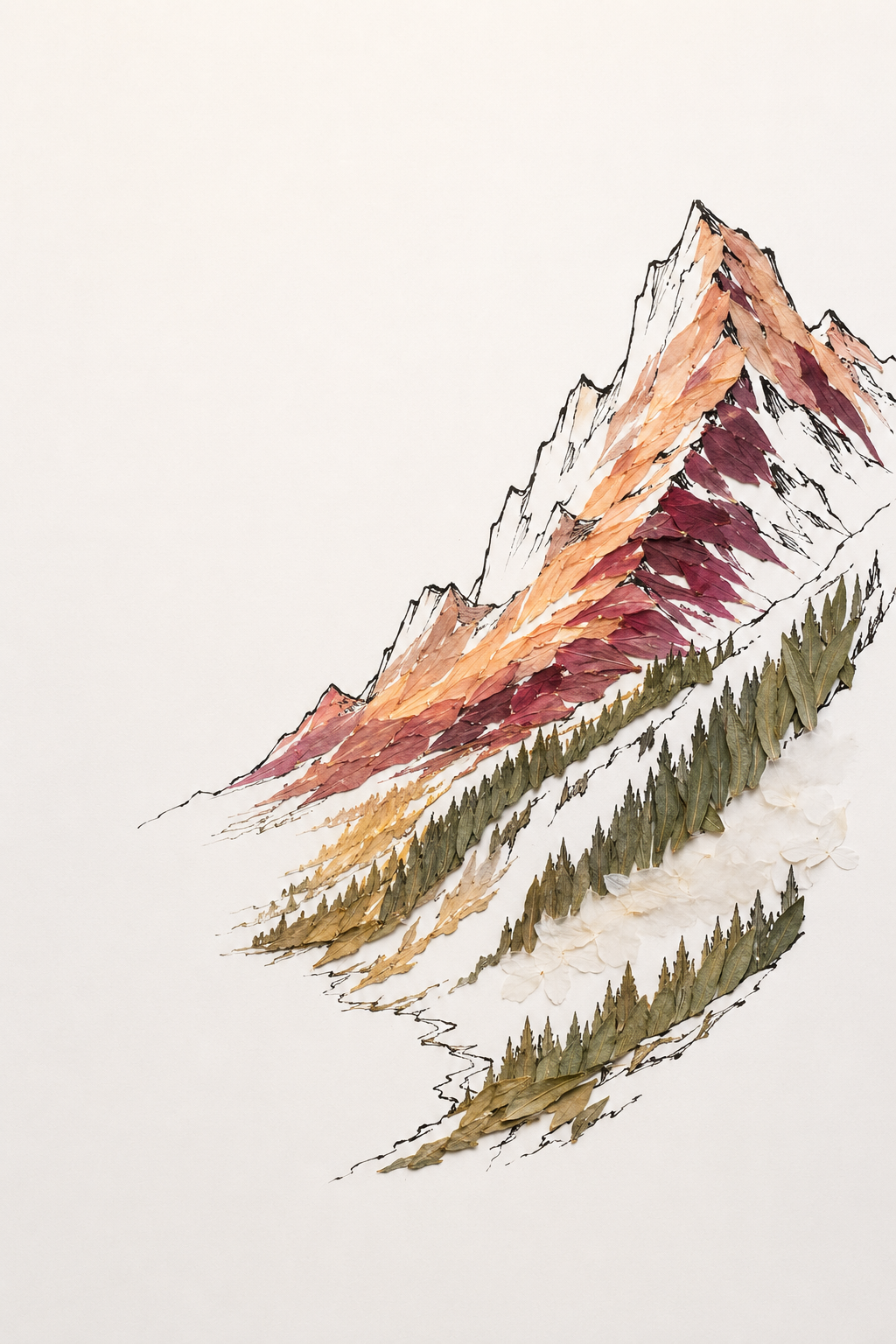
Ridge of Sunset and Evergreen Slopes
Critique
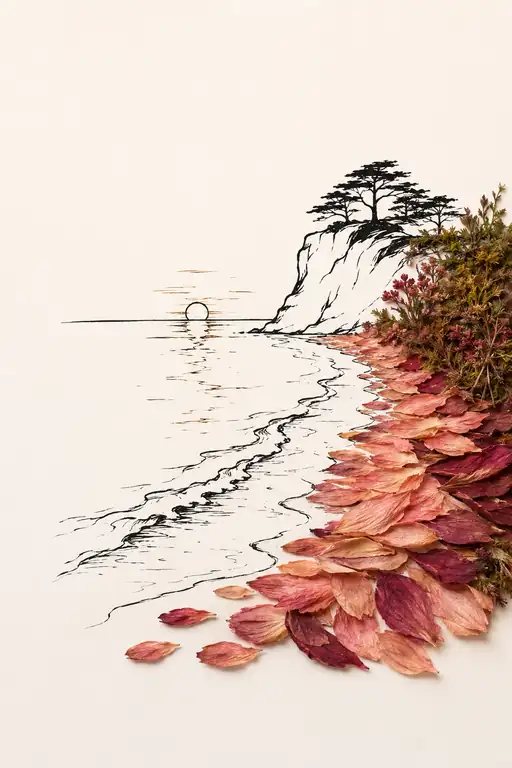
Introduction This work constructs mountains from ink and pressed leaves. Occupying the right two-thirds of the sheet, the peaks rise into open space, while layered vegetation transforms geological mass into repeated organic forms. Description A high triangular summit dominates the upper right, with smaller ridges stepping down toward the left. Peach and burgundy leaves overlap along exposed faces, leaving white channels that read as snow or bare rock. Below, narrow olive leaves stand upright in dense bands like conifer forests. A central patch of white petals crosses the lower slope, and broken black lines indicate ravines and foothills. Analysis Strong diagonals drive the eye from the low left edge toward the summit. Alternating warm leaf bands articulate separate planes, while white gaps prevent the mountain from becoming a single heavy collage mass. The pointed olive leaves repeat the silhouette of the peaks at a smaller scale, establishing a persuasive formal unity. Cast shadows beneath individual pieces add relief, but the spare ink drawing preserves distance and exposure. Interpretation and Evaluation By using delicate leaves to represent enduring stone, the work complicates conventional ideas of permanence. The mountain appears monumental from afar yet reveals itself as an accumulation of fragile parts. Its composition is forceful, the rust, wine, olive, and white palette clearly distinguishes altitude zones, and the linework supplies a convincing structure. The scaled repetition between leaf tips, trees, and summits is an especially original technical insight. Conclusion At first the picture reads as a dramatic alpine view, but closer inspection turns magnitude into an effect assembled from small botanical units. The disciplined diagonals and varied textures preserve grandeur while inviting attention to the vulnerability within it.
Same Subcategory
Similar Artworks
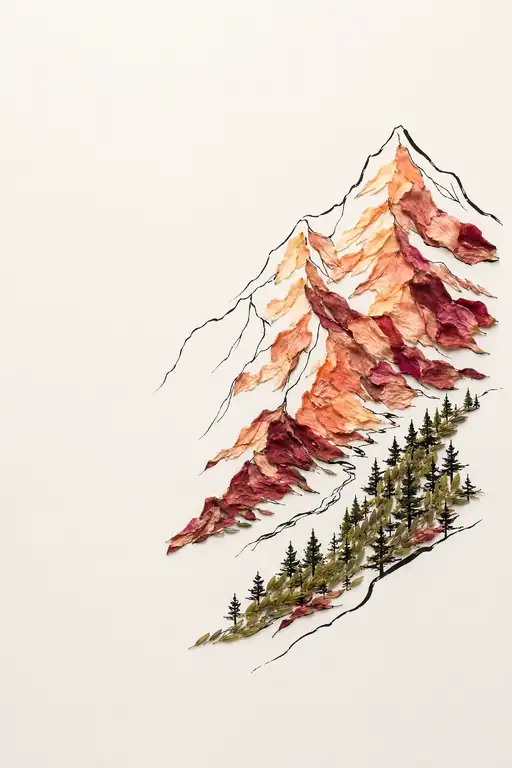 Alpenglow on the Jagged Peak
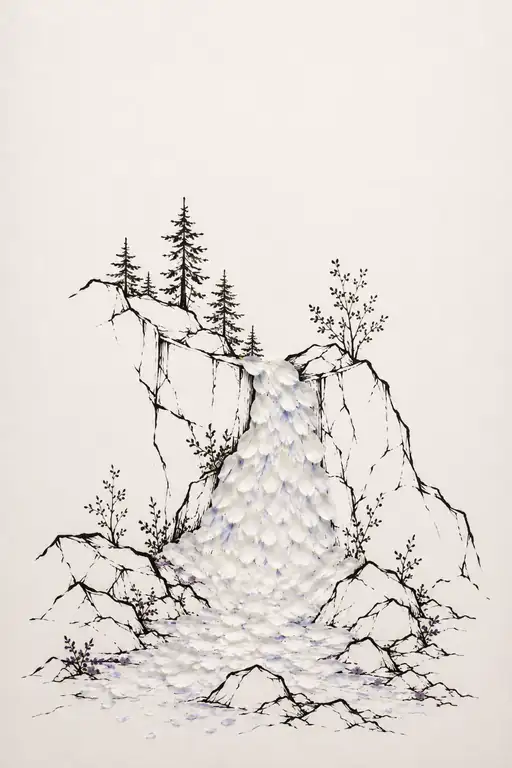 Cascade Down the Cliffside
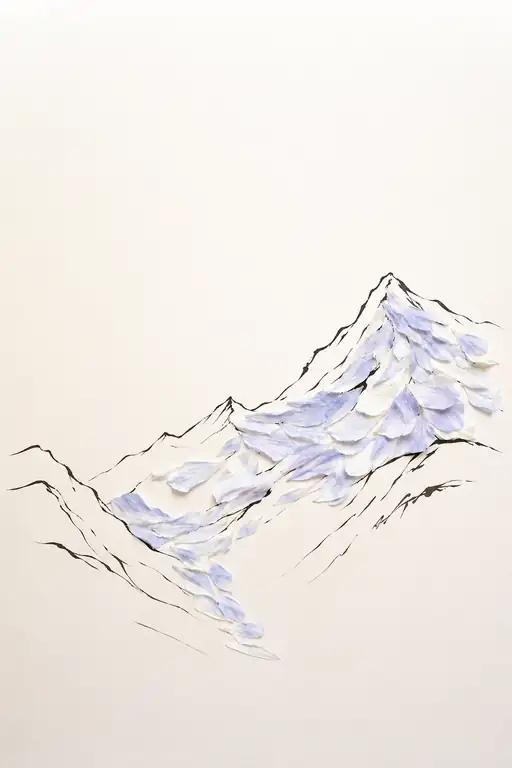 Lavender Snowfields on the High Peaks
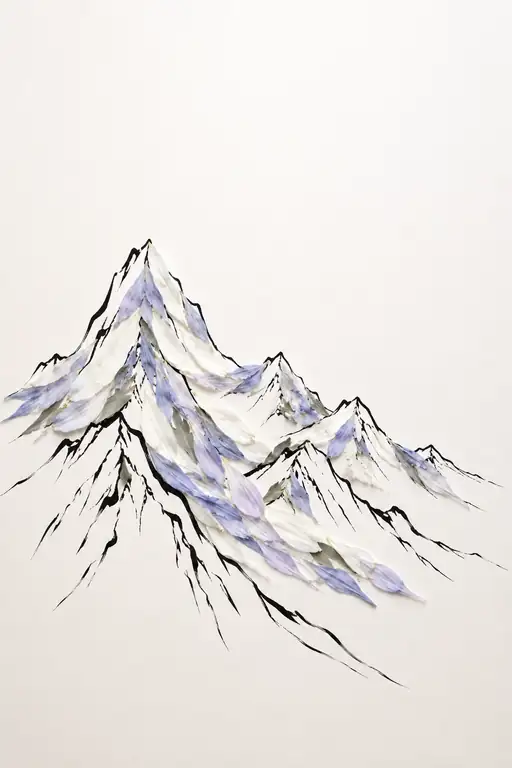 Glacial Ridge in Silent Slumber
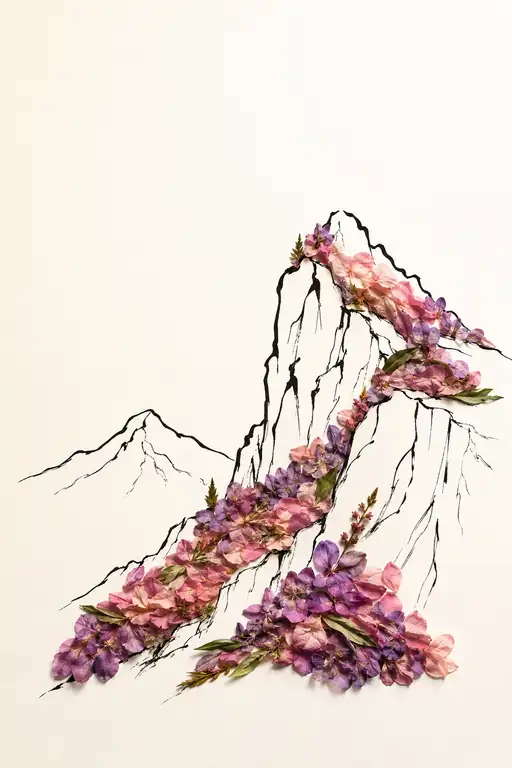 Whispering Ridge of the Solitary Peak
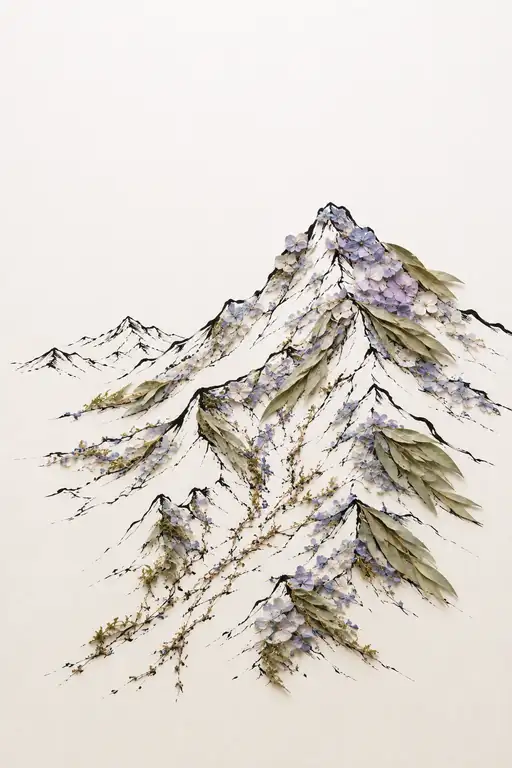 Solitude on the Azure Ridge
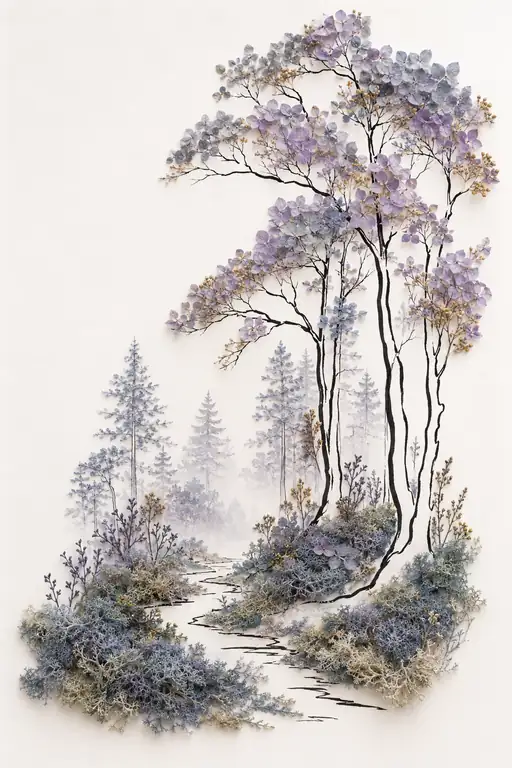 Mists in the Lavender Forest
 Whitecaps of Petals on the Sunset Path
 Twilight Shore Whispering to the Tide
 Waterfall of Lilac and Light