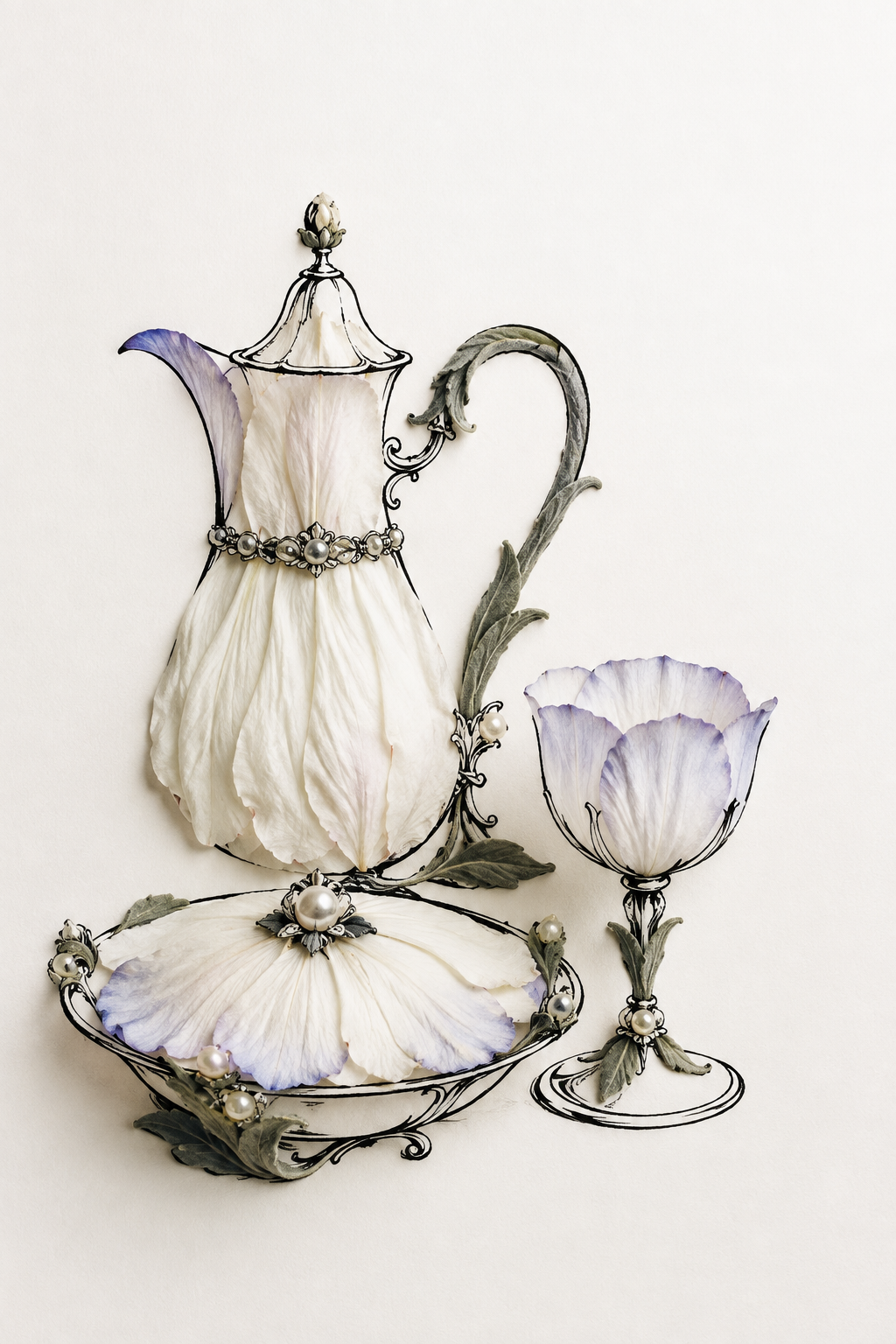
Porcelain and Pale Petal Ware
Critique
Introduction This work transforms a tea service into a botanical assemblage, joining drawn silverware with pale petals, leaves, and pearl-like ornaments. The arrangement occupies the lower left and center of an open ivory field, giving domestic objects the poised presence of ceremonial artifacts. Description A tall pot rises at left, its body formed by overlapping white petals gathered by a jeweled band. Its lavender-tipped spout points outward, while a gray-green stem bends into an arched handle. Below, a broad blossom becomes a shallow dish, and at right a flared flower forms a goblet on an inked stem; small pearls mark rims, joints, and finials. Analysis The three vessels establish a stable triangular structure, with the pot as the highest mass and the cup providing a smaller counterweight. Black contour lines clarify metal edges and ornamental scrolls without suppressing the veins and folds of the organic material. Cool violet borders animate the dominant whites, while muted foliage and silvery beads distribute darker accents through the lower half. Interpretation and Evaluation The merger of tableware and flowers suggests refinement as something cultivated yet temporary. Petals imitate porcelain, but their creases and irregular edges prevent the objects from becoming flawless luxury goods; fragility remains visible within elegance. The descriptive detail is exact, the composition balances variety with order, and the restrained colors unify several textures. Especially inventive is the way stems serve structural roles while still reading as plants. Conclusion At first glance the image resembles an ornate antique service, but sustained viewing reveals that every vessel depends upon vulnerable botanical matter. Its precise drawing and tactile construction turn decoration into a thoughtful comparison between ceremony, growth, and decay.
Same Subcategory
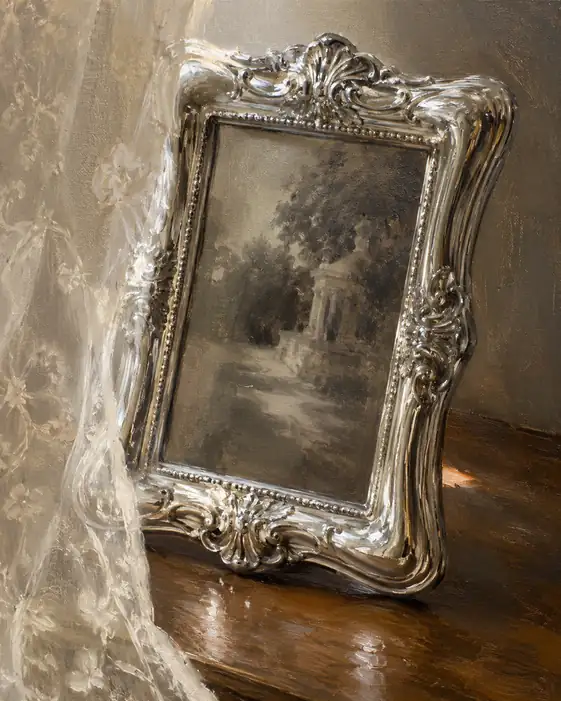 Eternal Reflections in Silver
Similar Artworks
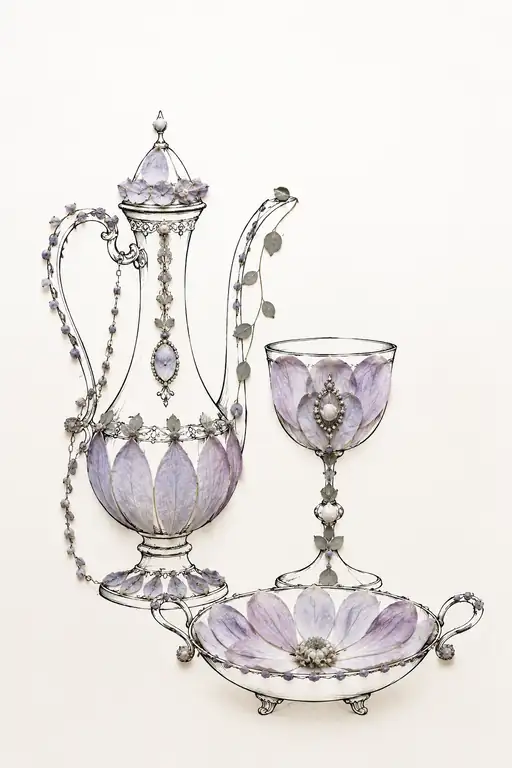 Lavender Elegance in Silver Linework
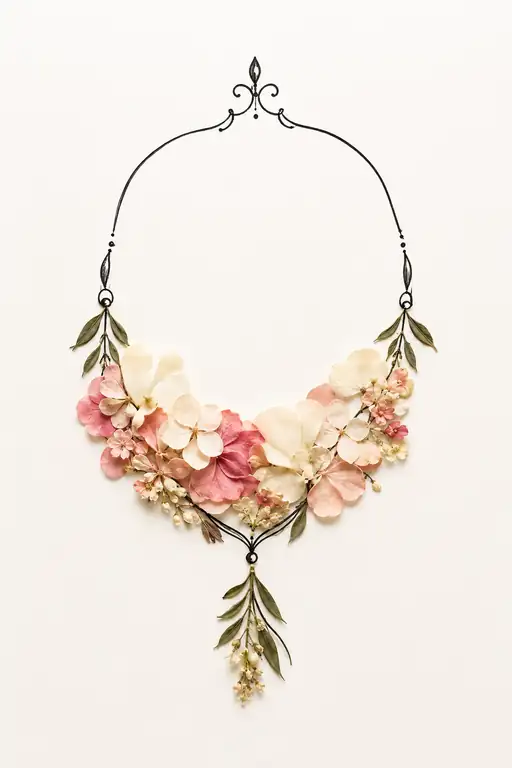 Royal Necklace Woven with Ephemeral Blossoms
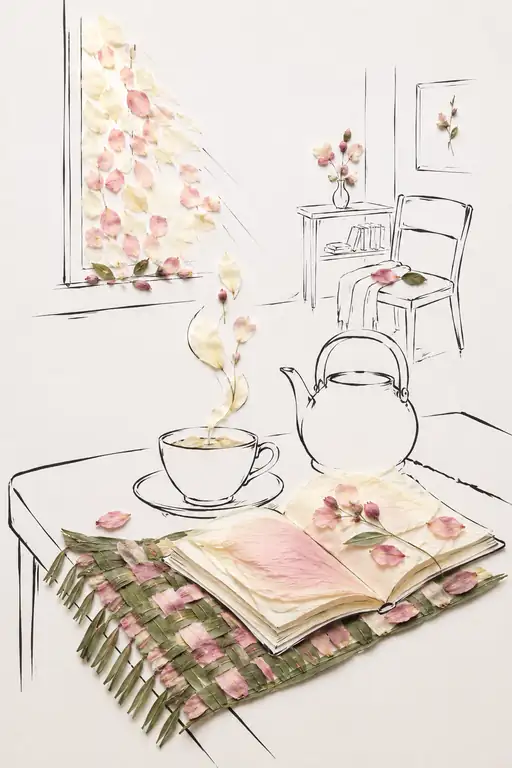 Solitude of Tea and Blossom-Turned Pages
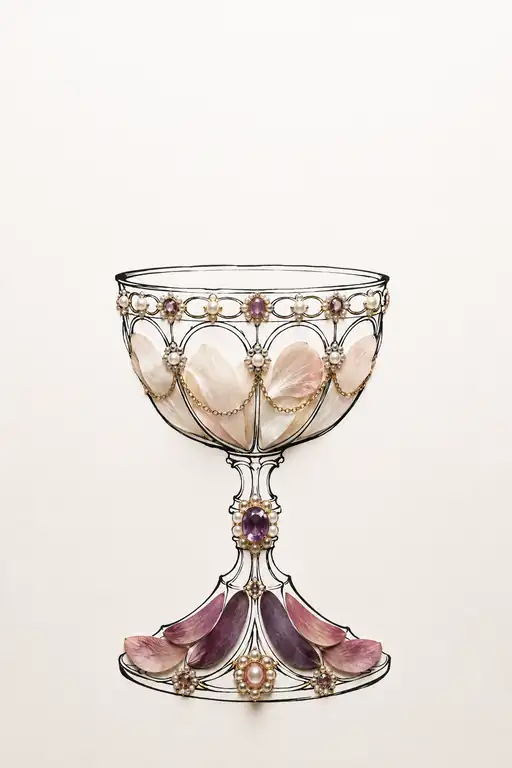 Sacred Chalice of Amethyst Light
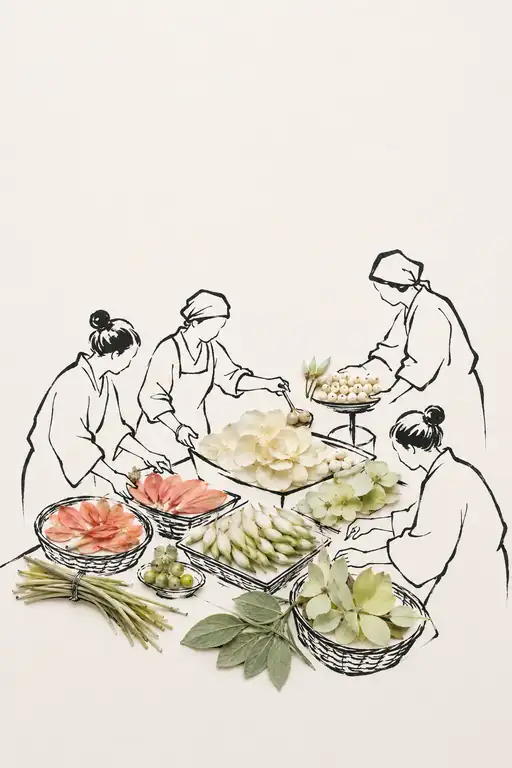 Sorting Petals and Pearls in Quiet Accord
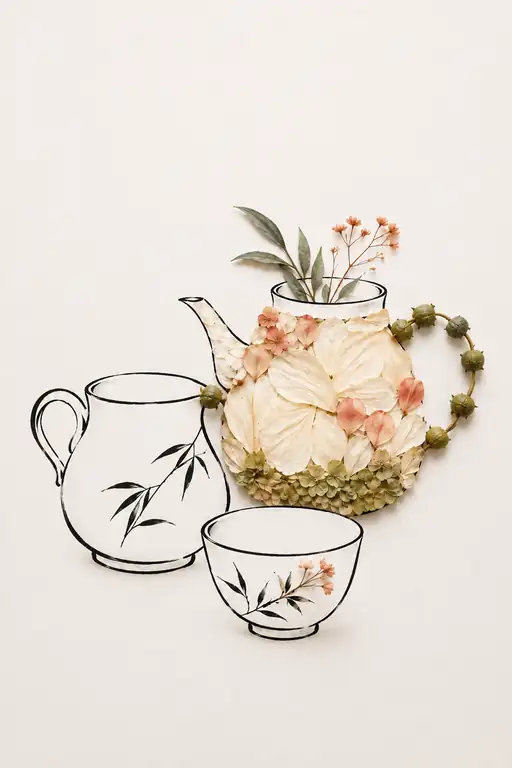 Ivory Blossom Teapot with Berry Handle
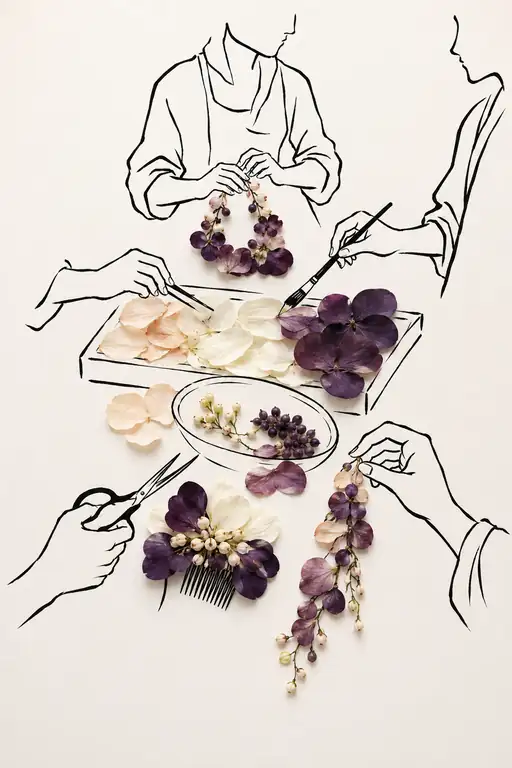 Hands Fashioning the Violet Comb and Wreath
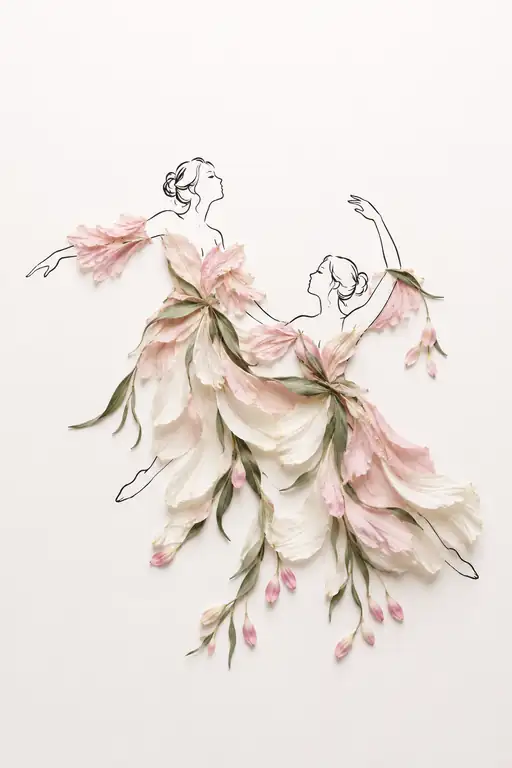 Dual Harmony of Petals in Mid-Air Dance
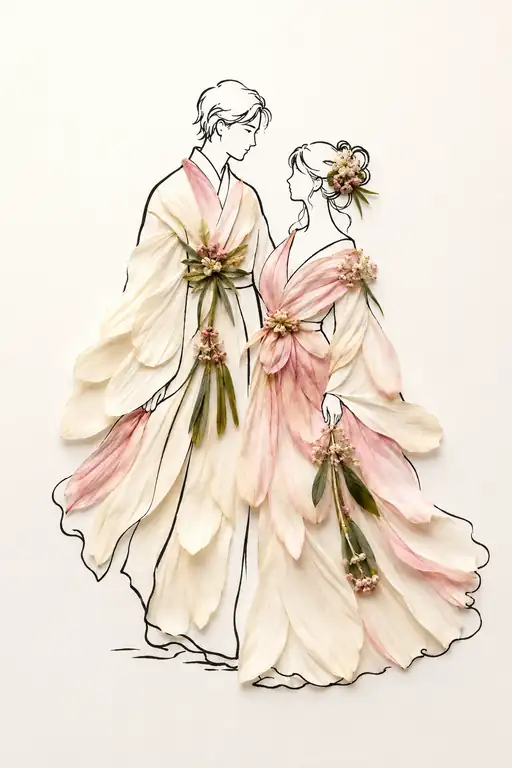 Sacred Vow in Robes of Dawn Petals
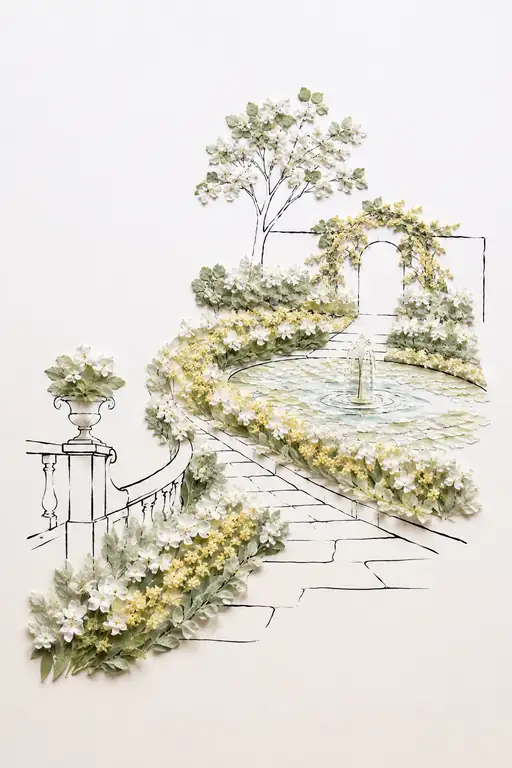 Blossom Terraces of the Sunlit Garden