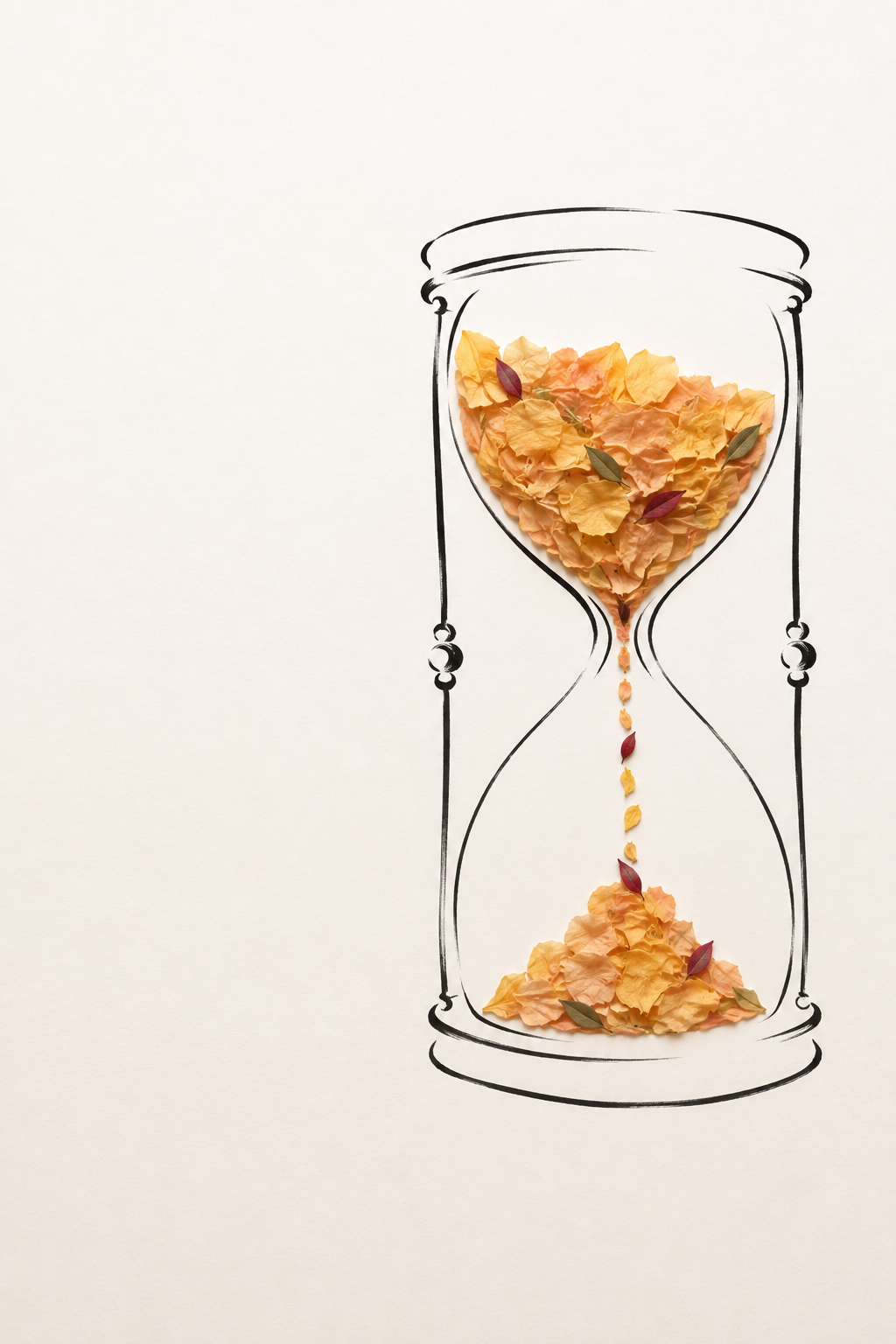
Golden Grains of Solitude
Critique
Introduction This work presents an hourglass whose falling contents are made from crumpled autumn leaves rather than sand. Set to the right of a wide, nearly empty field, the familiar instrument becomes a quiet study of time, change, and material fragility. Description Thin black strokes define the glass bulbs, circular rims, and four upright supports. A dense amber mass fills the upper chamber, while a smaller mound rests below; between them, individual yellow and burgundy leaves descend in a measured vertical chain. Olive leaves punctuate both heaps, and the warm paper textures stand out against the softly grained ivory ground. Analysis The strongly asymmetrical placement gives the blank left side unusual weight, allowing the compact hourglass to appear isolated and contemplative. Curving contours narrow sharply at the waist and guide the eye from the broad upper cluster through the falling fragments to the lower pile. Crisp ink lines contrast with wrinkled, translucent petals, while modest shadows make the collage elements hover just above the surface. Interpretation and Evaluation Replacing uniform sand with visibly distinct leaves turns elapsed time into a sequence of singular losses. The abundant upper chamber and modest lower accumulation suggest a process still underway, yet the scattered red accents resist a purely mournful reading by giving the descent visual vitality. The composition is disciplined, the limited palette is coherent, and the combination of drawing with tactile plant forms supplies an inventive technical tension. Conclusion What first appears to be a decorative seasonal emblem develops into a precise meditation on duration. Its economical draftsmanship, controlled color, and carefully spaced falling leaves make absence as active as the central object.
Same Subcategory
Similar Artworks
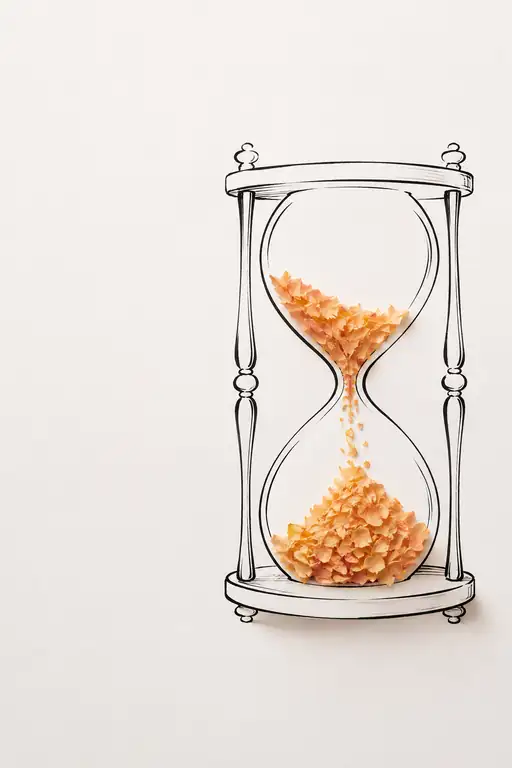 Golden Sands of Fleeting Hours
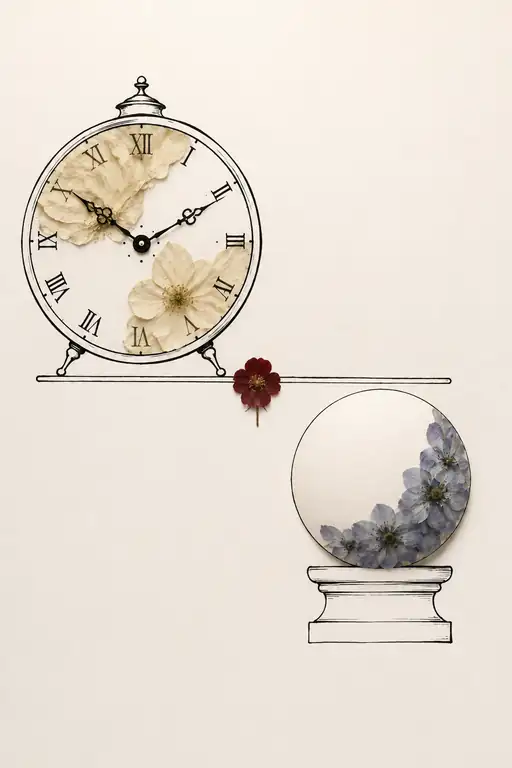 The Geometry of Fleeting Hours
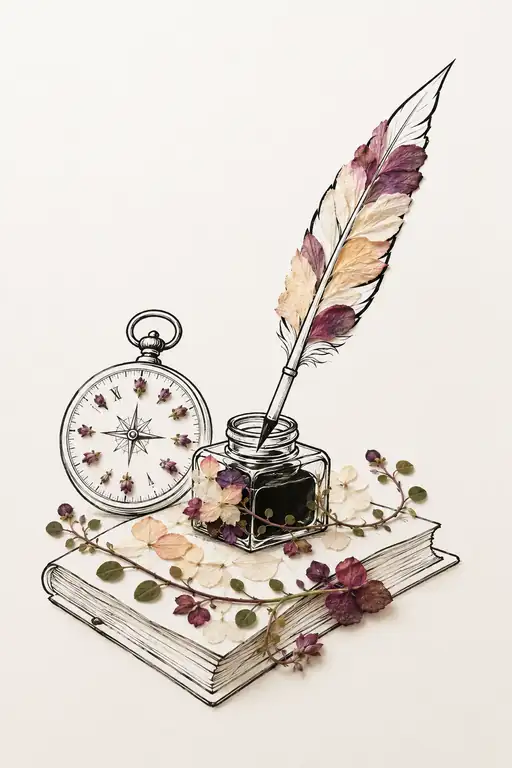 Inscription of Fleeting Hours
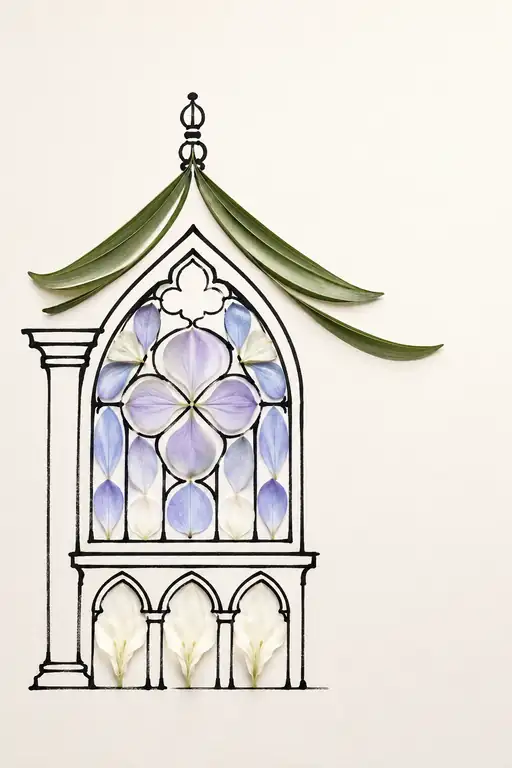 Gothic Rose Window of Translucent Petals
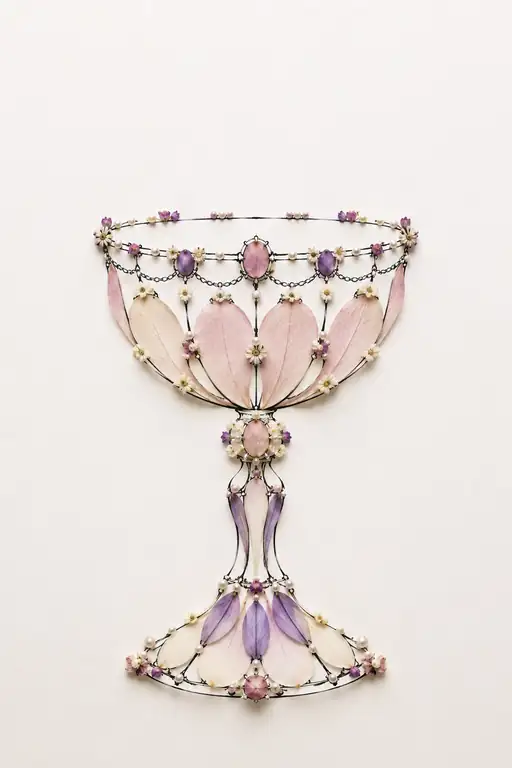 Vessel of Translucent Hours
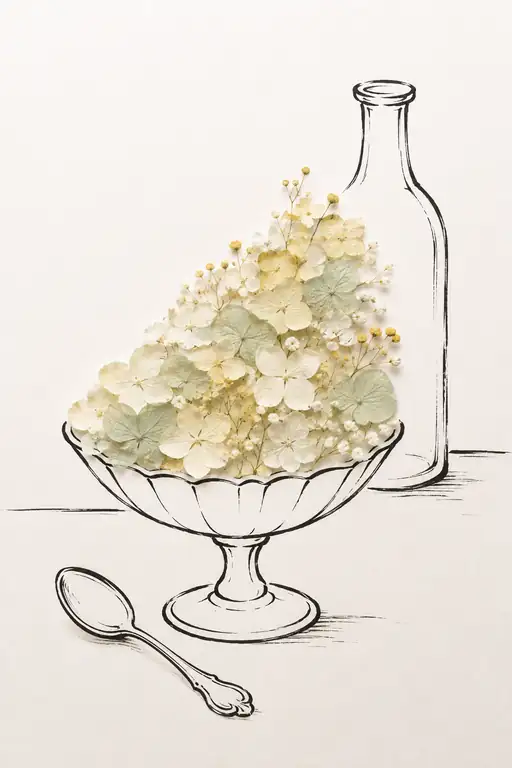 Sweet Siesta in the Coupe Glass
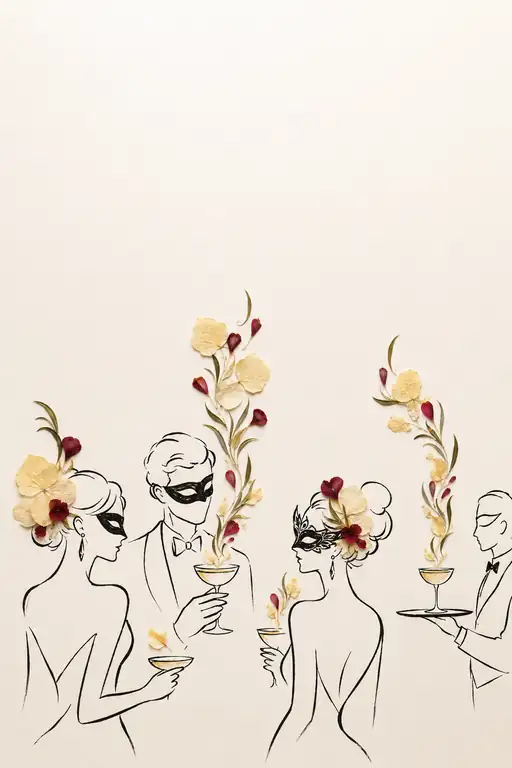 Whispers and Crimson Petals at the Masquerade
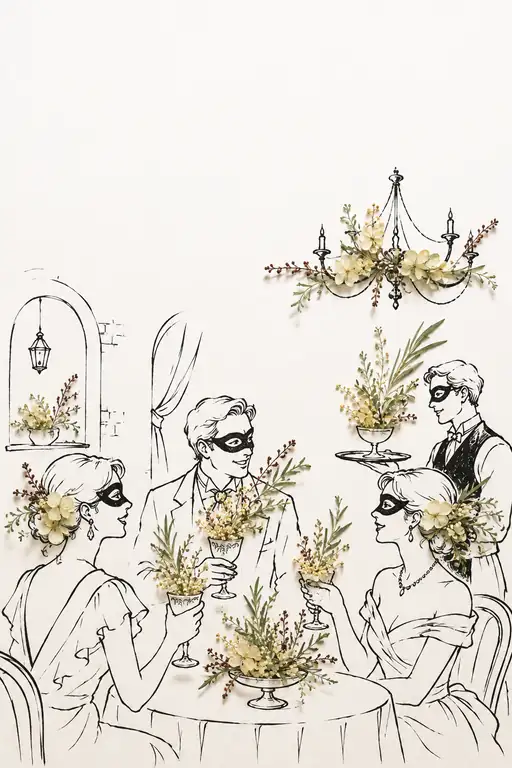 Toast of Blossoms Under the Gilded Chandelier
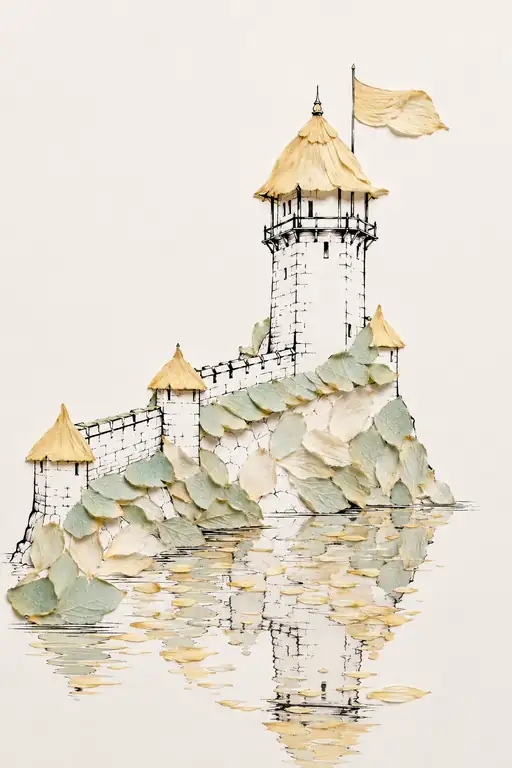 Fortress of Light Guarding the Shimmering Waters
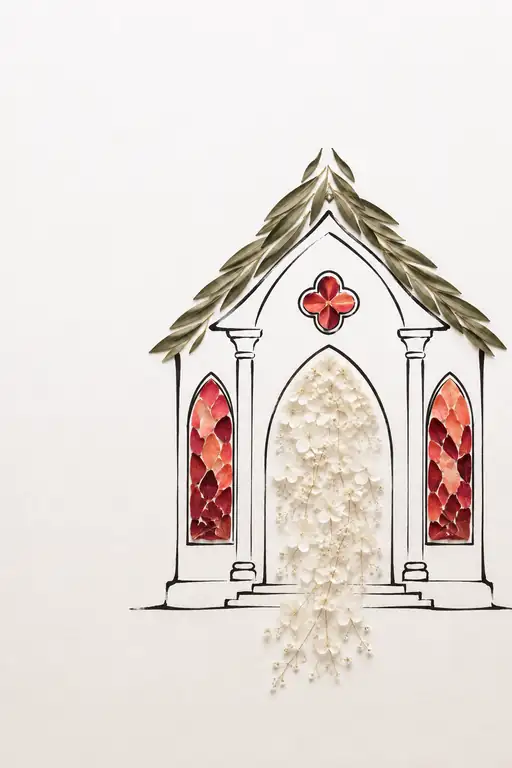 Chapel Threshold Where White Light Cascades