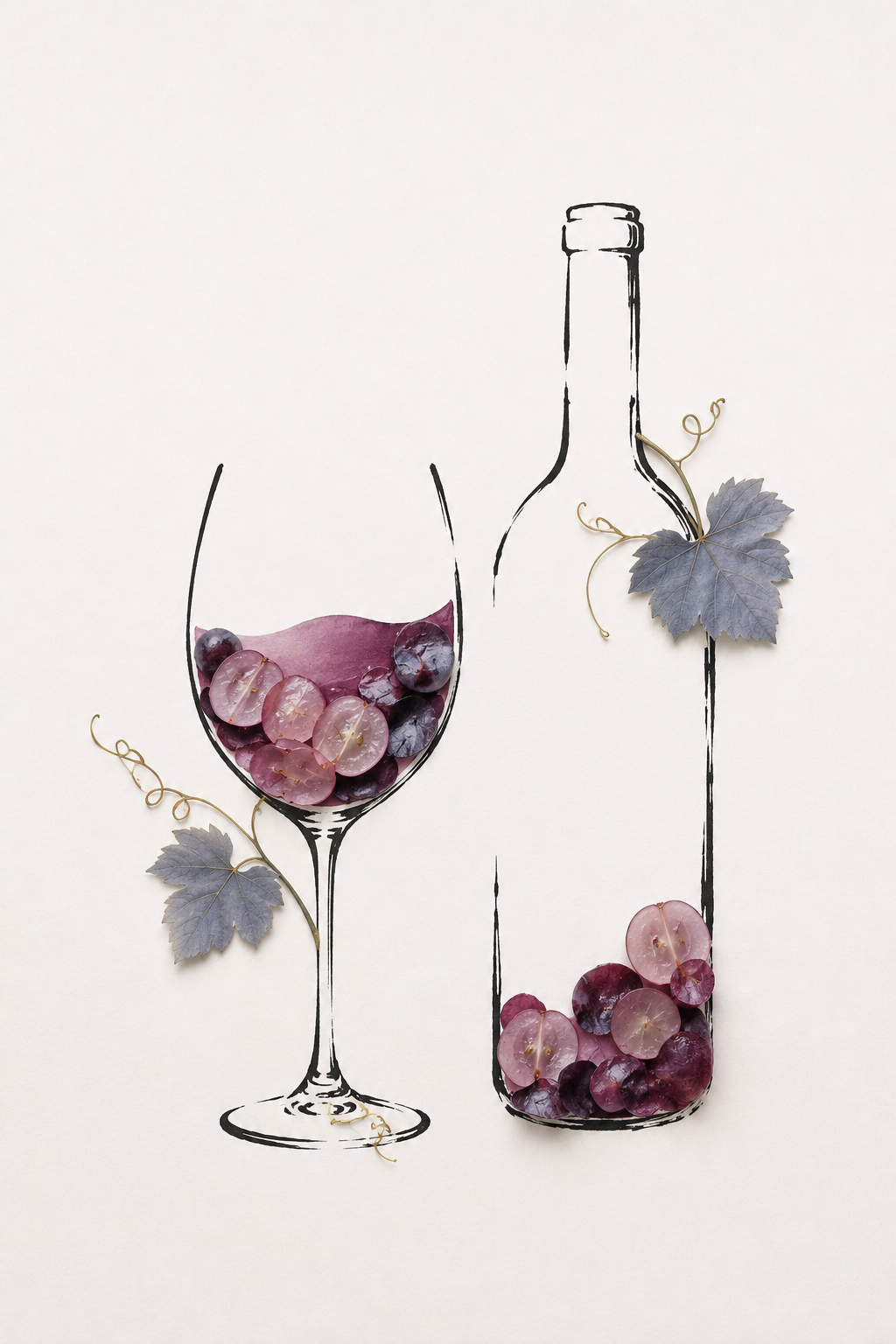
A Cluster of Memories in a Glass
Critique
Introduction This still life outlines a wineglass and bottle in sparse black ink, then fills both vessels with real grapes and vine leaves. The arrangement is frontal and lucid, using a limited mauve-gray palette to turn familiar tableware into a study of containment and transformation. Description The broad bowl of the glass stands on the left, its slender stem ending in an elliptical foot. A tall bottle rises on the right, cropped only by ample surrounding space. Whole dark grapes and translucent halved grapes collect inside the glass and at the bottle's base. Two blue-gray leaves and curling golden tendrils cross the vessel contours, linking the separate forms. Analysis The bottle's height is balanced by the wider glass bowl, producing an asymmetrical but stable pair. Broken ink lines leave the transparent walls open, while the densely clustered fruit supplies weight. Circular grapes repeat the glass foot and bottle base, and their glossy skins contrast with papery leaves and wiry tendrils. Pale rose interiors, deep plum skins, and cool foliage create a controlled tonal progression. Interpretation and Evaluation Instead of showing finished wine, the image places its source within the vessels, compressing cultivation, harvest, and consumption into one view. Grapes crossing the imagined glass surface complicate the boundary between inside and outside. The drawing is economical, the spacing assured, and the botanical textures are selected with notable precision. Its conceptual substitution gives the conventional still life fresh coherence. Conclusion What first reads as a decorative pairing of bottle and glass becomes a concise account of origin and use. Through balanced scale, transparent linework, and carefully varied organic surfaces, the work unites observation with a clear visual idea.
Same Subcategory
Similar Artworks
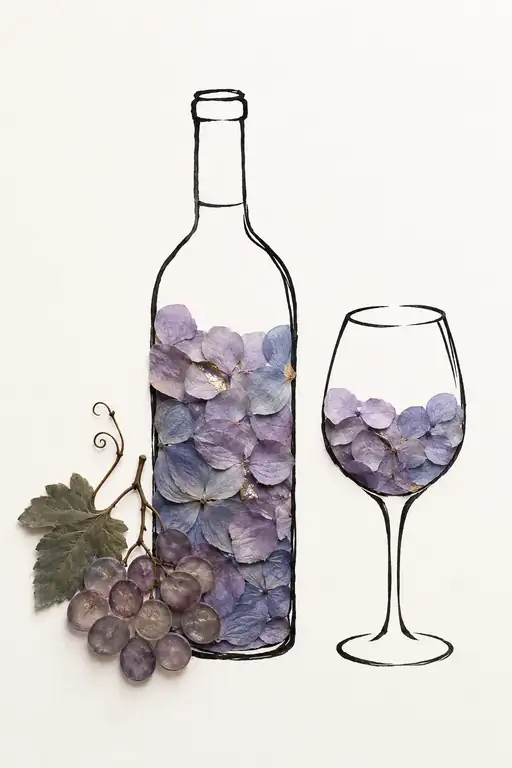 Violet Vintage and Slender Glass
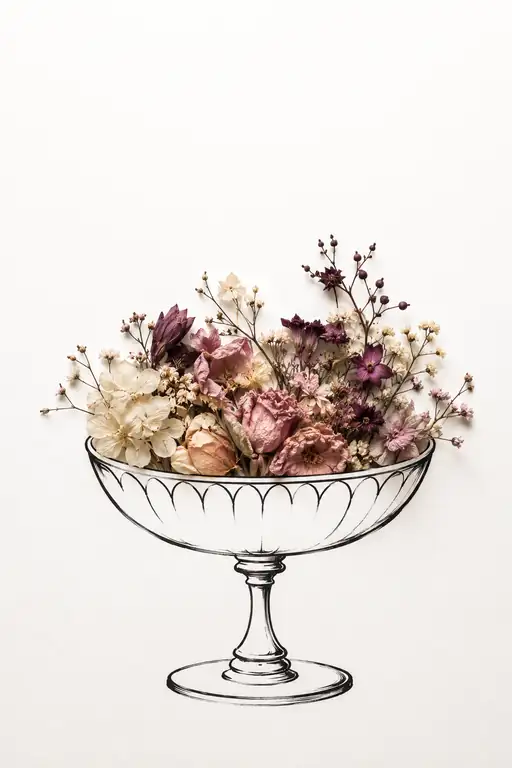 Autumn Bloom in Crystal Chalice
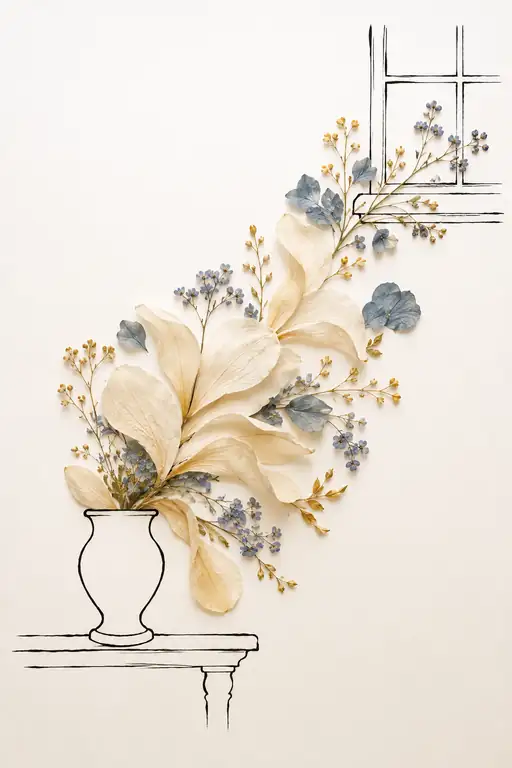 Ascent of Ivory Petals Toward the Light
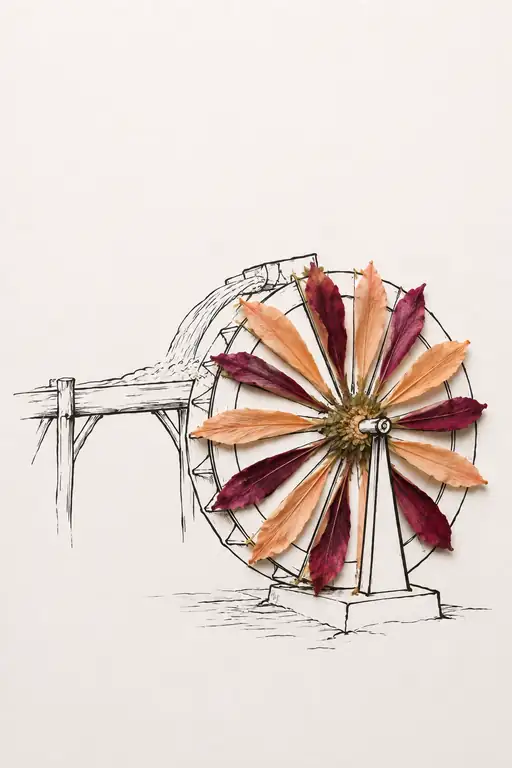 Flower Wheel Turning in Sunlit Waters
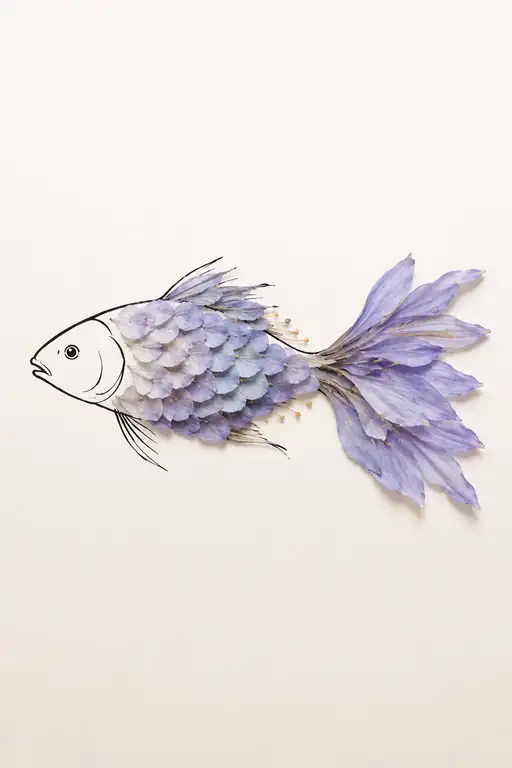 Violet Fin Gliding Through Crystal Depths
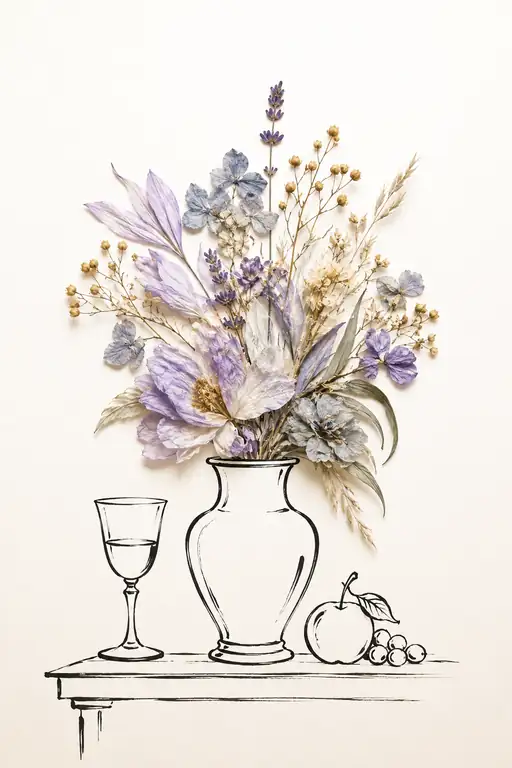 Quiet Autumn Light on the Table
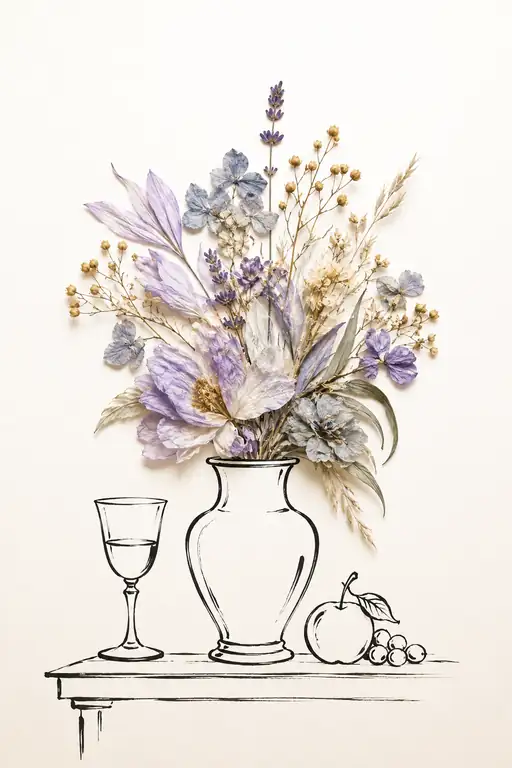 Lavender Bouquet Beside Wine and Apples
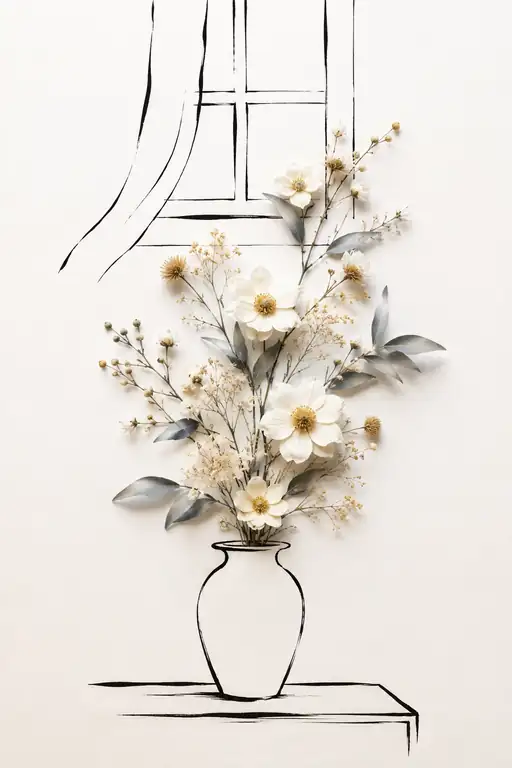 White Petals Whispering by the Curtain's Fold
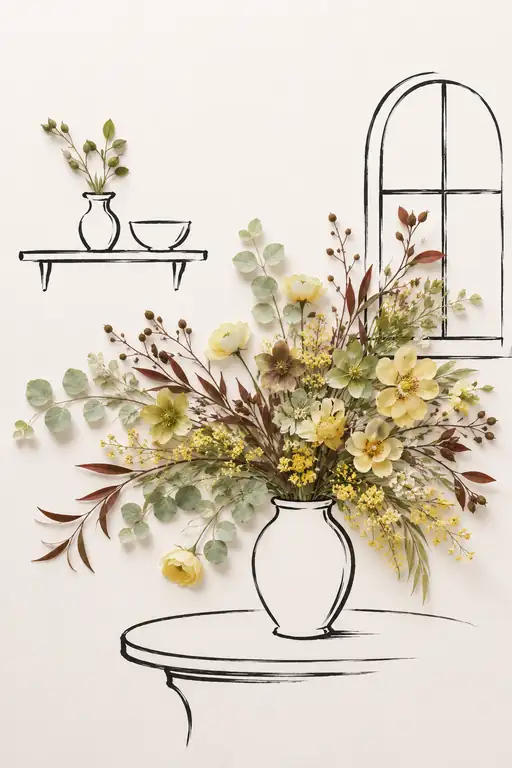 Autumn Flourish Beside the Arched Casement
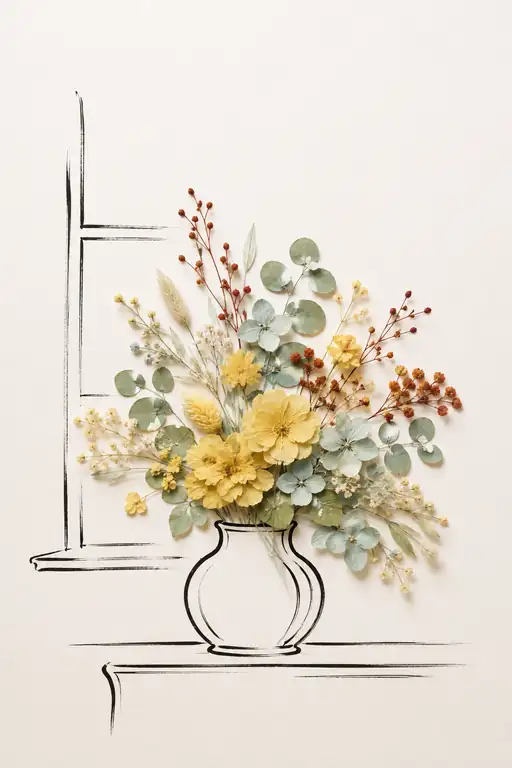 Sunlight Gathered in the Windowed Vase