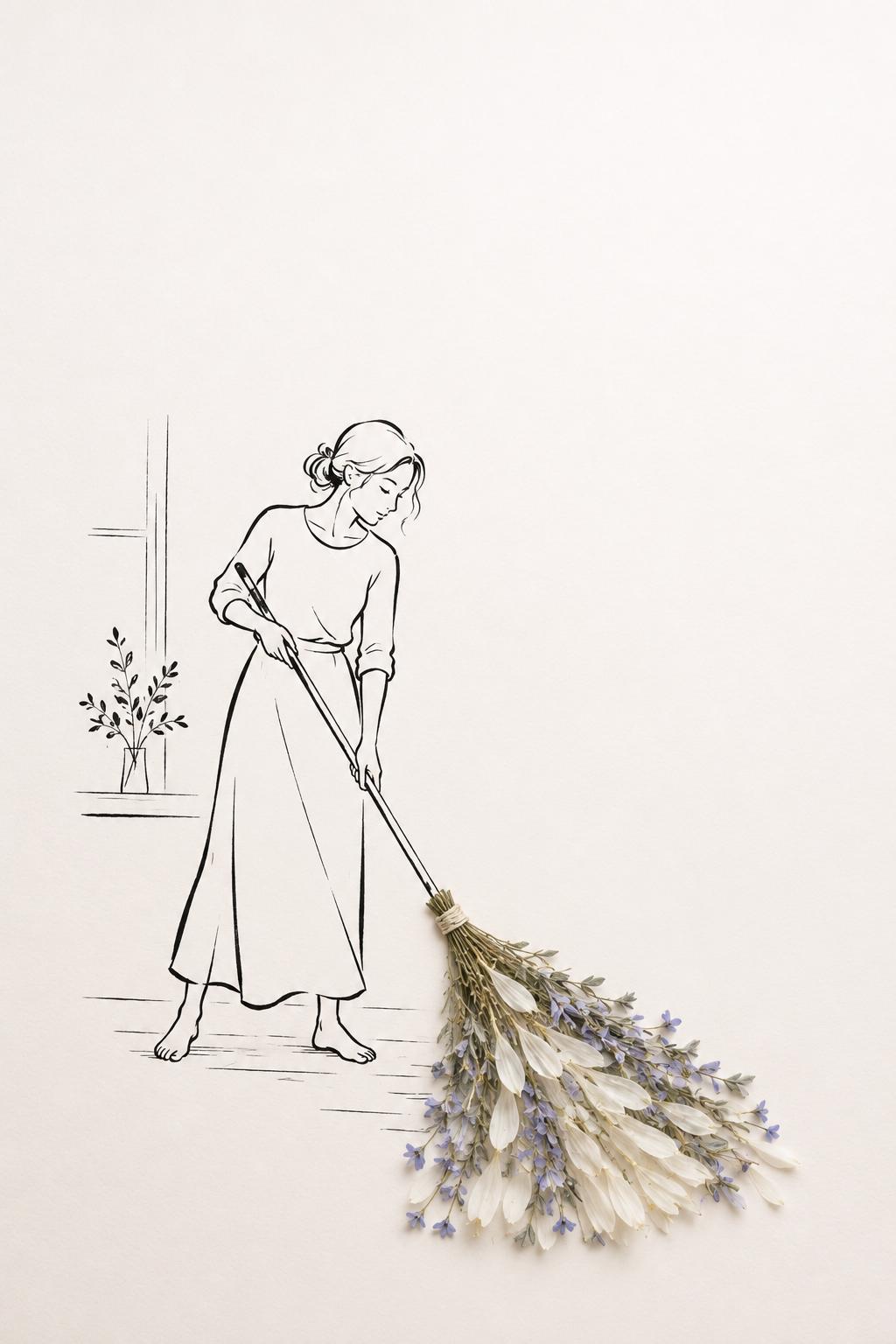
Quiet Morning with the Broom
Critique
Introduction This witty domestic portrait shows a barefoot woman sweeping with a broom made from white petals, lavender flowers, gray leaves, and seed stems. Her body and room are drawn in spare black ink, while the broom head alone becomes tactile and colored. Description The woman stands left of center, leaning forward with both hands on a long handle. Her hair is tied back, sleeves rolled, and long skirt falls around bare feet. A simple window ledge and a small vase appear behind her. Analysis The handle forms a decisive diagonal from the woman’s upper left hand to the dense lower-right broom. Her bent torso, arms, and gaze follow the same direction, concentrating attention on the task. The broad botanical fan counterbalances the upright figure. White petals catch light against the paper through cast shadows, while lavender tips define the outer edge. Minimal room lines preserve spaciousness and domestic scale. Interpretation and Evaluation The flower broom reverses cleaning’s usual logic: instead of removing organic debris, it makes the tool itself from cherished remnants. Sweeping becomes care, renewal, or a ritual of arranging daily life. Bare feet and rolled sleeves keep the metaphor grounded in ordinary labor. The bouquet could be impractical, yet the firm binding and aligned stems make its imagined function visually credible. Conclusion The work succeeds through humor, clarity, and respect for mundane action. Ink provides posture, effort, and environment; plants give the tool emotional and seasonal value. The woman’s downward attention prevents the flowers from becoming mere spectacle. Gentle and memorable, the image suggests that maintenance can itself be creative—a way of moving beauty through lived space.
Same Subcategory
 Terracotta Sunbath
 Warmth Spilling from the Drum
Similar Artworks
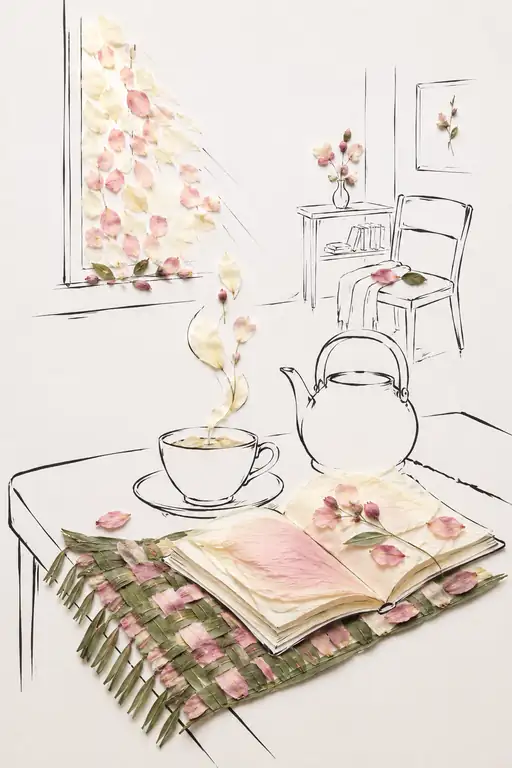 Solitude of Tea and Blossom-Turned Pages
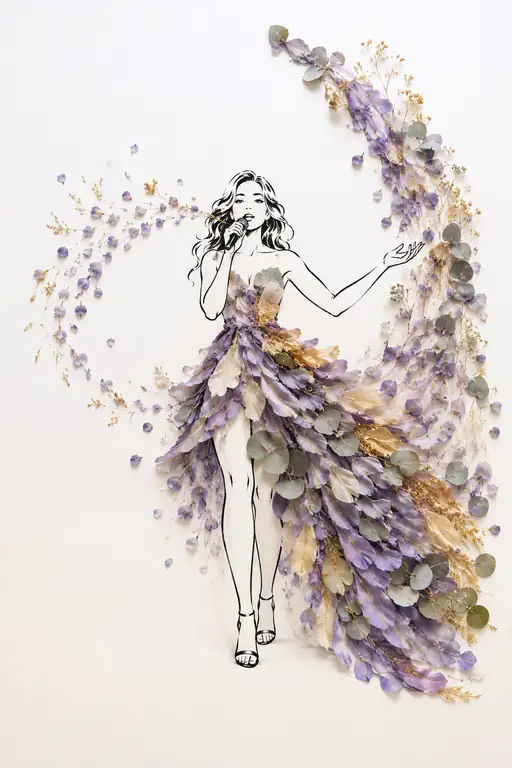 Song of the Lavender Siren
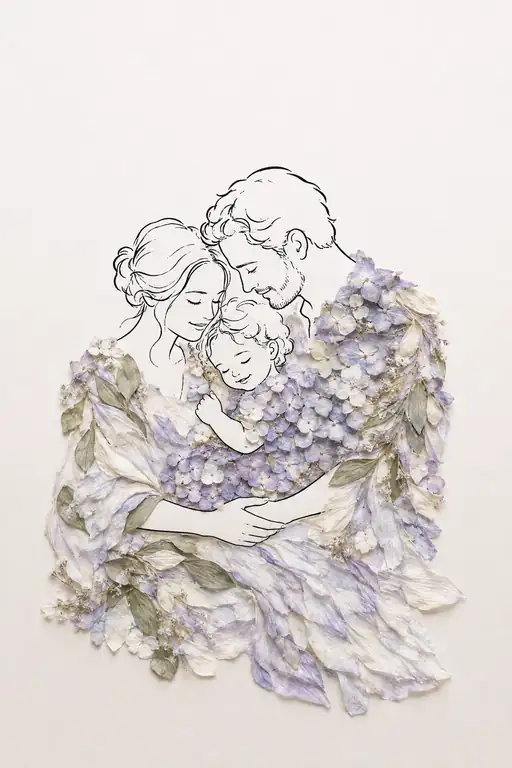 Cradle of Quiet Devotion
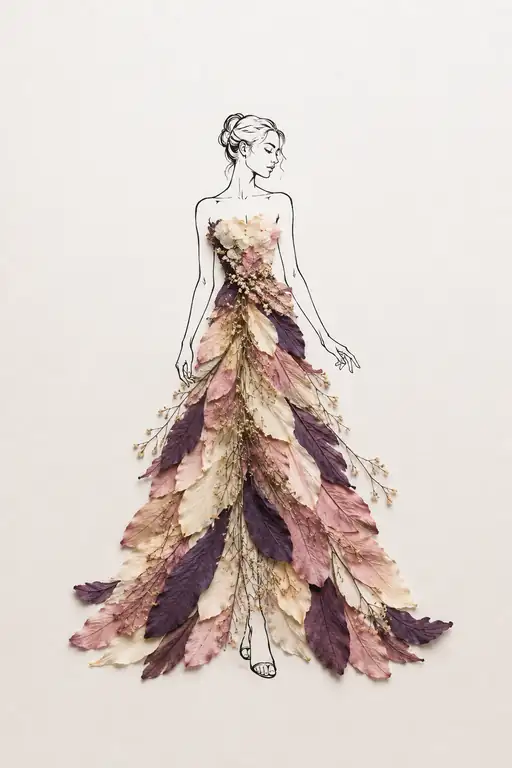 Gown of Layered Dusk
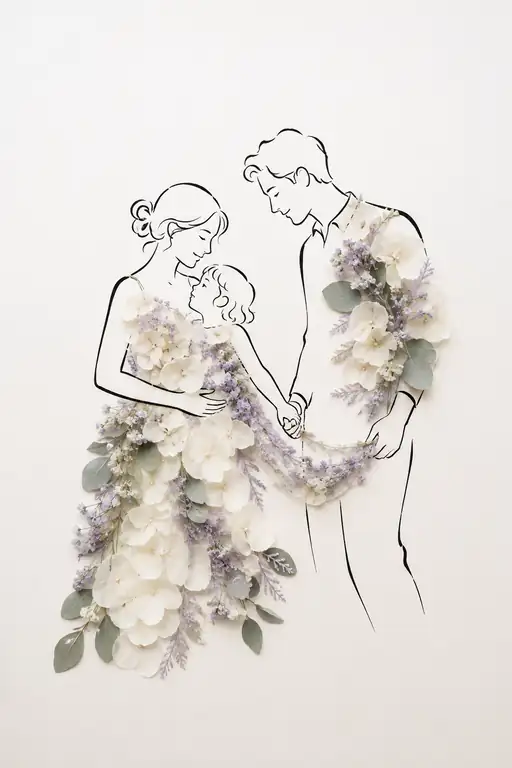 Family Bound by a Garland of Blossoms
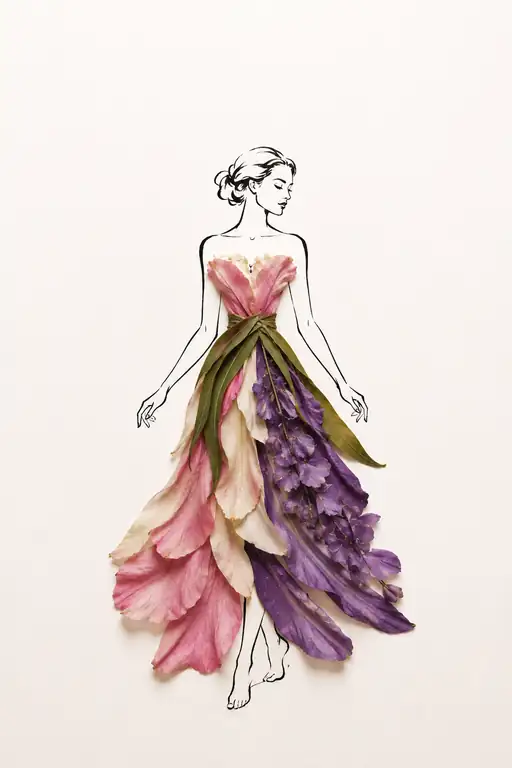 Lady in a Gown of Pink and Violet Petals
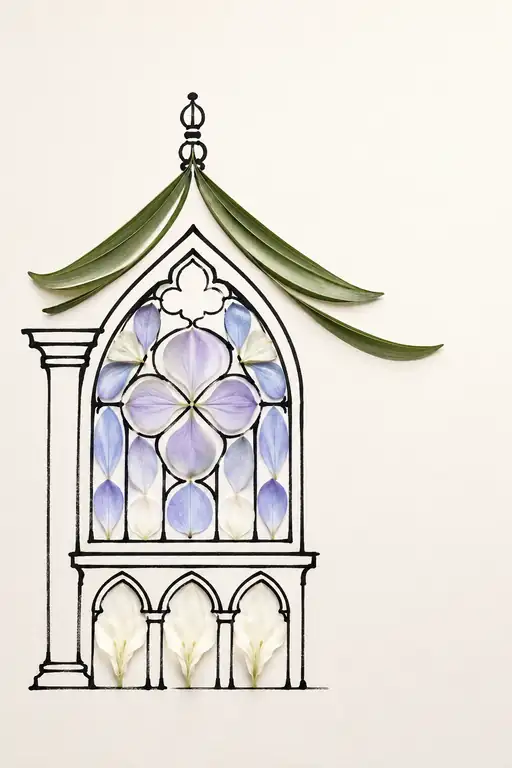 Gothic Rose Window of Translucent Petals
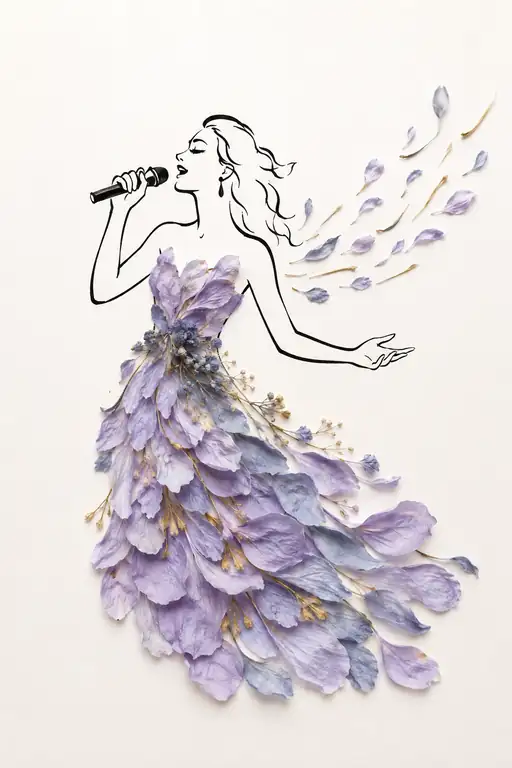 Diva Singing in a Flowing Violet Gown
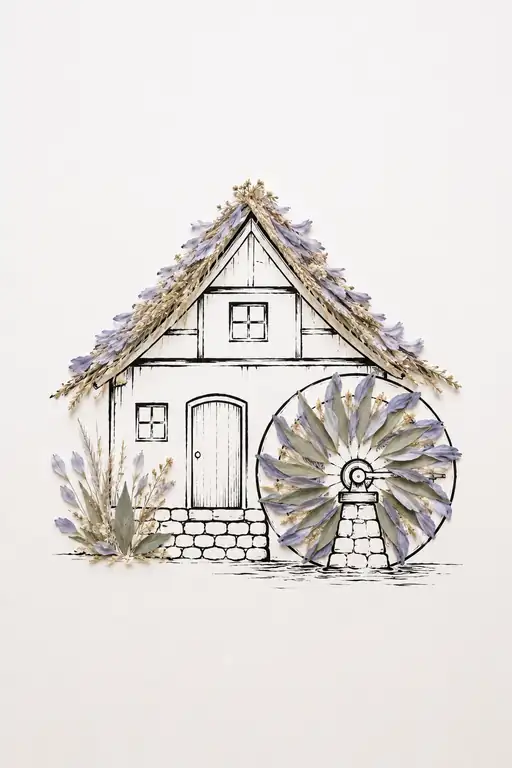 Rustic Mill Whispering of Flow and Season
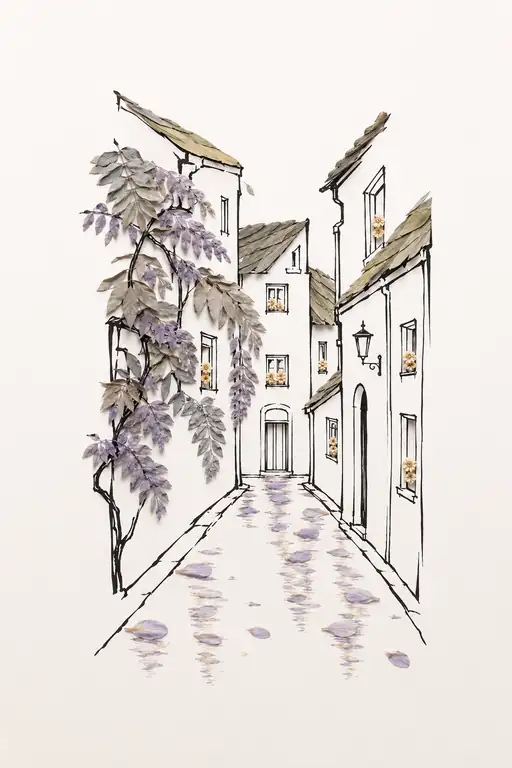 Wisteria Lane Overlooking Cobblestone