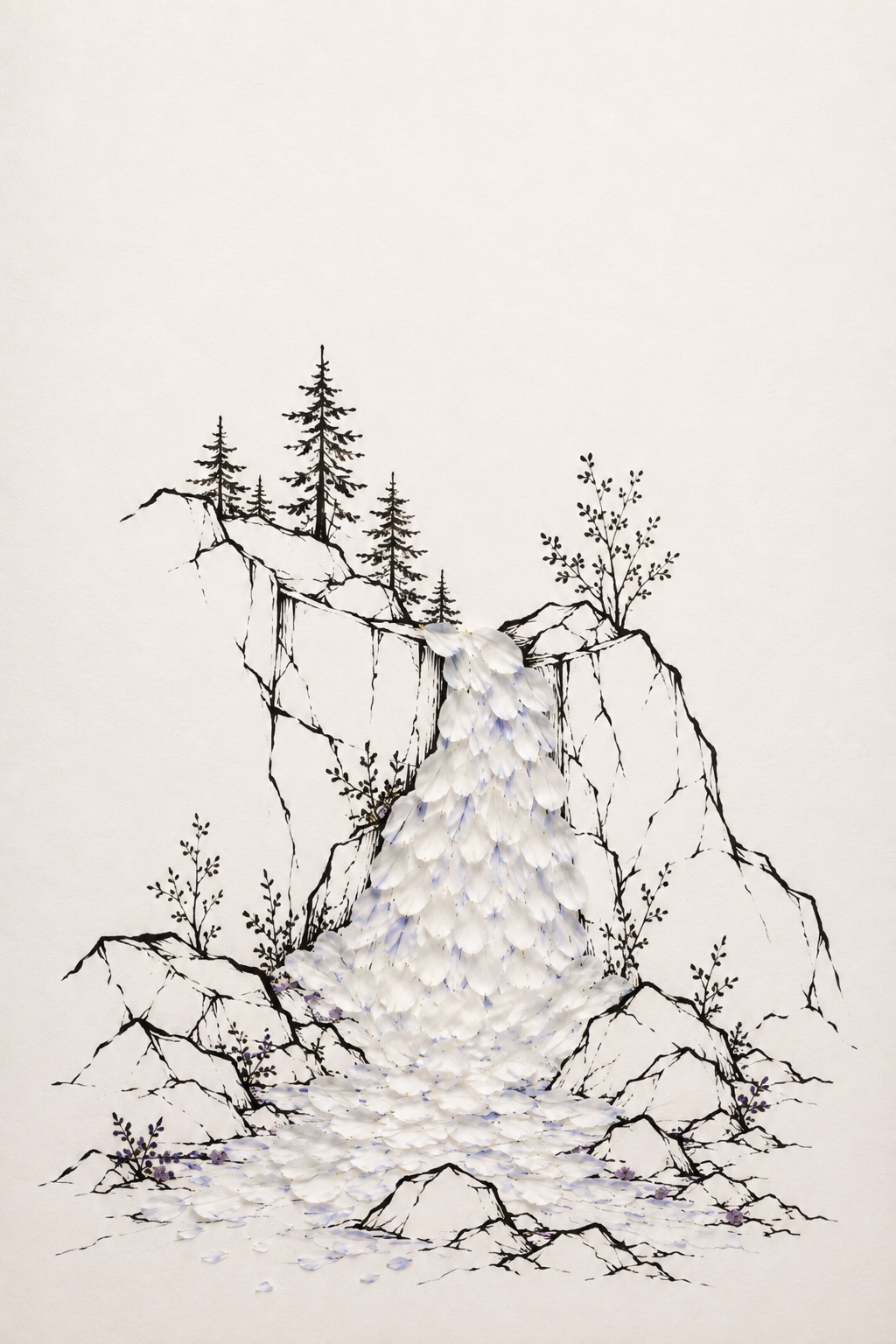
Cascade Down the Cliffside
Critique
Introduction This waterfall scene contrasts rigorous ink geology with a luminous cascade assembled from white petals touched by pale blue. Dark firs and sparse shrubs crown the cliffs, while the floral water descends into a spreading foreground stream. Description A rocky ravine fills the lower two-thirds, its vertical cliff faces split by sharp cracks. Black conifers rise along the upper ridges. From a narrow notch near center, overlapping white petals fall in a broadening column, then gather in a foaming pool and flow toward the viewer. Lavender fragments punctuate the water and lower rocks. Analysis The waterfall forms a bright central wedge enclosed by angular black cliffs. Petals are tightly packed near the drop, then flatten and disperse downstream, convincingly changing velocity and surface. Blue tips create cool shadow within the white mass. Vertical trees echo the fall, while foreground rocks interrupt the current and establish depth. Interpretation and Evaluation Fragile petals paradoxically convey relentless water. Their separate units suggest countless droplets, yet overlap produces one continuous force. The austere rocks and persistent conifers frame the cascade as renewal within endurance. Small violet flowers among the boulders imply life nourished by spray. Although the water is materially dense, exposed ink channels and scattered edges prevent it from reading as a static fabric. Conclusion The work succeeds through a strong marriage of structure and tactile illusion. Ink provides resistance, height, and permanence; petals provide brightness, motion, and sound imagined through sight. The stream opens toward the viewer, extending the event beyond the page. Clear, dramatic, and refreshing, the landscape transforms botanical delicacy into the momentum of falling water.
Same Subcategory
Similar Artworks
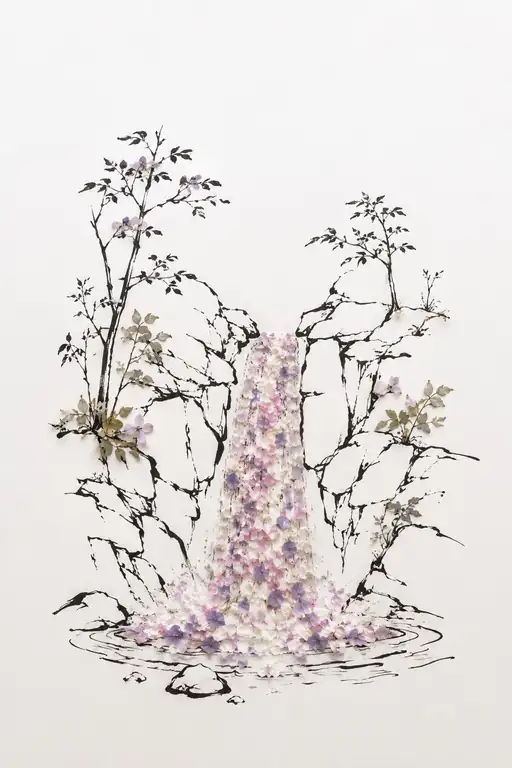 Waterfall of Lilac and Light
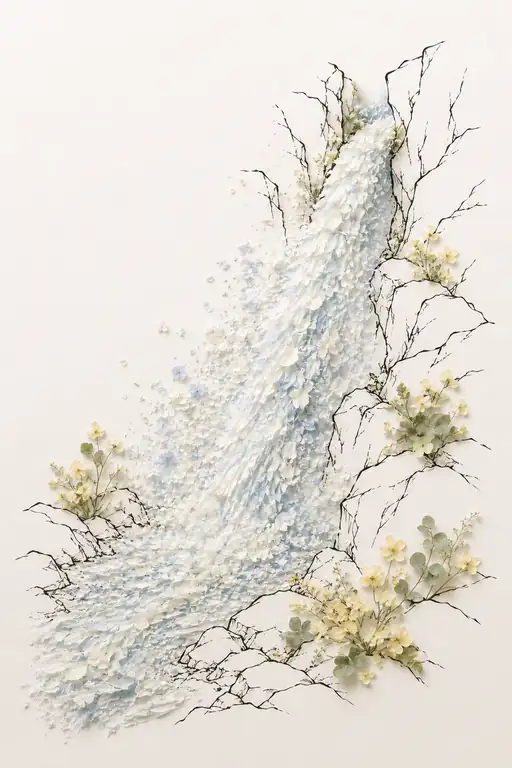 Cascade of White Blossoms in the Silent Gorge
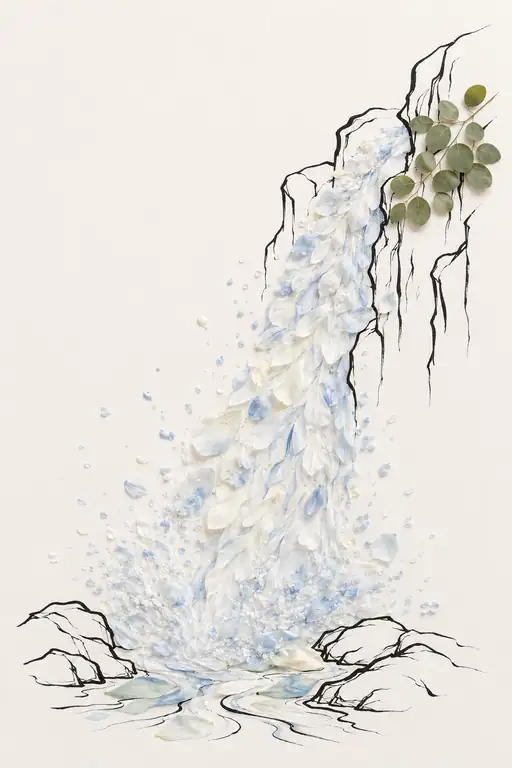 Crystal Torrent in the Silent Gorge
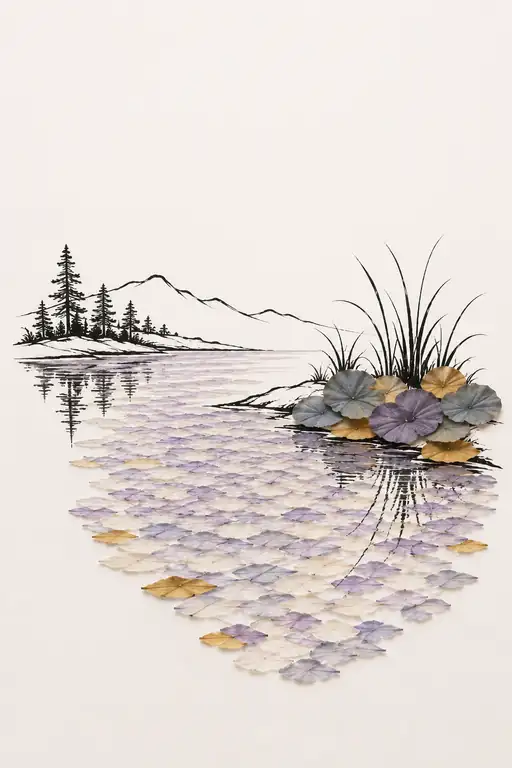 Purple Petals Drifting on Mirror Lake
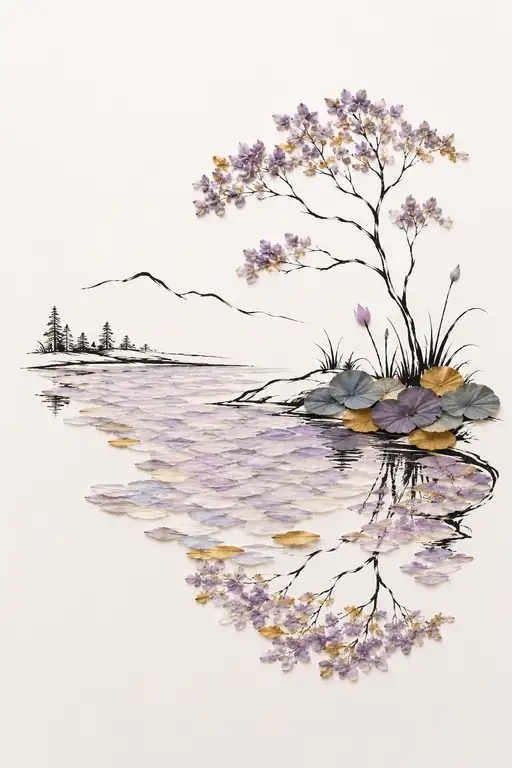 Violet Blossoms Reflected on the Mirror Lake
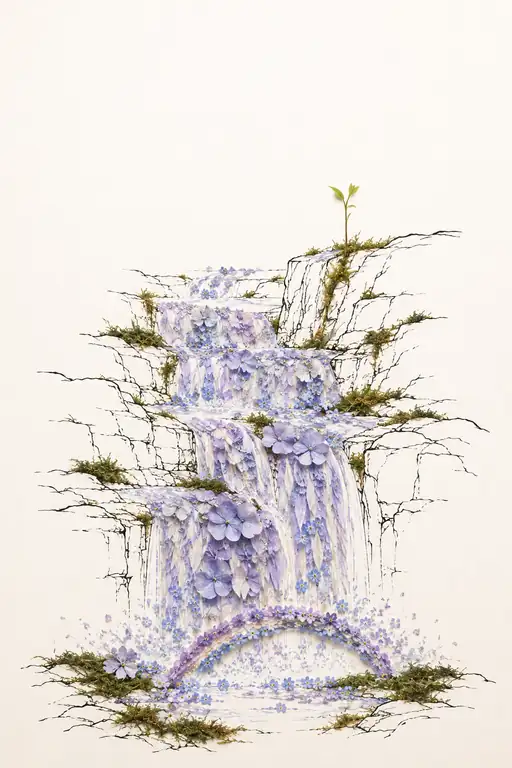 Tiered Cascade and the Violet Arch
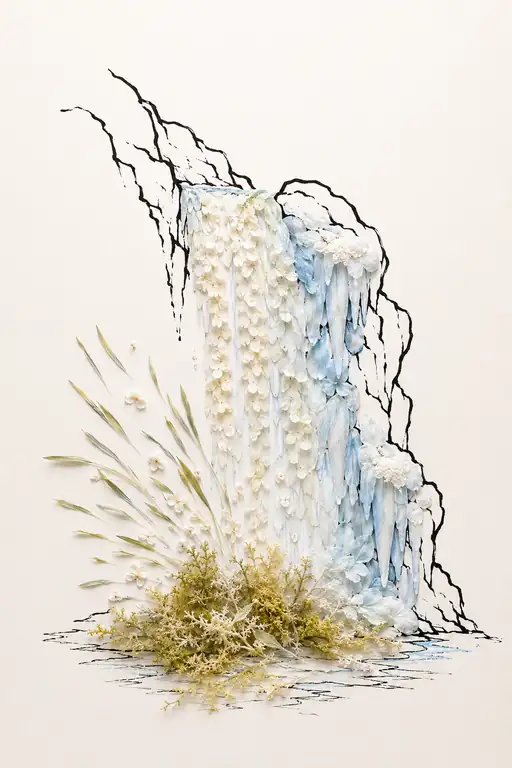 Petal Cascade on the Inky Crags
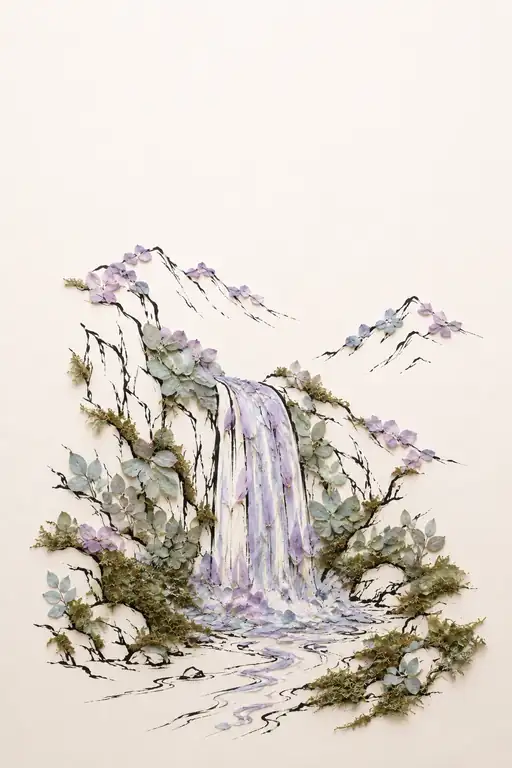 Violet Cascade in Misty Crags
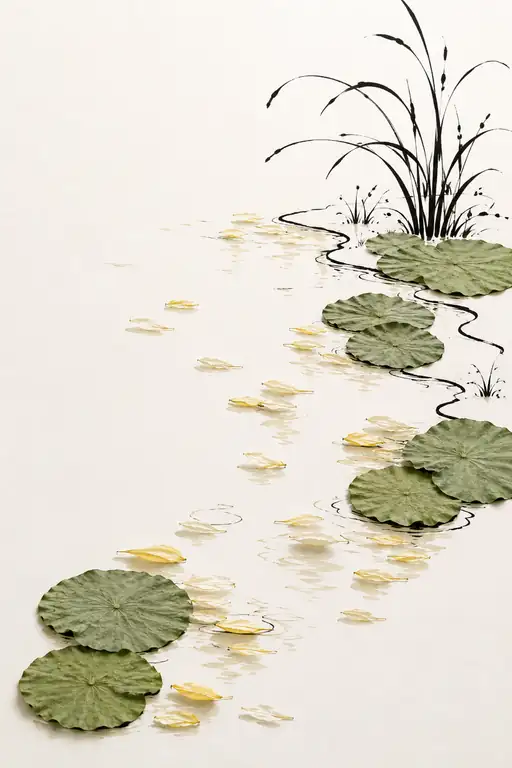 Drifting Lights on the Pond
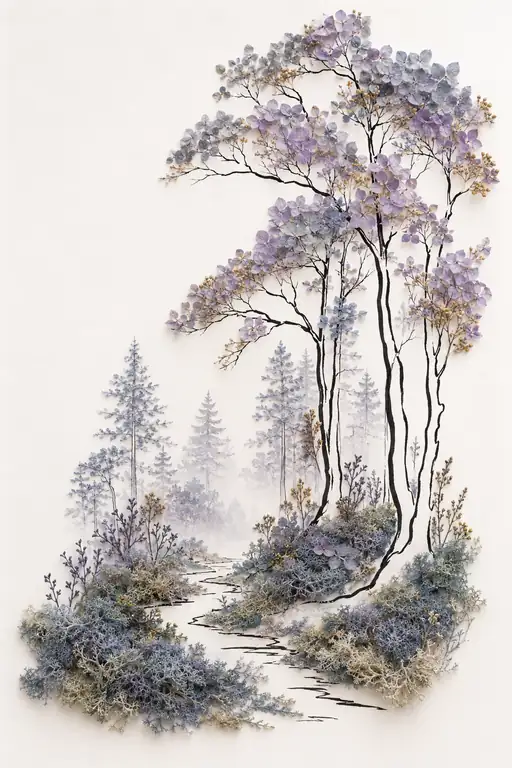 Mists in the Lavender Forest