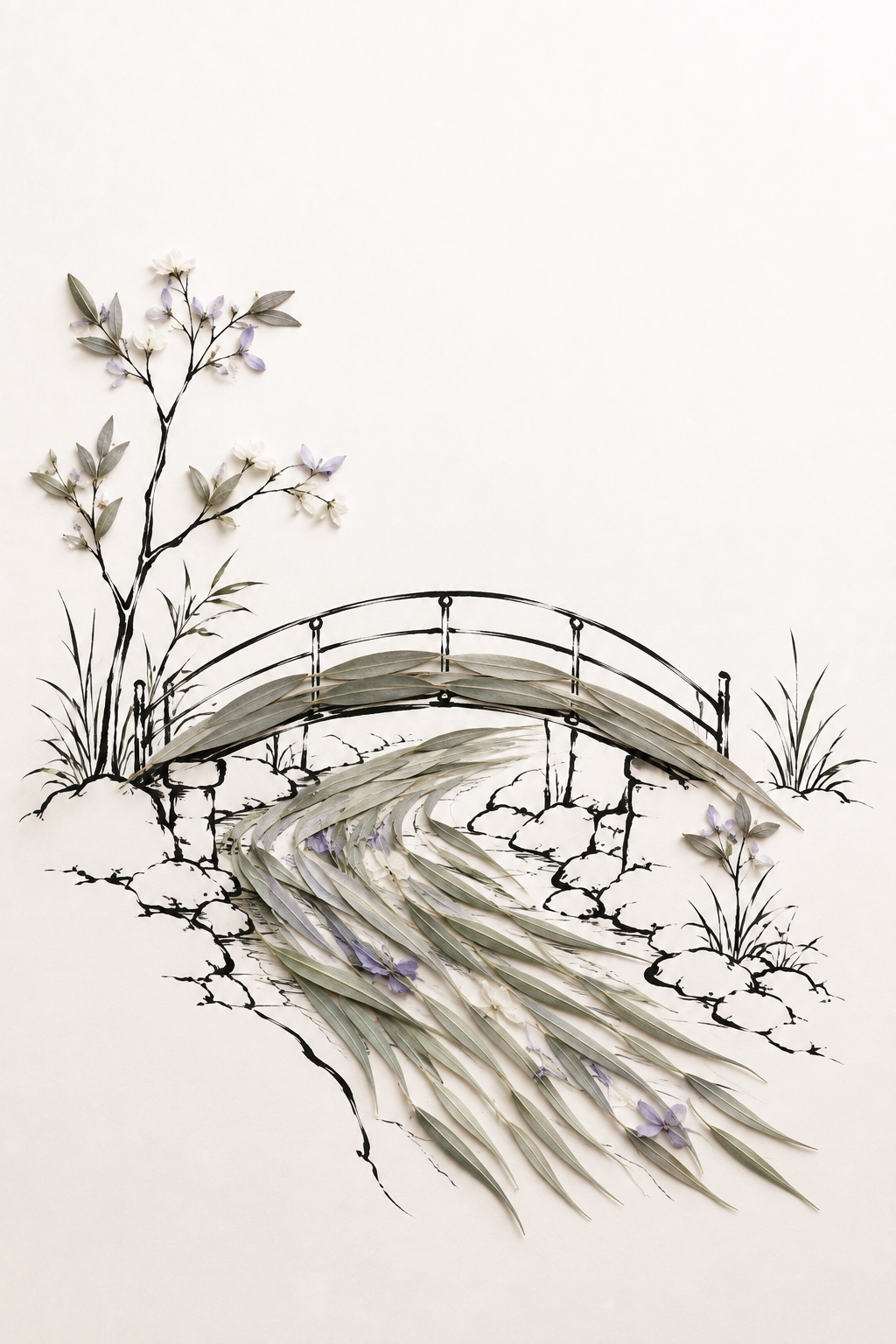
Stream Beneath the Arched Bridge
Critique
Introduction This quiet bridge scene combines an ink-drawn arched crossing and rocky banks with long gray-green leaves that become both bridge decking and flowing water. Sparse white and lavender blossoms appear along the shore. Description A low bridge spans the upper middle, supported by stone abutments and a simple black railing. Overlapping lance-shaped leaves cover its curved deck. From beneath, many similar leaves sweep toward the lower foreground in a broad S-shaped channel, interspersed with white and violet petals. A slender flowering tree stands at left; grasses and rocks frame both banks. Analysis The bridge’s stable horizontal arc crosses the stream’s deep curving recession. Repeated leaves establish directional flow through their tapered tips and layered edges. Ink rocks create firm interruptions, while botanical water slips between them. The left tree supplies vertical balance to the wide bridge. Interpretation and Evaluation Using the same leaves for bridge and stream suggests that crossing and flow are not opposites but related forms of movement. The empty bridge anticipates a traveler, while the channel invites the viewer inward from the foreground. Flowers caught in the current imply recent passage or seasonal drift. The bridge deck’s material ambiguity is particularly effective: it can read as wood, woven foliage, or water momentarily held in an arch. Conclusion The work succeeds through elegant economy and a strong spatial path. Ink supplies cultural structure and rocky resistance; leaves create motion, surface, and unity. Open white areas keep the scene airy despite dense foreground material. Meditative and accessible, the image presents a landscape where constructed and natural routes meet without conflict.
Same Subcategory
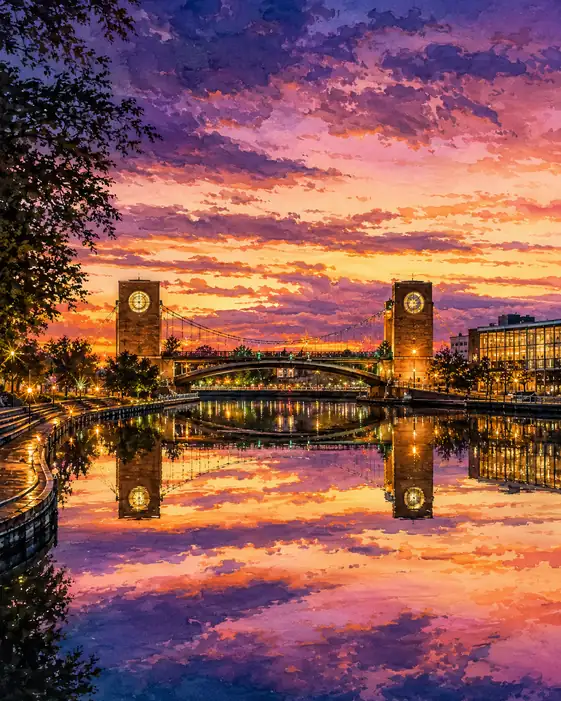 Two Clocks Holding the Sunset
Similar Artworks
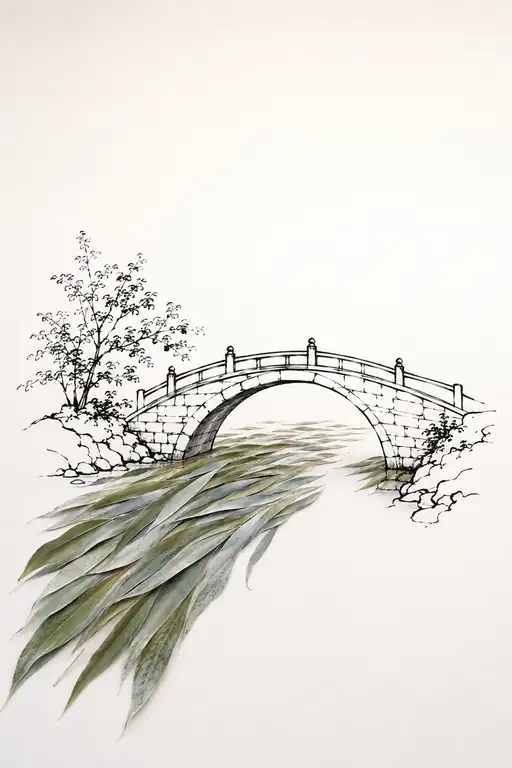 Gentle Currents Beneath the Stone Bridge
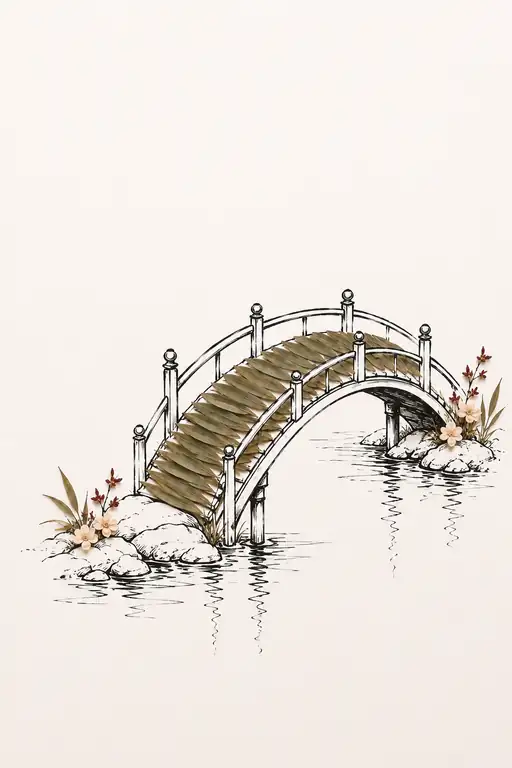 Leaf-Paved Arch Across the Serene Flow
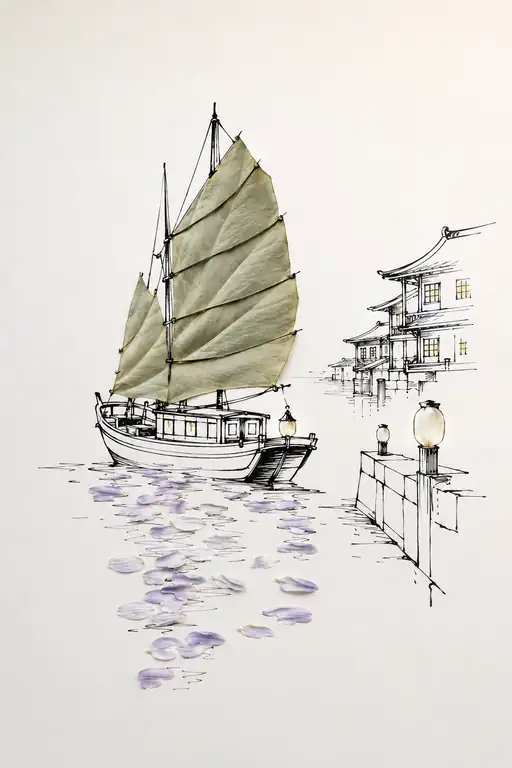 Evening Anchorage Under Leaf-Woven Sails
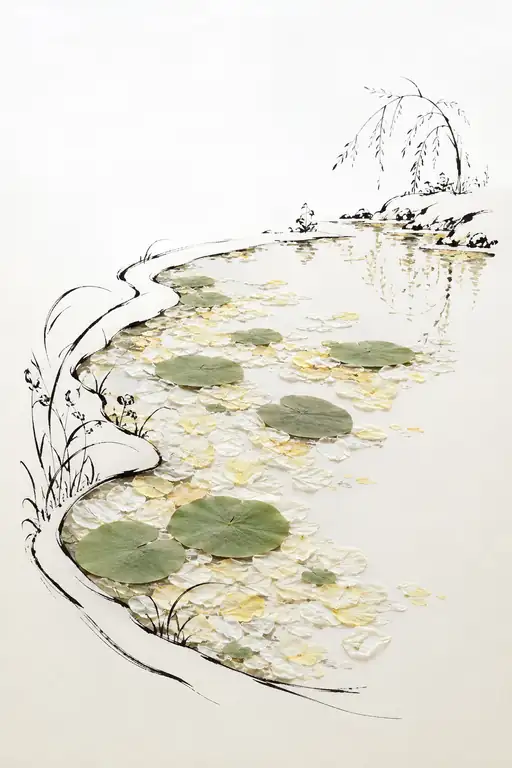 Willow Shadows and Floating Petals
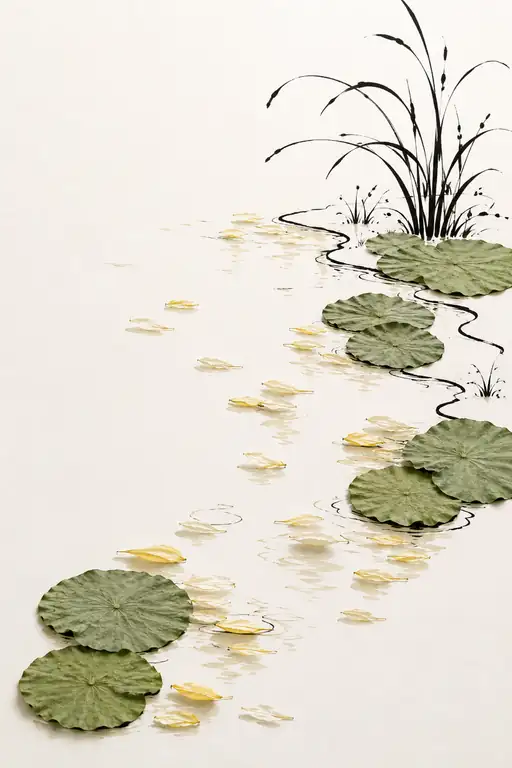 Drifting Lights on the Pond
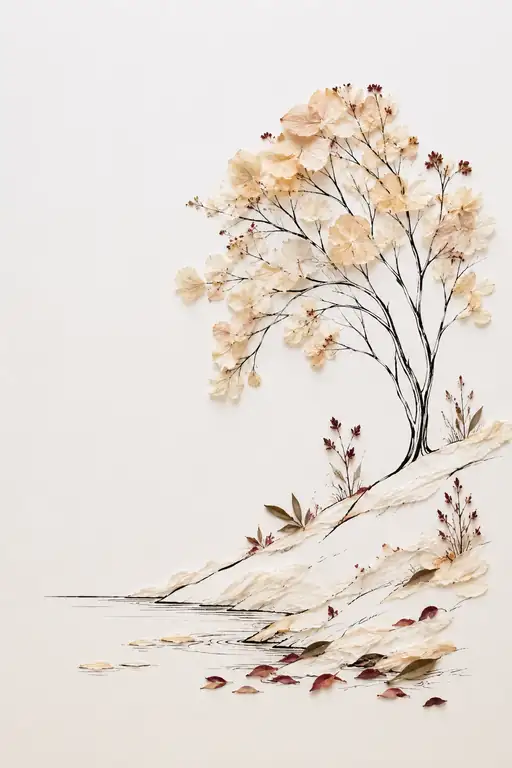 Autumn Whispers on the Sloping Hill
 Blooming Blossoms on the Thawing Shore
 Winter Shore Awakening with Budding Boughs
 Arched Bridge by the Blossoming Cherry Tree
 Ancient Tree and the Drifting Petal Raft