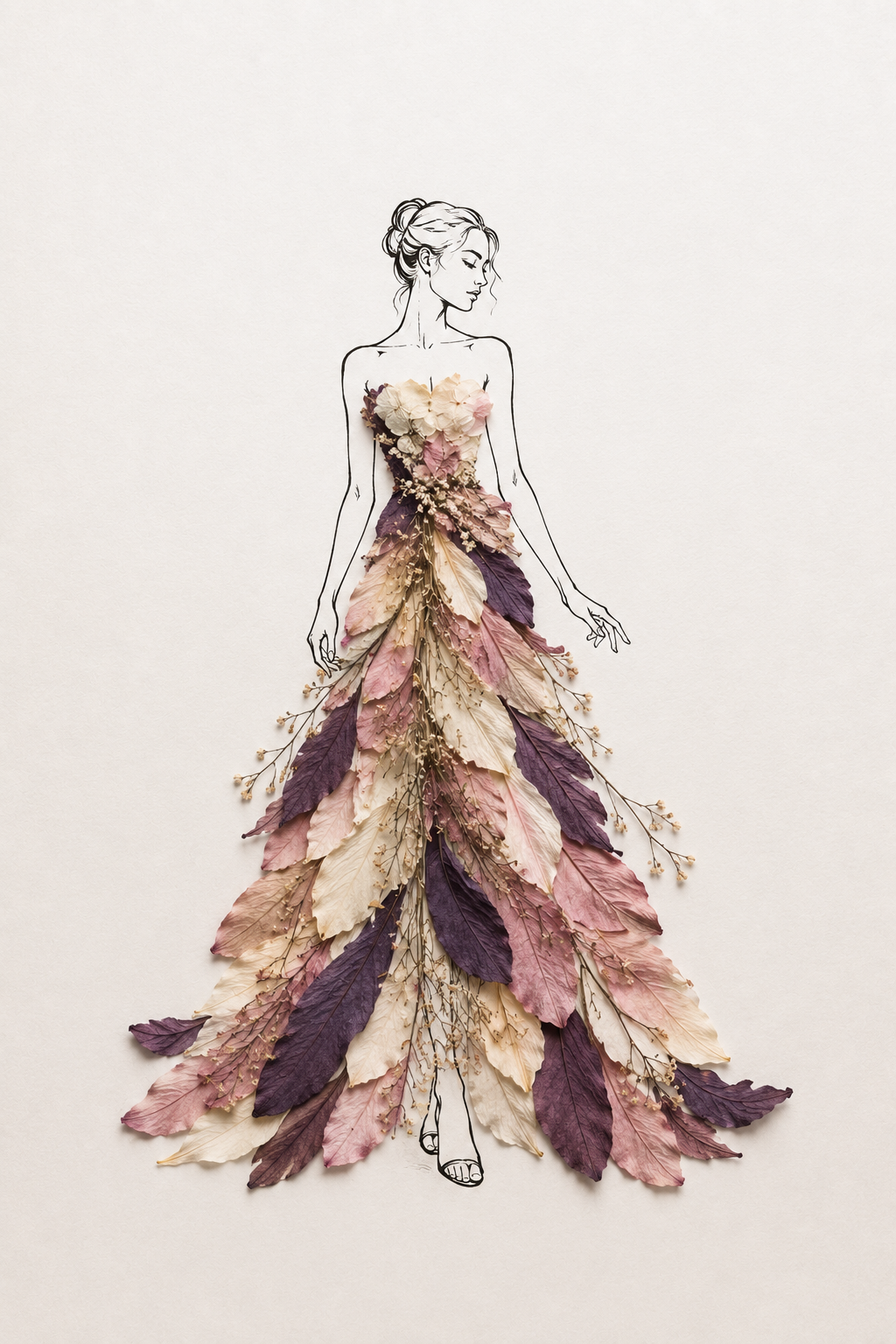
Gown of Layered Dusk
Critique
Introduction This elegant fashion figure wears a floor-length gown built from cream, blush, mauve, and dark plum leaves. Fine golden sprigs thread through the layered skirt, while ink defines the woman’s composed face, bare shoulders, arms, and stepping feet. Description The woman faces slightly right with hair gathered high and both hands relaxed beside her skirt. Pale round flowers form the strapless neckline. Below, broad pointed leaves overlap in alternating colors from waist to floor, opening into a wide train. Delicate branching stems descend along the center and extend beyond both sides. Analysis The body establishes a calm vertical axis, expanded by the skirt’s triangular silhouette. Dark plum leaves form recurring structural ribs, while cream and pink leaves create light-filled intervals. Fine seed stems overlay the larger pieces with a secondary linear rhythm. The exposed foot and asymmetrical train imply forward movement. Abundant white space around the shoulders prevents the material density below from overwhelming the figure. Interpretation and Evaluation The gown turns seasonal change into public self-presentation. Leaves retain veins, wrinkles, and discoloration, so elegance includes age rather than denying it. The wearer appears to carry a whole canopy, yet her relaxed hands and averted gaze preserve inward composure. The central stems resemble embroidery, rain, or falling seeds. Their slight irregularity softens the formal symmetry and keeps the garment alive. Conclusion The work unites fashion, portraiture, and botanical arrangement with notable clarity. Ink gives the wearer agency and restraint; leaves provide scale, color, and temporal depth. The advancing foot makes the ornate dress seem mobile rather than monumental. Graceful and tactile, the image presents beauty as a layered passage through ripeness, fading, and renewal.
Same Subcategory
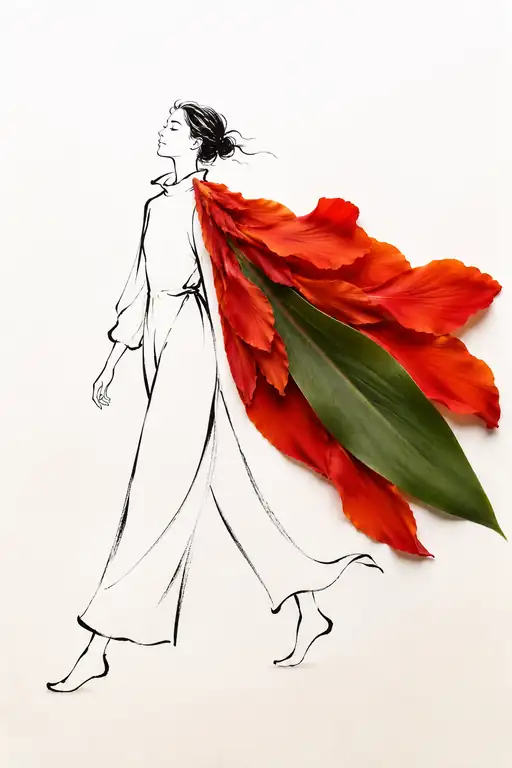 Stride of the Crimson Plumage
Similar Artworks
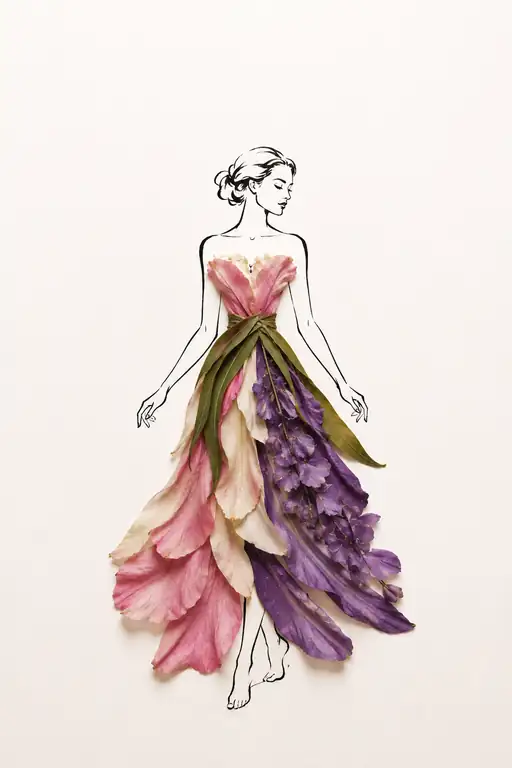 Lady in a Gown of Pink and Violet Petals
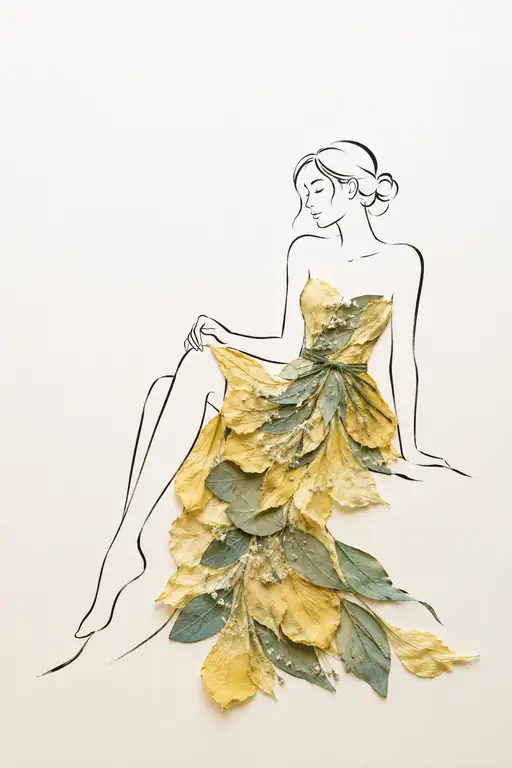 Golden Gown and the Serene Pose
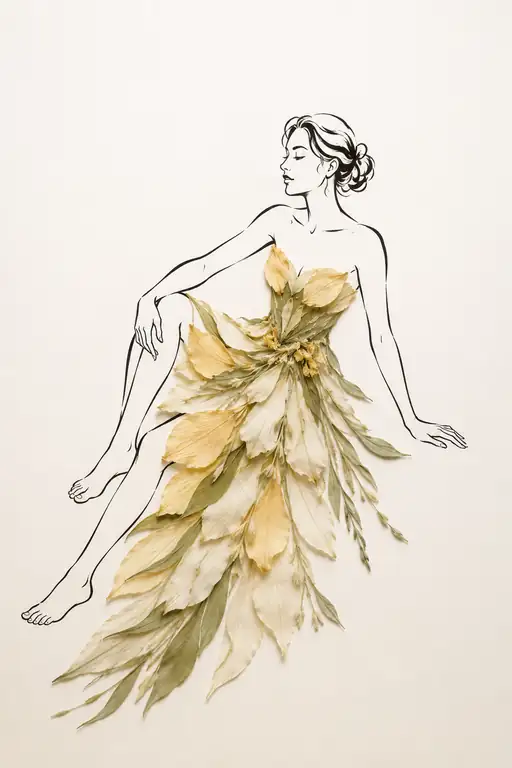 Sunlit Silhouette in Repose
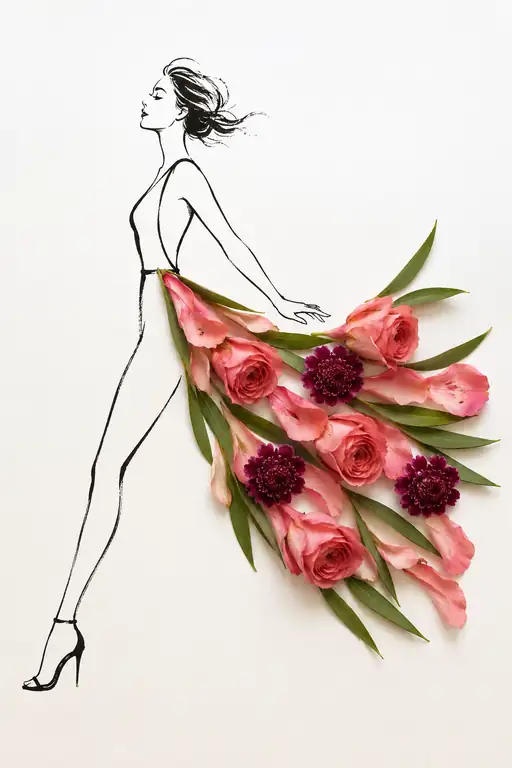 Fluttering Train of Roses and Leaves
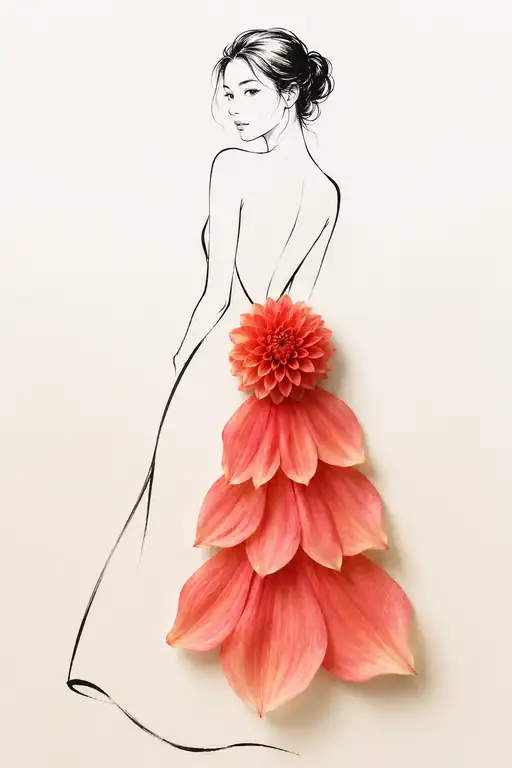 Cascade of Coral Dahlia
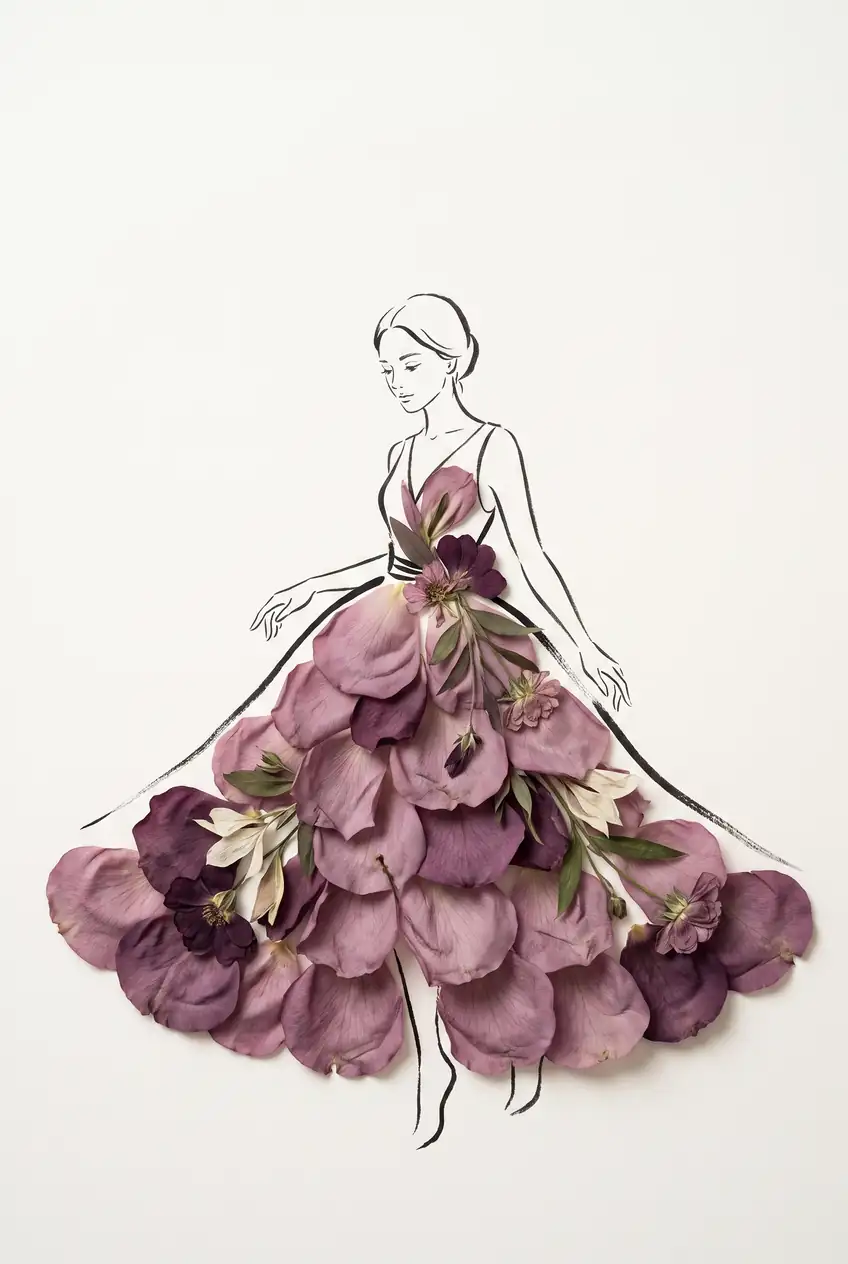 Silhouette Draped in Velvet Petals
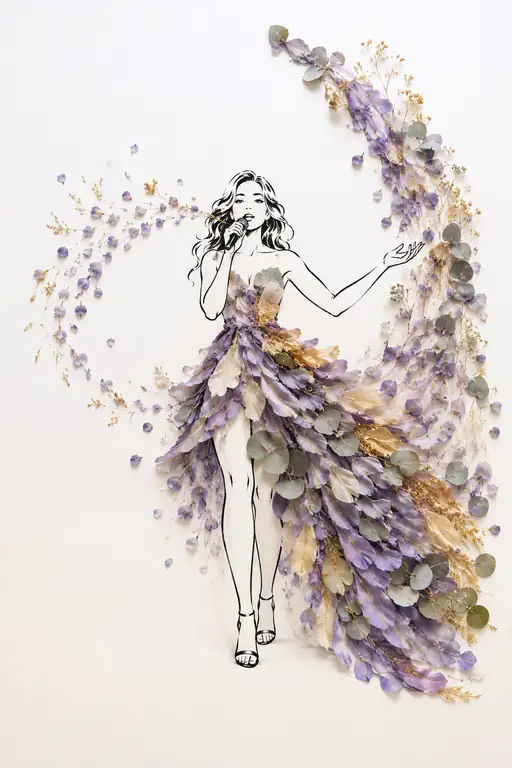 Song of the Lavender Siren
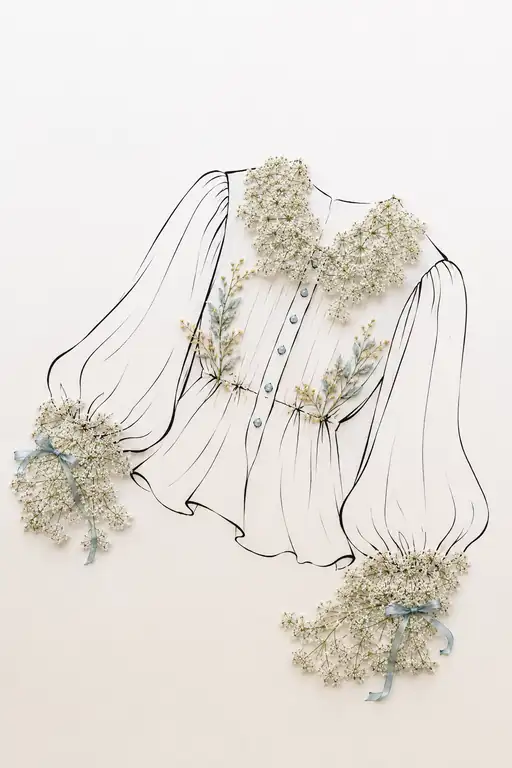 Lace-Collared Blouse with Pale Blue Bows
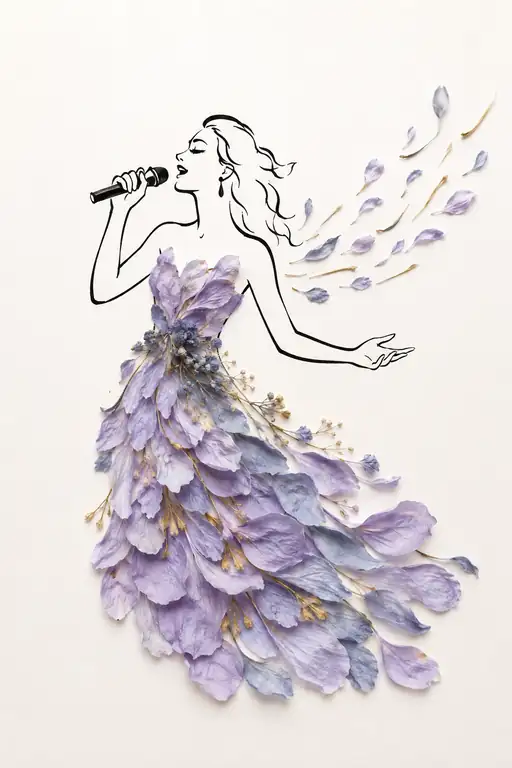 Diva Singing in a Flowing Violet Gown
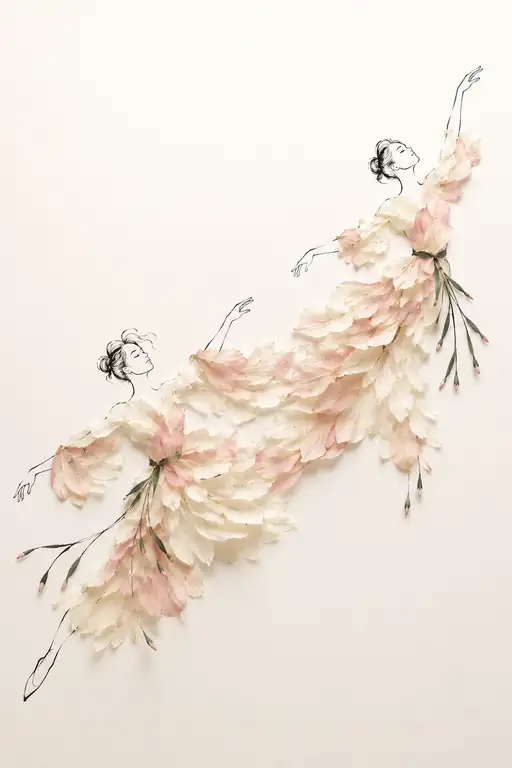 Ascending Flight in Petal-Woven Gowns