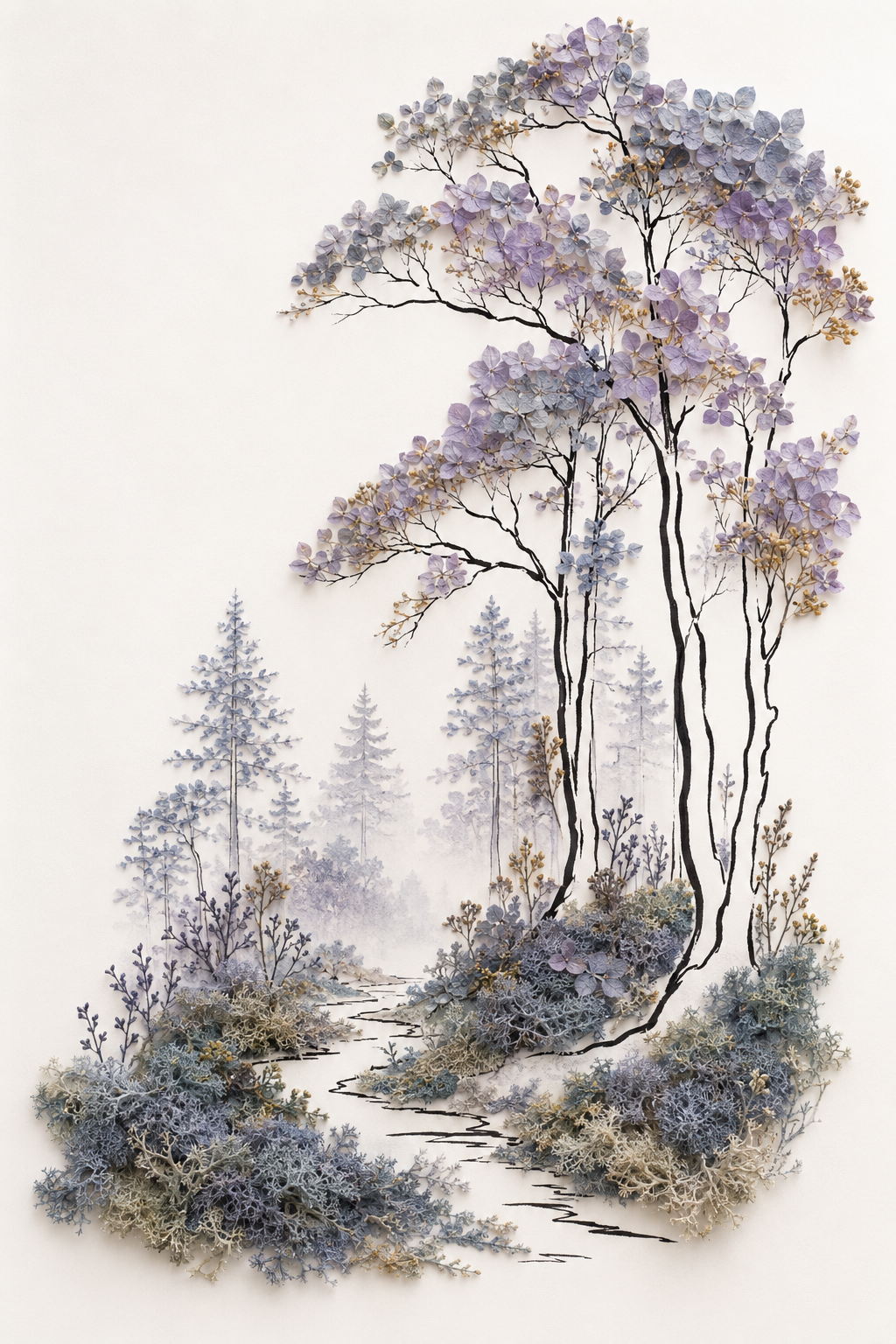
Mists in the Lavender Forest
Critique
Introduction This immersive woodland uses ink trunks and a narrow stream alongside blue-gray moss, lavender flowers, and pale botanical silhouettes. Tall deciduous trees dominate the right, while conifers recede into mist on the left. Description Several black trunks rise from mossy mounds at right and branch into broad crowns of lavender and blue petals. Behind them, progressively paler conifers form layered ranks. A thin ink stream enters from the distance, bends through the center, and widens toward the foreground. Dense lichen-like material occupies both banks, interwoven with cream and purple seed stems. Analysis Dark foreground trunks establish scale and contrast with translucent distant trees. Overlapping foliage decreases in saturation toward the center, producing atmospheric recession without painted haze. The stream’s zigzag white channel separates heavy moss banks and leads the eye inward. Vertical trunks are softened by arching crowns and irregular ground textures. Interpretation and Evaluation The forest feels remembered, nocturnal, or touched by frost rather than observed in ordinary daylight. Real moss makes the ground physically dense, while printed or drawn distance remains weightless, creating a passage from matter into memory. The stream acts as both path and reflective silence. The large trees could overwhelm the scene, but open spaces within their crowns and the pale left distance preserve breath and access. Conclusion The work succeeds as a layered meditation on entering woodland depth. Botanical fragments provide texture and seasonal ambiguity; ink organizes them into trunks, banks, and moving water. The cool palette unifies many materials without flattening them. Quietly monumental yet inviting, the forest offers a route from tactile foreground into an increasingly immaterial, contemplative distance.
Same Subcategory
 Sanctuary of the Silent Pines
Similar Artworks
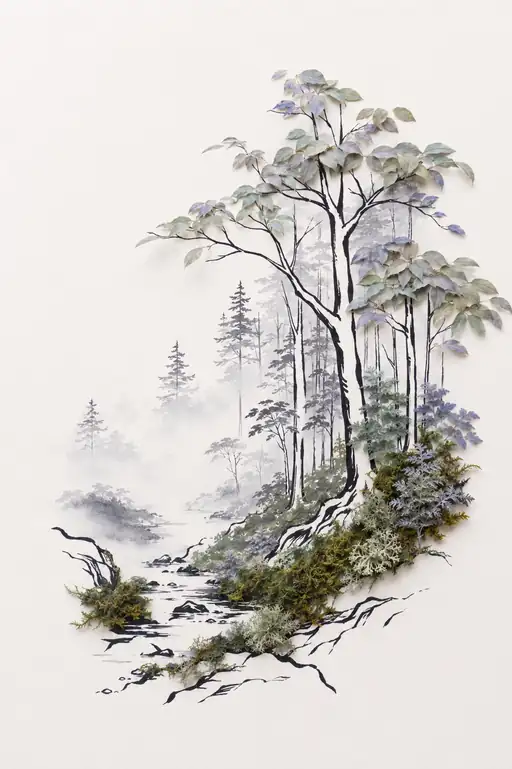 Whispering Mist Along the Forest Stream
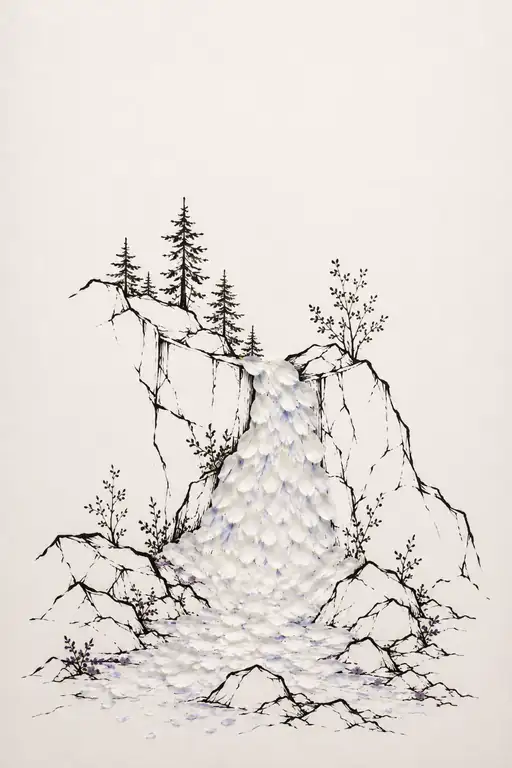 Cascade Down the Cliffside
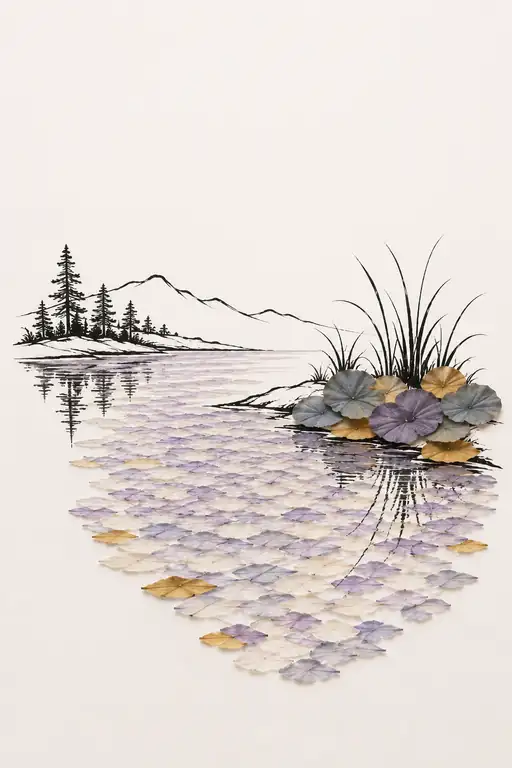 Purple Petals Drifting on Mirror Lake
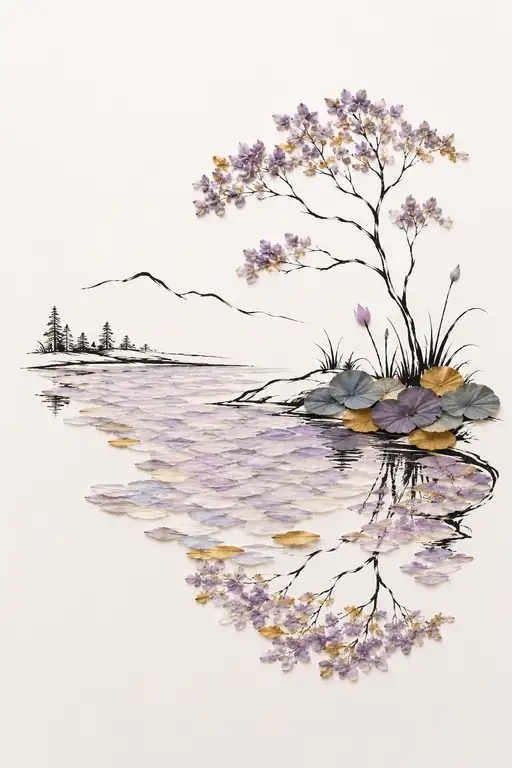 Violet Blossoms Reflected on the Mirror Lake
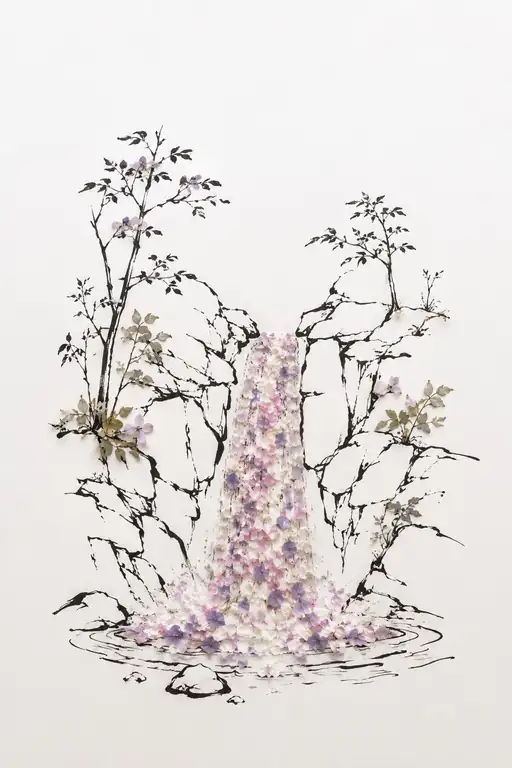 Waterfall of Lilac and Light
 Alpenglow on the Jagged Peak
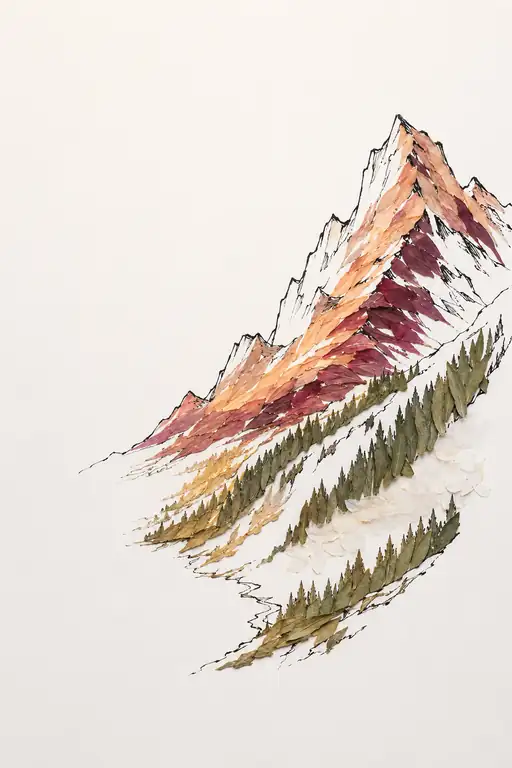 Ridge of Sunset and Evergreen Slopes
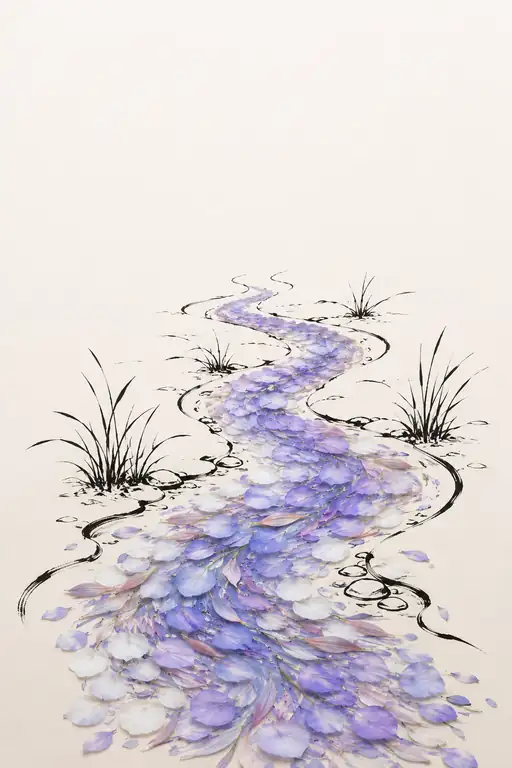 Meandering Stream of Violet Petals
 Sunbeams Breaking Through the Verdant Path
 Gentle Foliage in Rose and Violet