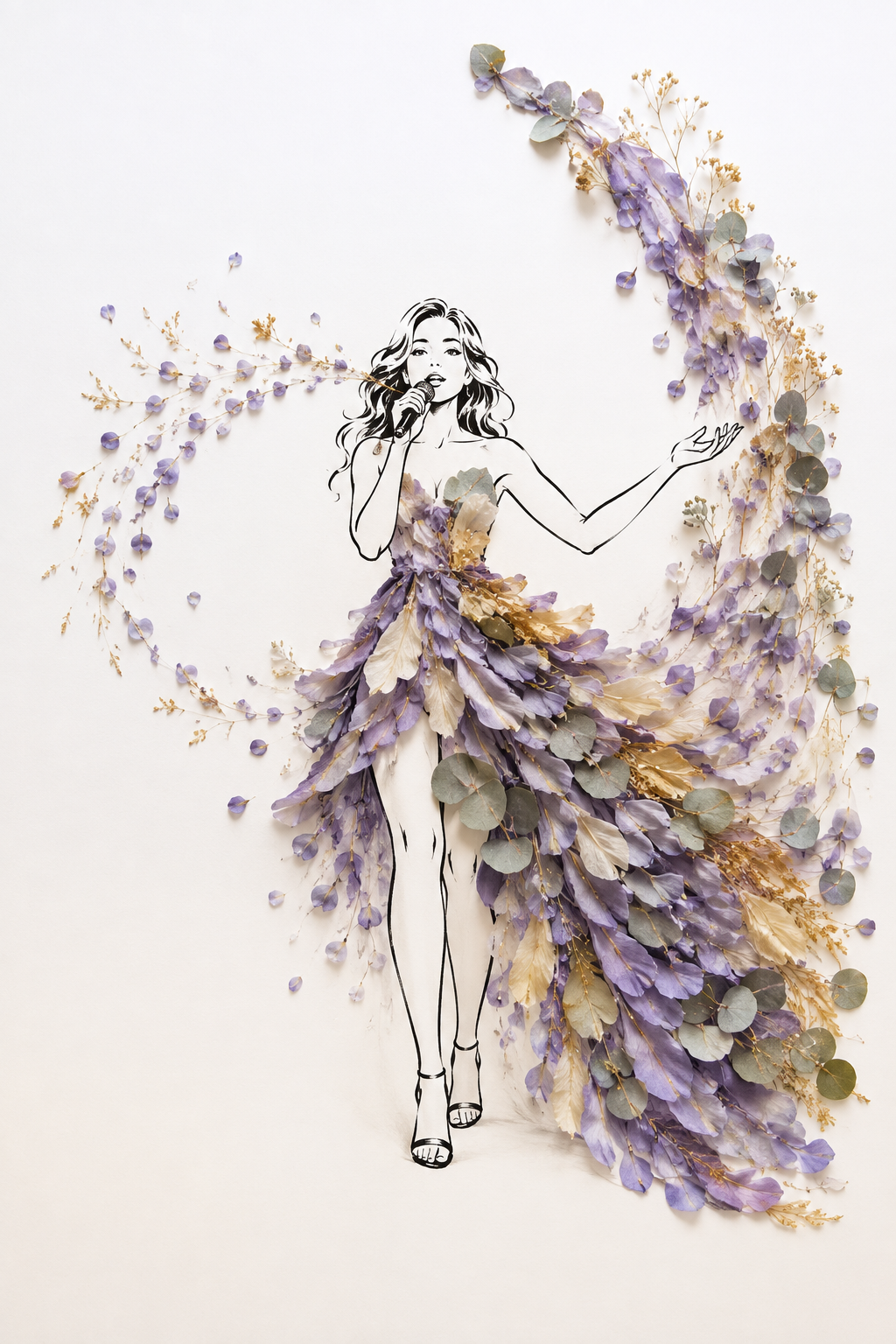
Song of the Lavender Siren
Critique
Introduction This theatrical portrait presents a singer stepping forward through a vast floral train. Ink defines her face, microphone, outstretched arm, legs, and heels, while lavender, ivory, gold, and eucalyptus-like foliage form a gown that arcs dramatically around her. Description The singer stands near center, facing outward with a microphone at her mouth. Her right arm extends toward a towering curve of flowers on the right. A fitted floral bodice opens into an asymmetrical skirt, exposing both ink-drawn legs. Dense purple and cream petals, round gray leaves, and golden stems cascade down and sweep far behind. Analysis The body provides a vertical hinge between two opposing arcs: a fine leftward spray and a massive rightward wave. Dense material along the lower right counterbalances the bare legs and open upper torso. Lavender dominates, with ivory creating highlights and gold sharpening direction. The raised hand meets the curve without touching it, creating charged negative space. Interpretation and Evaluation The floral train can be read as voice, applause, memory, or stage presence made visible. Its growth from the performer suggests expression exceeding the body that produces it. Exposed legs preserve agency and forward motion, preventing the gown from immobilizing her. The composition risks spectacle, but the direct gaze and clearly drawn stride keep personality central. Conclusion The work succeeds as an image of performance expanding into atmosphere. Ink carries focus, gesture, and human scale; botanical matter supplies resonance and magnificent duration. The singer appears to conduct the arc around her while walking out of it. Dynamic, glamorous, and materially inventive, the portrait turns a single sung phrase into an enveloping field of color and motion.
Same Subcategory
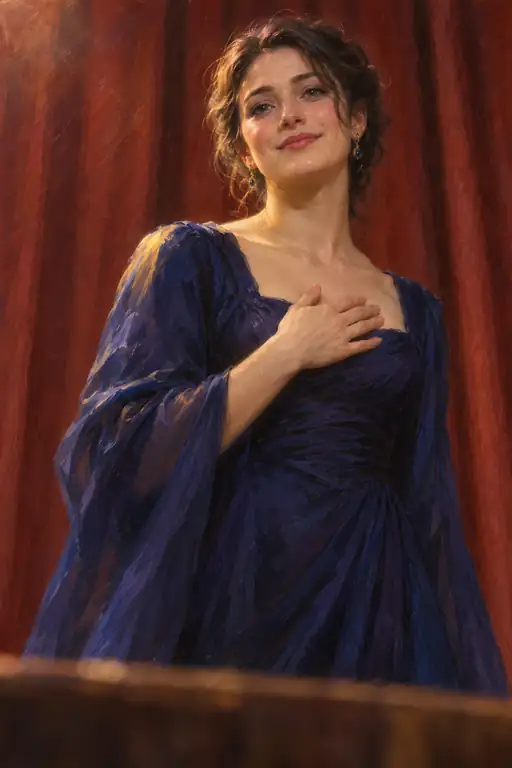 Grateful Heart in the Glow of the Crimson Curtain
Similar Artworks
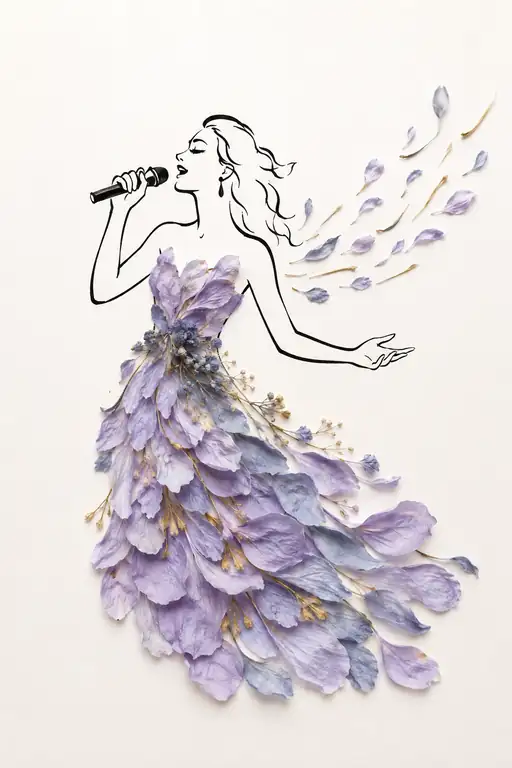 Diva Singing in a Flowing Violet Gown
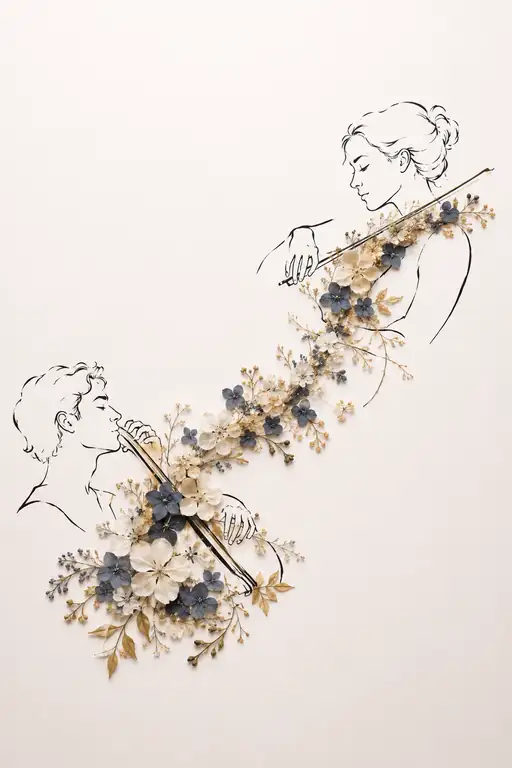 Cadence of Breath and Strings in Bloom
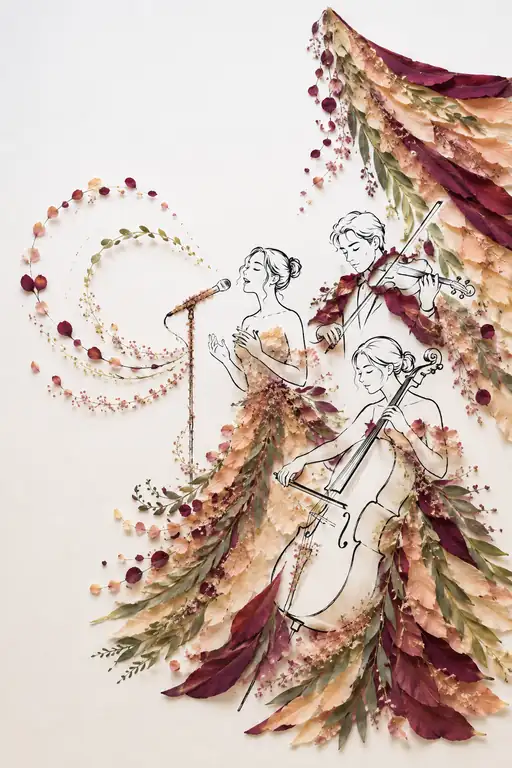 Trio Harmonizing in the Autumn Breeze
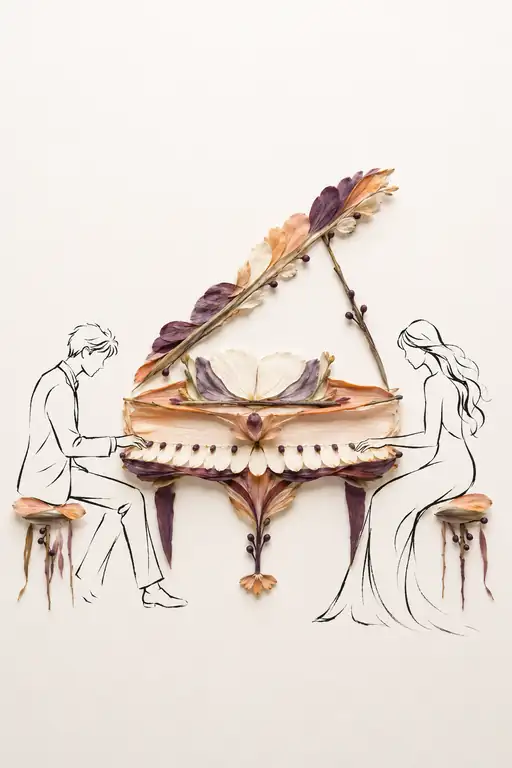 Sonata of Blossoms and Facing Hands
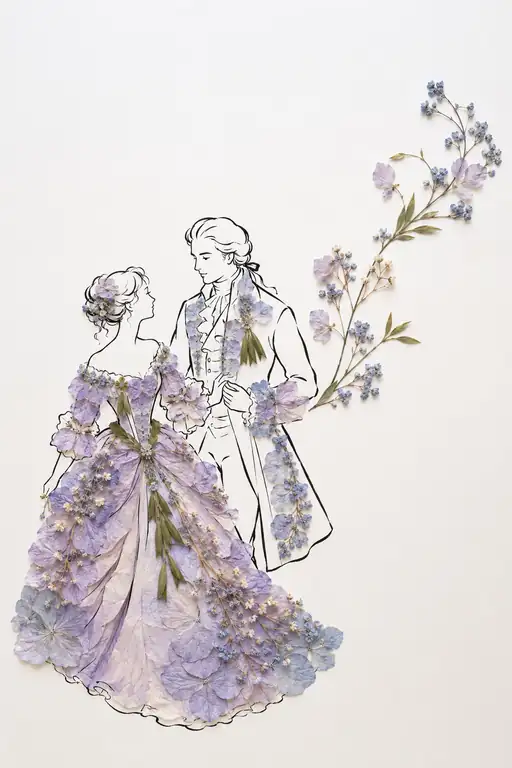 Promenade of Lilac and Azure Ribbons
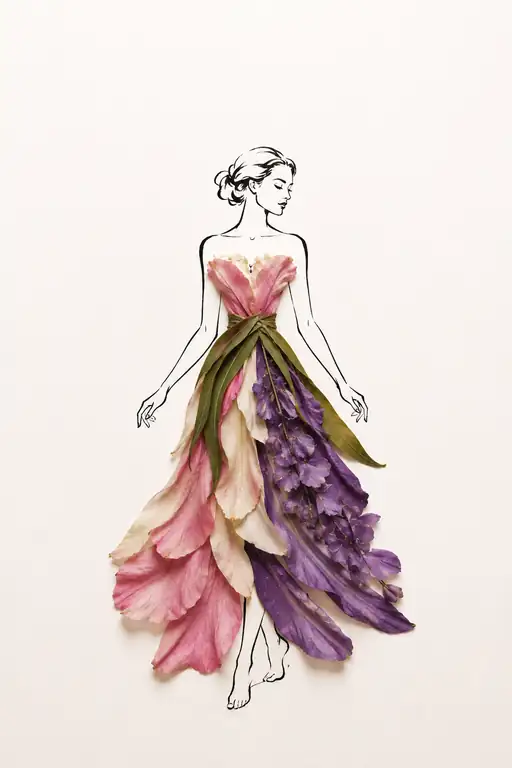 Lady in a Gown of Pink and Violet Petals
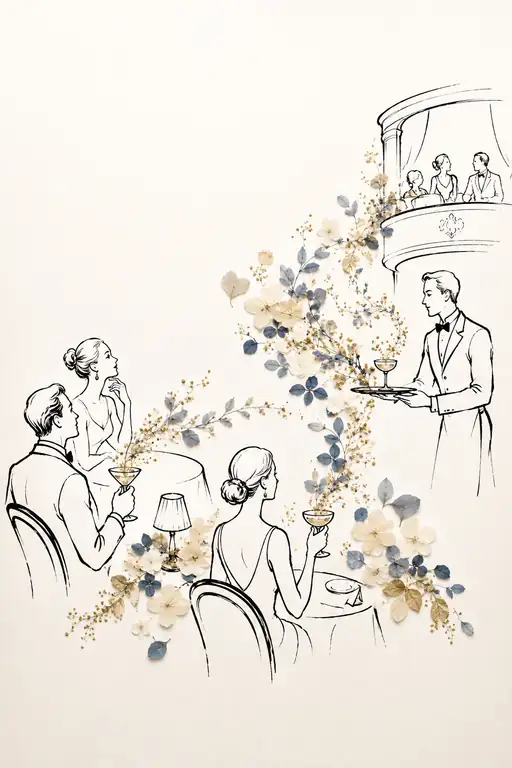 Ascent of Floral Whispers to the Balcony
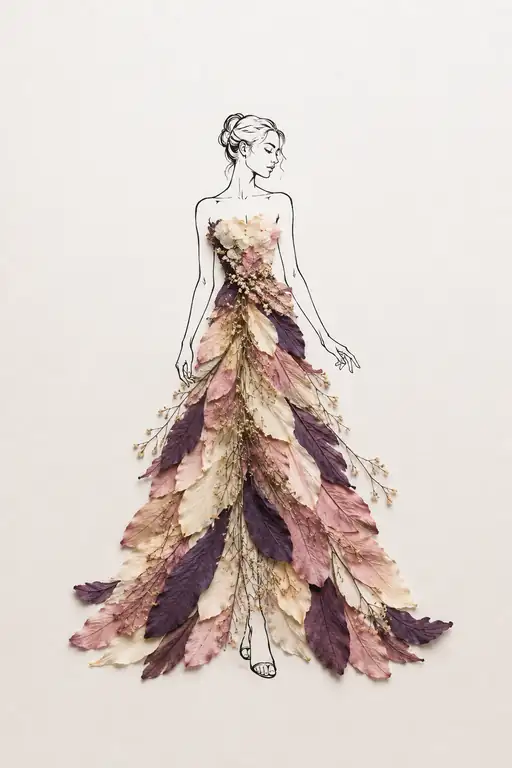 Gown of Layered Dusk
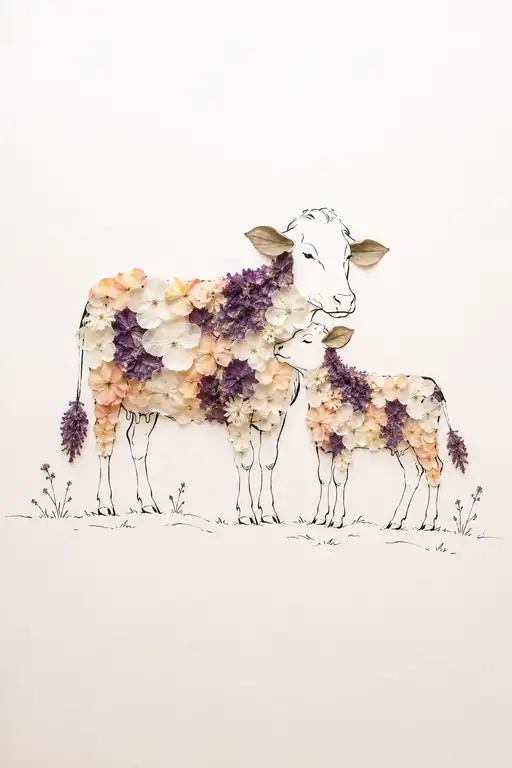 Gentle Stances in Blossom Coat
 Duet of Blossom Keys and Berry Notes