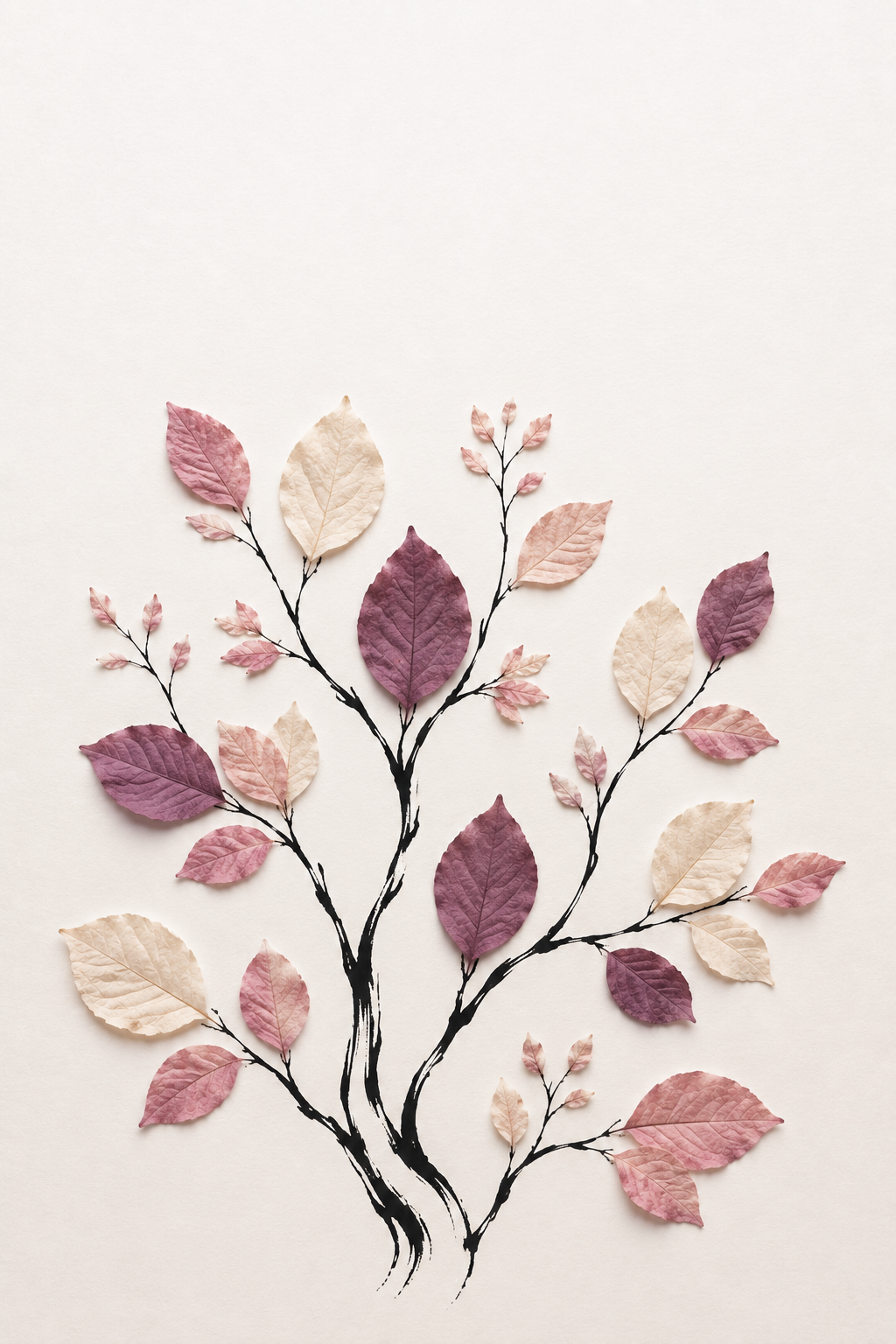
Branching Tones of Rose and Cream
Critique
Introduction This spare botanical study joins a vigorously brushed black trunk with real leaves in cream, blush, rose, and plum. The tree has no ground or landscape; it exists as a self-contained rhythm of branching and color. Description Several dark trunks rise from the lower center, twist together, and divide into thin angular branches. Large oval leaves occupy major junctions, while smaller pointed leaves cluster at the tips. Deep purple forms mark the center and left; pale cream leaves illuminate the upper and outer areas. Pink leaves mediate between them. Analysis The trunk’s upward sweep establishes a strong central axis, repeatedly split by asymmetrical forks. Large leaves act as visual weights, and small clusters extend motion beyond them. Color is distributed rather than graded: plum accents anchor, cream opens light, and rose carries rhythm across branches. Brush lines vary from dense black to dry tapering strokes. Interpretation and Evaluation The tree suggests transition without assigning one exact season. Cream may imply fading, pink transformation, and purple maturity or shadow. Because actual leaves are detached from their original plant, the ink branches function as an imagined genealogy that gathers separate remnants into renewed coherence. The central plum leaf is especially effective as a heartlike focus. Some isolated tips remain deliberately fragile, emphasizing growth’s provisional nature. Conclusion The work succeeds through economy, material honesty, and controlled imbalance. Ink provides force and continuity; leaves contribute time, individuality, and tactile color. The tree feels rooted despite lacking soil because its branching logic is convincing. Against generous white space, it becomes a compact meditation on how change can preserve structure while altering every visible surface.
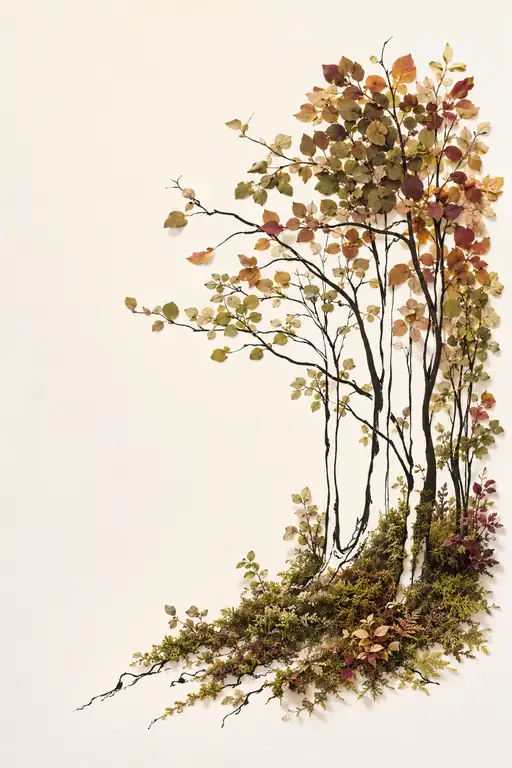 Autumn Grove Rising from Mossy Earth
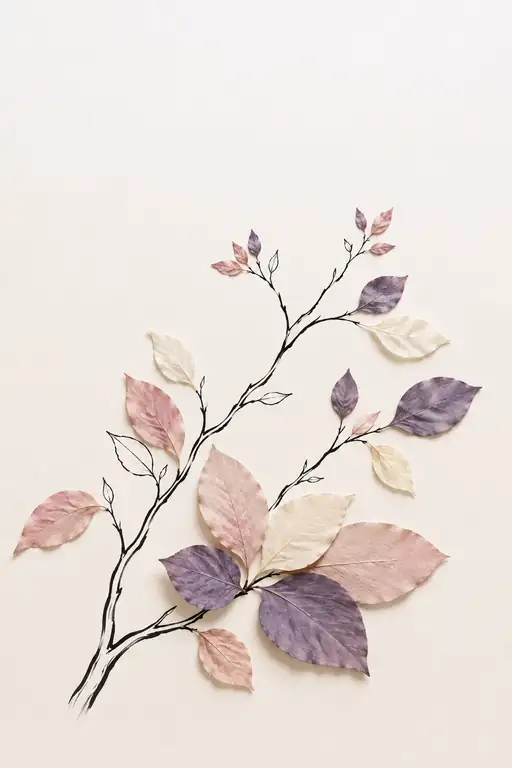 Gentle Foliage in Rose and Violet
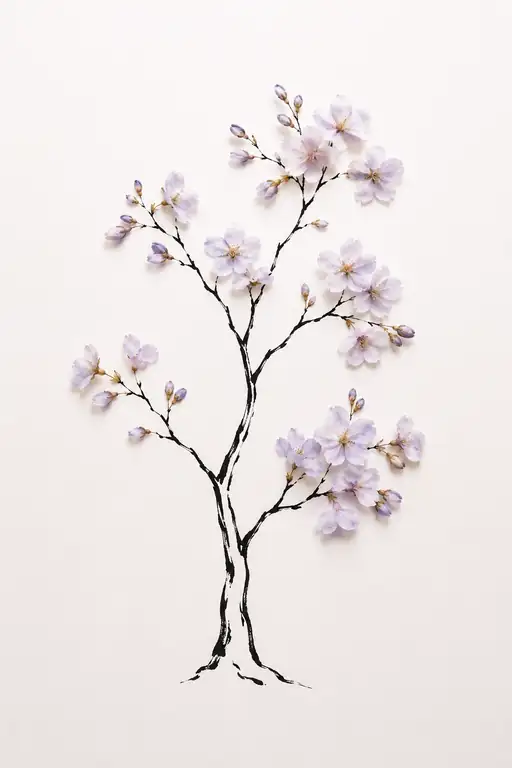 Slender Tree Blossoming with Lilac Dreams
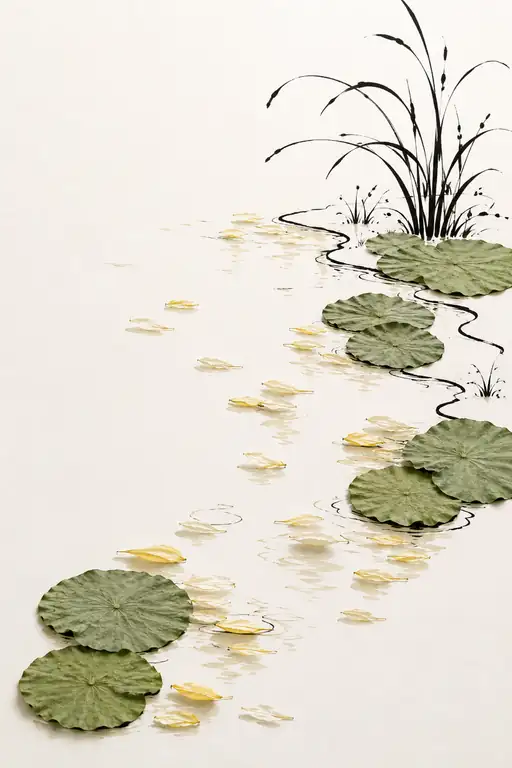 Drifting Lights on the Pond
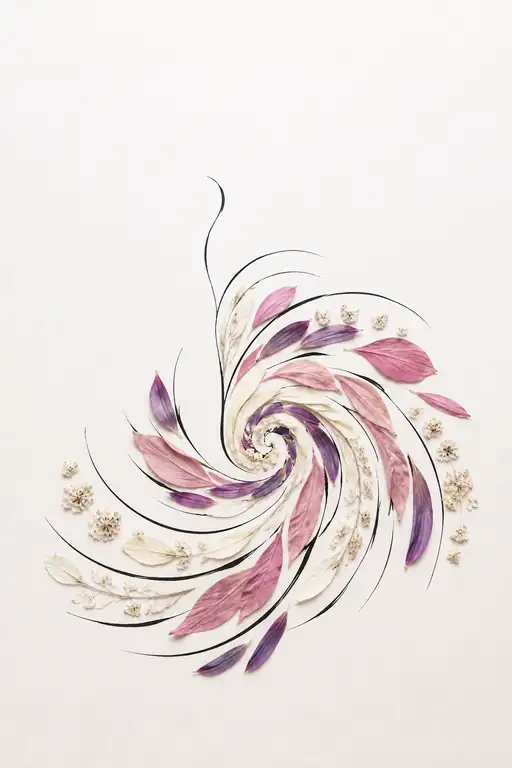 Spiral of the Amethyst Gale
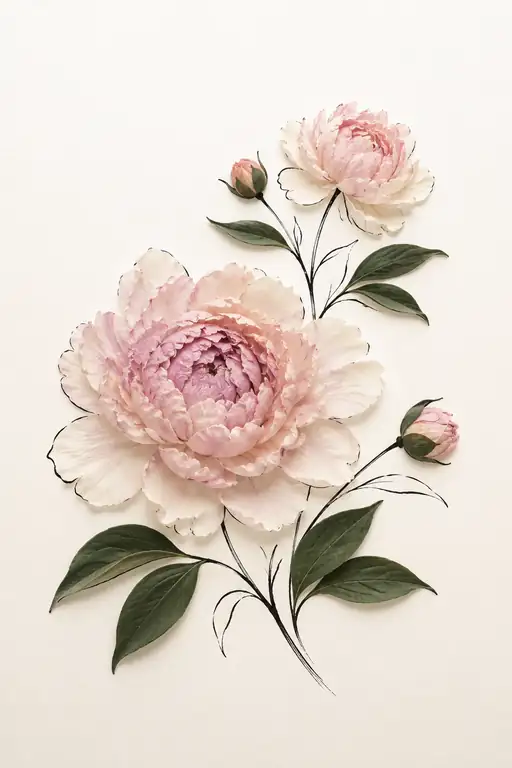 Bloom in Layered Rose
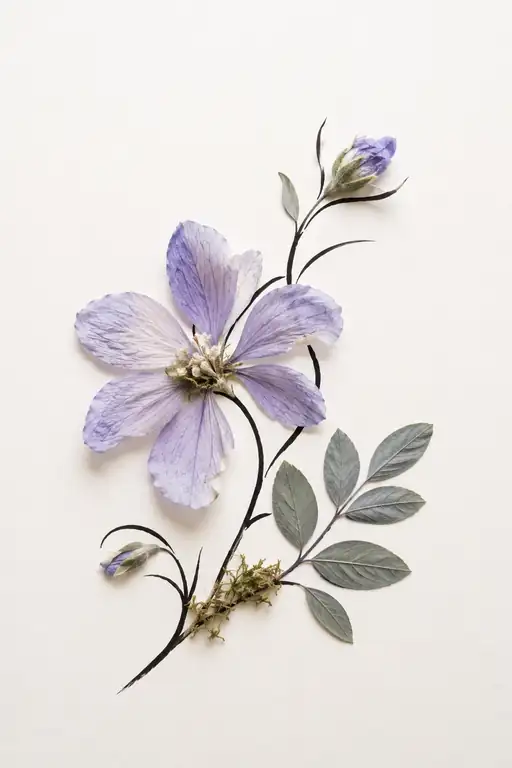 Grace in Solitary Bloom
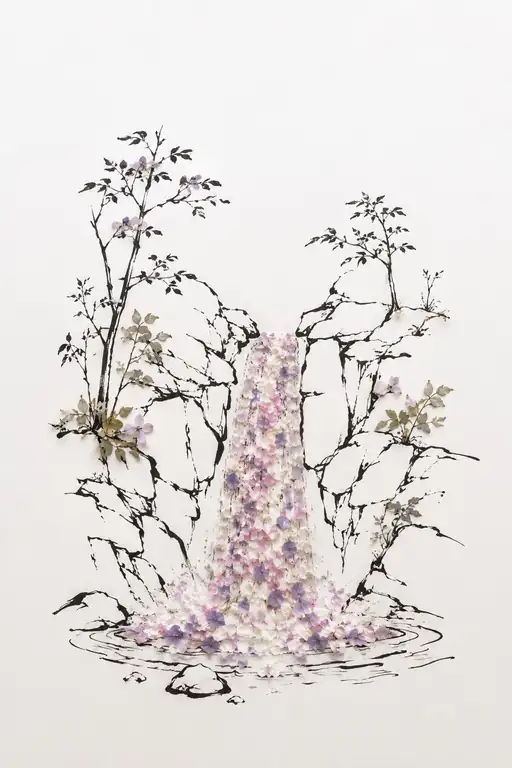 Waterfall of Lilac and Light
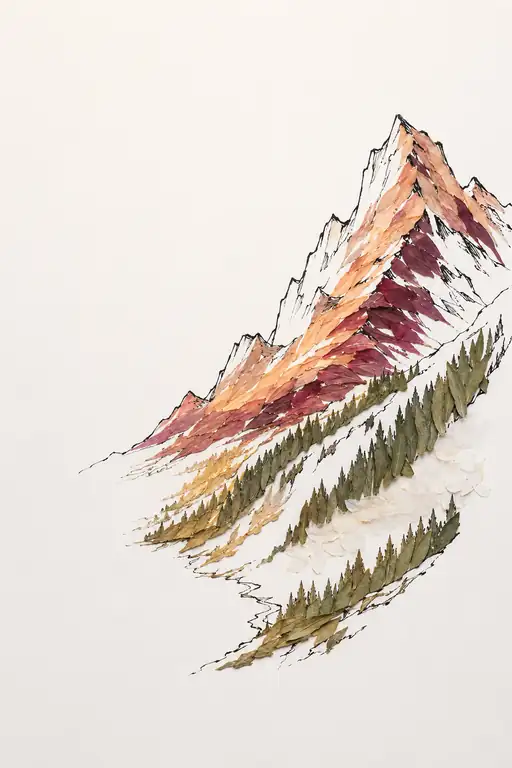 Ridge of Sunset and Evergreen Slopes
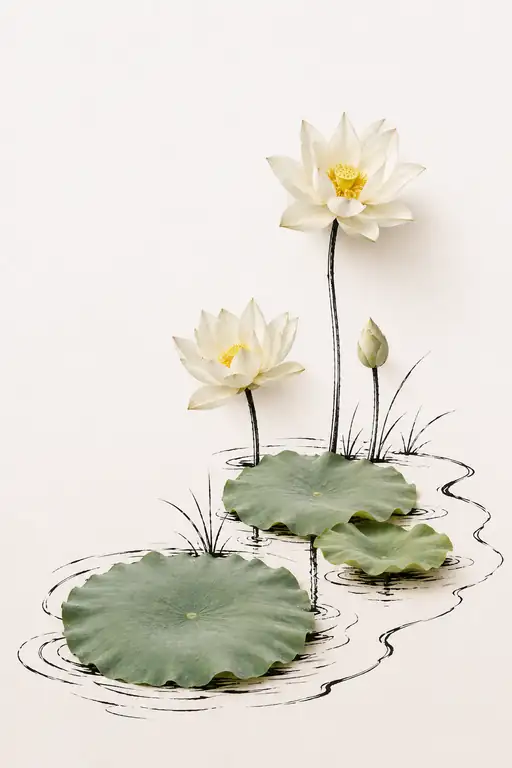 Purity of the White Lotus
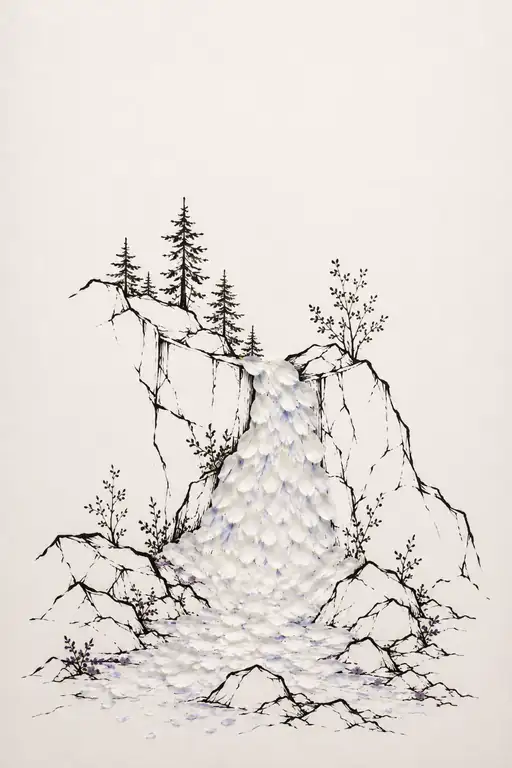 Cascade Down the Cliffside