Golden Sands of Fleeting Hours
Critique
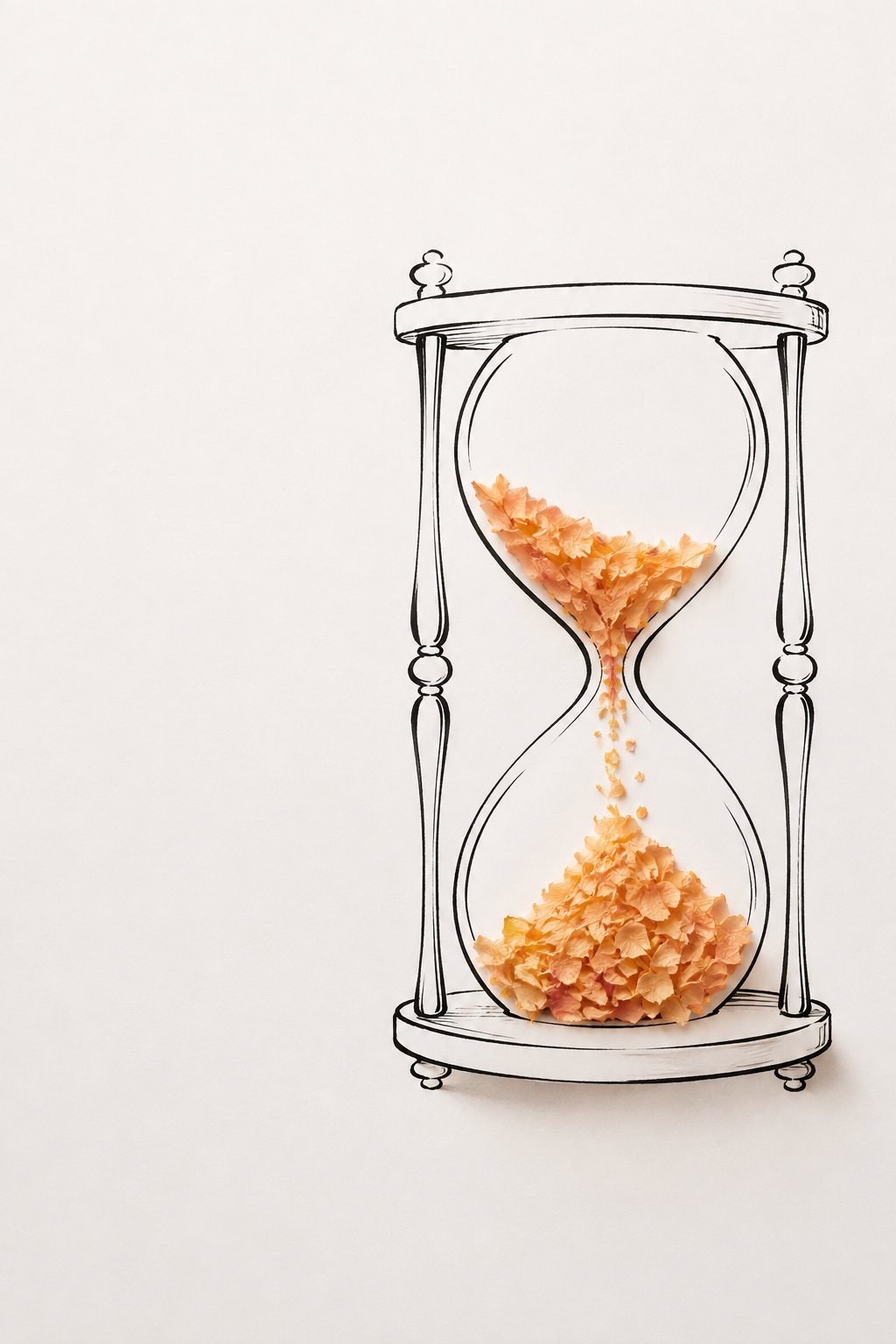
Introduction This hourglass study gives passing time an unexpectedly organic substance. A traditional frame and glass vessel are rendered in firm black ink, while orange petals replace sand in both chambers. Description The hourglass stands slightly right of center, supported by four slender turned columns and oval top and bottom plates. Inside the upper bulb, a sloping heap of peach-orange fragments funnels toward the narrow neck. Individual pieces fall in a broken vertical chain. A larger mound has accumulated below, spreading against the curved base. Analysis Strong vertical symmetry and repeated columns create stability around the unstable transfer. The two triangular petal masses oppose one another, with the lower mound broader and heavier. Small falling fragments articulate the central axis and make duration visible as sequence. Orange color concentrates attention within monochrome architecture. Petal wrinkles and cast shadows give each unit individuality, resisting the uniformity of real sand and slowing visual counting. Interpretation and Evaluation Because petals once belonged to flowers, their descent evokes aging and seasonal change as well as abstract time. The lower chamber becomes an archive of spent moments, while the remaining upper fragments hold limited possibility. Yet nothing appears destroyed; material simply changes position. This lends the image a gentler philosophy than conventional memento mori imagery. Its plain background appropriately removes distractions from the irreversible action. Conclusion The work succeeds through exact correspondence between concept and material. Ink supplies the measuring device; petals complicate what measurement can mean. Every falling piece is distinct, suggesting lived moments rather than interchangeable seconds. Clear, restrained, and emotionally resonant, the hourglass turns chronology into a visible ecology of release and gathering.
Same Subcategory
Similar Artworks
 Golden Grains of Solitude
 The Geometry of Fleeting Hours
 Vessel of Translucent Hours
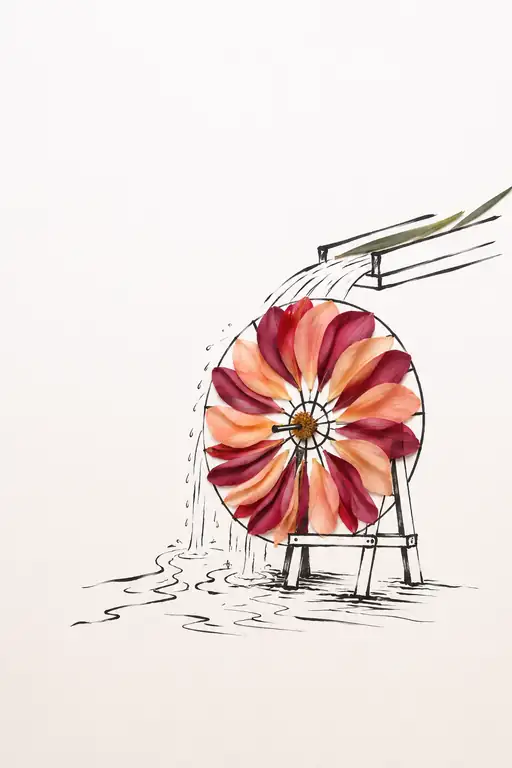 Crimson Flower Wheel Turning in the Stream
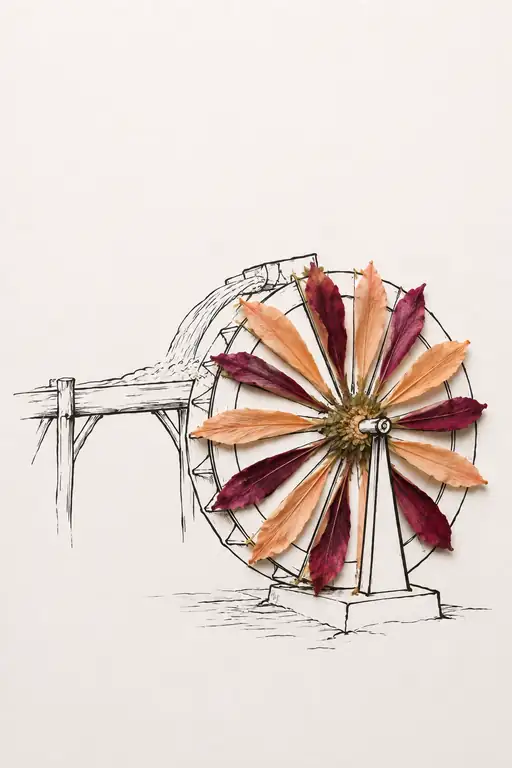 Flower Wheel Turning in Sunlit Waters
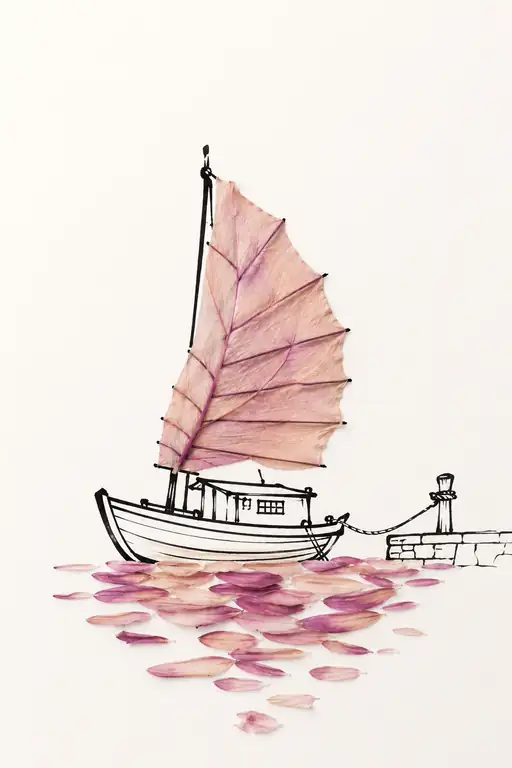 Moored Sailboat with a Rose Leaf Sail
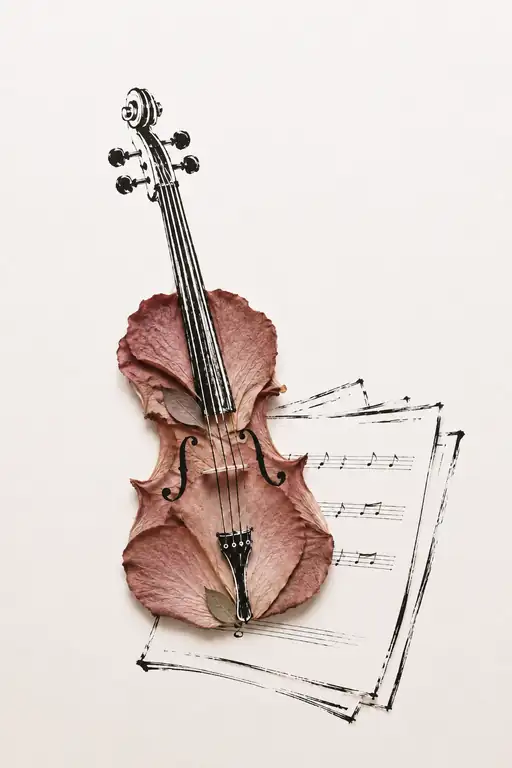 Verse of the Antique Cello on Sheet Music
 Warm Embrace of Coral Feathers
 Inscription of Fleeting Hours
 Quill of Petals and the Inkwell of Words