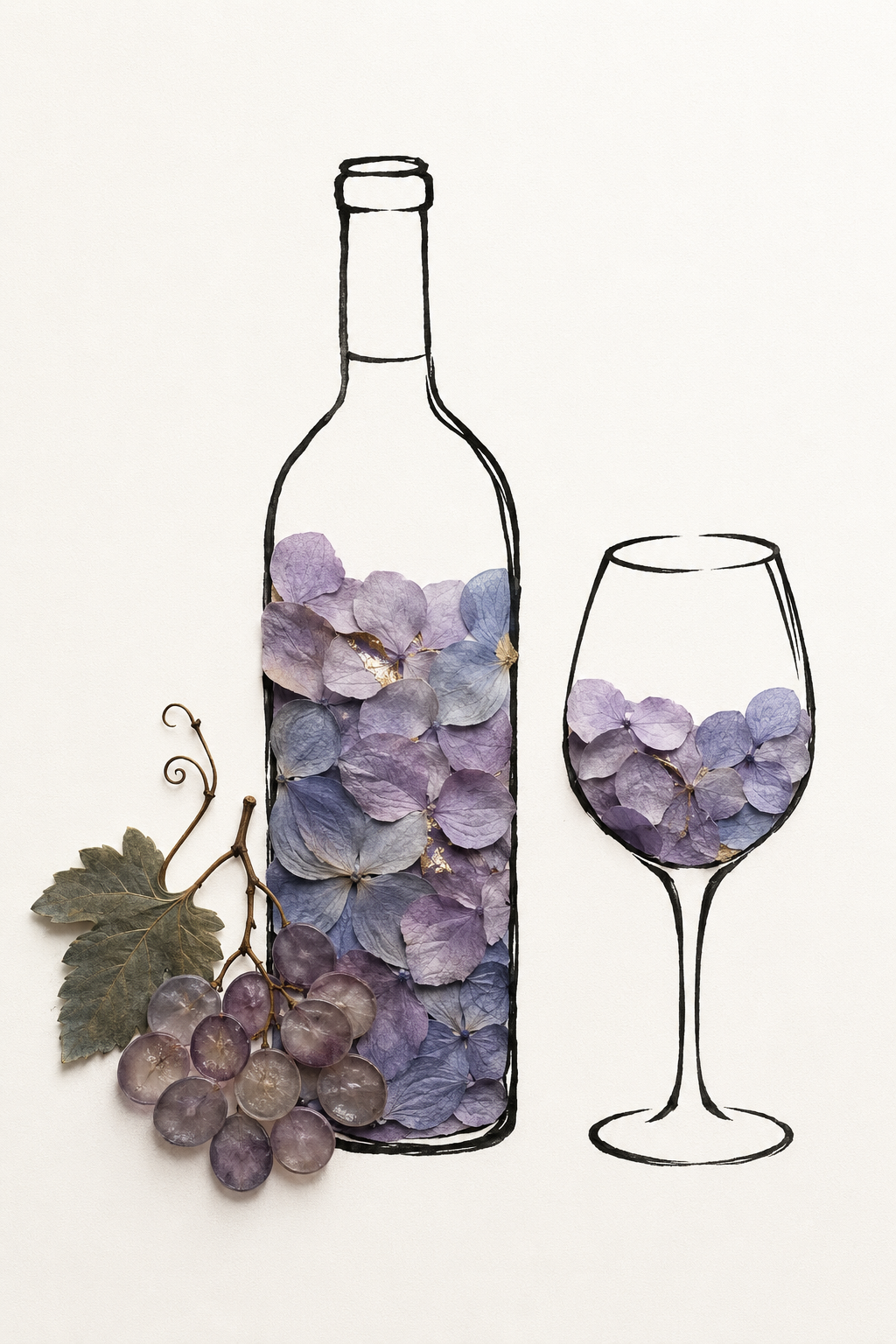
Violet Vintage and Slender Glass
Critique
Introduction This botanical still life reduces wine to a dialogue among bottle, glass, grapevine, and violet petals. Bold ink outlines remain deliberately empty above their floral “liquid,” while real leaves and translucent grape-like discs gather at the bottle’s base. Description A tall bottle stands left of a stemmed wineglass. Both vessels are drawn with thick, slightly irregular black lines. Their lower portions contain overlapping lavender, blue-gray, and purple hydrangea petals touched with small gold fragments. Analysis The bottle’s vertical mass balances the glass’s open bowl and narrow stem. A shared floral level visually links the two containers, while differing amounts imply pouring or tasting. Cool violet tones unify petals and grapes; the olive leaf provides a grounded complementary note. Empty white interiors clarify vessel shape and make the contents feel luminous. The organic vine curves contrast with the upright geometry of manufactured glassware. Interpretation and Evaluation Instead of depicting literal liquid, the work fills wine with an image of its floral and agricultural associations. Petals suggest bouquet, taste, celebration, and recollection, while grapes insist on material origin. Gold flecks add a sense of age or reflected light. The translucent discs are not botanically exact grapes, but their glasslike surface cleverly mediates between fruit and vessel, strengthening the conceptual exchange. Conclusion The image succeeds through economy and visual correspondence. Bottle, wine, flower, and grape share color without becoming indistinguishable. Ink provides recognizable containers; botanical matter supplies sensory richness that drawing alone could not. Spacious and composed, the still life turns a familiar drink into an understated reflection on transformation—from vine to wine, and from flavor to remembered atmosphere.
Same Subcategory
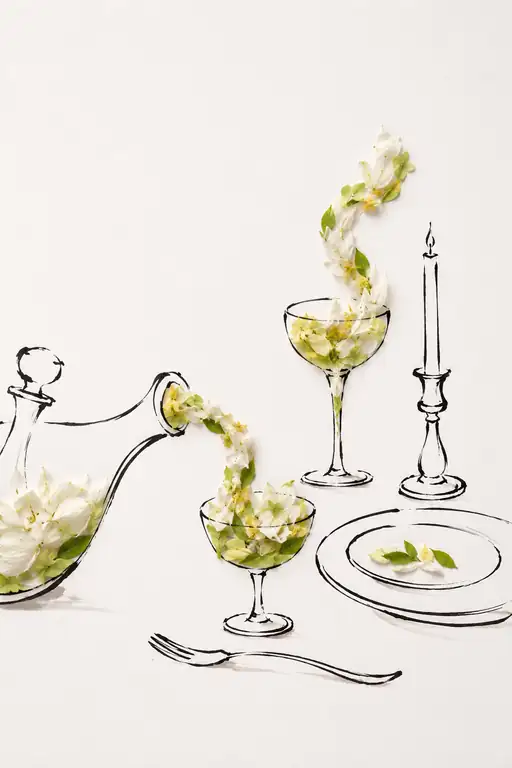 Pouring the Fragrance of Fresh Blossoms
Similar Artworks
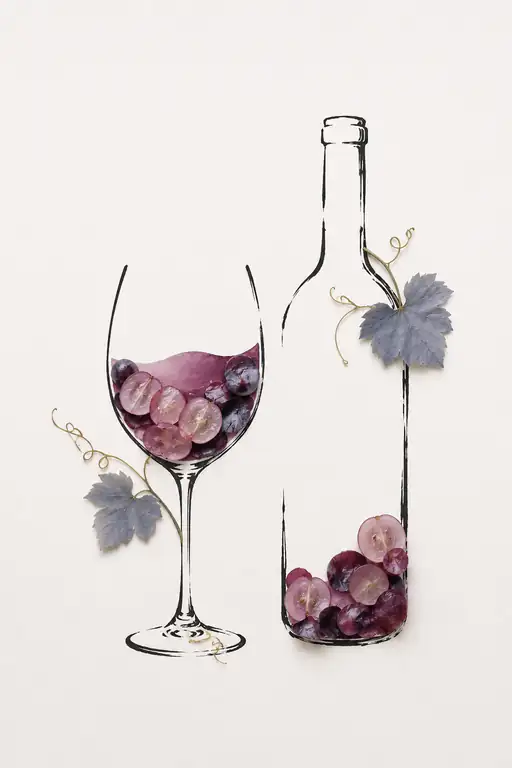 A Cluster of Memories in a Glass
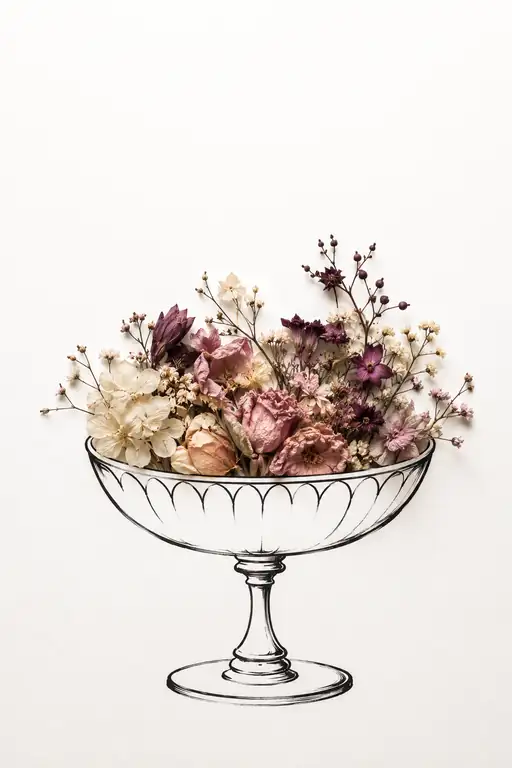 Autumn Bloom in Crystal Chalice
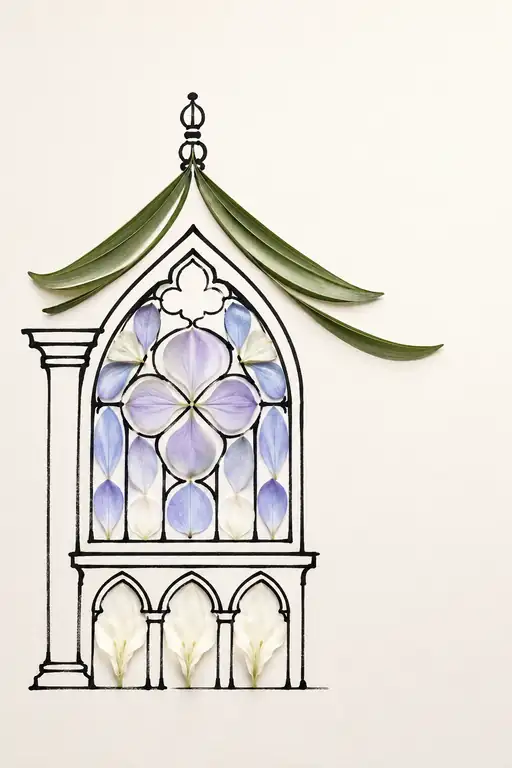 Gothic Rose Window of Translucent Petals
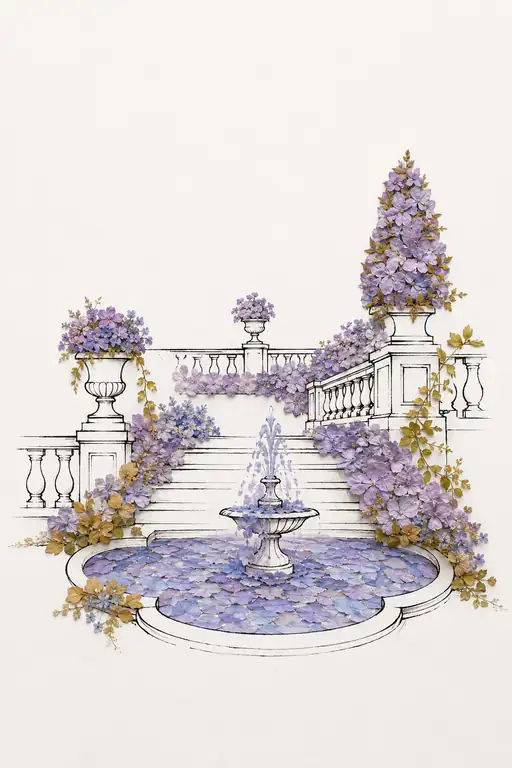 Tiered Fountain Garden of Violet Blooms
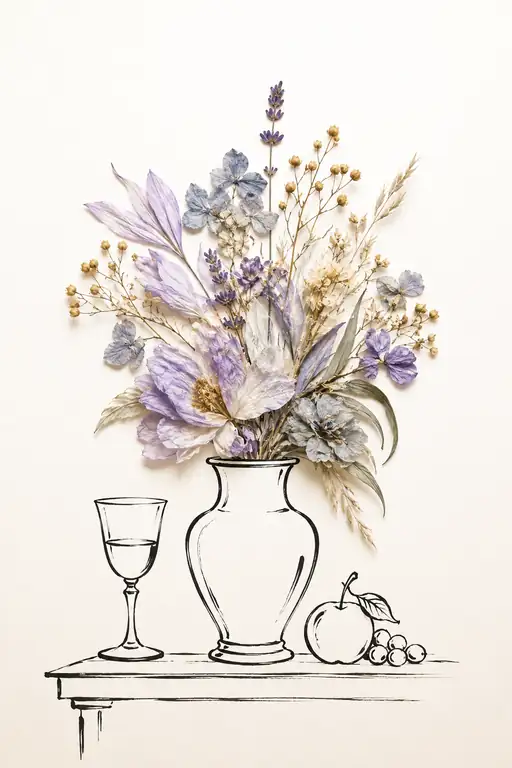 Quiet Autumn Light on the Table
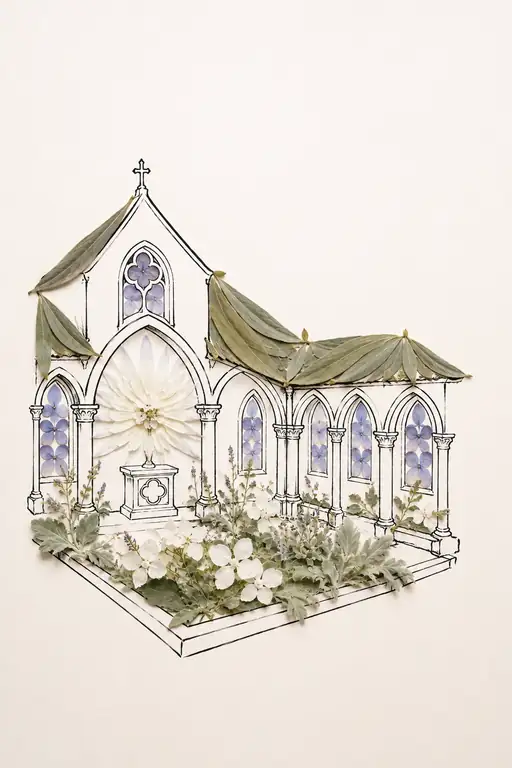 Gothic Chapel Blooming with Prayer
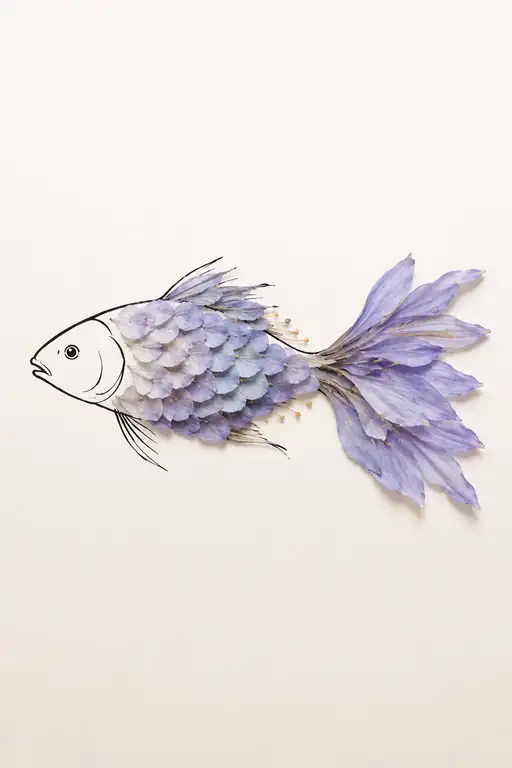 Violet Fin Gliding Through Crystal Depths
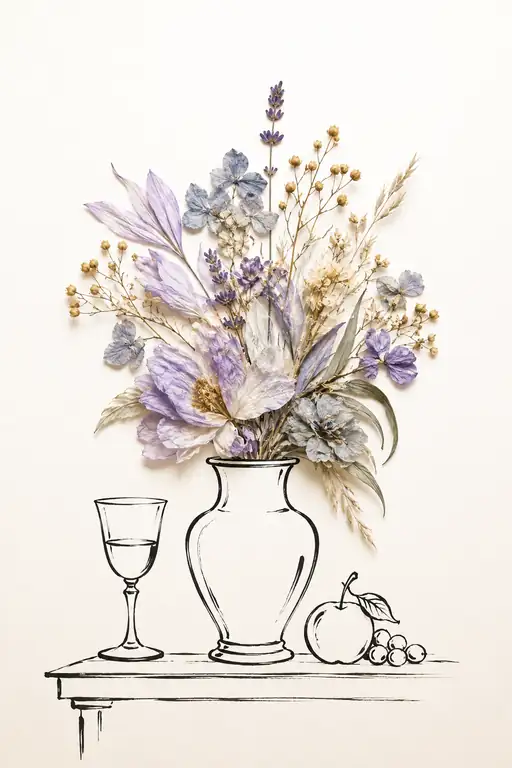 Lavender Bouquet Beside Wine and Apples
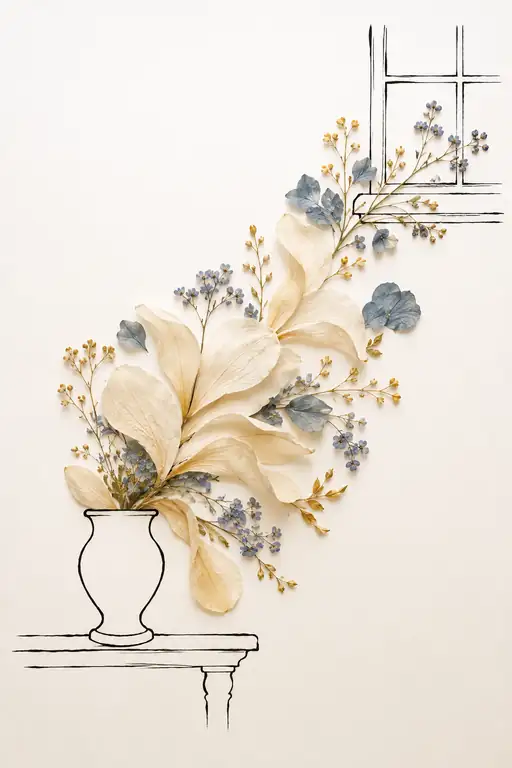 Ascent of Ivory Petals Toward the Light
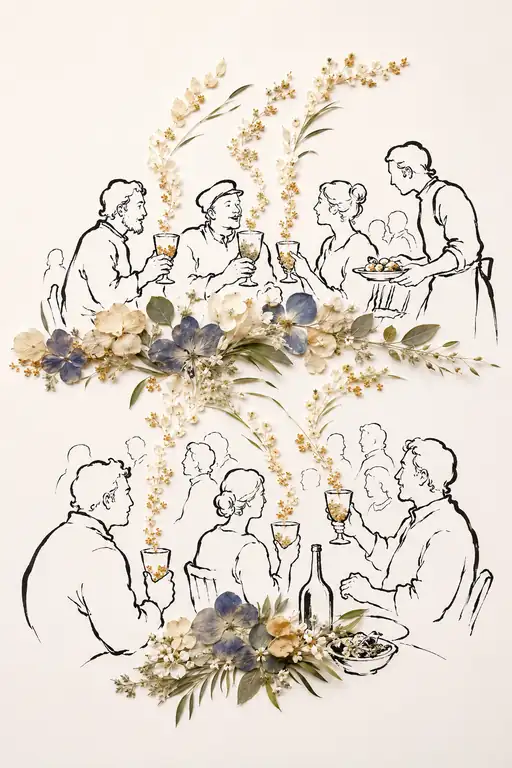 Tiered Banquet Connected by Floral Ribbons