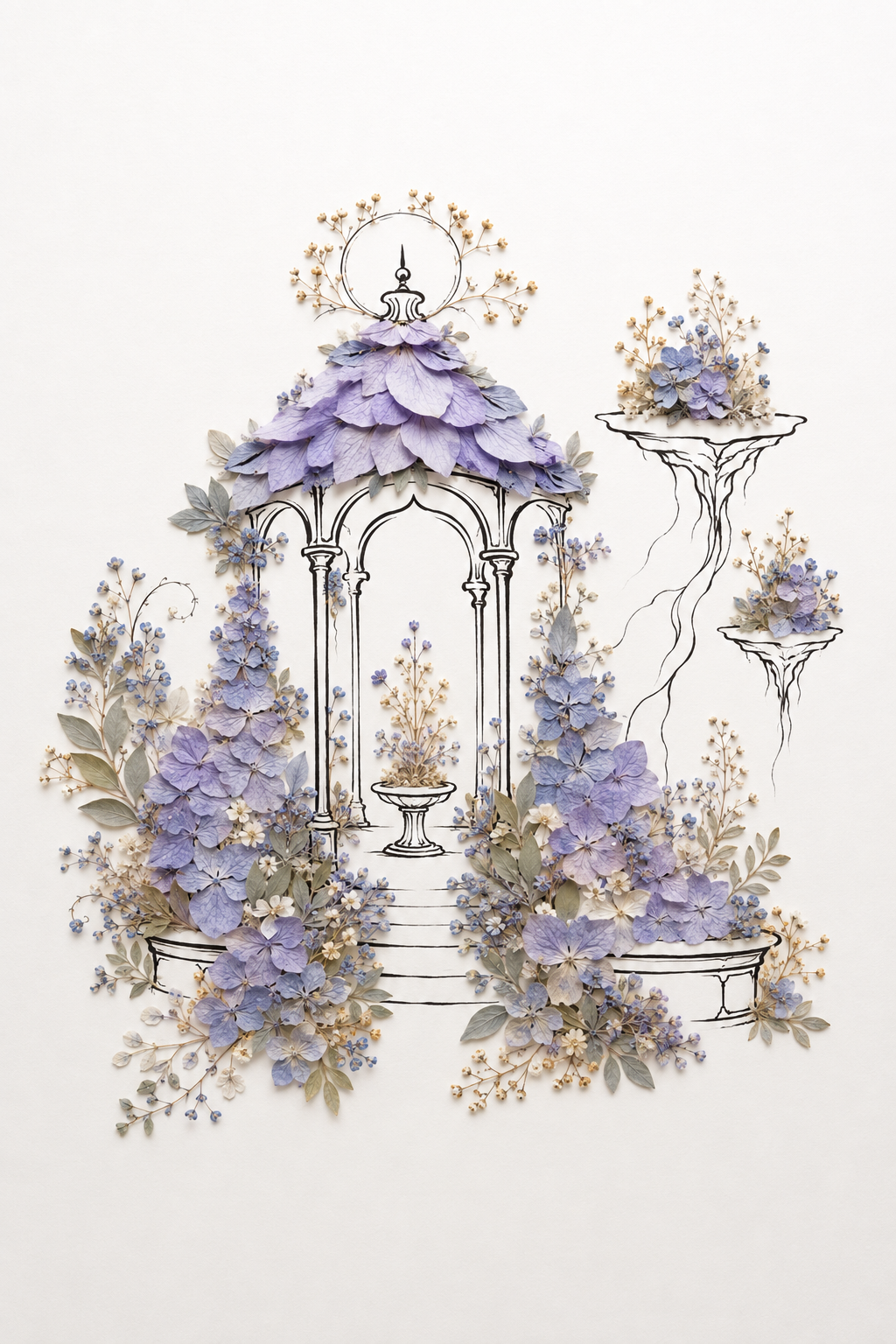
Lavender Sanctuary in Bloom
Critique
Introduction This elaborate garden pavilion combines Mughal-inspired ink architecture with abundant lavender flowers, gray foliage, and tiny cream buds. Petals form the roof, climbing borders, and offerings, while three floating platforms appear at the right. Description At center, steps rise between large floral masses to a four-column pavilion with pointed arches. Overlapping violet petals create its domed roof, crowned by a circular finial surrounded by branching buds. A small pedestal bowl stands inside. Analysis The pavilion’s vertical symmetry provides an anchor, while asymmetrical planting spills outward at the base. Dense hydrangea-like clusters frame the empty central arch and make white interior space luminous. Repeated blue buds connect roof, columns, foreground, and floating islands. The right platforms establish a secondary upward rhythm and counterbalance the heavy left floral bank. Fine black structure remains visible through botanical abundance. Interpretation and Evaluation The pavilion reads as a threshold between cultivated reality and an airborne sacred garden. Flowers occupy architecture without destroying its order, suggesting devotion expressed through tending and seasonal renewal. Floating beds release ornament from gravity, extending the sanctuary beyond conventional ground. Their exposed root lines are especially evocative, revealing dependence beneath apparent weightlessness. The central empty bowl invites imagined water, flame, or offering. Conclusion The work succeeds through layered spatial invention and disciplined color. Architecture gives petals a ritual framework; plants soften and expand that framework into fantasy. Steps welcome entry, yet the open arch and suspended islands keep the destination mysterious. Rich but breathable, the scene presents beauty as a garden one approaches, inhabits, and continues to cultivate.
Same Subcategory
 Lotus Path to Utopia
Similar Artworks
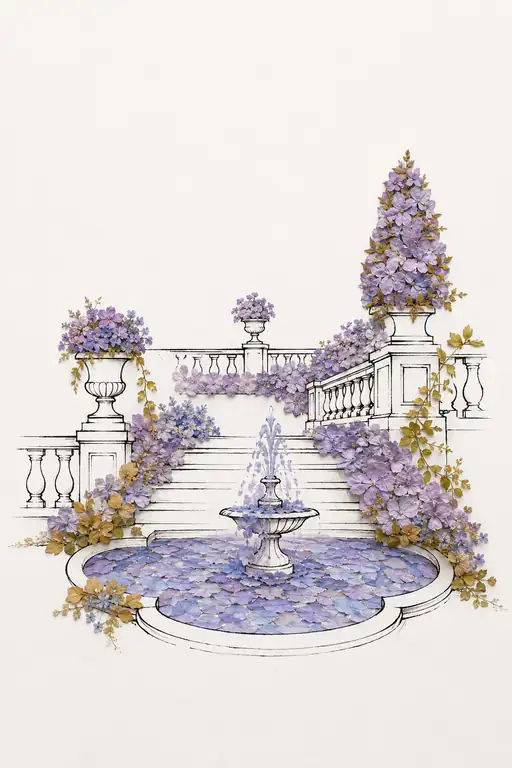 Tiered Fountain Garden of Violet Blooms
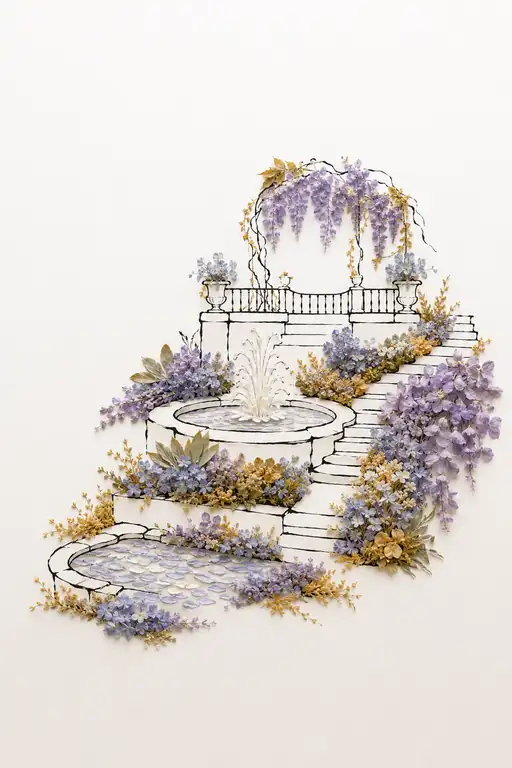 Cascade of Wisteria by the Classical Terrace
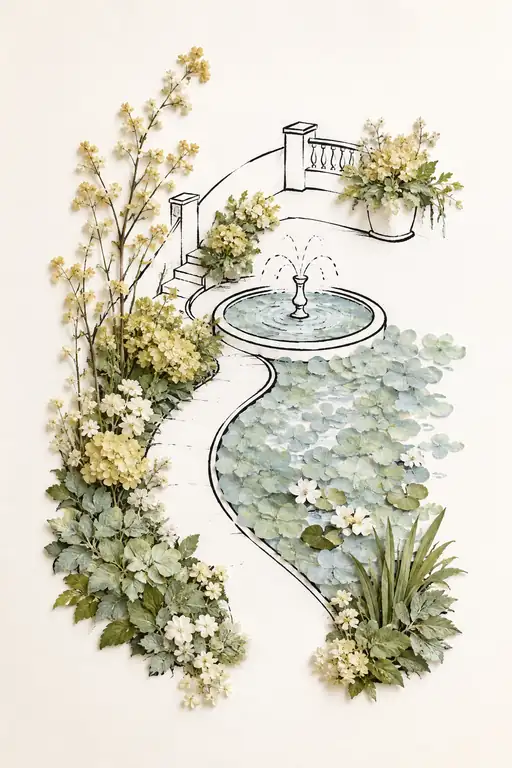 Serenade of the Garden Fountain
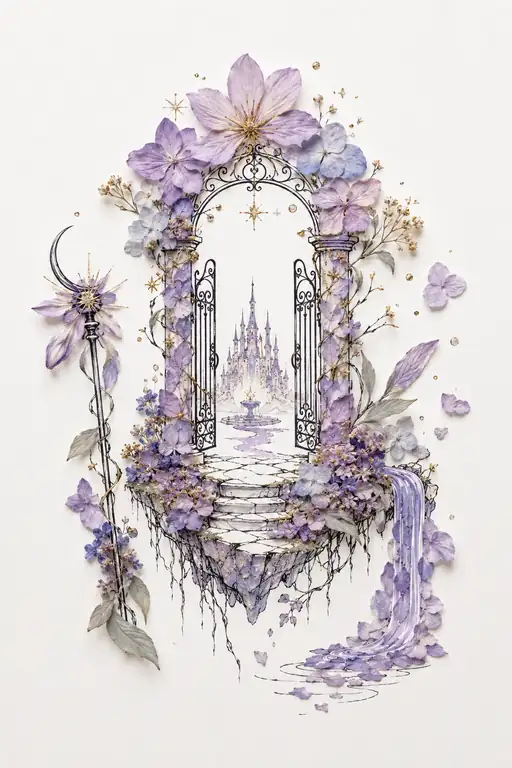 Floating Floral Portal to the Distant Castle
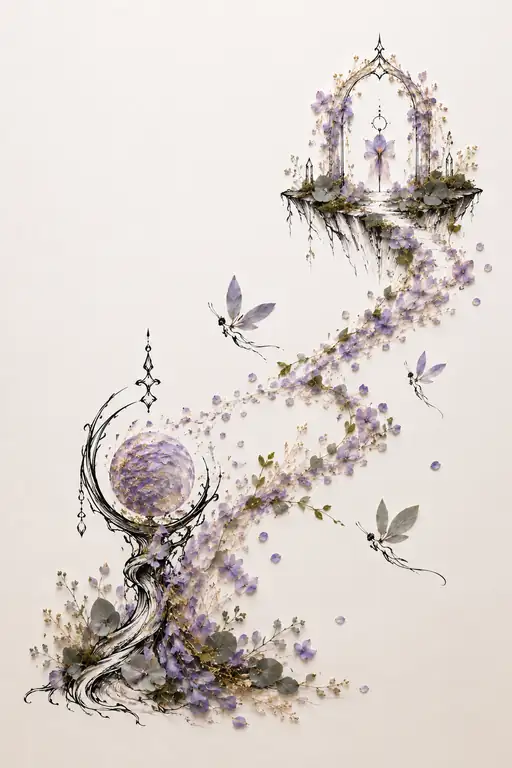 Path of Fairies to the Star Portal
 Ascending Guardian of the Blooming Crags
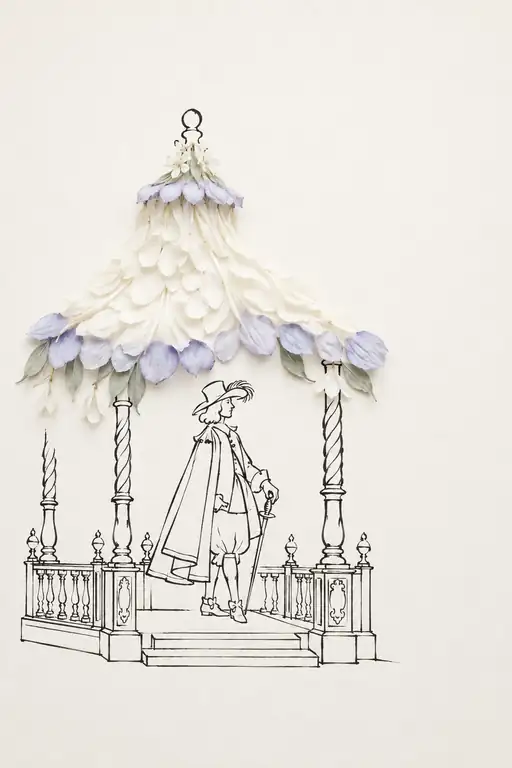 Noble Stance Beneath the Floral Canopy
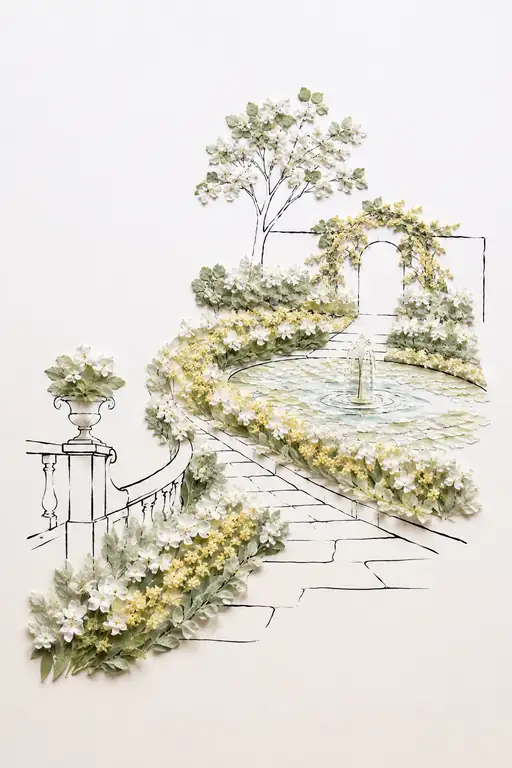 Blossom Terraces of the Sunlit Garden
 Violet Vintage and Slender Glass
 Timeless Melody in Mauve