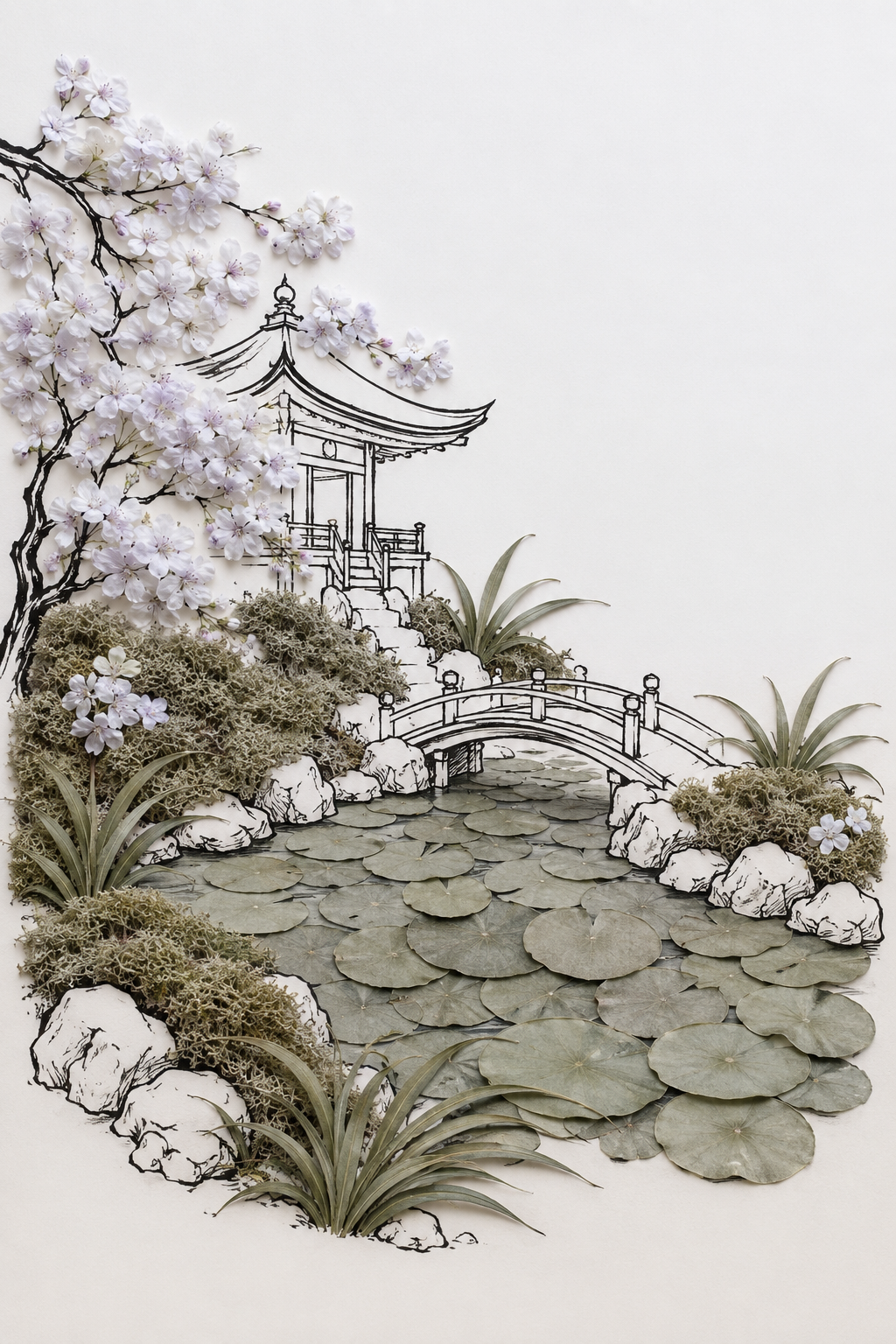
Spring Solitude at the Curved Bridge
Critique
Introduction This botanical garden scene combines an ink pavilion and arched bridge with real blossoms, moss, long leaves, and a pond paved in round gray foliage. The materials create unusually convincing spatial depth while retaining the clarity of illustration. Description A flowering tree rises along the left edge, its dark trunk supporting clouds of white-pink blossoms. Behind it, steps lead to an open pavilion with a curved roof. A small arched bridge spans the middle distance. Overlapping circular leaves cover the pond from foreground to bridge. Analysis The pond forms a broad wedge that narrows toward the bridge, creating strong recession. Overlapping leaves increase in scale toward the foreground and act like natural perspective tiles. The bridge establishes a horizontal threshold, while the pavilion and flowering tree lift the left side vertically. Dense moss alternates with white rock openings. Interpretation and Evaluation The path from pond to bridge, steps, and pavilion suggests progressive entry into reflection. Actual plant matter makes the garden both represented and physically present, collapsing distance between image and specimen. The leaf-covered water could imply stillness, concealment, or seasonal accumulation. Abundance is carefully controlled; blank sky above the pavilion provides essential release and makes the blossoms feel airy rather than crowded. Conclusion The work offers a persuasive synthesis of garden design and collage. Every material carries spatial purpose: moss shapes banks, round leaves establish water, flowers mark season, and ink supplies cultural architecture. The viewer is not shown a figure, yet the bridge and steps imply a waiting route. Calm, layered, and tactile, the scene transforms botanical remnants into an inhabitable sanctuary.
Same Subcategory
Similar Artworks
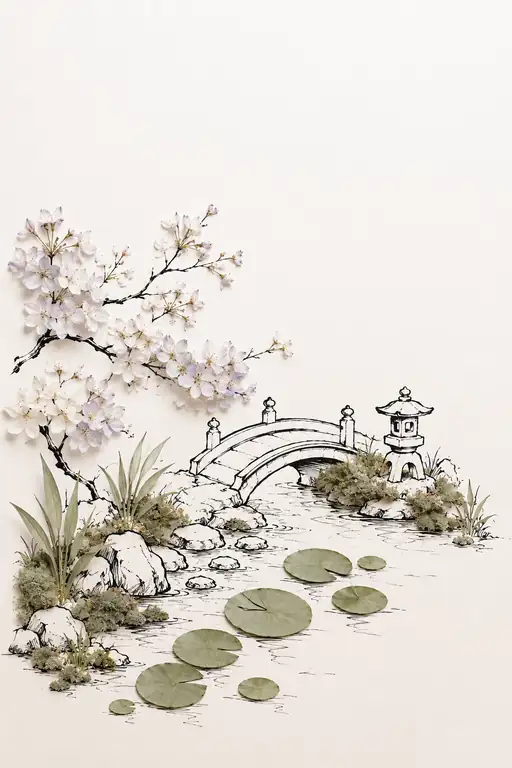 Arched Bridge by the Blossoming Cherry Tree
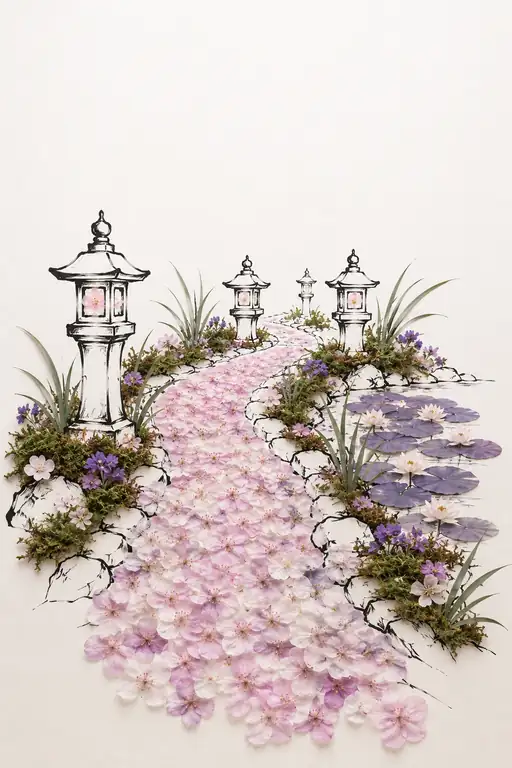 Blossom-Carpeted Pathway by the Stone Lanterns
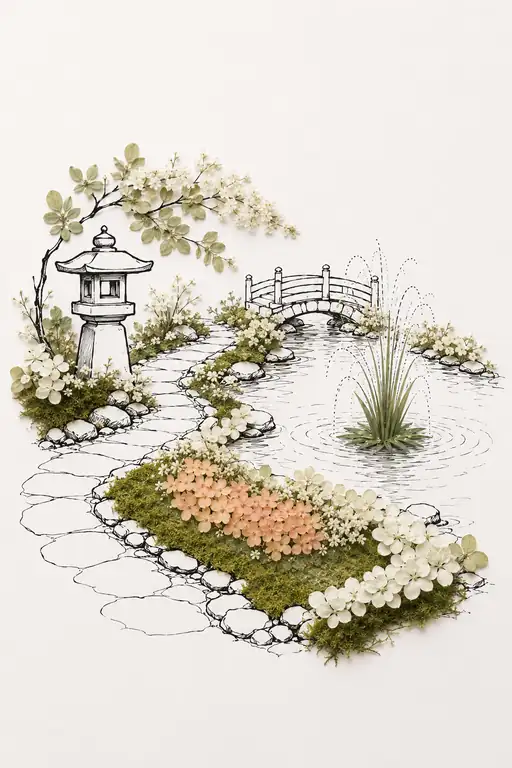 Pathway of the Lantern and Bridge
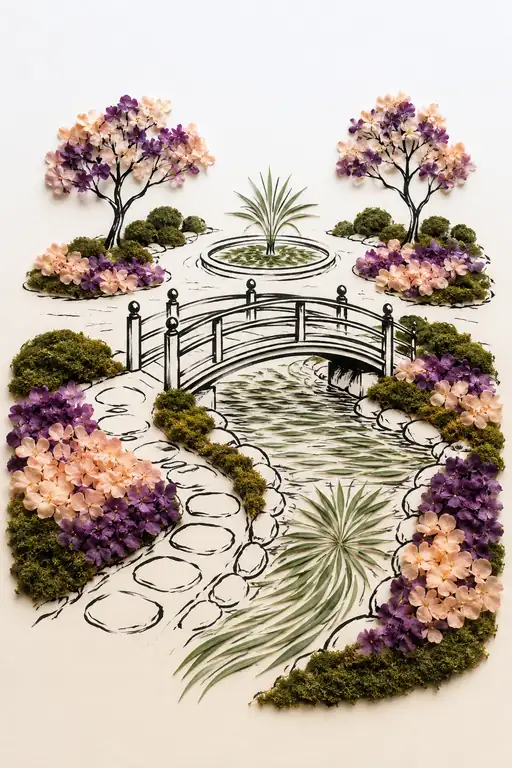 Arched Bridge Over the Stream of Flowing Petals
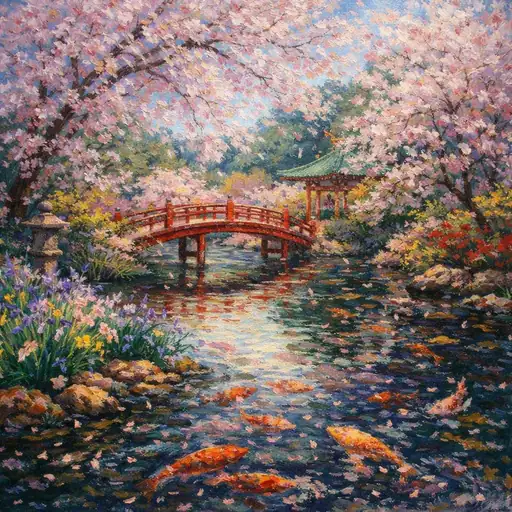 Whispers of Cherry Petals
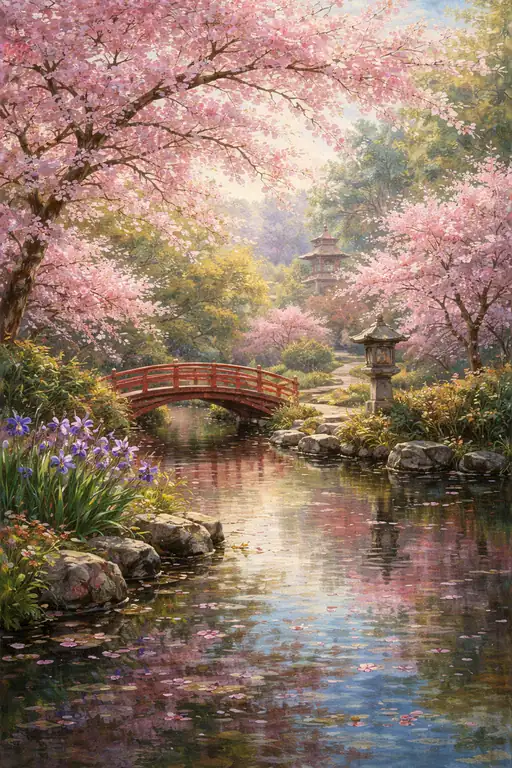 Tranquility in the Zen Garden
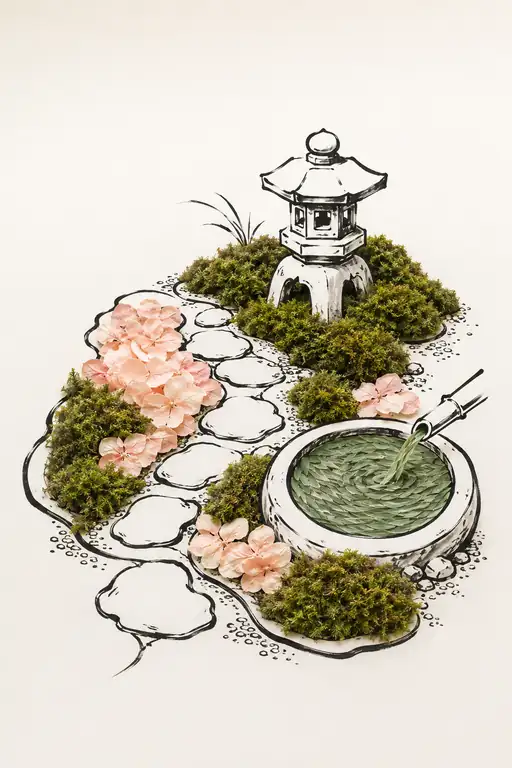 Stone Lantern and Flowing Water in the Moss Garden
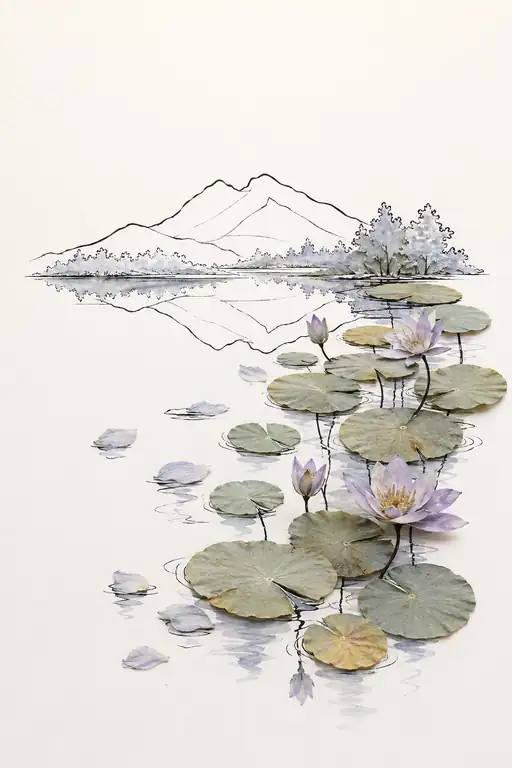 Water Lilies Slumbering on Mirror Lake
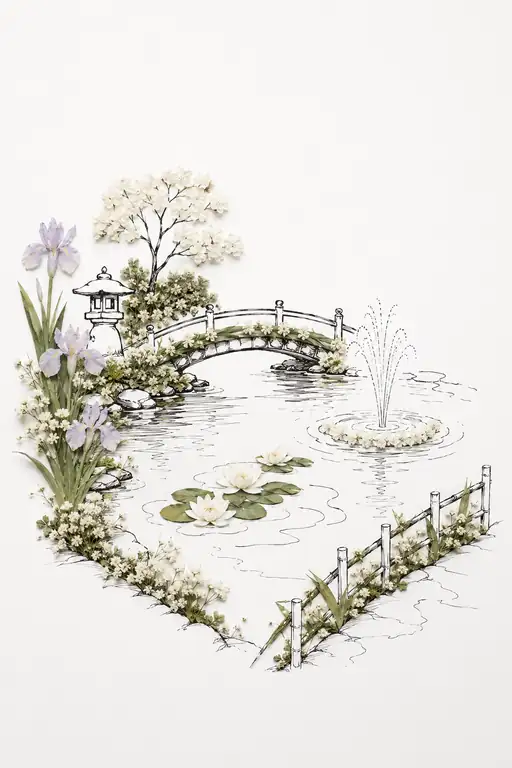 Classic Garden Pond Adorned with Irises and Water Lilies
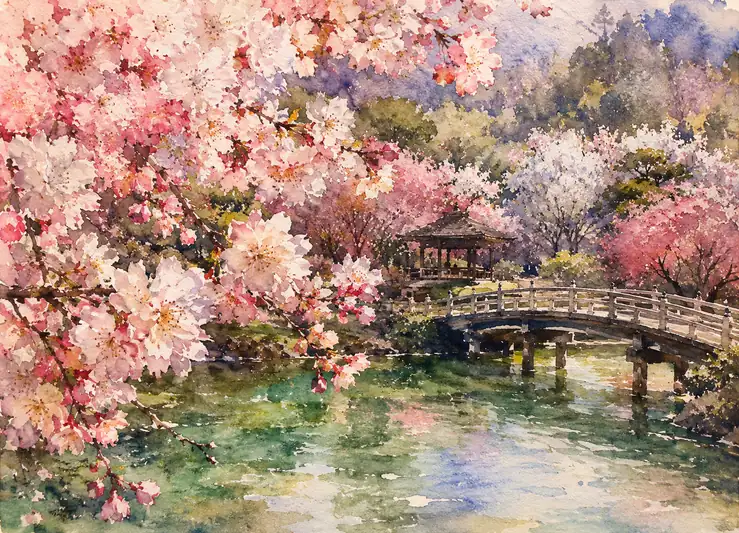 The Waltz of Sakura and Stone