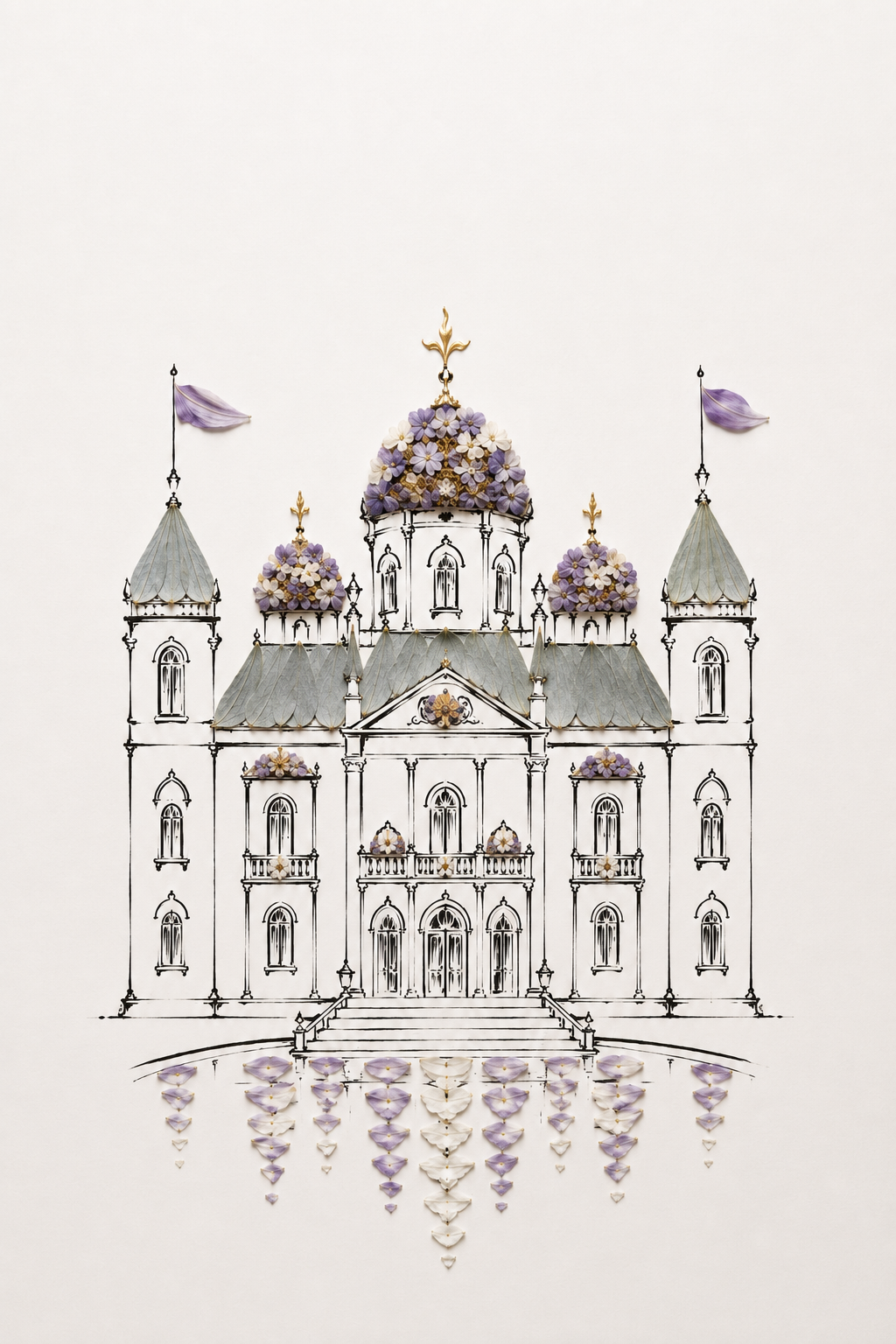
Twilight Spires of Pale Lavender
Critique
Introduction This frontal palace study uses black architectural line, gray leaf roofs, violet floral domes, and a petal reflection to stage an image of cultivated grandeur. Compared with a landscape setting, the strict elevation isolates proportion and ornament. Description Two tall square wings flank a central block with portico, balconies, and three entrance doors. Behind the long leaf-tiled roofs rise two smaller flower cupolas and one large central dome. Purple petal flags mark the outer towers, and golden finials punctuate the upper silhouette. Analysis Bilateral symmetry governs nearly every architectural element, producing calm ceremonial weight. Repeated arched windows establish a regular grid, while the towers create a stepped ascent toward the central dome. The gray-green leaves form continuous roof planes that separate linework from floral crowns. The reflection is less literal than rhythmic: tapering petal columns repeat the façade’s vertical bays. Broad white margins keep the dense center crisp and luminous. Interpretation and Evaluation The palace presents power as something maintained through cultivation. Flowers replace durable masonry at the most prestigious points, making splendor dependent on bloom, care, and eventual fading. The mirrored petals suggest that public magnificence is also an image offered to viewers. Exact symmetry might feel impersonal, yet subtle differences among each dome’s blossoms and roof leaves restore evidence of touch and time. Conclusion The work is persuasive because structural clarity and botanical vulnerability remain in productive tension. Ink makes the building credible; real materials make it temporal. The central stair and reflection extend a ceremonial axis toward the viewer, while flags imply a faint surrounding breeze. The result is an elegant palace whose disciplined grandeur is softened by growth and impermanence.
Same Subcategory
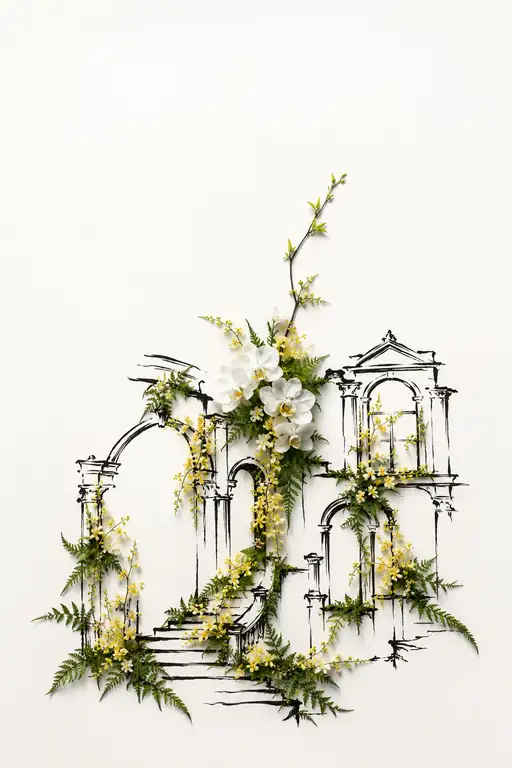 Canopy of White Orchids on Ancient Arches
Similar Artworks
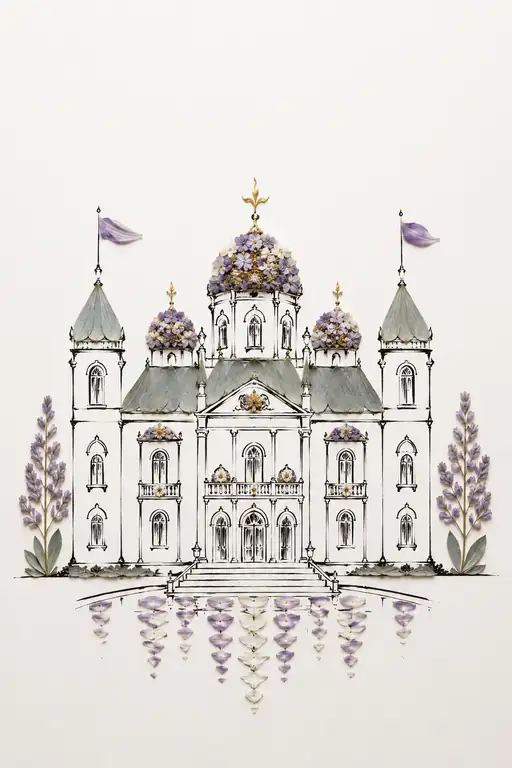 Grand Floral Palace Reflected on Still Water
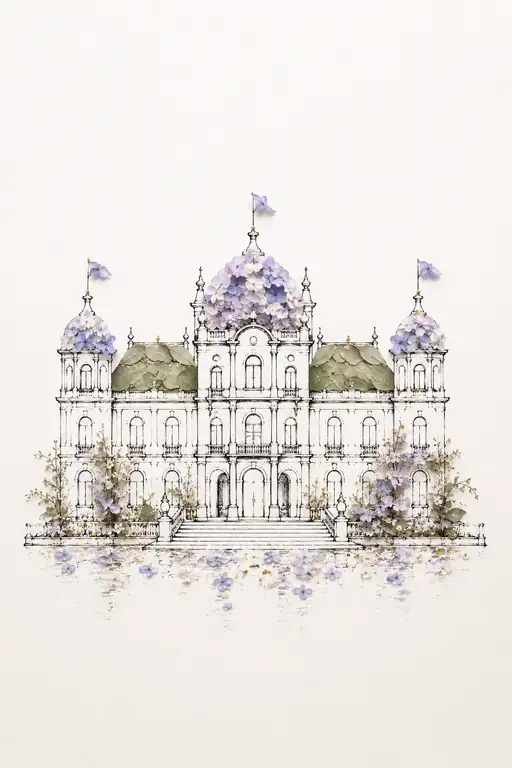 Grand Palace Crowned with Floral Domes
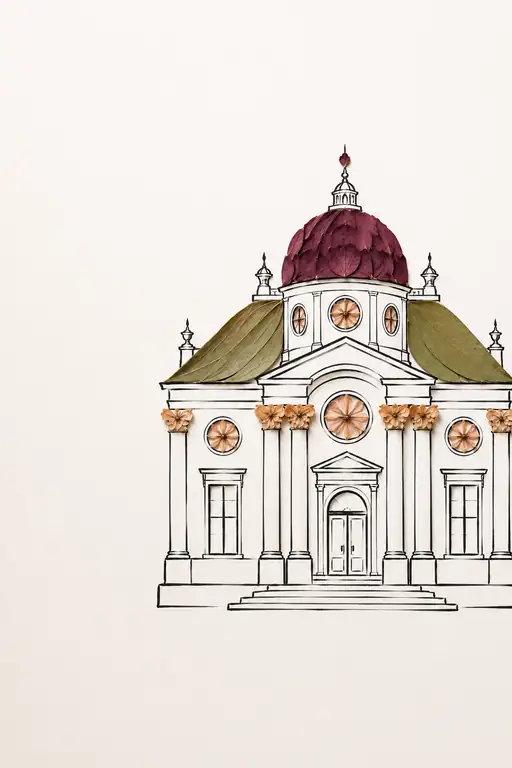 Baroque Sanctuary Crowned in Wine-Red Petals
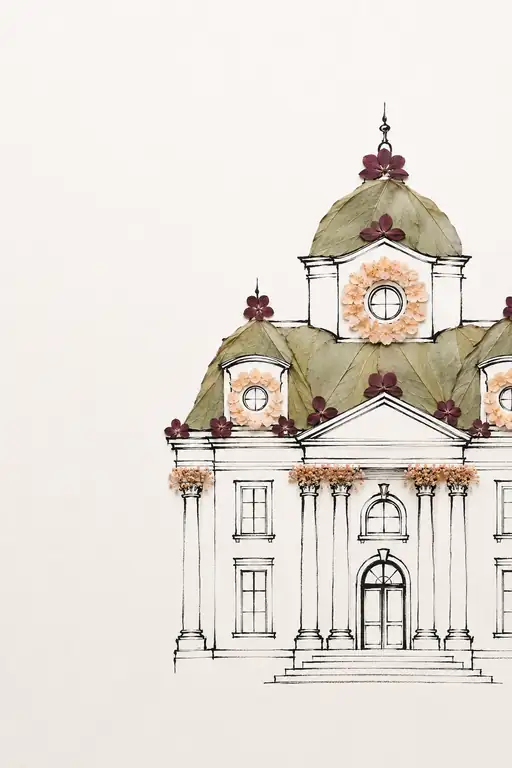 White Hall Crowned with Leaf Domes
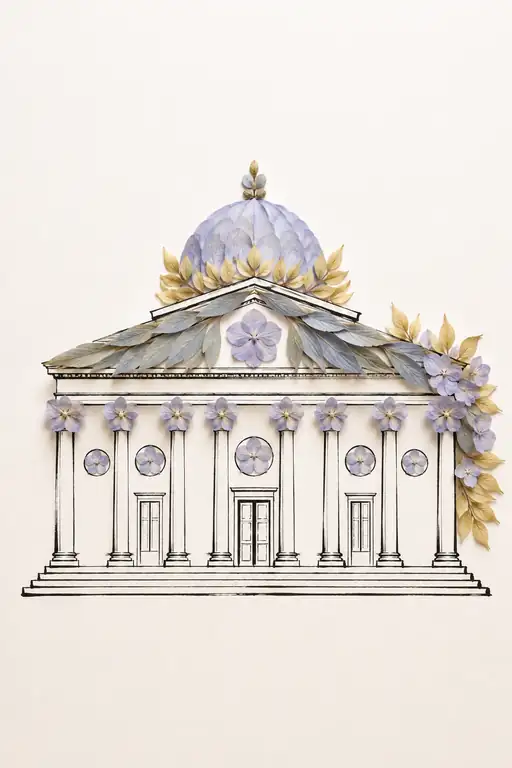 Sanctuary of Pale Lilac and Golden Crests
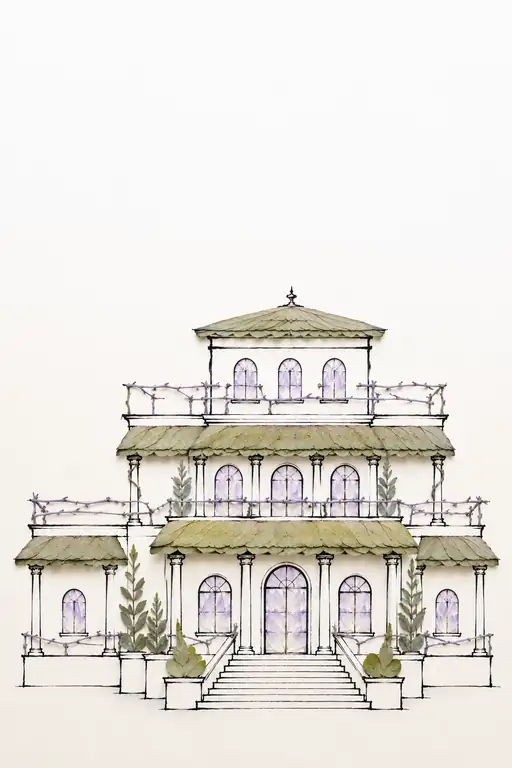 Pavilion of Petal and Tier
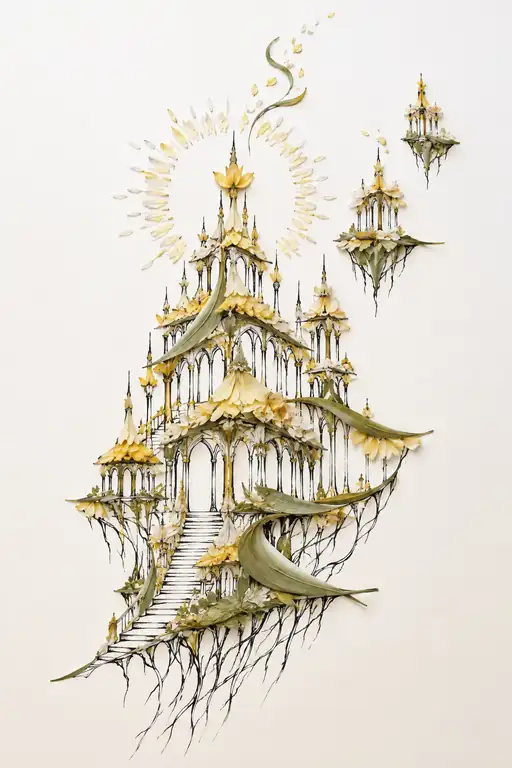 Floating Cathedral Reaching for the Golden Halo
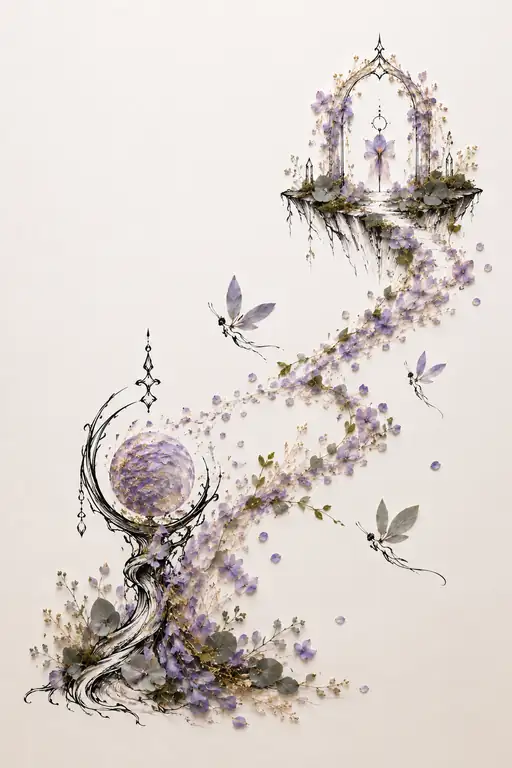 Path of Fairies to the Star Portal
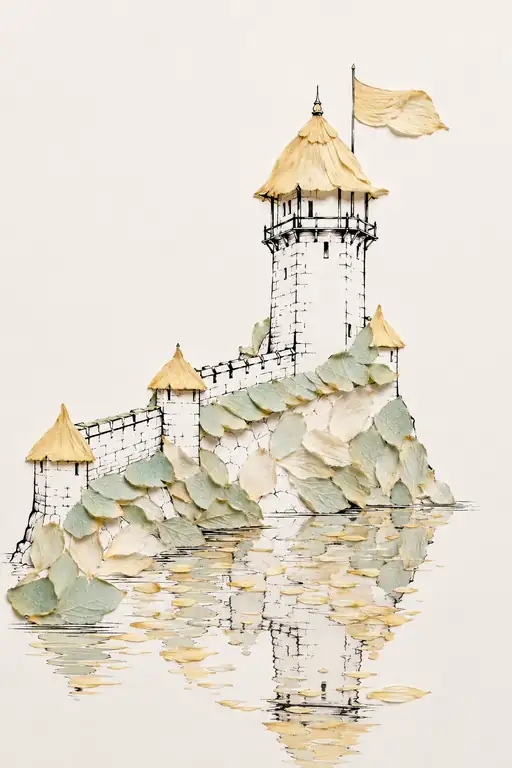 Fortress of Light Guarding the Shimmering Waters
 Song of the Lavender Siren