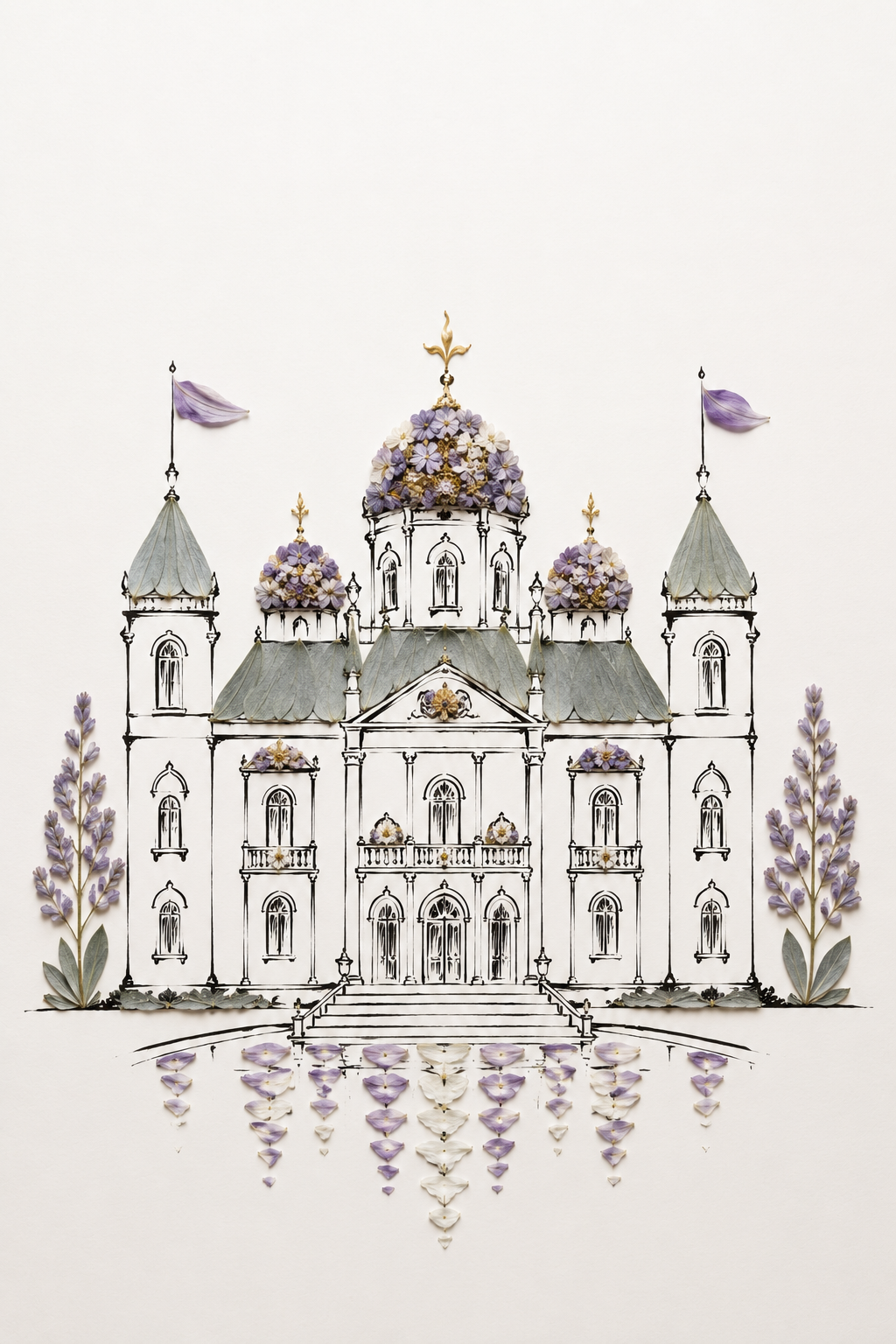
Grand Floral Palace Reflected on Still Water
Critique
Introduction This grand botanical palace is built from disciplined ink architecture, gray-green leaf roofs, and violet flower domes. Its frontal symmetry and reflecting pool evoke ceremonial European residences, yet the preserved materials lend the monument a seasonal softness. Description A broad central block with columns, balconies, and an entrance stair is flanked by two square towers. Smaller cupolas rise behind, and a large flower-packed dome crowns the center. Overlapping sage leaves tile the roofs. Lavender flowers fill the domes, pediments, and balcony urns. Tall flowering stalks stand at both outer edges. Analysis Strong bilateral symmetry produces ceremonial stability. Repeated windows and columns regulate the wide façade, while stepped tower heights draw the eye upward to the central finial. Gray roofs separate white walls from violet crowns and keep the palette coherent. The pool’s petal reflection repeats the building in an abstract, inverted triangle. Interpretation and Evaluation The palace appears to bloom rather than merely stand. Flowers occupy locations traditionally reserved for metal, tile, and carved heraldry, transforming power into cultivation. Mirrored petals below suggest that magnificence survives as an unstable image. The two tall side plants resemble living standards or guardians. Although the symmetry is emphatic, small differences among leaves and blossoms preserve individuality and keep the architecture from feeling mechanically duplicated. Conclusion The work combines spectacle with delicacy in a remarkably legible design. Architectural line gives the botanical elements public scale; their veins and fading tones return intimacy to the palace. The central stair invites approach, while the reflection extends the scene toward the viewer. It is an elegant vision of authority softened by growth, ceremony, and impermanence.
Same Subcategory
Similar Artworks
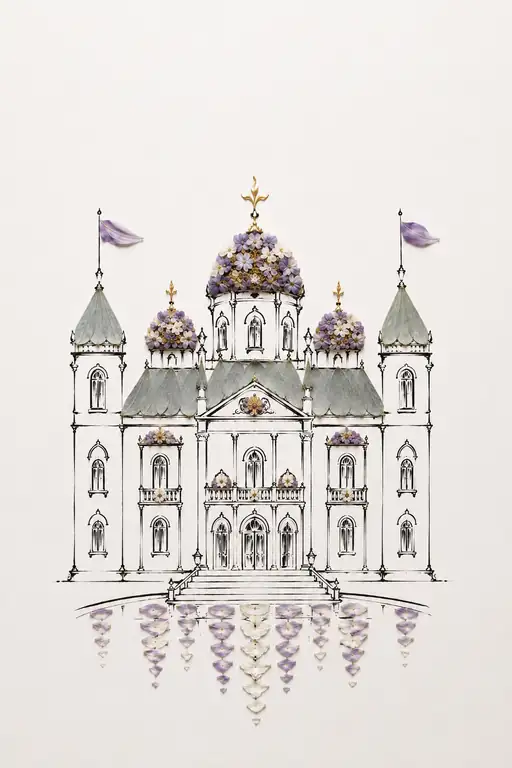 Twilight Spires of Pale Lavender
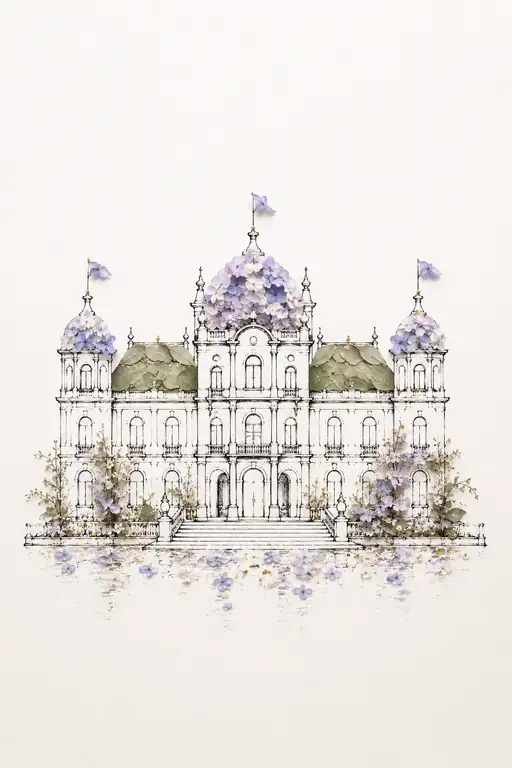 Grand Palace Crowned with Floral Domes
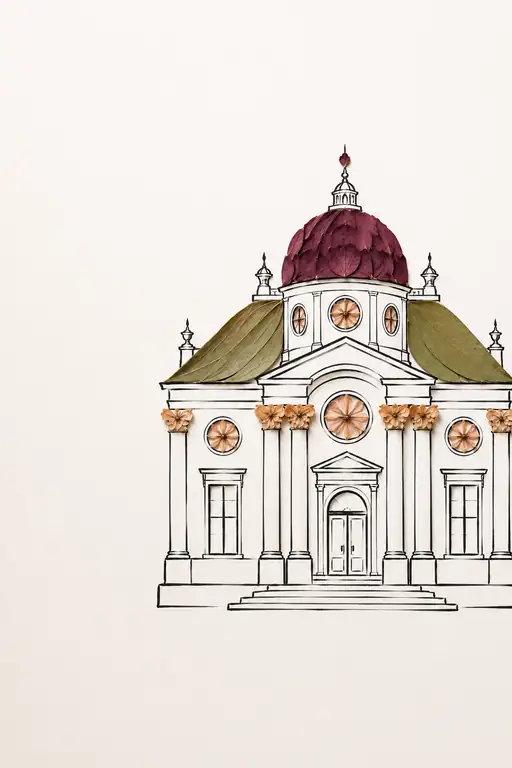 Baroque Sanctuary Crowned in Wine-Red Petals
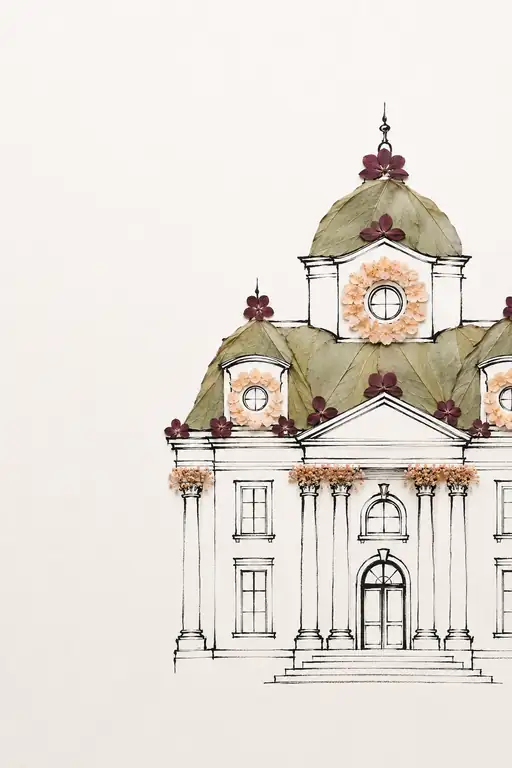 White Hall Crowned with Leaf Domes
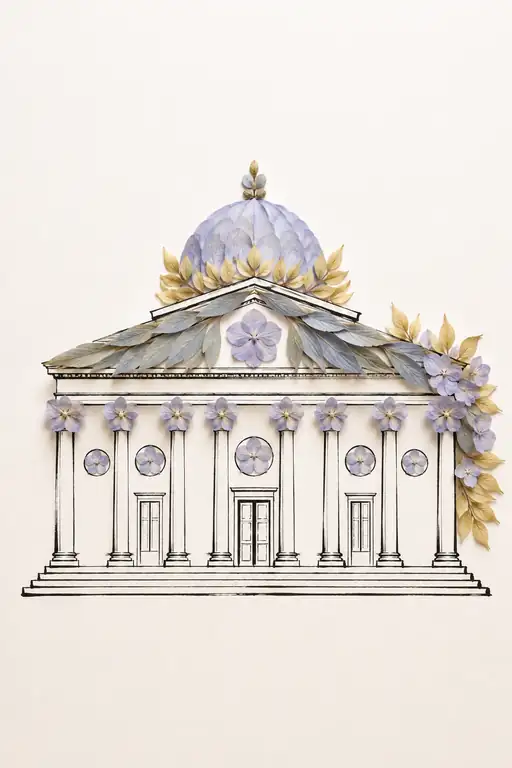 Sanctuary of Pale Lilac and Golden Crests
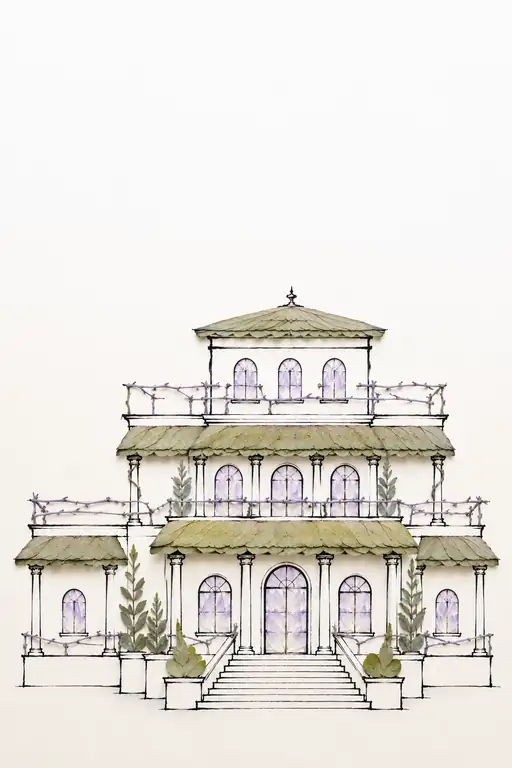 Pavilion of Petal and Tier
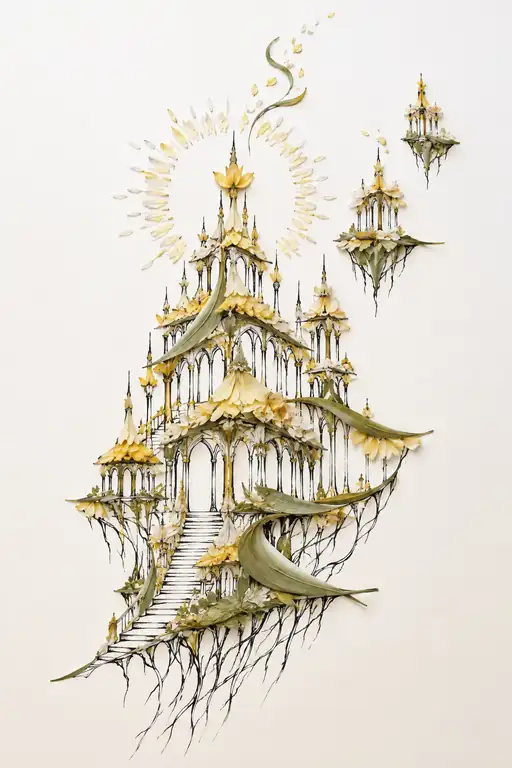 Floating Cathedral Reaching for the Golden Halo
 Song of the Lavender Siren
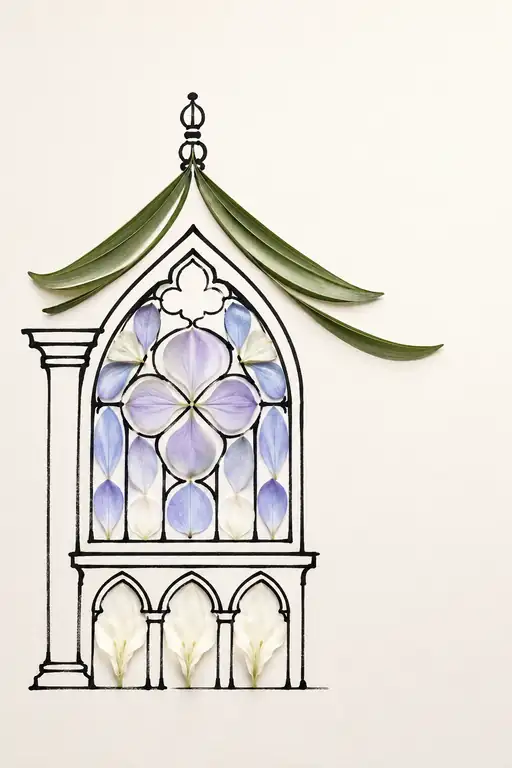 Gothic Rose Window of Translucent Petals
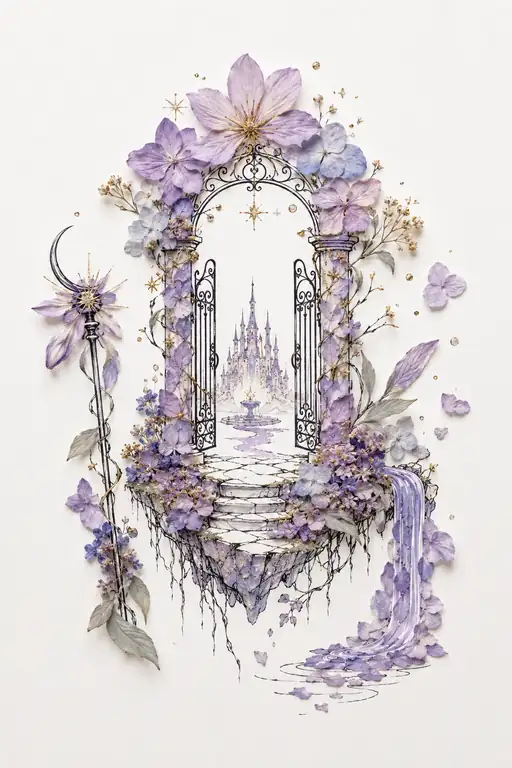 Floating Floral Portal to the Distant Castle