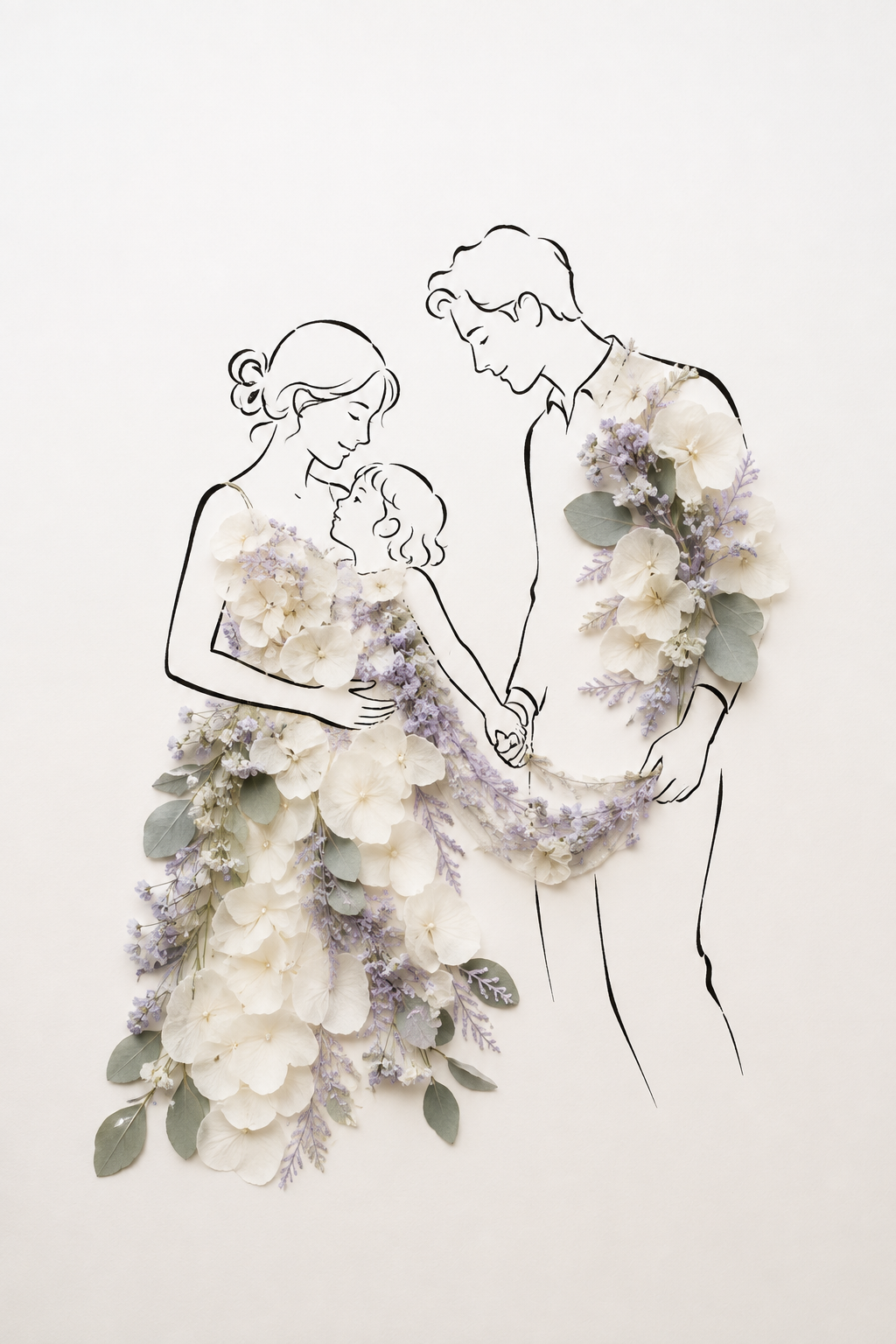
Family Bound by a Garland of Blossoms
Critique
Introduction This tender family portrait combines minimal ink contours with cascades of white hydrangea-like flowers, pale lavender sprigs, and gray-green leaves. A mother holds a child while a father leans toward them, their joined hands completing the group. Description The mother stands at left with her head inclined toward the child in her arms. The child looks upward, one arm reaching across her floral dress. At right, the father bends forward and holds the mother’s hand. Large cream blossoms and lavender stems form the woman’s long gown and continue as a garland between the adults. Analysis Three bowed heads create a compact triangular focus. The chain of hands and the child’s raised face produces an internal circuit of attention. Floral density descends strongly on the left, balanced by the father’s height and chest bouquet on the right. Repeated white discs unify the two adults, while lavender strands bridge the central gap. Interpretation and Evaluation Flowers function as a shared fabric of kinship rather than individual decoration. The garland crossing between the parents makes emotional connection physically visible, while the child occupies its source. White conveys tenderness without becoming sterile because leaves, shadows, and violet accents vary the surface. The father’s partly unfinished body may seem less grounded, but it also emphasizes his act of leaning into an already close embrace. Conclusion The work communicates affection through posture, spacing, and material continuity. Its sentiment remains persuasive because faces are understated and touch is precisely observed. Botanical texture enlarges the family bond without obscuring it. The result is a luminous image of care in which separate bodies are joined by a fragile, flowering continuum.
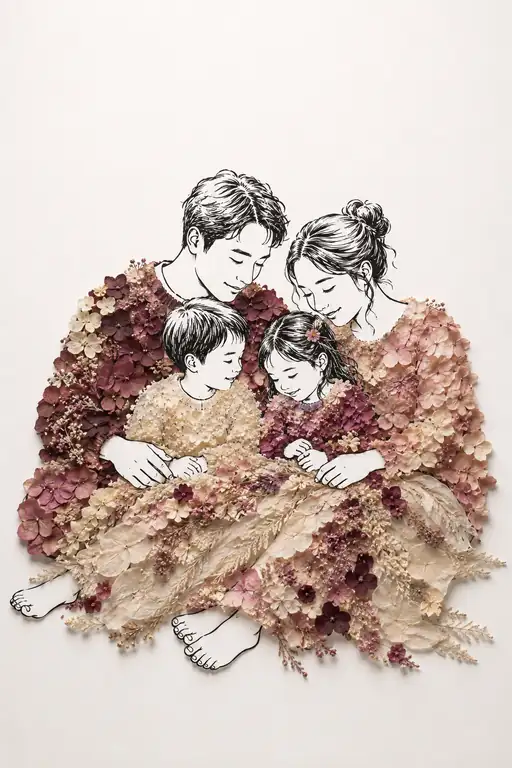 Family Embraced in Flowered Warmth
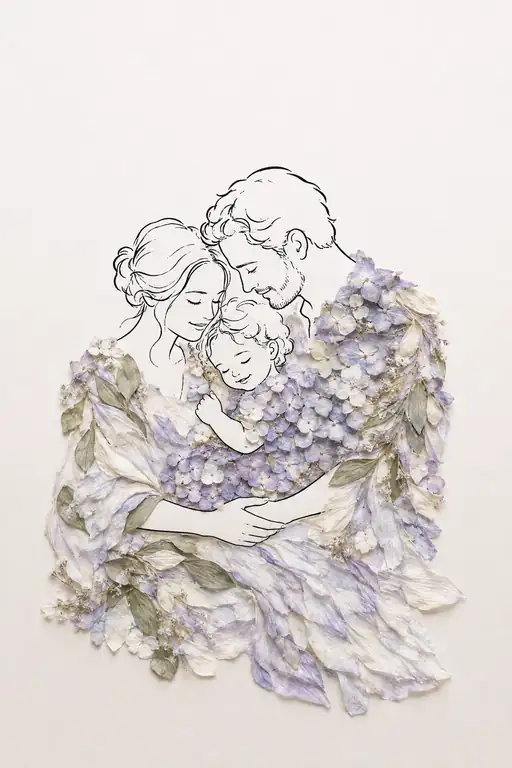 Cradle of Quiet Devotion
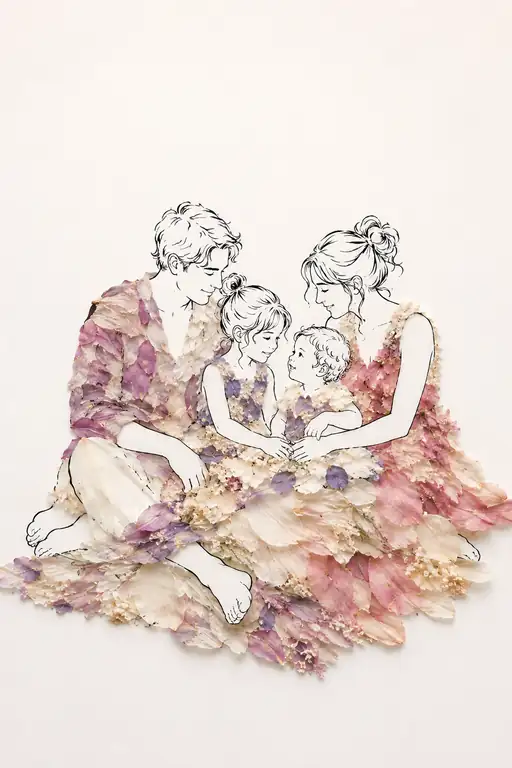 Tender Circle in the Warm Light
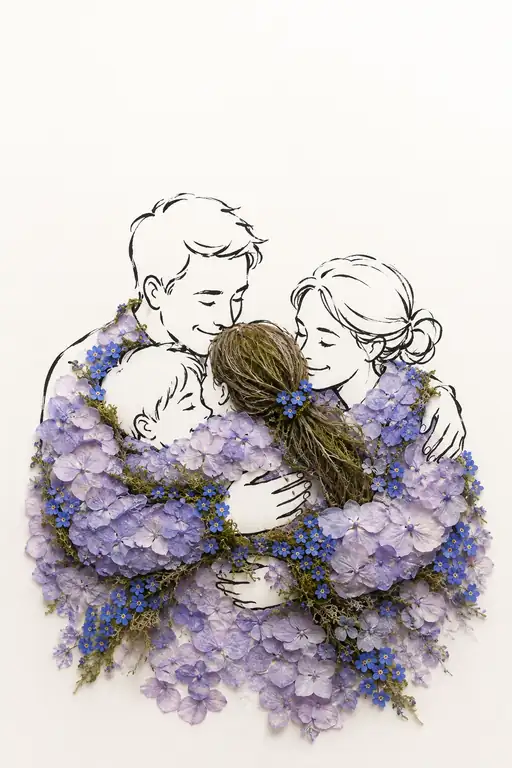 Sanctuary of Four Hearts
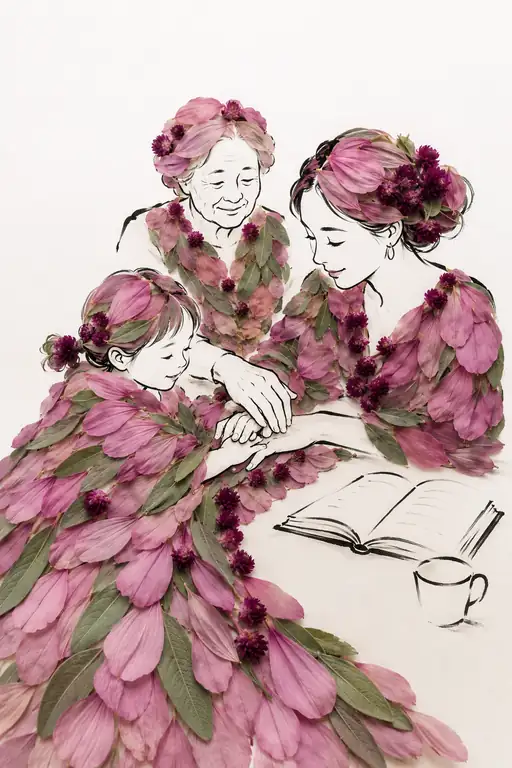 Lineage of Gentle Hands
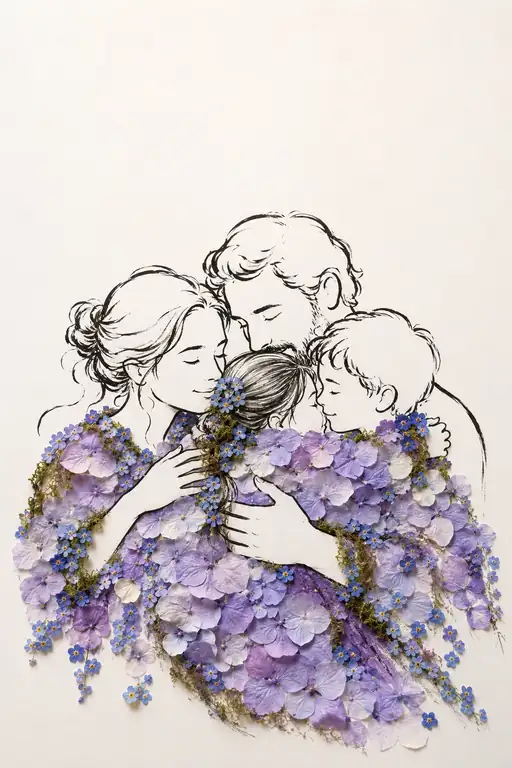 The Sacred Circle of Our Warmth
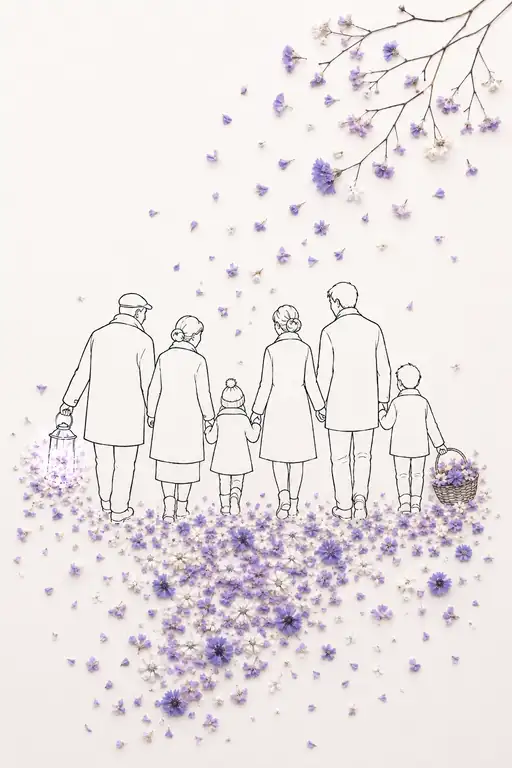 Walking Together Through the Seasons
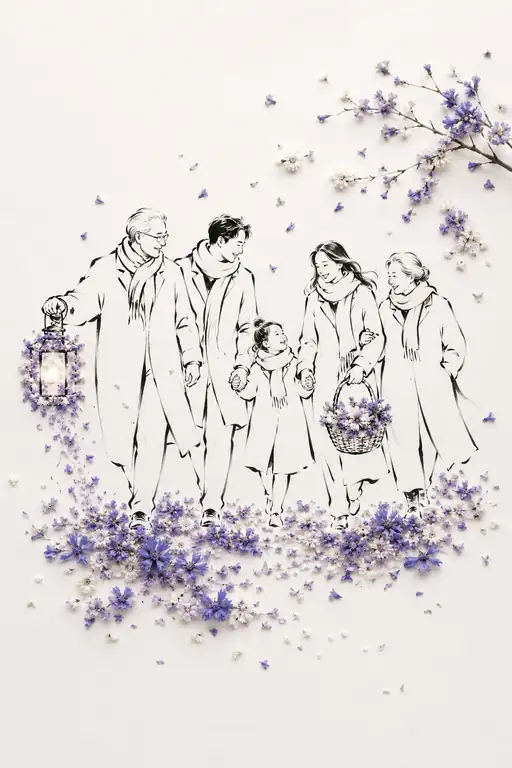 Footsteps Along the Azure Path
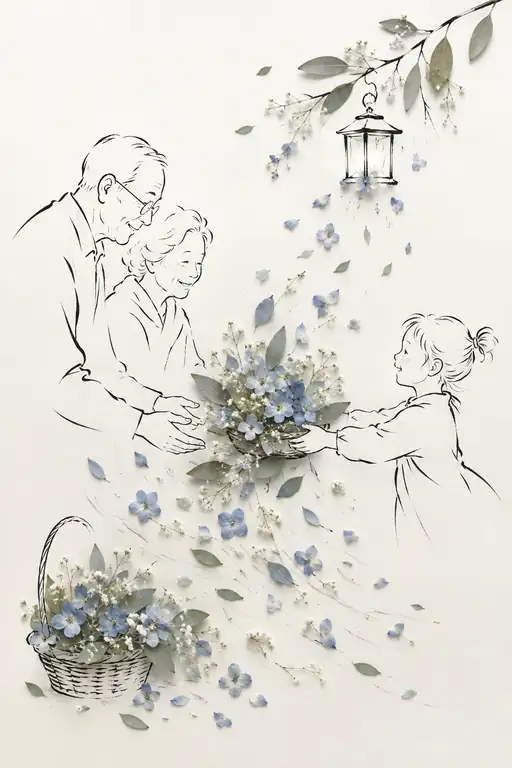 A Handful of Innocent Joy
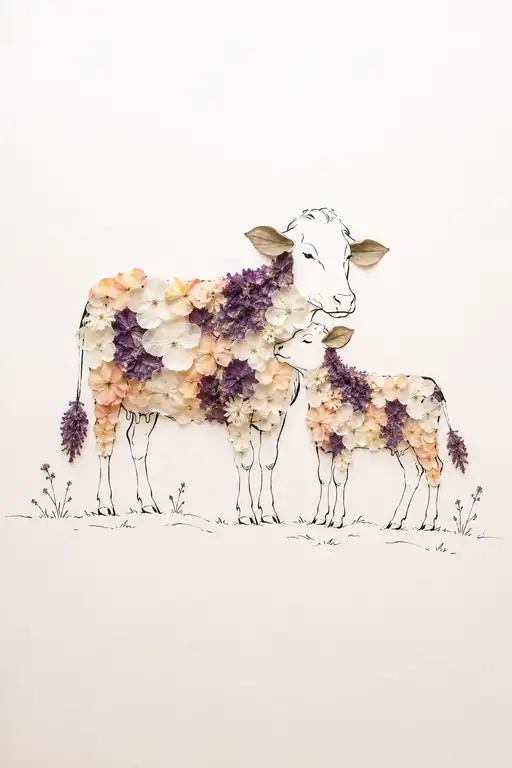 Gentle Stances in Blossom Coat