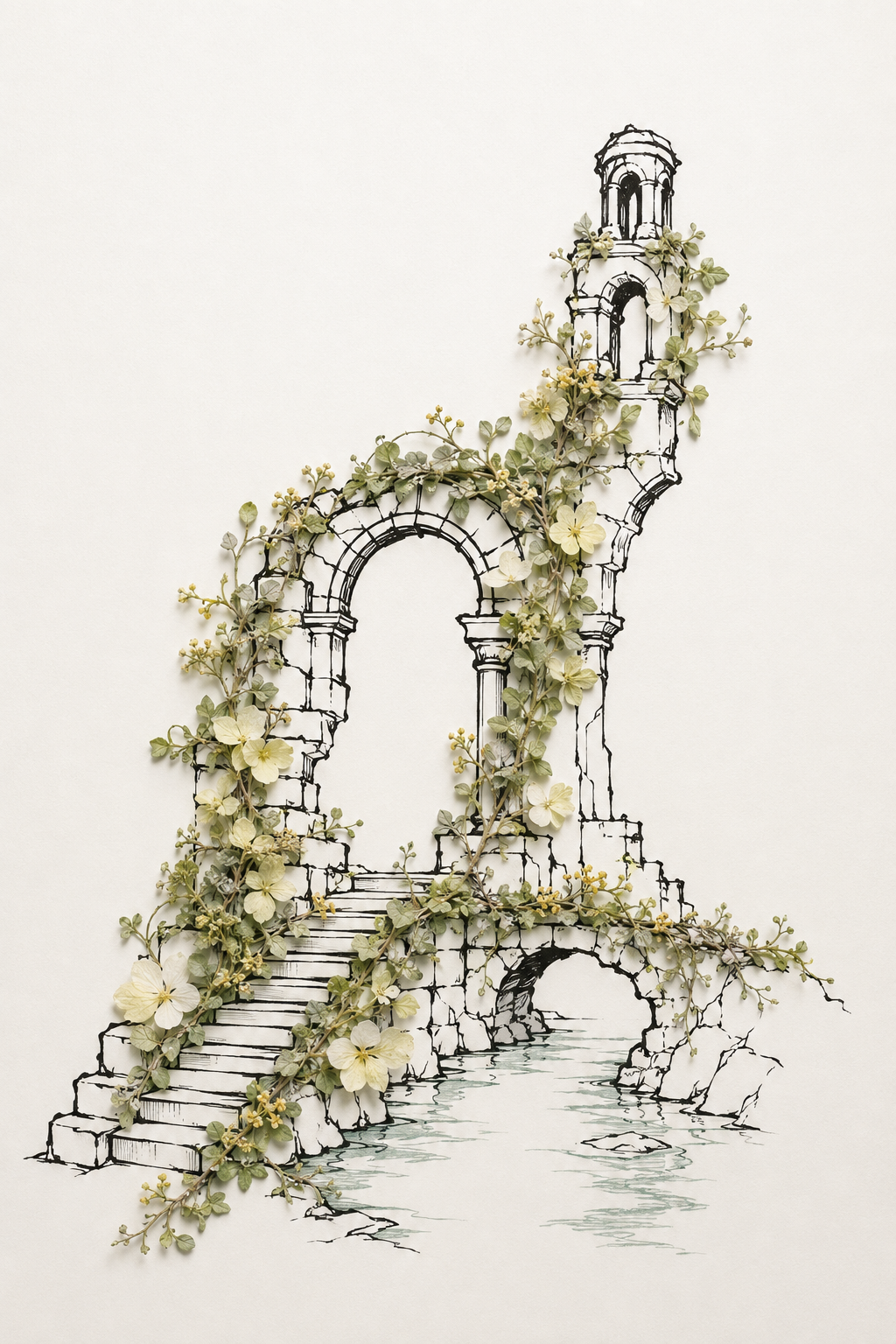
Ancient Arch and Bell Tower by the Stream
Critique
Introduction This romantic ruin combines an ink-drawn stair, arch, bridge, and bell tower with abundant pale vegetation. Cream blossoms and gray-green vines climb every surviving edge, while faint blue lines suggest water below. The scene evokes architecture reclaimed not through violence but through flowering. Description A staircase ascends from the lower left to a large broken arch. Beyond it, a narrow tower rises in several open stages and ends beneath a small dome. To the right, a low bridge crosses a stream through a dark central opening. Flowering stems trace the stairs, arch, tower, and parapet. Analysis The stair’s diagonal initiates an upward journey that continues through the arch to the tower. This zigzag movement is balanced by the bridge’s horizontal span and calm water marks. Dense vines clarify rather than obscure major contours, emphasizing thresholds and load-bearing edges. Pale green and cream soften the black masonry lines. Interpretation and Evaluation The ruin suggests time as collaboration between human making and natural succession. Plants do not simply conceal damage; they redraw the architecture and keep its pathways legible. The open arch becomes a portal, while the tower’s empty chambers invite ascent beyond practical use. The flowers’ freshness complicates conventional melancholy, proposing renewal within loss. Occasional crowded passages are justified by the sense of vigorous reclamation. Conclusion The work offers a persuasive balance of decay, growth, and invitation. Ink records what remains; vines imagine what continues. Its stairs still lead upward, its bridge still crosses water, and its tower still gathers the eye, even though their original world has vanished. The result is an airy, hopeful ruin whose fragility feels sustaining rather than terminal.
Same Subcategory
 Pillars in the Emerald Shallows
Similar Artworks
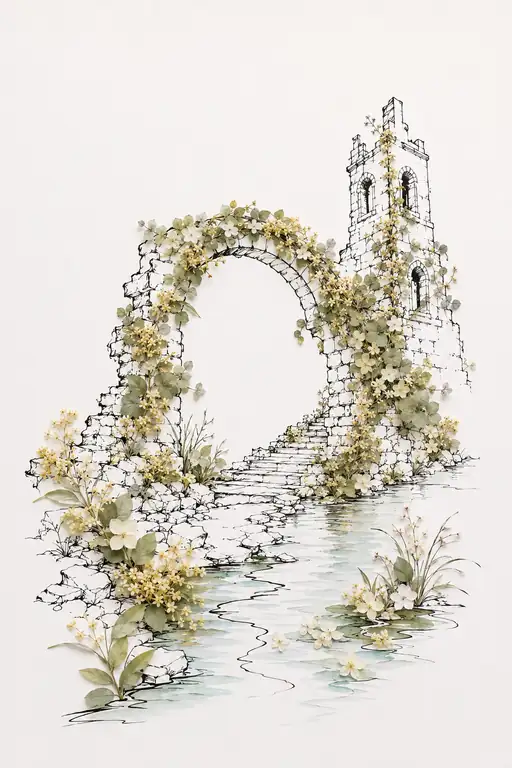 Blossom-Adorned Arch in the Ancient Ruins
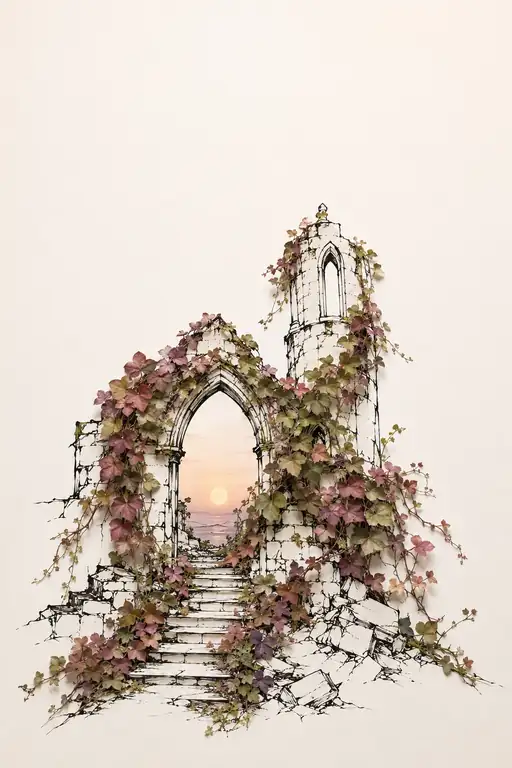 Sunset Portal Through the Ivy-Clad Arch
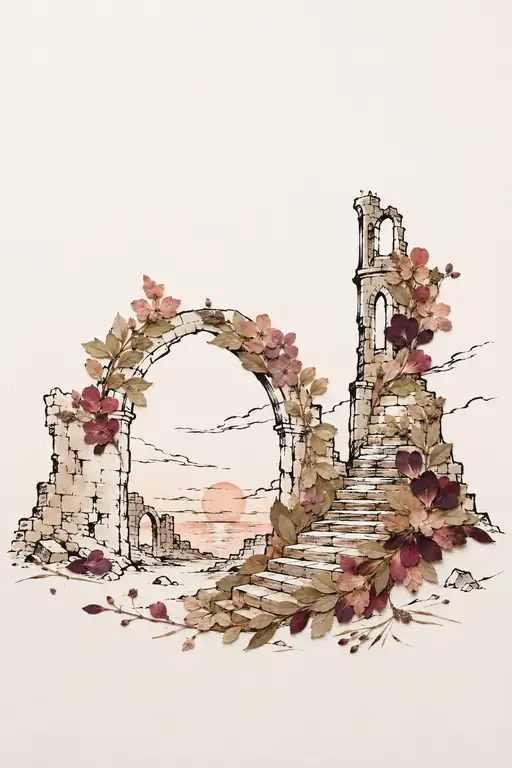 Sunset Framed by Ancient Arches
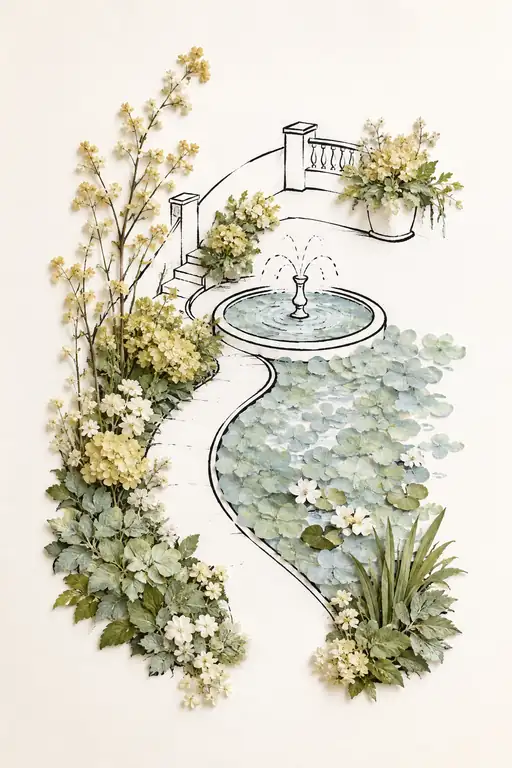 Serenade of the Garden Fountain
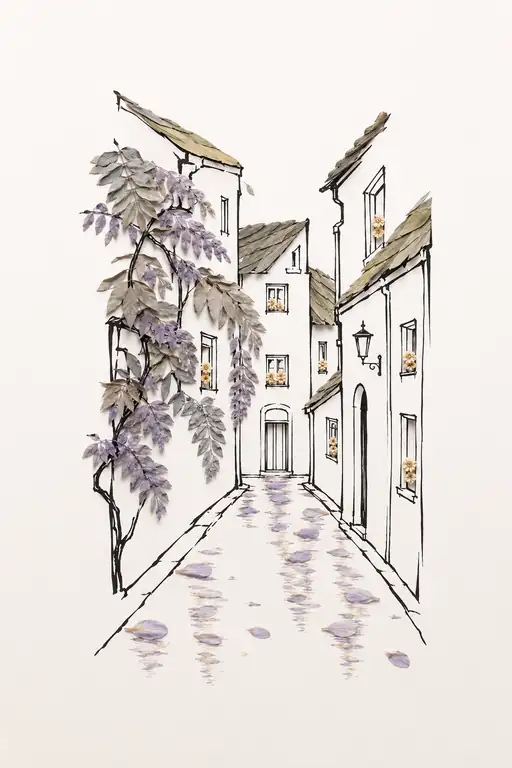 Wisteria Lane Overlooking Cobblestone
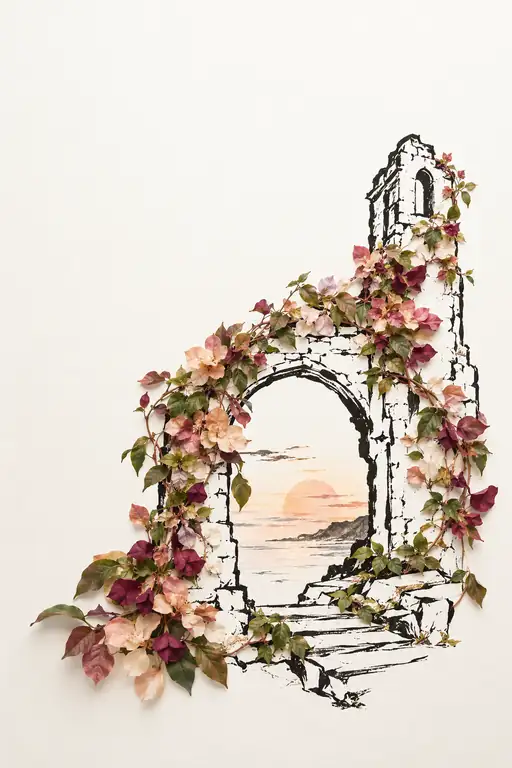 Sunset Glow Through Vine-Covered Ruin
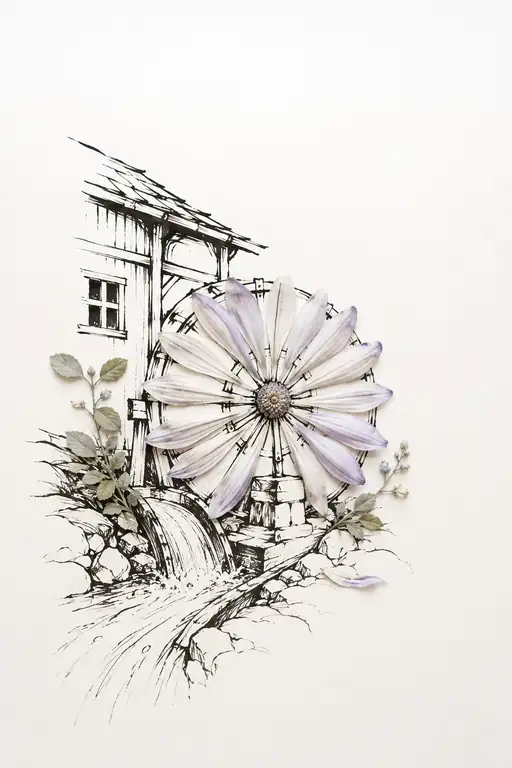 Wheel of Whispering Waters
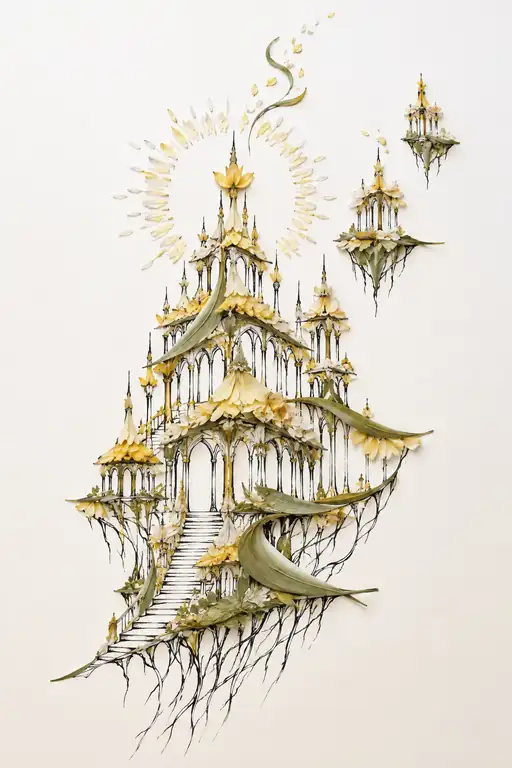 Floating Cathedral Reaching for the Golden Halo
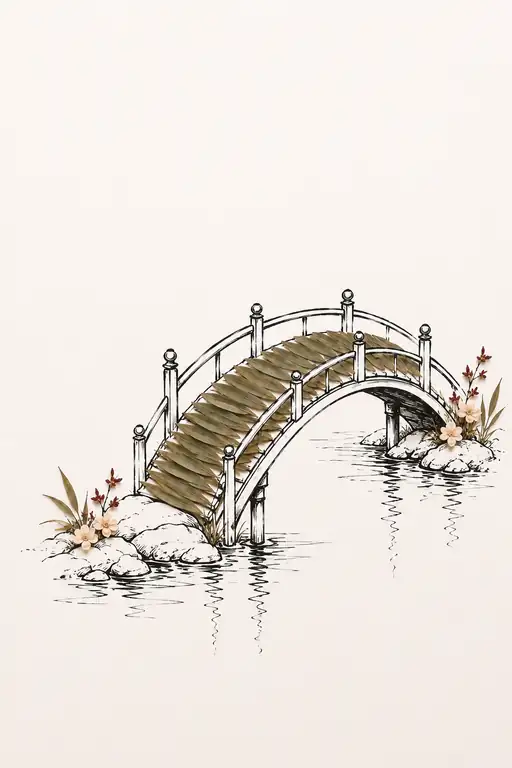 Leaf-Paved Arch Across the Serene Flow
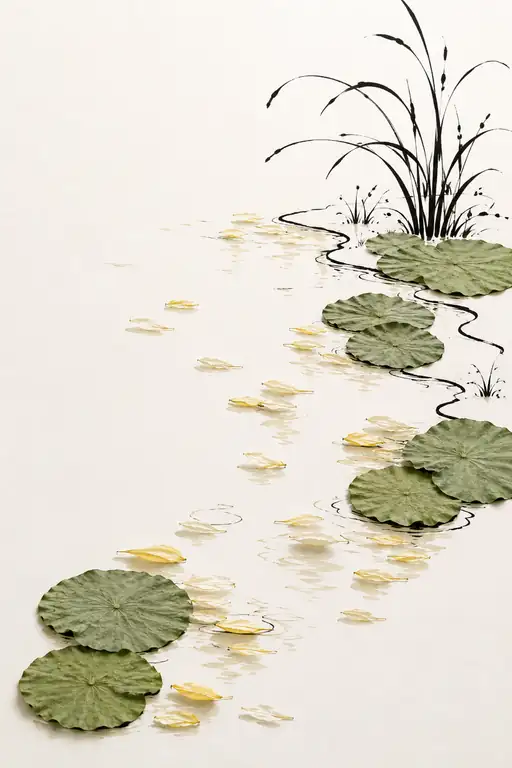 Drifting Lights on the Pond