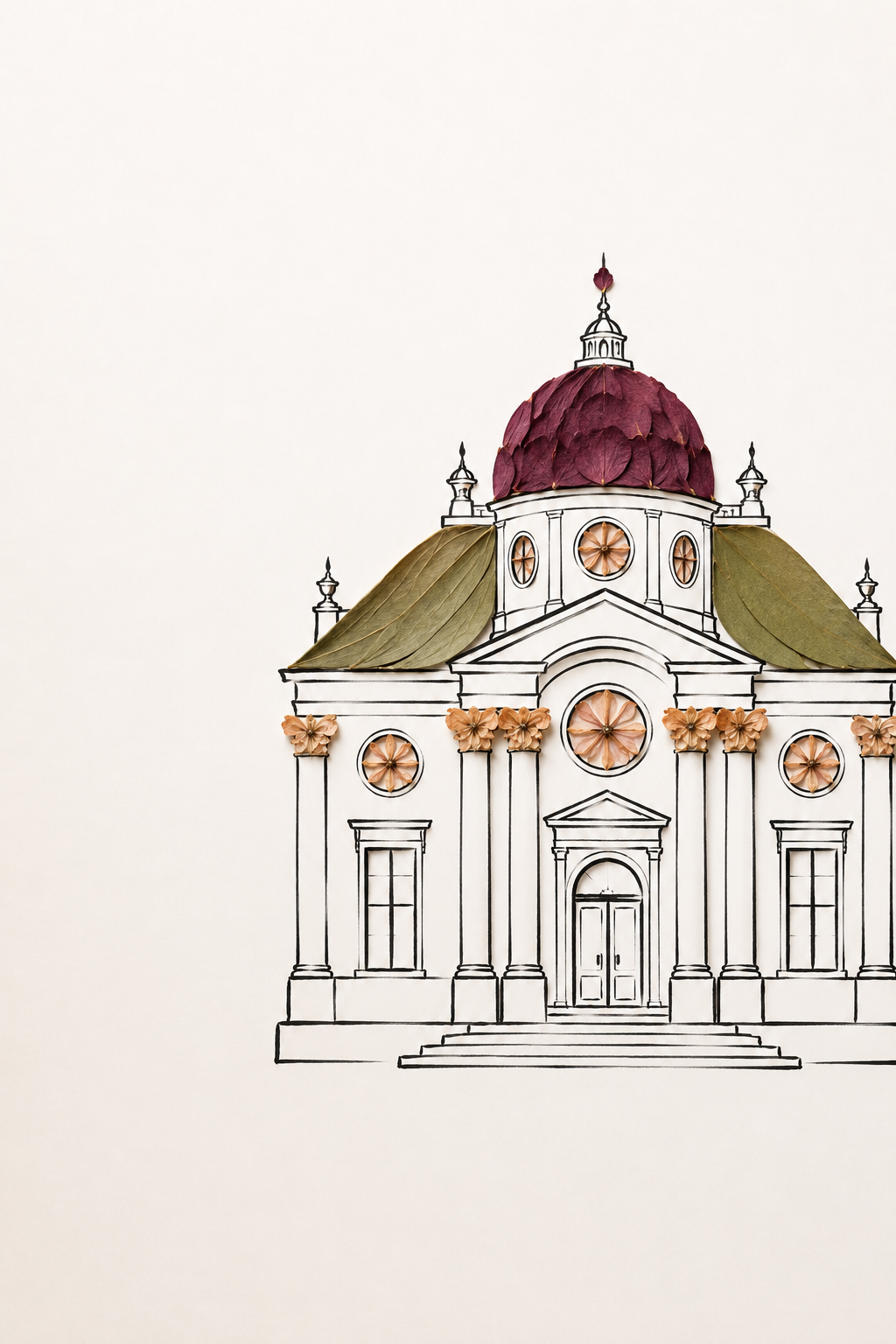
Baroque Sanctuary Crowned in Wine-Red Petals
Critique
Introduction This architectural study combines a symmetrical baroque façade with preserved leaves and petals. Ink supplies columns, doors, cornices, and cupolas; botanical material becomes roof, dome, ornament, and glazing. The building rises from the lower right into a broad field of untouched paper. Description A central doorway and stair anchor the façade beneath a triangular pediment. Tall paired columns divide rectangular windows and circular openings. Peach-colored flowers fill the oculi and crown several capitals. Two olive leaves form the sloping side roofs, while overlapping burgundy petals make the large central dome. Analysis Near symmetry gives the structure authority, although cropped outer bays keep it from feeling diagrammatic. Vertical columns lift the eye toward the dome, whose layered petals provide the darkest and most tactile mass. Olive roofs mediate between burgundy above and peach accents below. Black contours remain sufficiently firm to organize the soft materials. Interpretation and Evaluation Natural fragments translate architectural permanence into something seasonal and vulnerable. A dome traditionally associated with stone or copper is here assembled from petals that retain veins, wrinkles, and slight tears. The flower-filled windows resemble rosettes, linking sacred ornament to actual botanical structure. The roof leaves are unusually convincing because their central veins suggest rafters. Some repeated floral capitals feel playful, but they enliven the strict façade. Conclusion The work succeeds as both an architectural fantasy and a study of material analogy. Its disciplined drawing preserves structural credibility, while petals prevent the monument from becoming cold. The building appears ceremonial yet temporary, as though grandeur could bloom and fade. Spacious paper, restrained color, and lucid symmetry give this compact botanical palace an unexpectedly dignified presence.
Same Subcategory
Similar Artworks
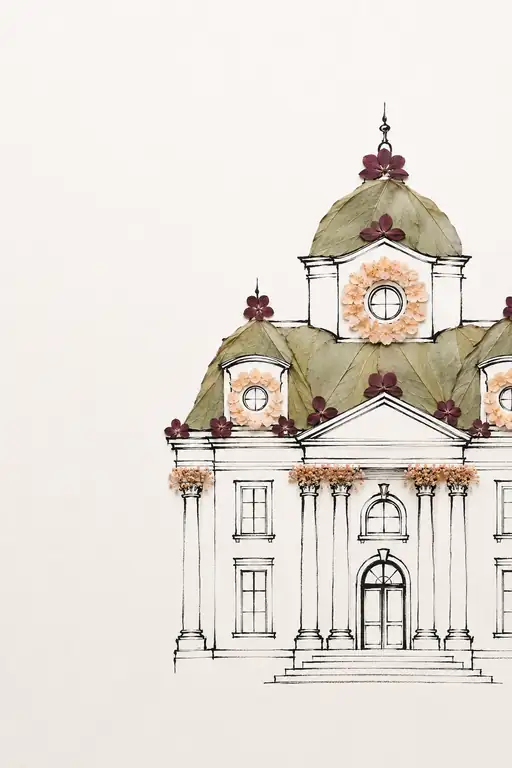 White Hall Crowned with Leaf Domes
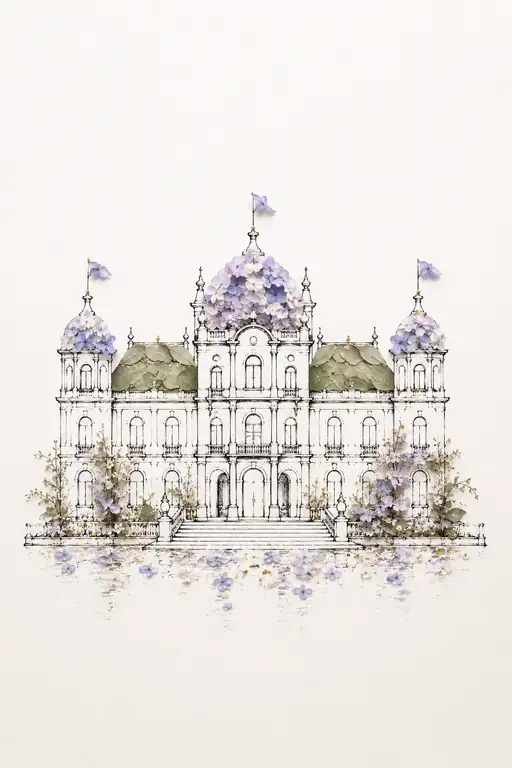 Grand Palace Crowned with Floral Domes
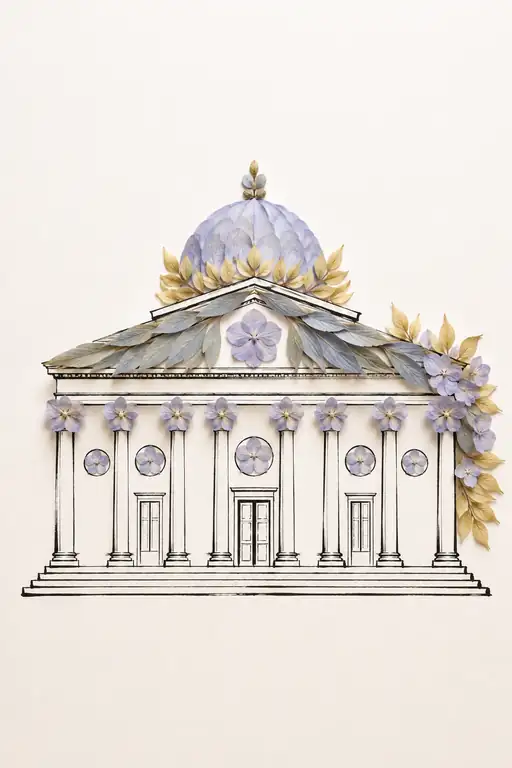 Sanctuary of Pale Lilac and Golden Crests
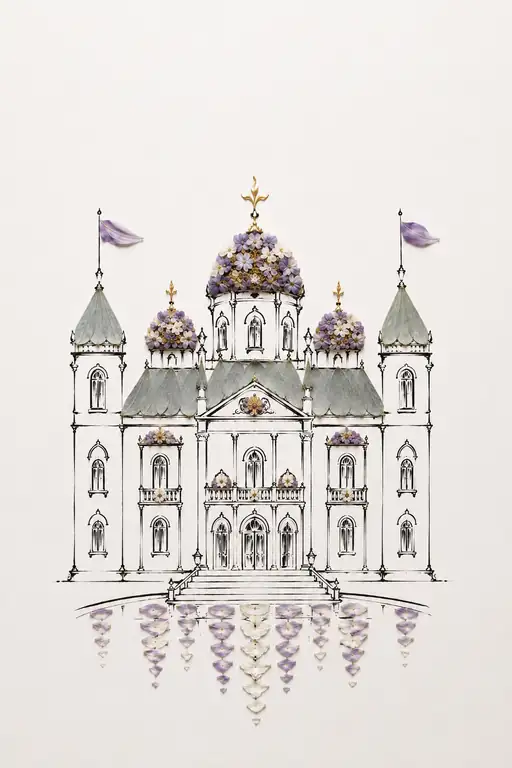 Twilight Spires of Pale Lavender
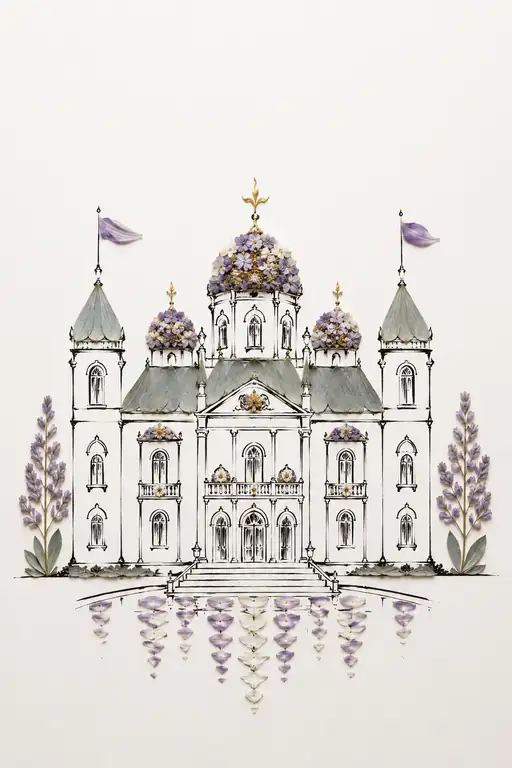 Grand Floral Palace Reflected on Still Water
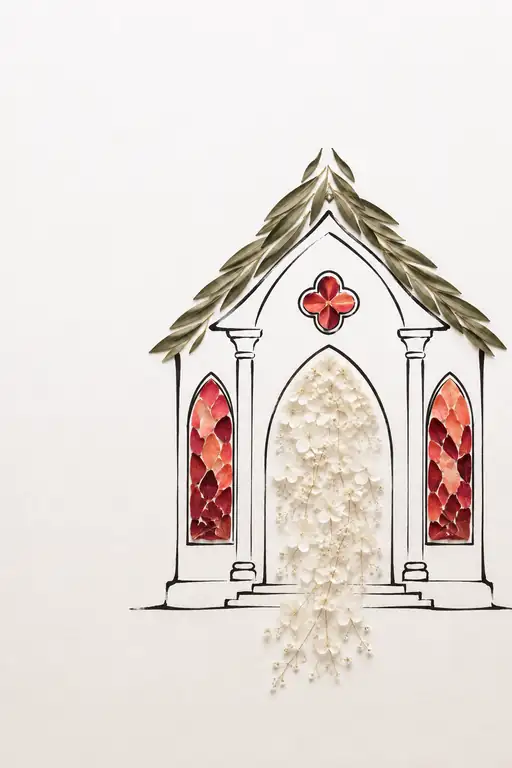 Chapel Threshold Where White Light Cascades
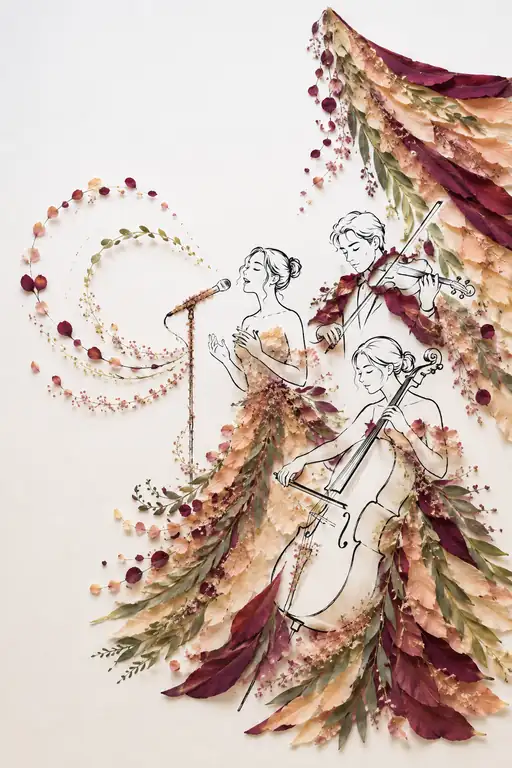 Trio Harmonizing in the Autumn Breeze
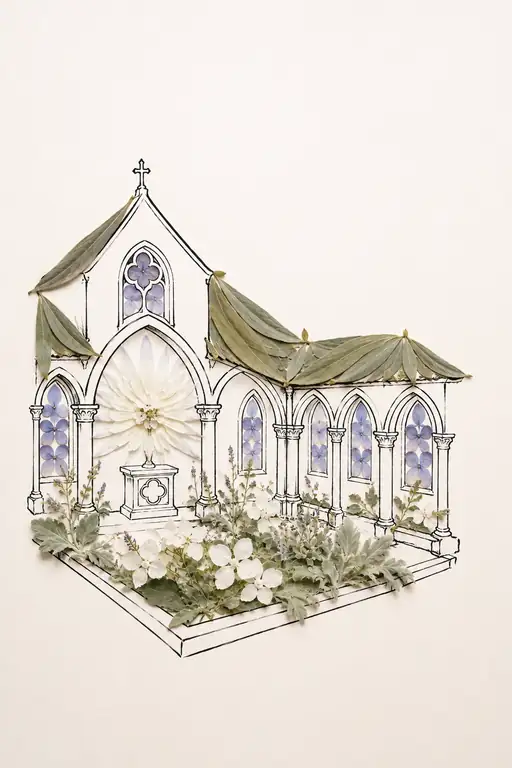 Gothic Chapel Blooming with Prayer
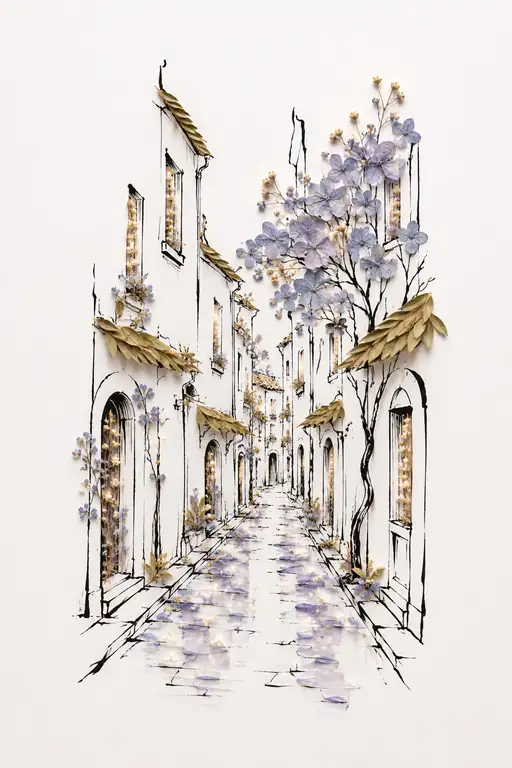 Deep into the Wisteria Lane
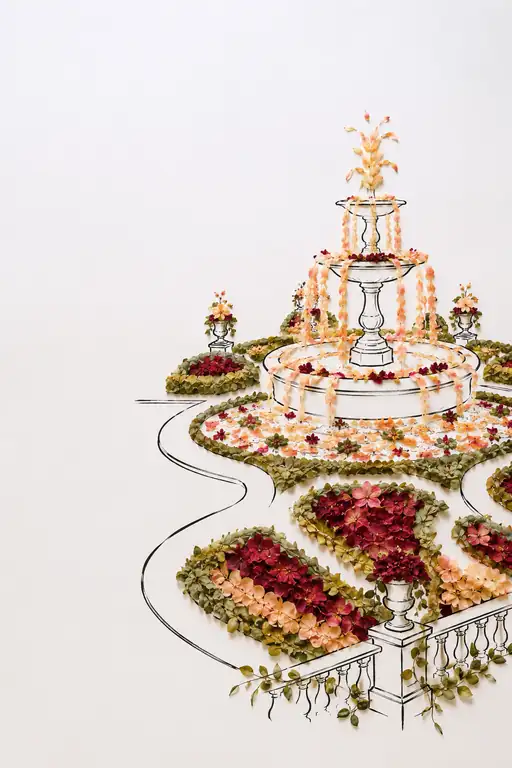 Flow of Sunlight in the Palace Garden