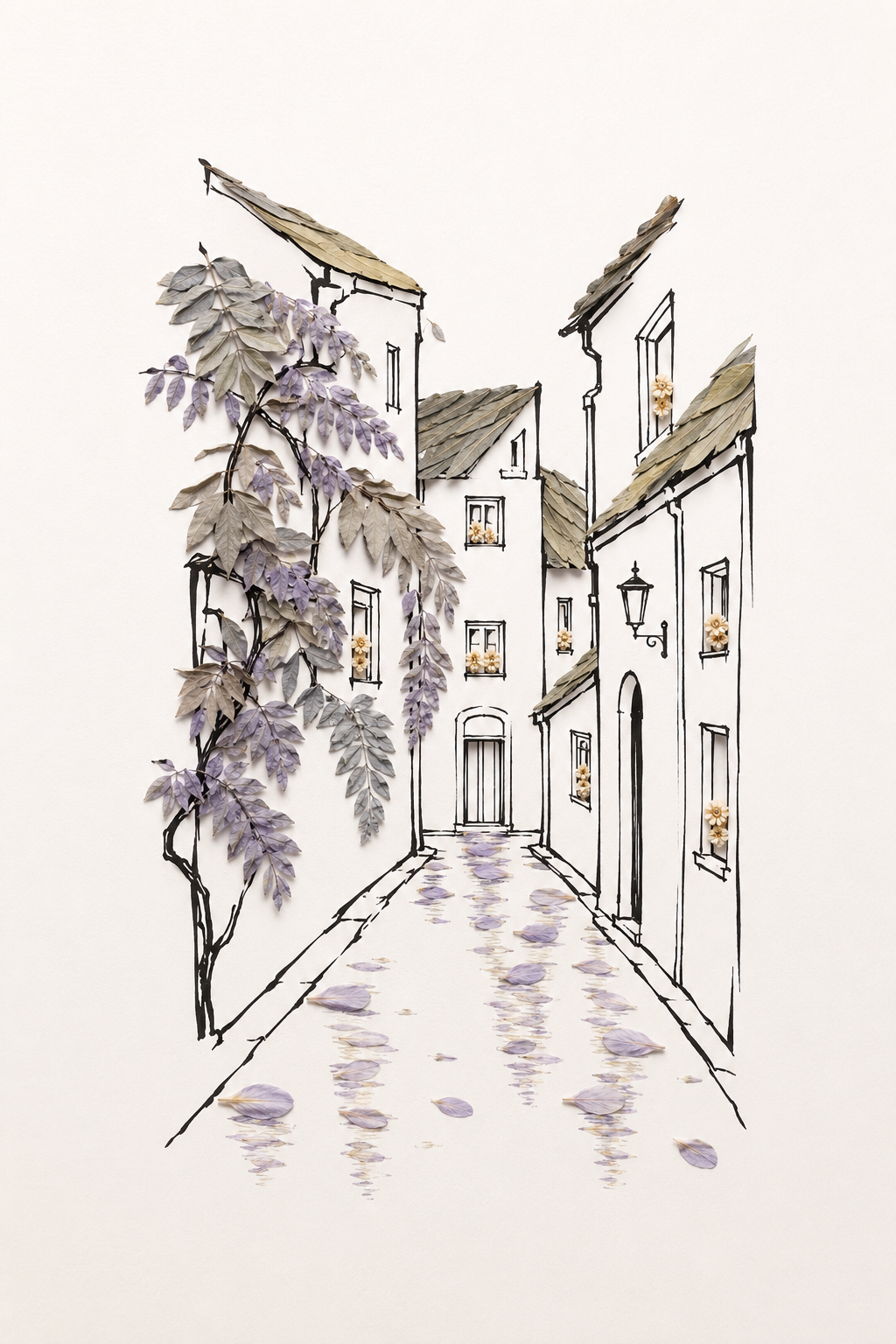
Wisteria Lane Overlooking Cobblestone
Critique
Introduction This imagined lane converts an old European streetscape into a collaboration between brisk architectural drawing and preserved vegetation. Narrow houses lean toward a central passage, while cascades of gray and lavender leaves occupy the left façade. Loose petals shimmer across the road. Description Two rows of white buildings recede toward a closed doorway near the center. Their steep roofs are tiled with overlapping olive-gray leaves, and black ink defines windows, gutters, doors, and a projecting lantern. Small cream flowers sit in several window boxes. At left, a dark climbing trunk supports abundant drooping foliage. Analysis Converging wall and pavement lines create a clear one-point perspective, giving structural depth to the largely blank ground. The heavy plant mass on the left is balanced by the tall right façade and its lantern. Repeated windows regulate the ascent, while their small floral accents link architecture to vegetation. Real leaves soften roof planes and interrupt exact contours. Interpretation and Evaluation The absence of figures allows plants to become the town’s occupants and narrators. Wisteria-like foliage seems to remember many seasons, while flowers in windows imply unseen residents. Petals on the lane can read as fallen blossoms, reflected color, or traces of recent rain, enriching an otherwise economical scene. Conclusion The composition successfully joins inhabitable space with botanical collage. Its strongest achievement is the way tactile material supplies weather, age, and local character without dense illustration. The central passage invites entry, yet the closed door preserves mystery. Restrained color and confident emptiness leave the lane luminous, intimate, and suspended between an actual town and a cherished recollection.
Same Subcategory
 Sea Breeze through White Steps
Similar Artworks
 Deep into the Wisteria Lane
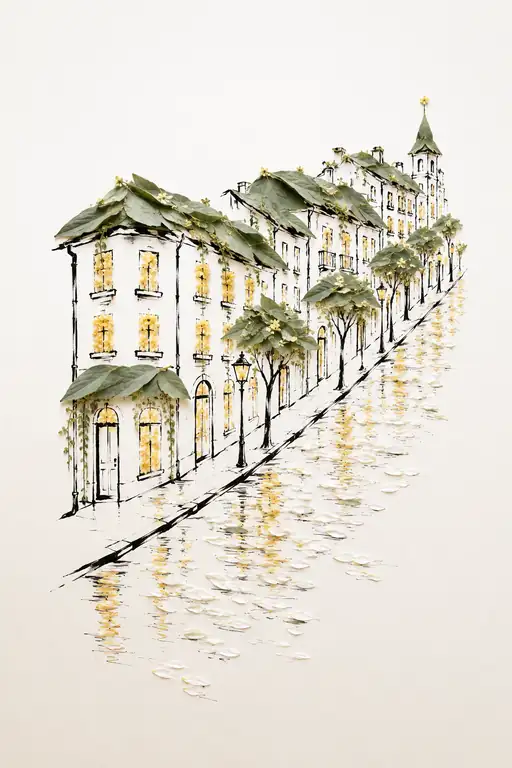 Golden Lights Ascending the Rain-Washed Hill
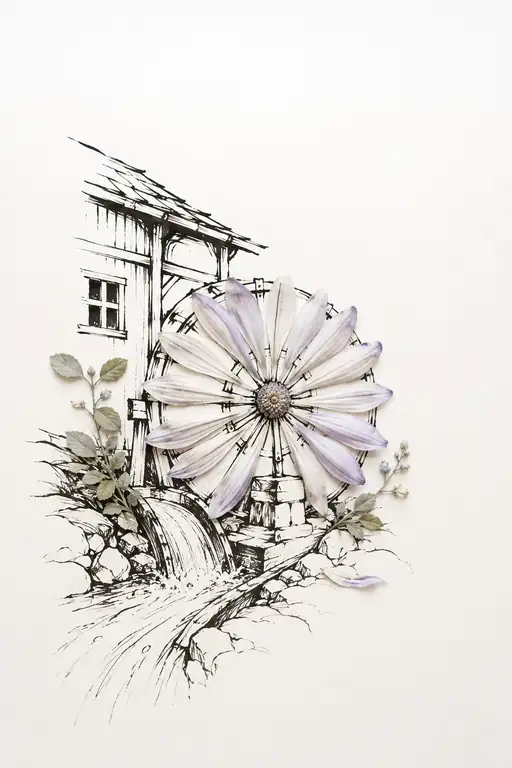 Wheel of Whispering Waters
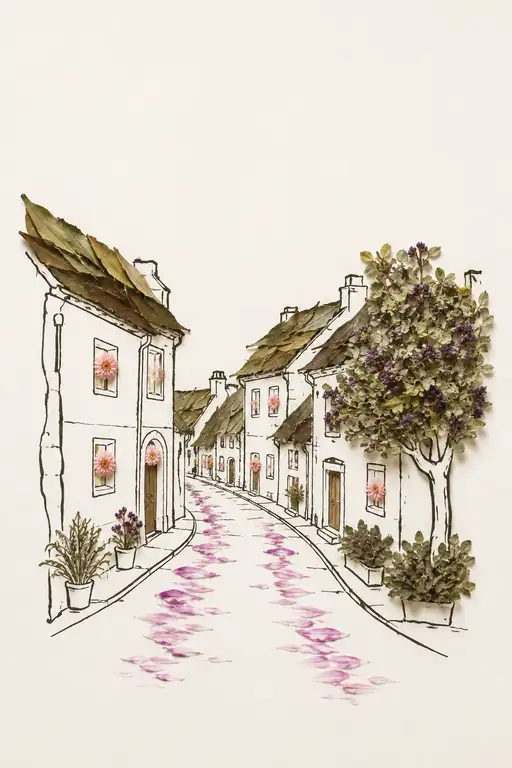 Quiet Old Town Beneath Whispering Leaf Roofs
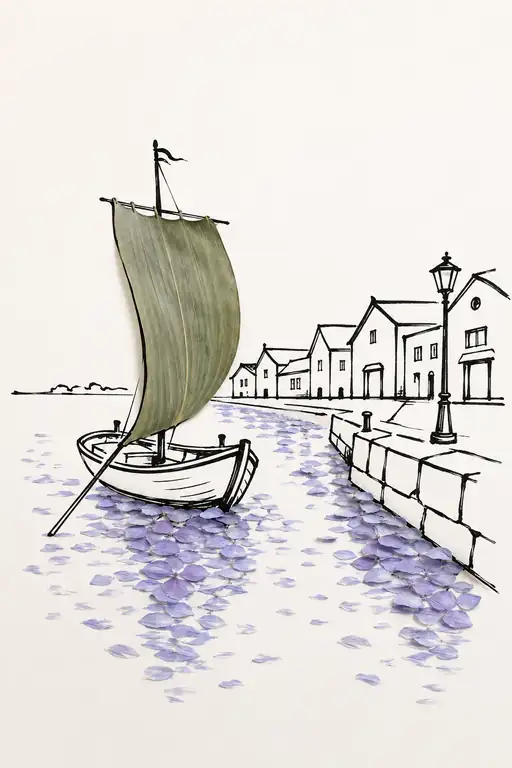 Canal Journey Under Pale Skies
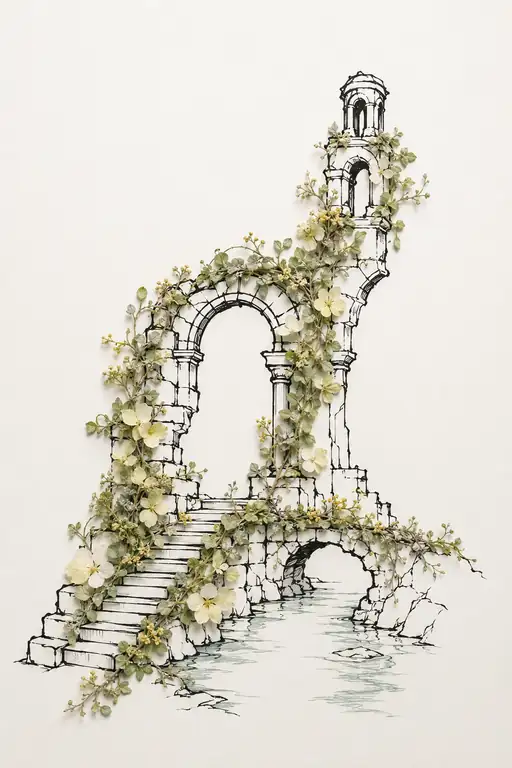 Ancient Arch and Bell Tower by the Stream
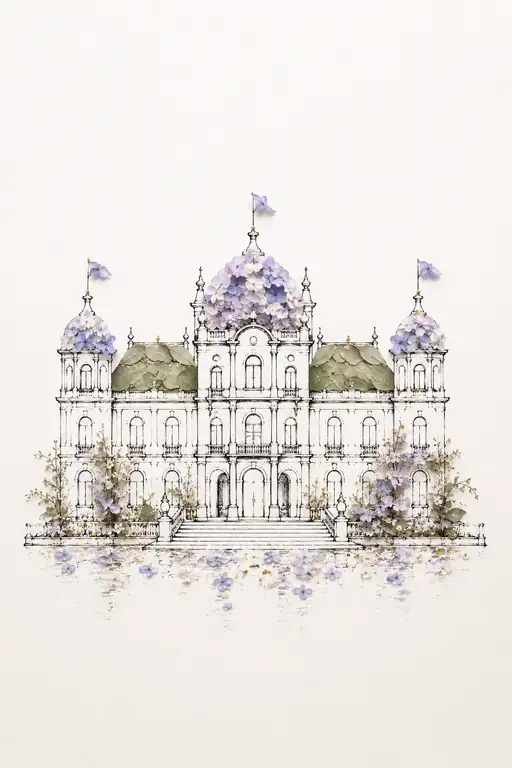 Grand Palace Crowned with Floral Domes
 Blossom-Adorned Arch in the Ancient Ruins
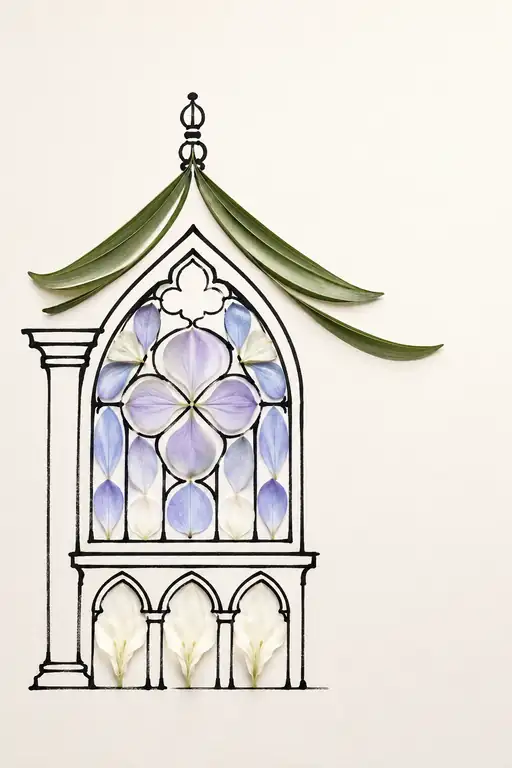 Gothic Rose Window of Translucent Petals
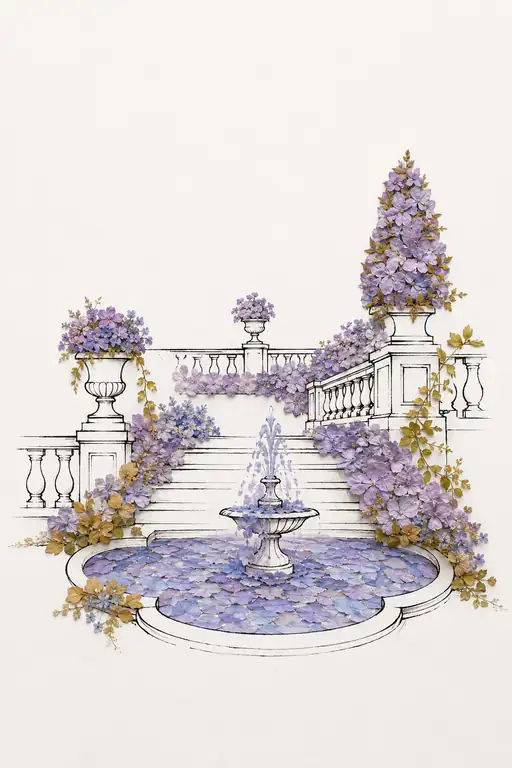 Tiered Fountain Garden of Violet Blooms