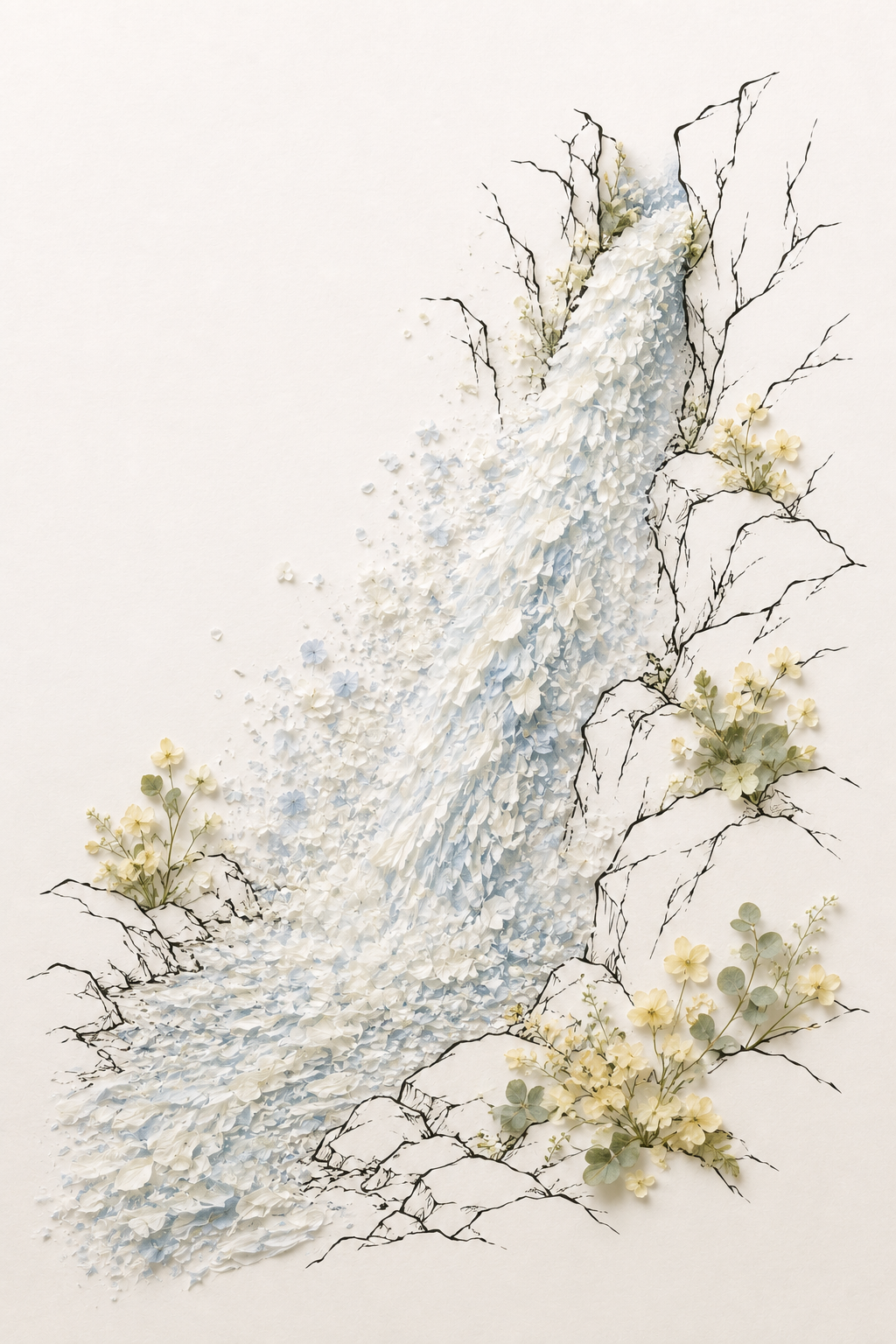
Cascade of White Blossoms in the Silent Gorge
Critique
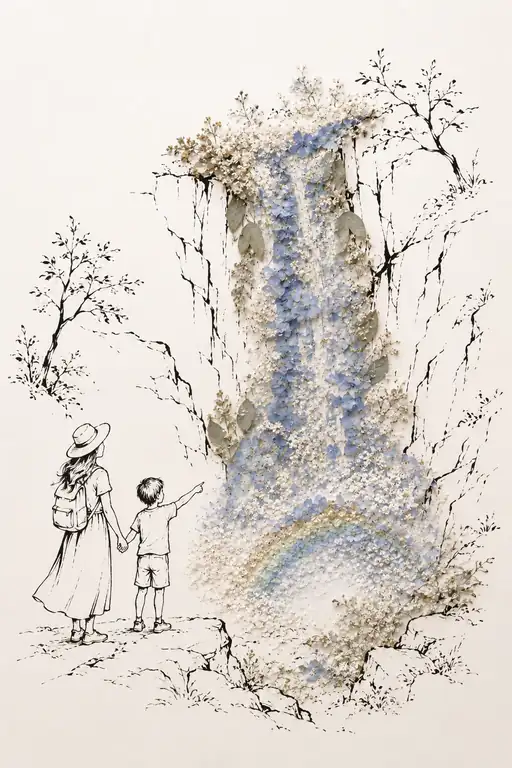
Introduction This mixed-media landscape transforms a tall waterfall into a dense descent of white and pale blue petals between cliffs drawn in fine black ink. The fall begins near the upper-right center, widens diagonally toward the lower left, and is surrounded by small cream flowers growing from rock cracks. Description Angular contours define high broken walls on the right and lower ledges on the left. Thousands of overlapping petals form the central water column, with blue pieces concentrated in shadowed channels and white pieces catching light. Near the base, the flow spreads across a broad pool-like area. Floral clusters with round gray-green leaves occupy several shelves and the lower-right foreground. Analysis The waterfall's oblique descent counters the cliffs' sharp vertical fractures. Petal scale and density change continuously: tight small layers at the upper source become broader, turbulent overlaps below. Dark contour remains sparse, allowing the pale cascade to dominate. Repeated cream flowers connect static ledges to moving water, while blue shadow bands model internal depth without conventional paint. Interpretation and Evaluation Petals make water appear both forceful and vulnerable, joining continuous flow with individually fragile units. Plants rooted in cracks suggest life sustained by the same moisture represented at monumental scale. The controlled gradation of material, convincing rock structure, and restricted cool palette demonstrate strong technique. The transformation gives the waterfall tactile abundance without losing direction. Conclusion At first the pale mass reads as foaming water, but closer viewing reveals countless separate blossoms. Cohesion and multiplicity become the work's central tension, making descent appear as collective movement.
Same Subcategory
Similar Artworks
 Crystal Torrent in the Silent Gorge
 Cascade Down the Cliffside
 Waterfall of Lilac and Light
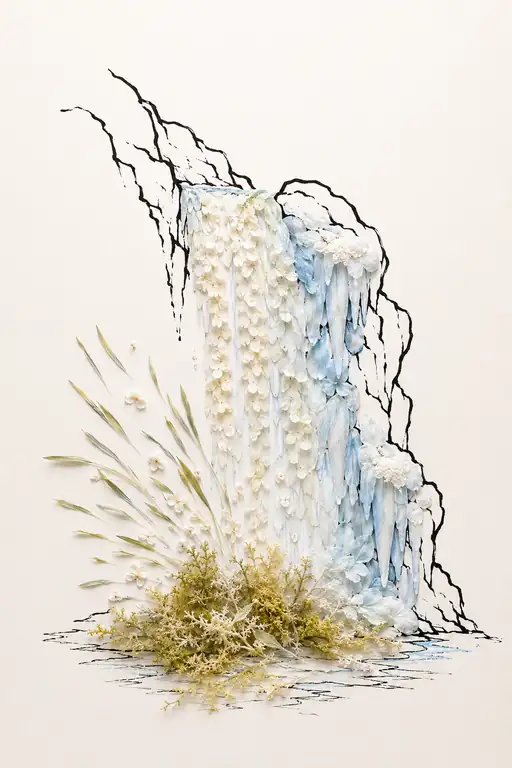 Petal Cascade on the Inky Crags
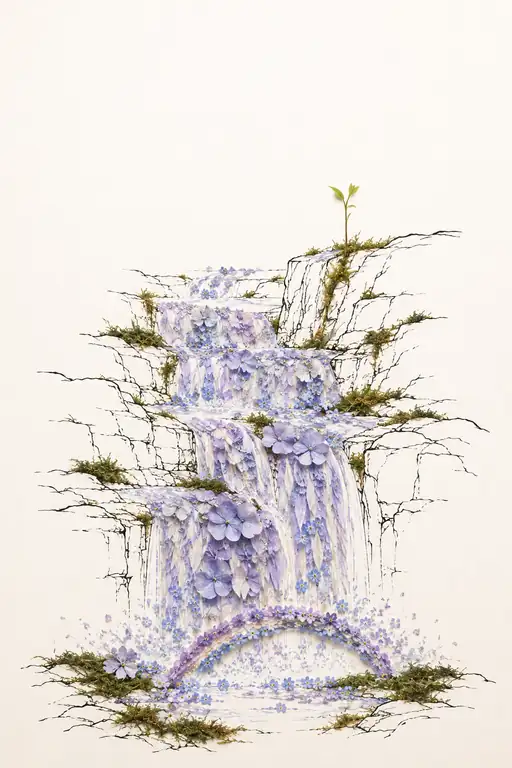 Tiered Cascade and the Violet Arch
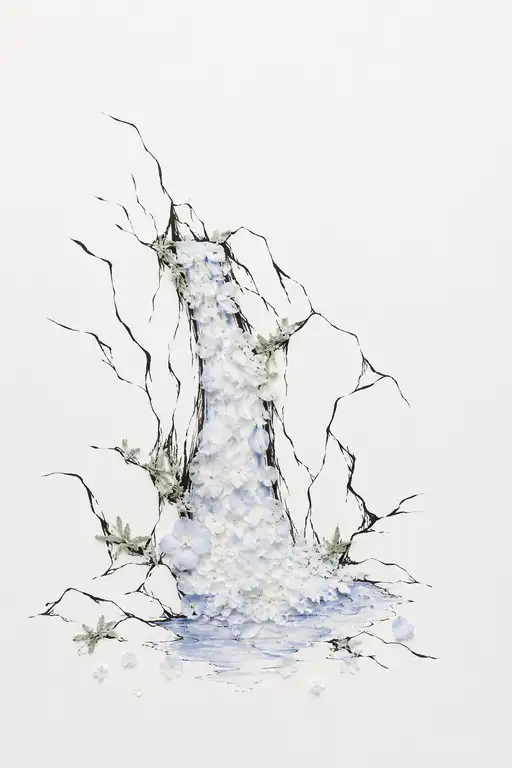 Silken Torrent of Pale Blue Petals
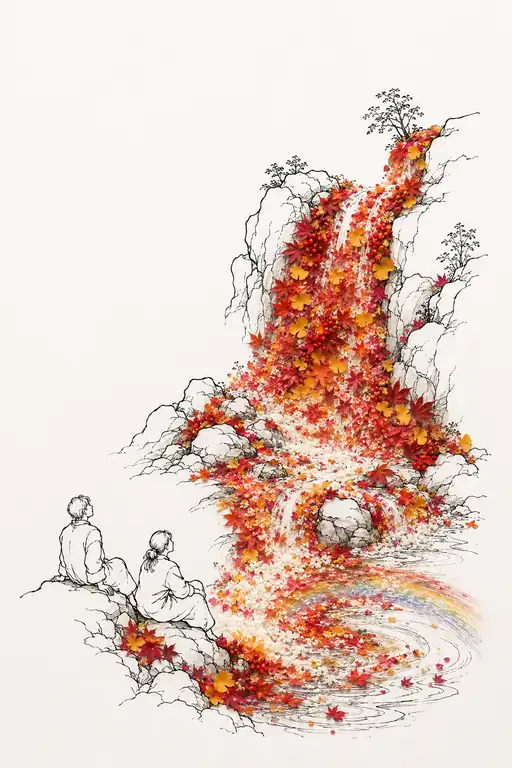 Contemplating the Fiery Cascade
 Rainbow at the Foot of the Blue Cascade
 Serenade of the Garden Fountain
 The Celestial Carp Clad in a Dream of Dawn