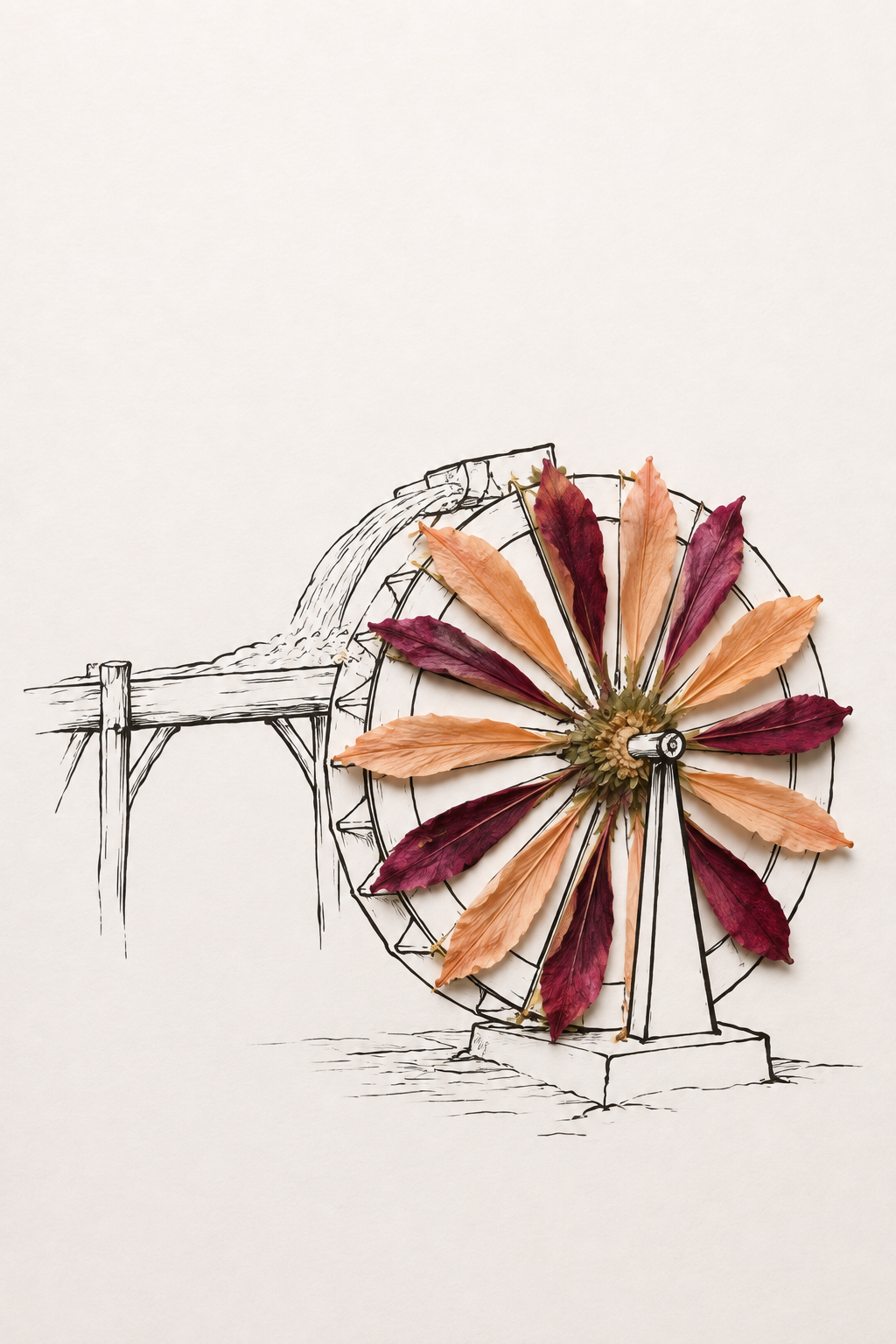
Flower Wheel Turning in Sunlit Waters
Critique
Introduction This mixed-media image depicts a waterwheel through black ink architecture and alternating peach and burgundy petals. The wheel occupies the center-right, while a wooden flume approaches horizontally from the left and pours a drawn stream onto the upper rim. Large white space isolates the mechanism. Description Concentric circles, radial supports, paddles, axle, and a triangular brace are sketched with energetic lines. Long tapered petals attach around the hub in alternating warm and dark red colors, creating a flower-like rotor. A textured seed head forms the central bearing. Water spills from the trough, breaks into foam, and passes behind the upper-left portion of the wheel. Analysis Strong radial symmetry controls the petal blades, but natural differences in length, curl, and tone prevent mechanical uniformity. The horizontal flume intersects the wheel's circular movement and clarifies cause and effect. Black spokes remain visible between petals, joining structural drawing to organic material. Warm peach advances while burgundy recedes, making rotation legible through color alternation. Interpretation and Evaluation The mechanism converts falling water into circular motion, and the floral substitution makes that energy resemble blooming. Dry petals suggest fragility, yet their rigid radial arrangement conveys useful force. Accurate relationships among axle, brace, trough, and rim ground the metaphor. The economical setting and controlled palette keep attention on transformation rather than scenery. Conclusion At first the wheel resembles a large flower, but closer viewing reveals every petal serving as a functional blade. Organic delicacy and mechanical repetition combine to make energy visible as patterned renewal.
Same Subcategory
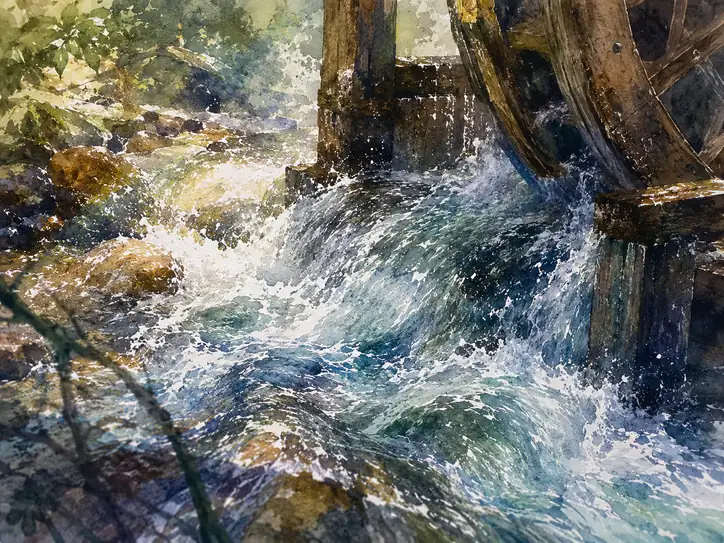 Nostalgia in the Rushing Stream
Similar Artworks
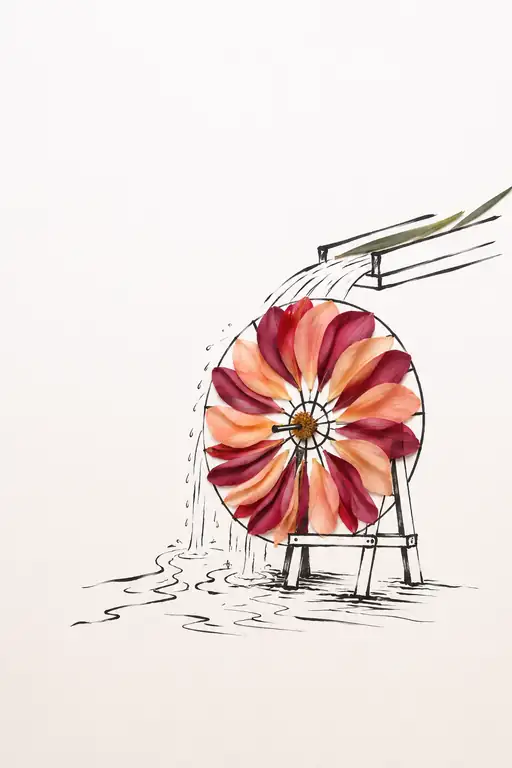 Crimson Flower Wheel Turning in the Stream
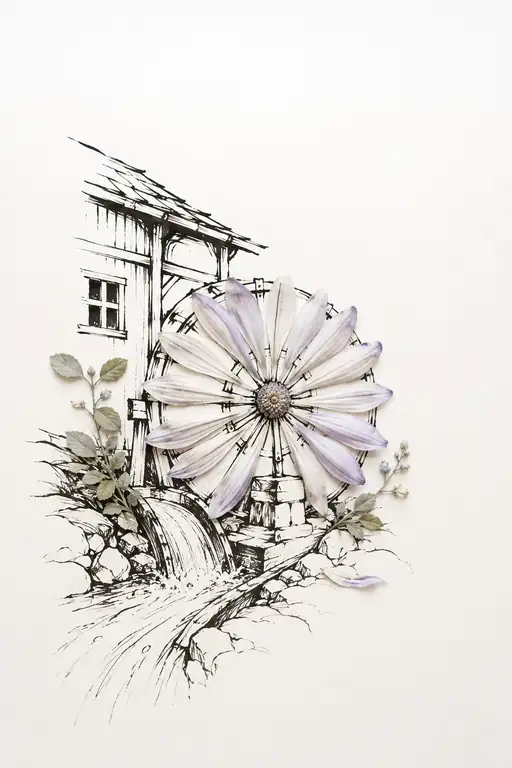 Wheel of Whispering Waters
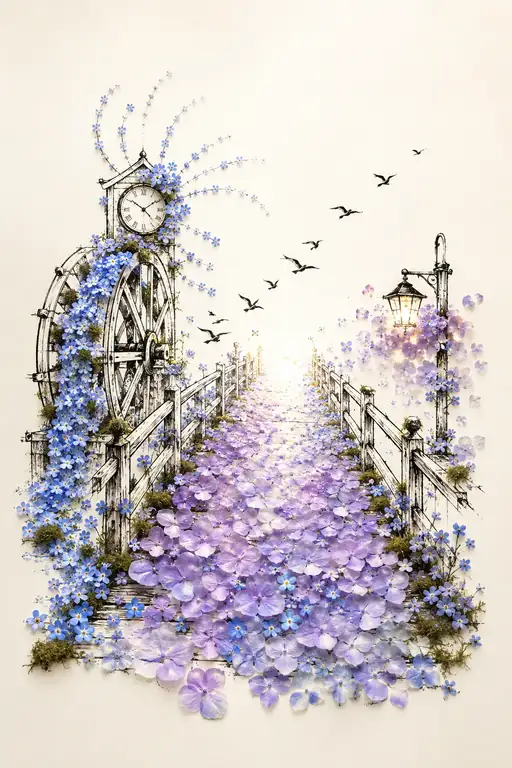 The Waterwheel Clock and the Path of Hydrangeas
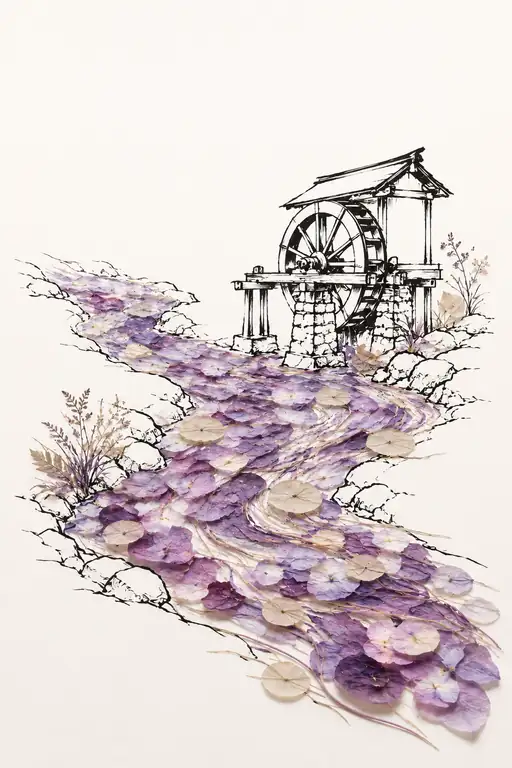 Wheel Turning by the Violet Stream
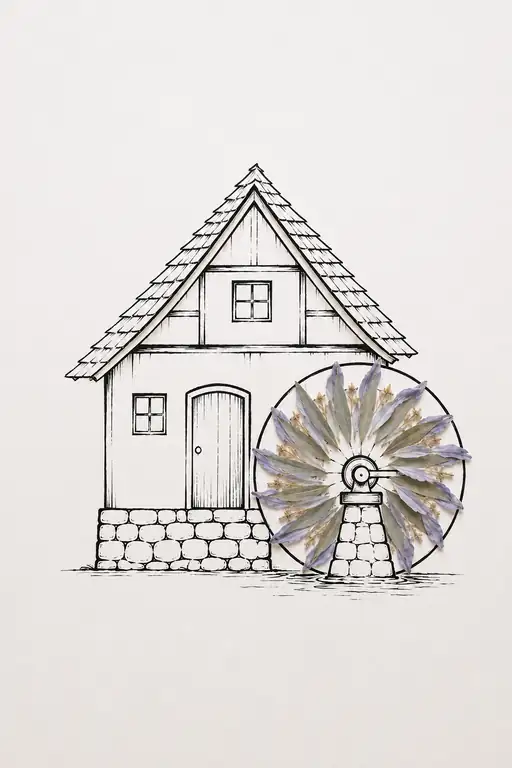 Quiet Turn of the Mill by the River
 Golden Sands of Fleeting Hours
 Moored Sailboat with a Rose Leaf Sail
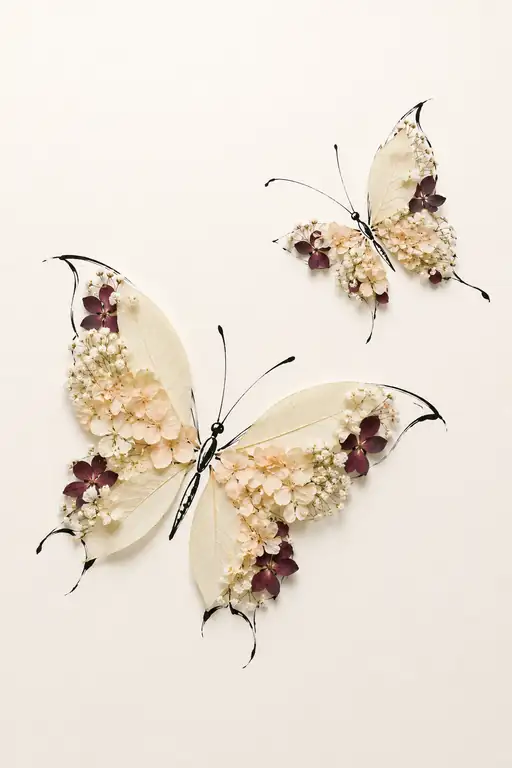 Wings of Veined Whispers
 Rustic Mill Whispering of Flow and Season
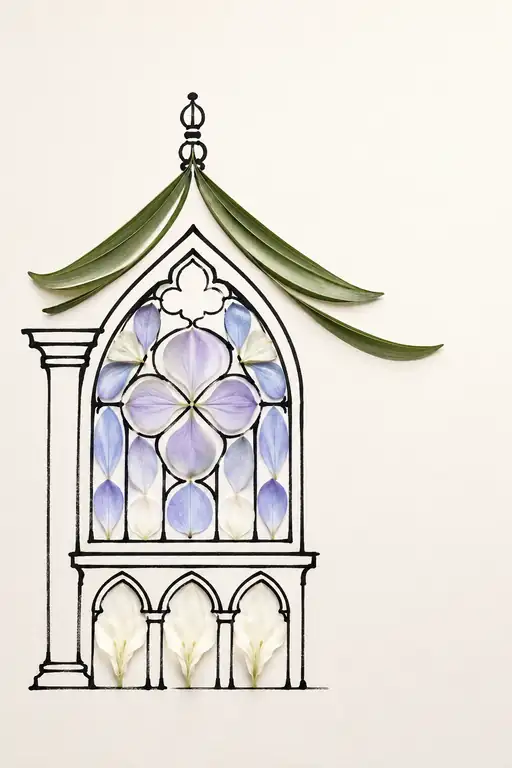 Gothic Rose Window of Translucent Petals