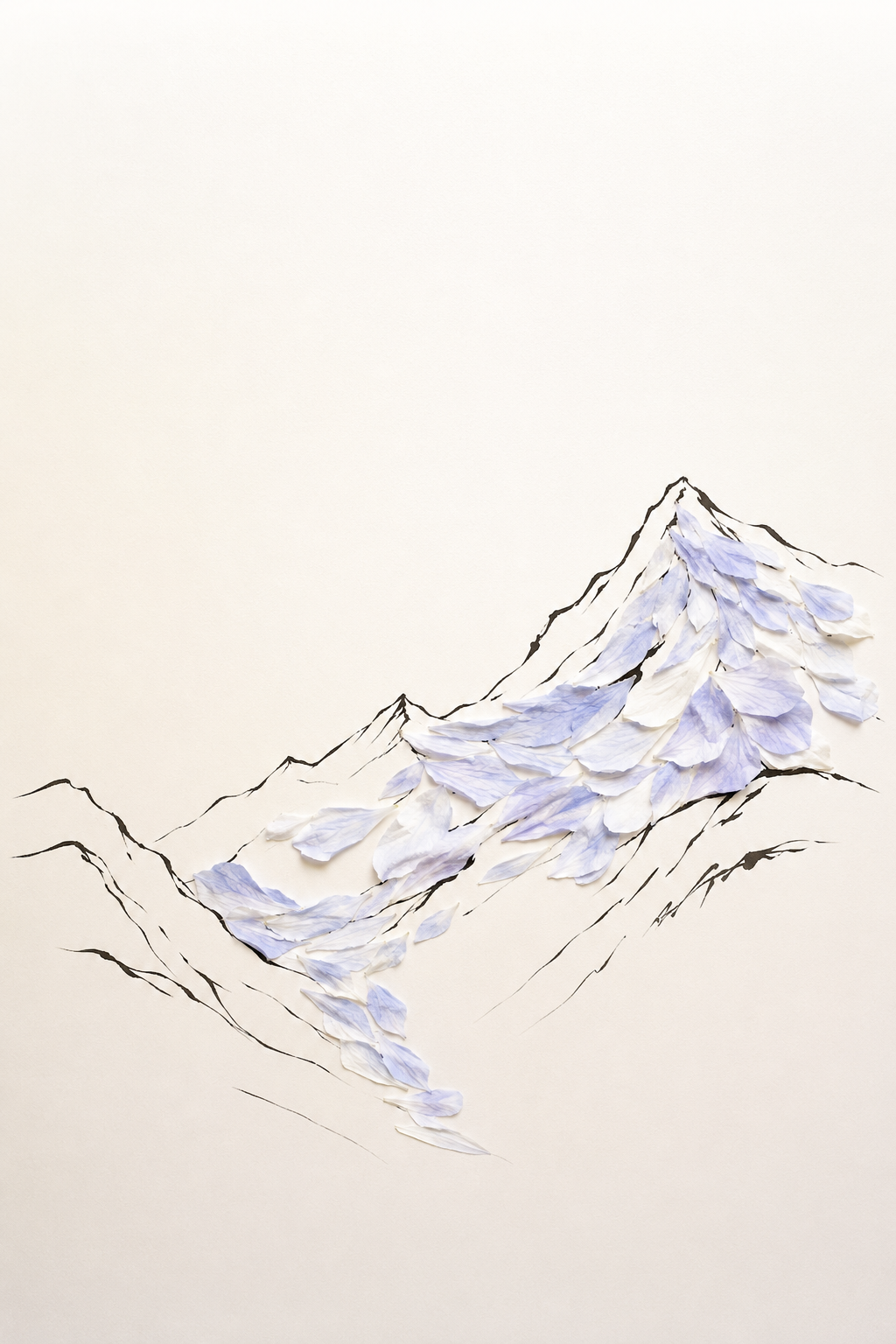
Lavender Snowfields on the High Peaks
Critique
Introduction This minimalist mountain landscape combines spare black contour with white and pale lavender petals that form snowfields across a high peak. The main summit rises in the upper right, while lower ridges descend diagonally toward the left and lower center through a vast open sky. Description Angular ink lines define a sharp pyramidal summit, secondary peaks, long slopes, and exposed rock seams. Overlapping translucent petals gather thickly on the upper mountain and spill through a central valley. Their lavender shadows alternate with ivory pieces, thinning into isolated fragments near the lower center. Most surrounding ridges remain unfilled white. Analysis The principal diagonal from upper-right summit to lower-center valley directs the entire composition. Dense material near the peak creates height and weight, while progressively separated petals imply distance and melting descent. Black ridgelines cut through the soft layers and preserve geological structure. Lavender functions as cool shadow, enabling white petals to remain visible against the warm ground. Interpretation and Evaluation Petals convincingly suggest snow because their overlapping edges resemble drifts and broken slabs, yet their fragility introduces seasonal impermanence. The contrast between enduring mountain line and detachable surface makes change central to the image. Economical drawing, controlled density, and unusual color restraint demonstrate confidence. Large emptiness gives the summit an isolated scale. Conclusion At first the mountain reads as a serene snow peak, but closer viewing exposes its surface as accumulated delicate fragments. Solidity and transience are held in tension through precise contour and tactile layering.
Same Subcategory
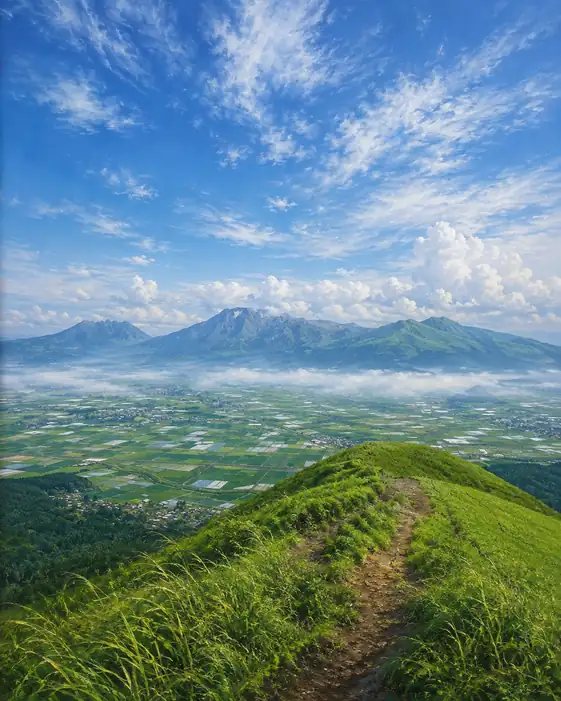 Ridge Above the Caldera Plains
Similar Artworks
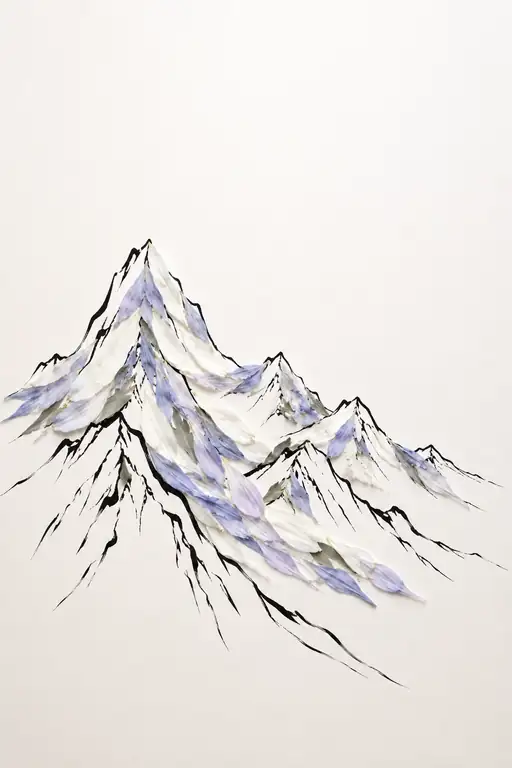 Glacial Ridge in Silent Slumber
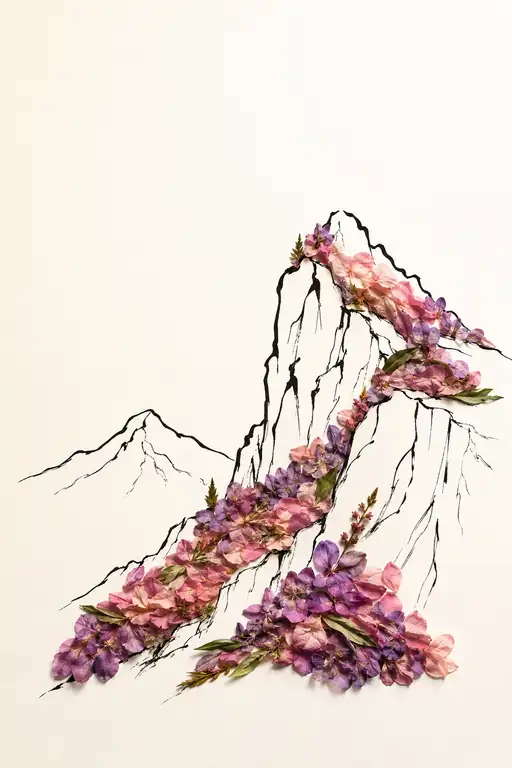 Whispering Ridge of the Solitary Peak
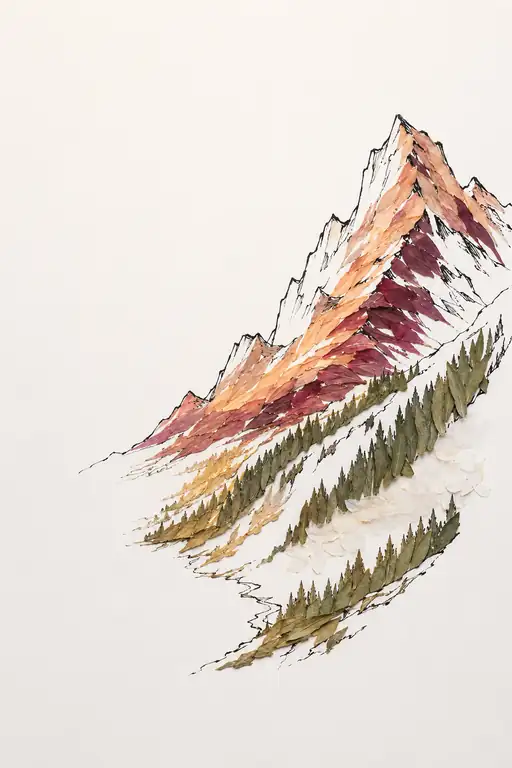 Ridge of Sunset and Evergreen Slopes
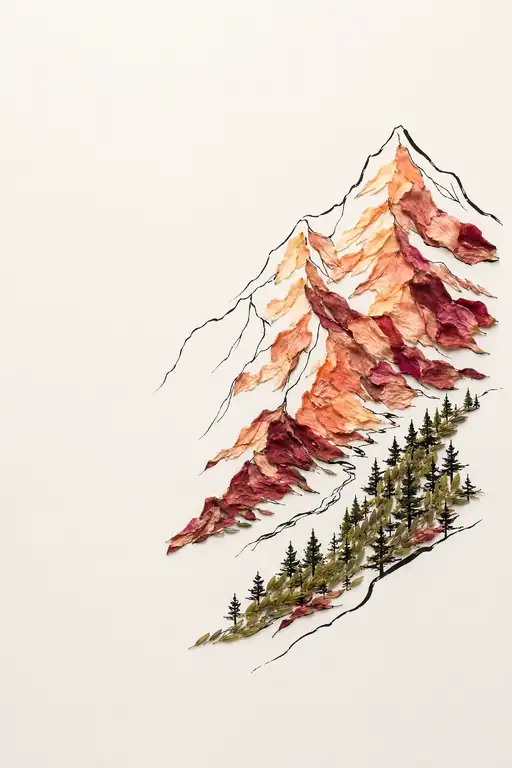 Alpenglow on the Jagged Peak
 Water Lilies Slumbering on Mirror Lake
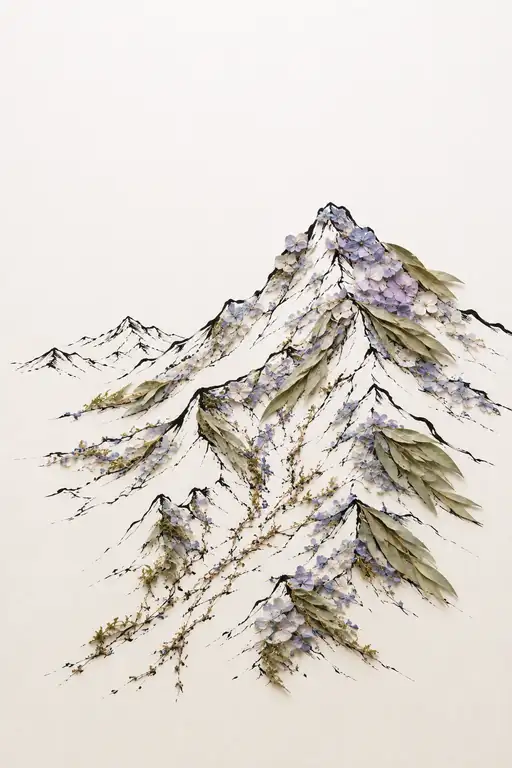 Solitude on the Azure Ridge
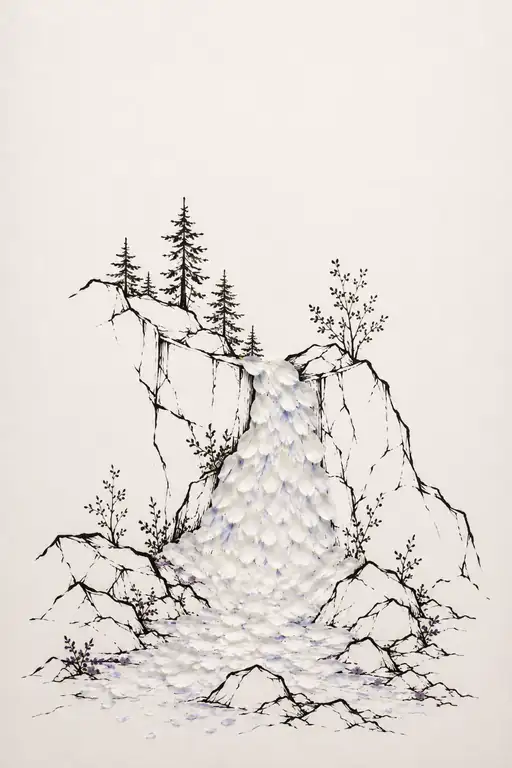 Cascade Down the Cliffside
 Autumn Whispers on the Sloping Hill
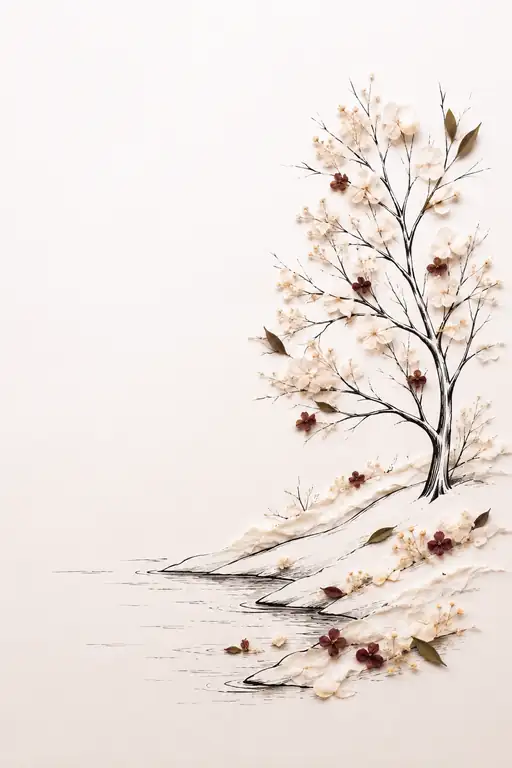 Blooming Blossoms on the Thawing Shore
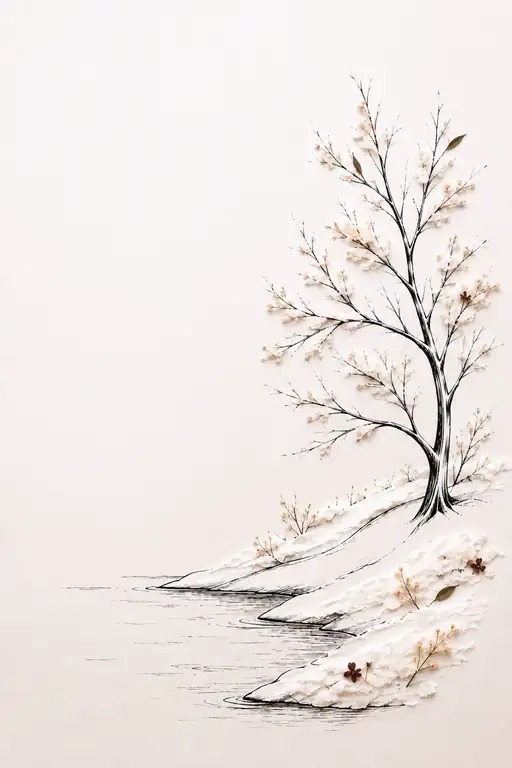 Winter Shore Awakening with Budding Boughs