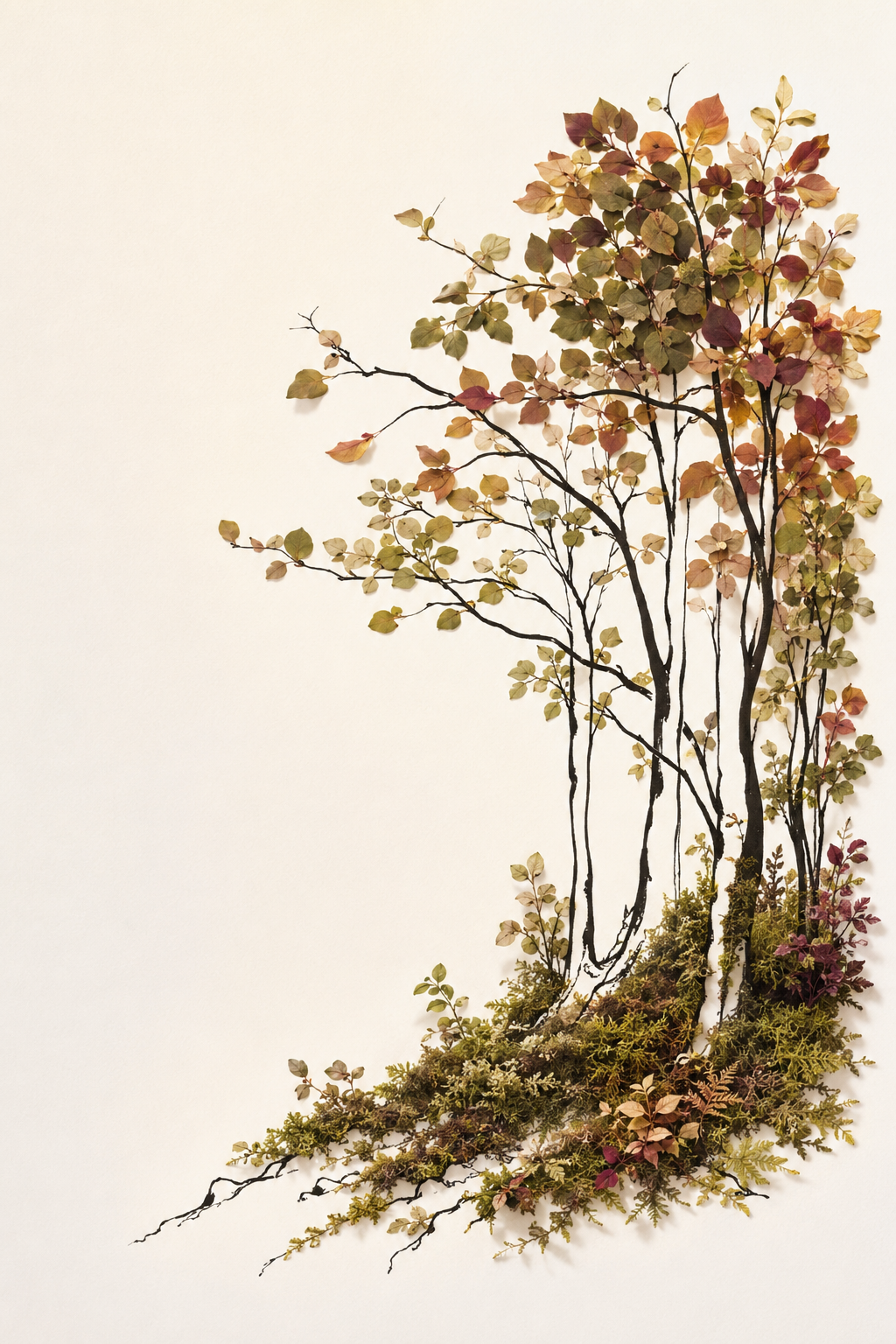
Autumn Grove Rising from Mossy Earth
Critique
Introduction This botanical mixed-media composition presents a slender grove rising from a dense mossy bank on the right side of a broad white field. Black ink trunks and branches support pressed leaves shifting from olive and ocher to rust and burgundy, while the left half remains almost entirely open. Description Several narrow trunks grow vertically from an uneven mound of moss, fern fronds, small plants, and exposed drawn roots. Branches extend mainly leftward, becoming progressively thinner and more sparsely leafed. The upper-right canopy is dense with overlapping round leaves in autumn colors. Lower right clusters include dark red foliage, while isolated saplings emerge along the sloping base. Analysis The composition balances extreme density against emptiness rather than using bilateral symmetry. Vertical trunks anchor the right edge, and long leftward branches test the vacant field without filling it. Dark ink provides skeletal continuity from roots to twigs. Leaf color rises from green-brown ground through ocher middle branches to warmer red upper clusters, creating chromatic as well as spatial growth. Interpretation and Evaluation The open left side suggests air, distance, or an unseen landscape toward which the grove reaches. Visible roots and moss emphasize dependence on a narrow foothold, while the canopy conveys resilience and seasonal change. Material textures remain distinct yet are organized by confident line. The asymmetric design and controlled autumn palette give a common tree subject unusual tension. Conclusion At first the colorful canopy attracts attention, but closer viewing reveals the exposed root bank as its necessary counterpart. Abundance and reserve, ascent and attachment, are held together through lucid spacing and tactile contrast.
Same Subcategory
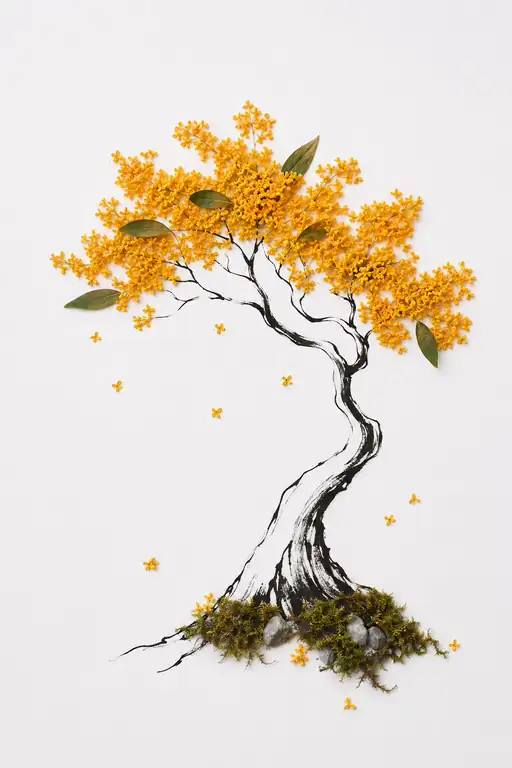 Scent of Osmanthus on the Inked Branch
Similar Artworks
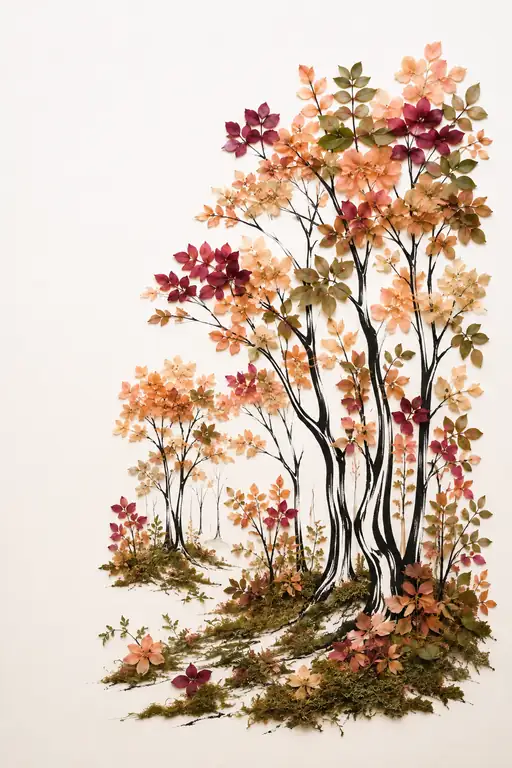 Living Earth of the Autumn Woods
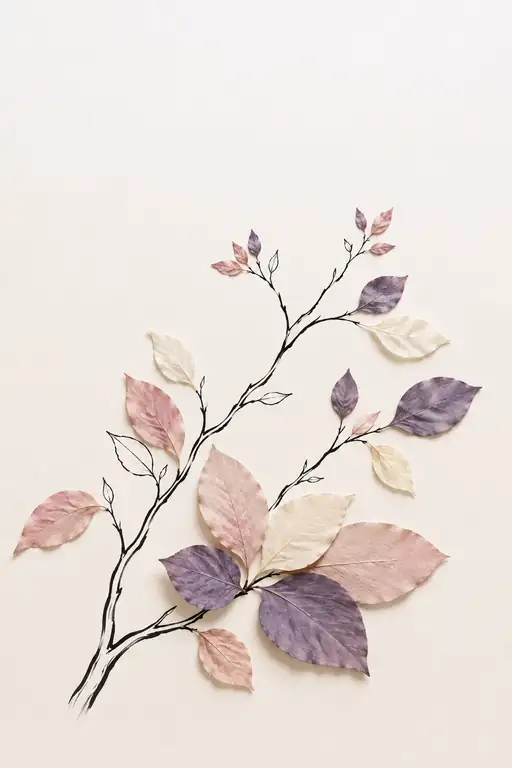 Gentle Foliage in Rose and Violet
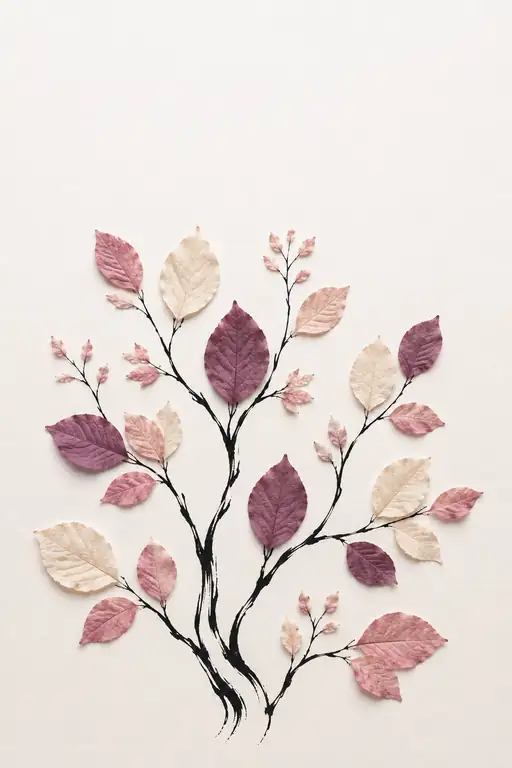 Branching Tones of Rose and Cream
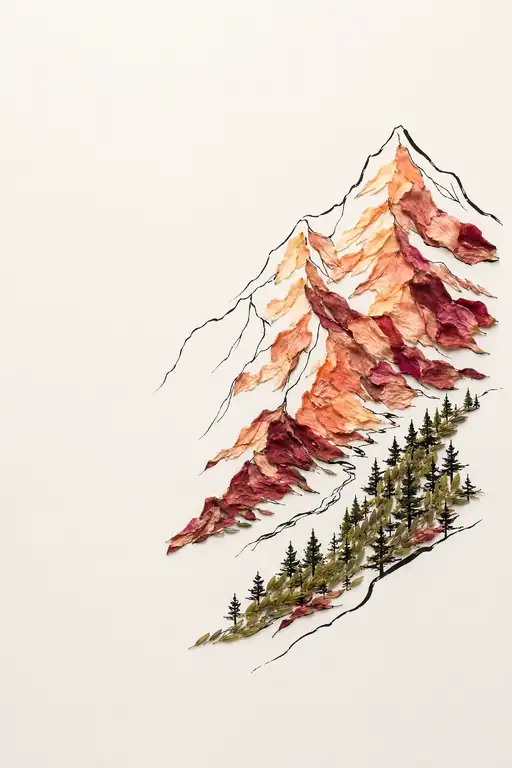 Alpenglow on the Jagged Peak
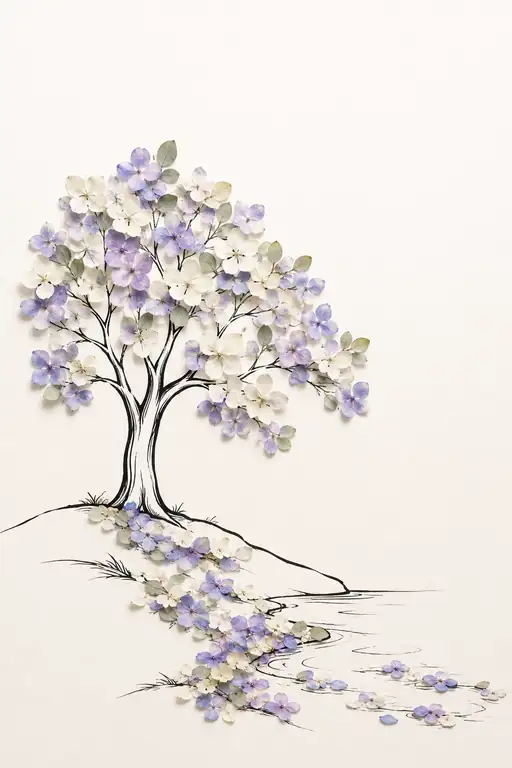 Ancient Tree and the Drifting Petal Raft
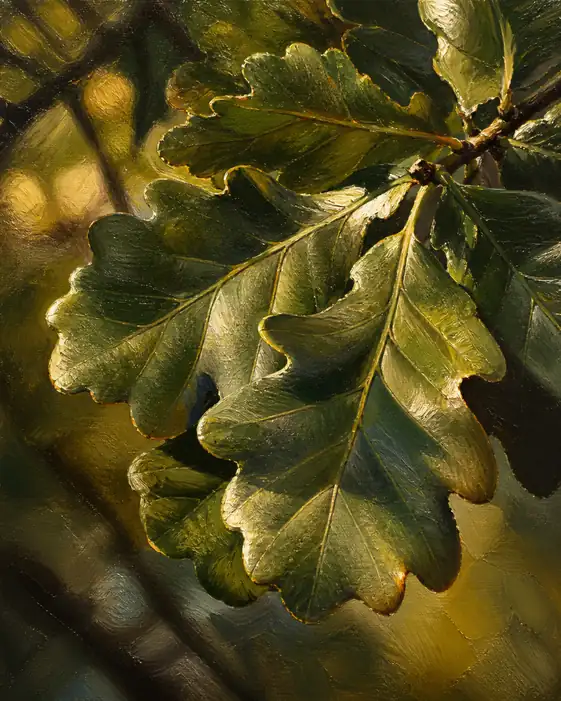 The Golden Weight of Time
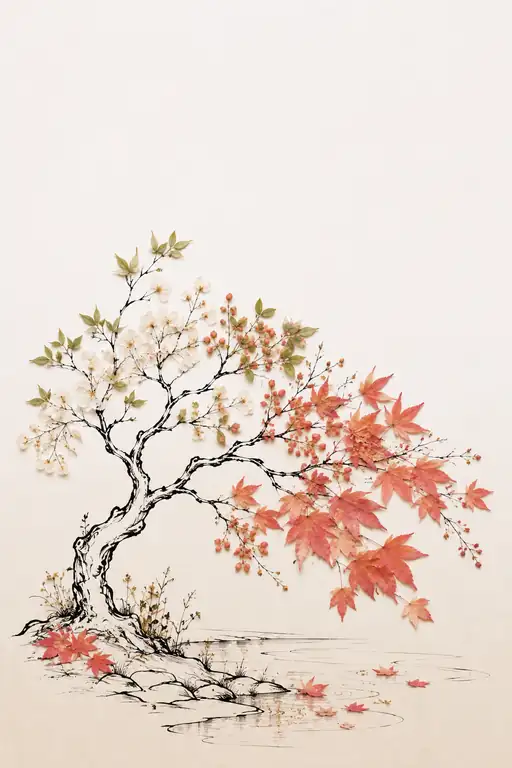 Seasons Intertwined on a Single Bough
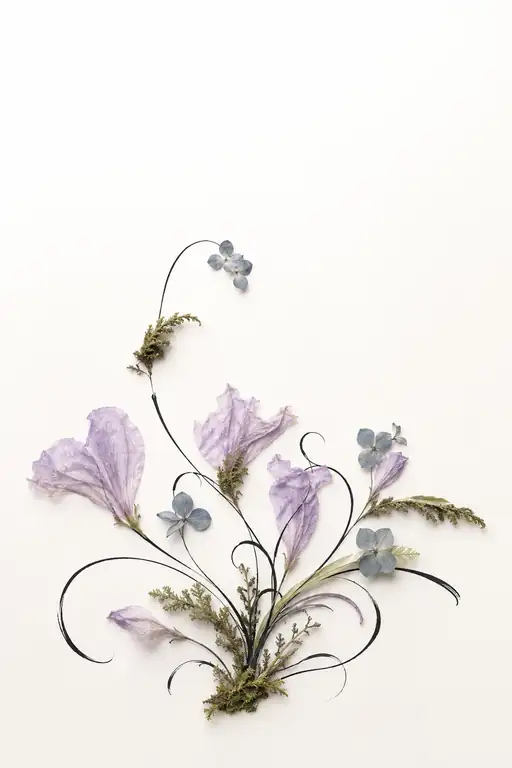 Violet Blossoms Swaying on Calligraphic Stems
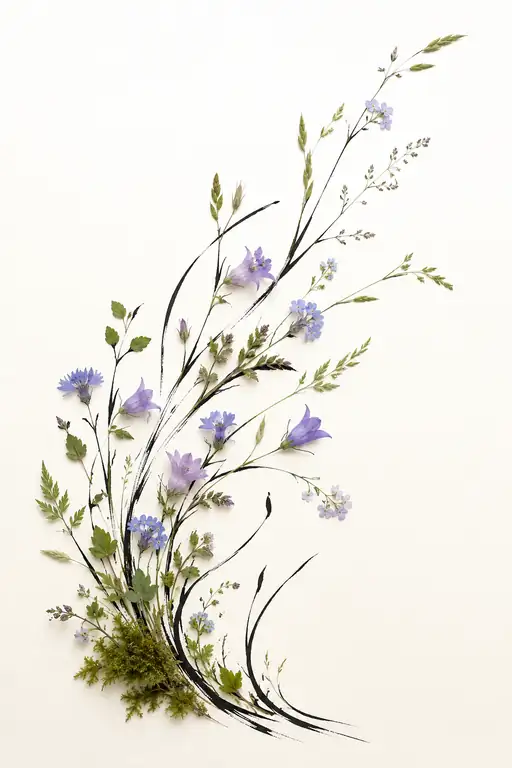 Bellflowers and Calligraphic Vines in Spring
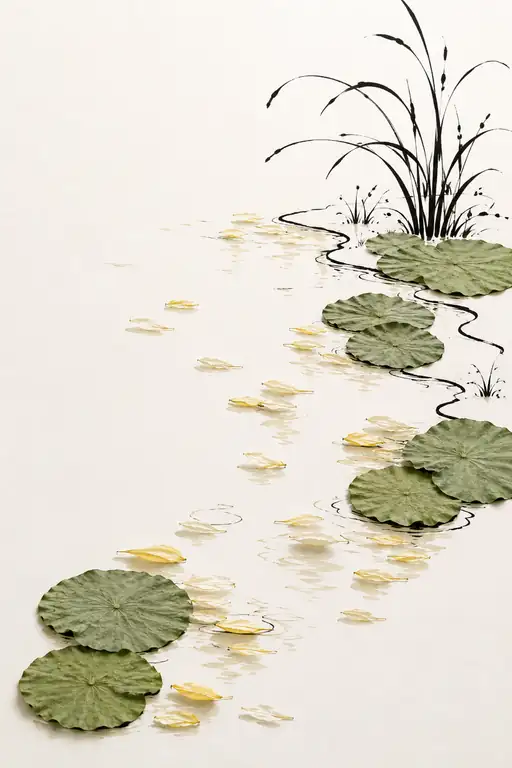 Drifting Lights on the Pond