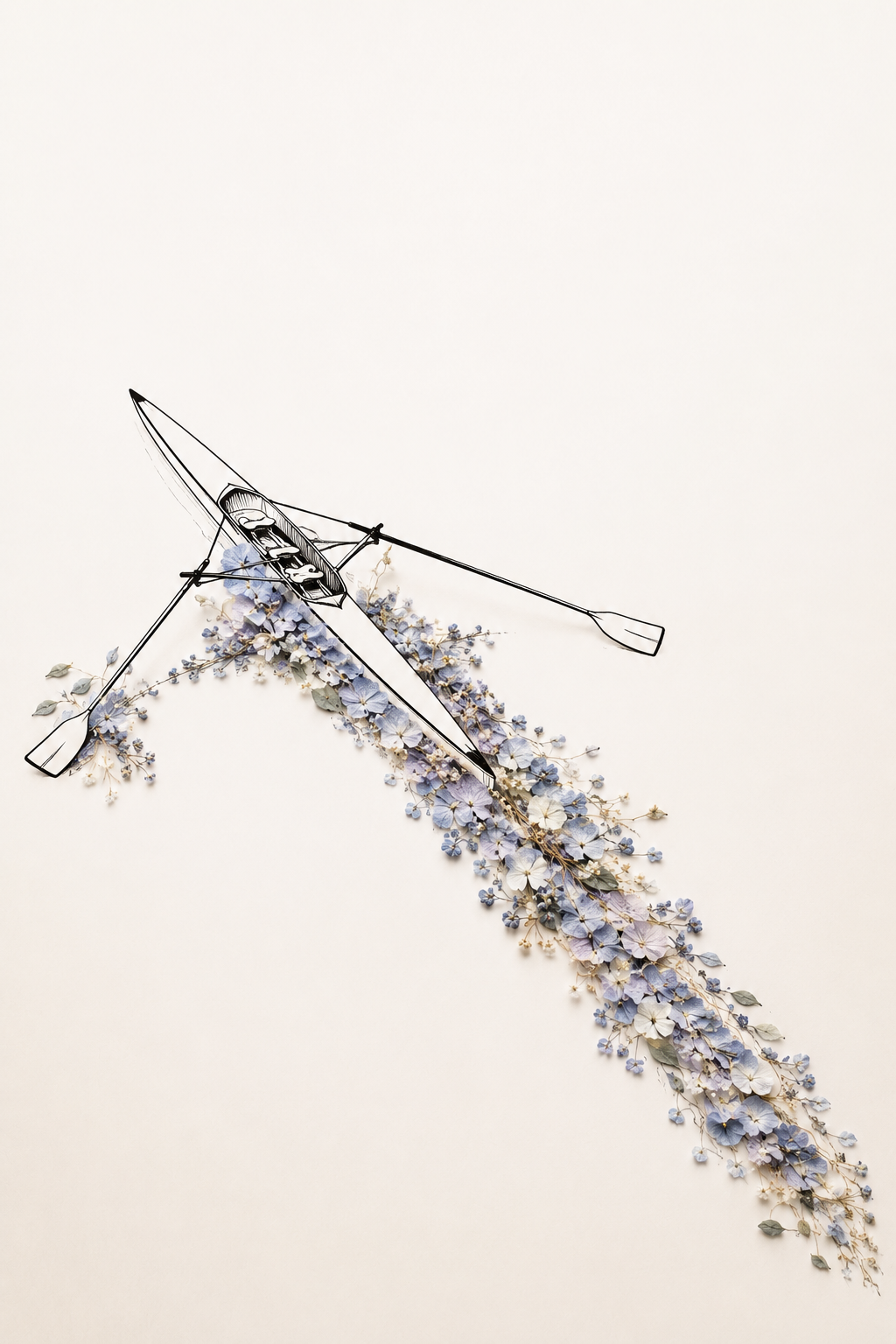
Lone Scull and the Flowing Wake
Critique
Introduction This mixed-media image shows a narrow rowing boat crossing the upper-left area while a long wake of pale flowers streams diagonally toward the lower right. Spare black line defines vessel, rower, and oars; dimensional blossoms transform the invisible passage through water into the dominant visible form. Description The pointed boat is viewed obliquely from above, with a seated figure bending over the central benches. Two extended oars create a wide cross around the hull. Beneath it, blue and ivory flowers, tiny buds, brown stems, and muted green leaves gather densely, then narrow and scatter along a sweeping trail that nearly reaches the bottom edge. Analysis The wake establishes a powerful diagonal axis, while the opposing oars broaden the small focal area and arrest its forward motion. Black contours are sharp and economical against the cream ground; petal edges, stems, and shallow shadows produce softer, irregular textures. Density decreases gradually along the floral trail, making direction and distance legible without a drawn water surface. Interpretation and Evaluation By replacing water and foam with blossoms, the work imagines movement as an act that leaves beauty rather than disturbance behind. The elevated viewpoint and credible geometry of hull and oars secure the scene, allowing the material transformation to remain persuasive. Restrained blue, white, green, and black colors reinforce calmness, while the elongated asymmetry gives the design memorable originality. Conclusion The first impression centers on a solitary boat, but the accumulating wake soon becomes the true subject. Precise line, tactile botanical detail, and controlled dispersal convert a brief passage into a lasting record of movement.
Same Subcategory
 Moored to the Moonlit Tide
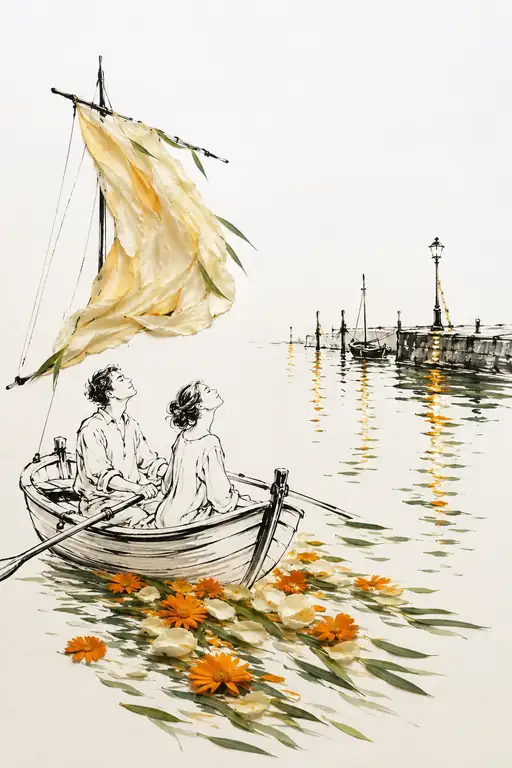 Drifting Beneath the Golden Sail
Similar Artworks
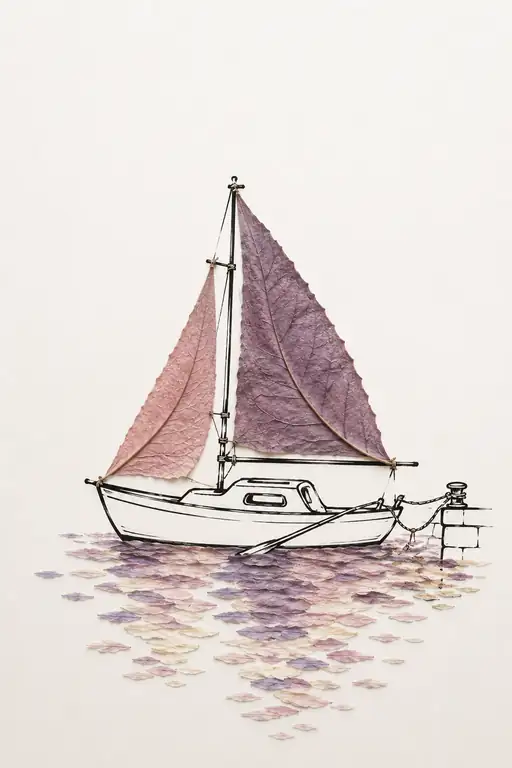 Moored Sailboat Resting on Gentle Ripples
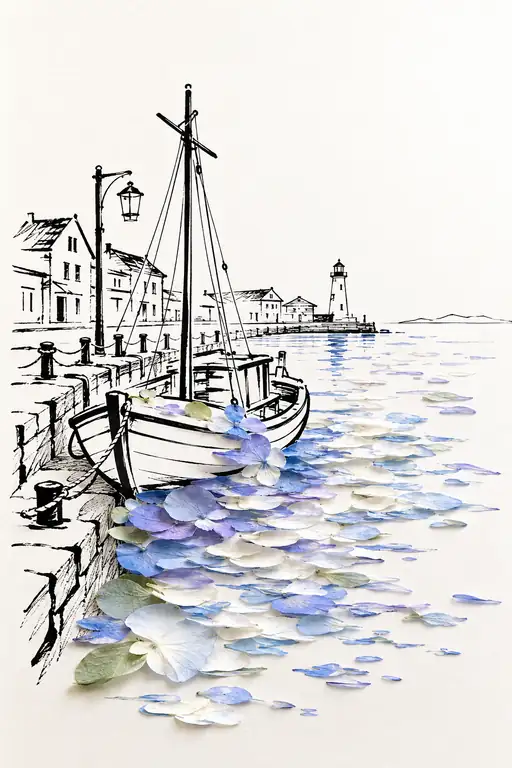 Harbor Rest on Shimmering Waters
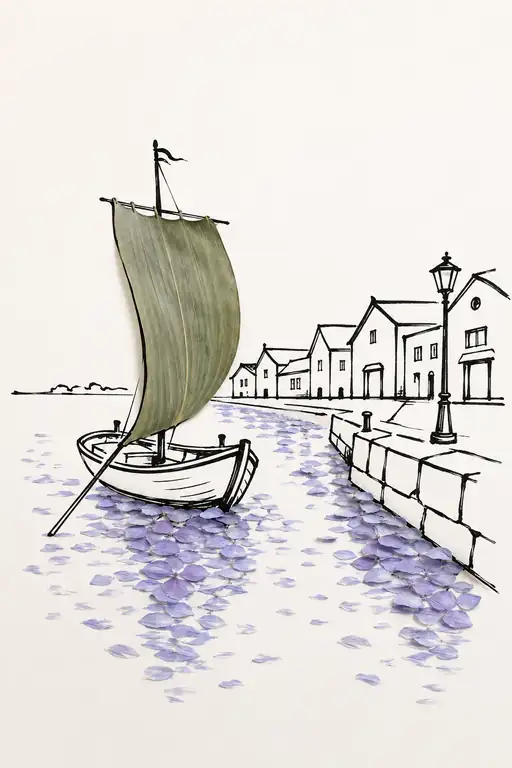 Canal Journey Under Pale Skies
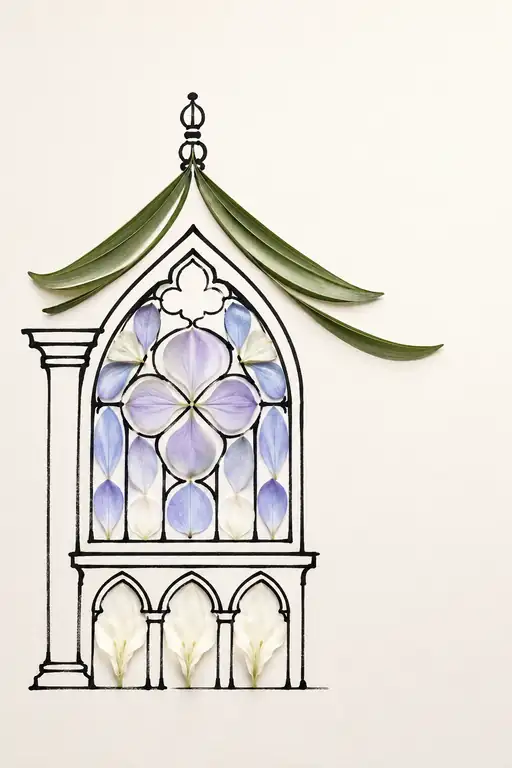 Gothic Rose Window of Translucent Petals
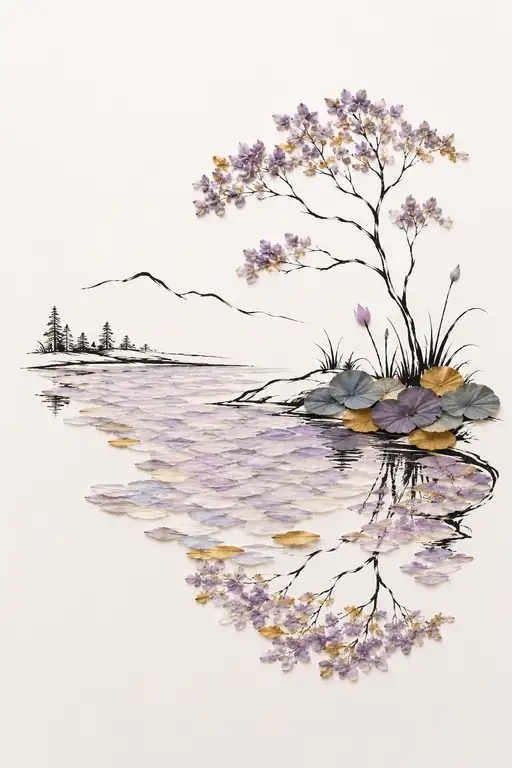 Violet Blossoms Reflected on the Mirror Lake
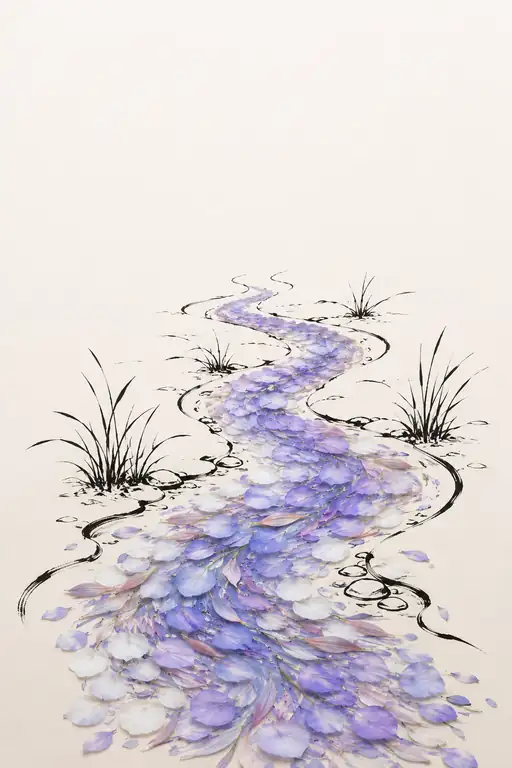 Meandering Stream of Violet Petals
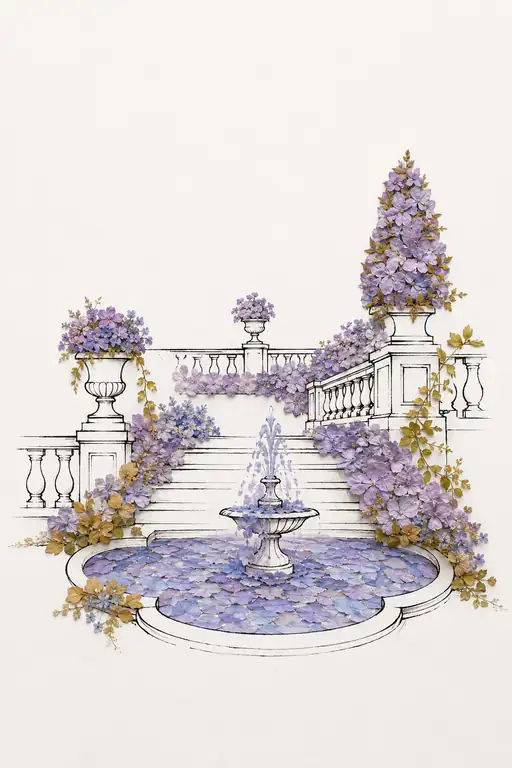 Tiered Fountain Garden of Violet Blooms
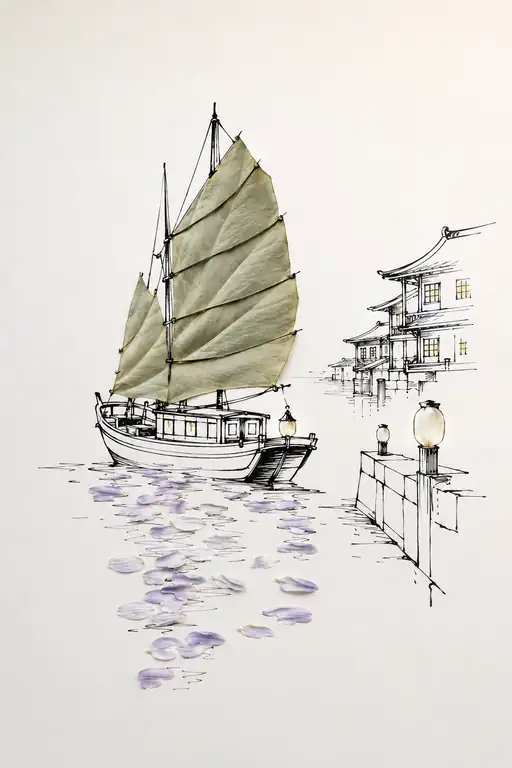 Evening Anchorage Under Leaf-Woven Sails
 Violet Vintage and Slender Glass
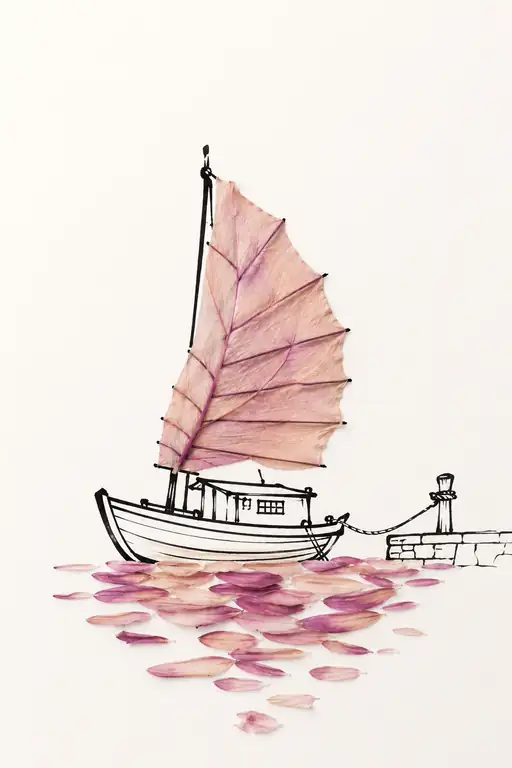 Moored Sailboat with a Rose Leaf Sail