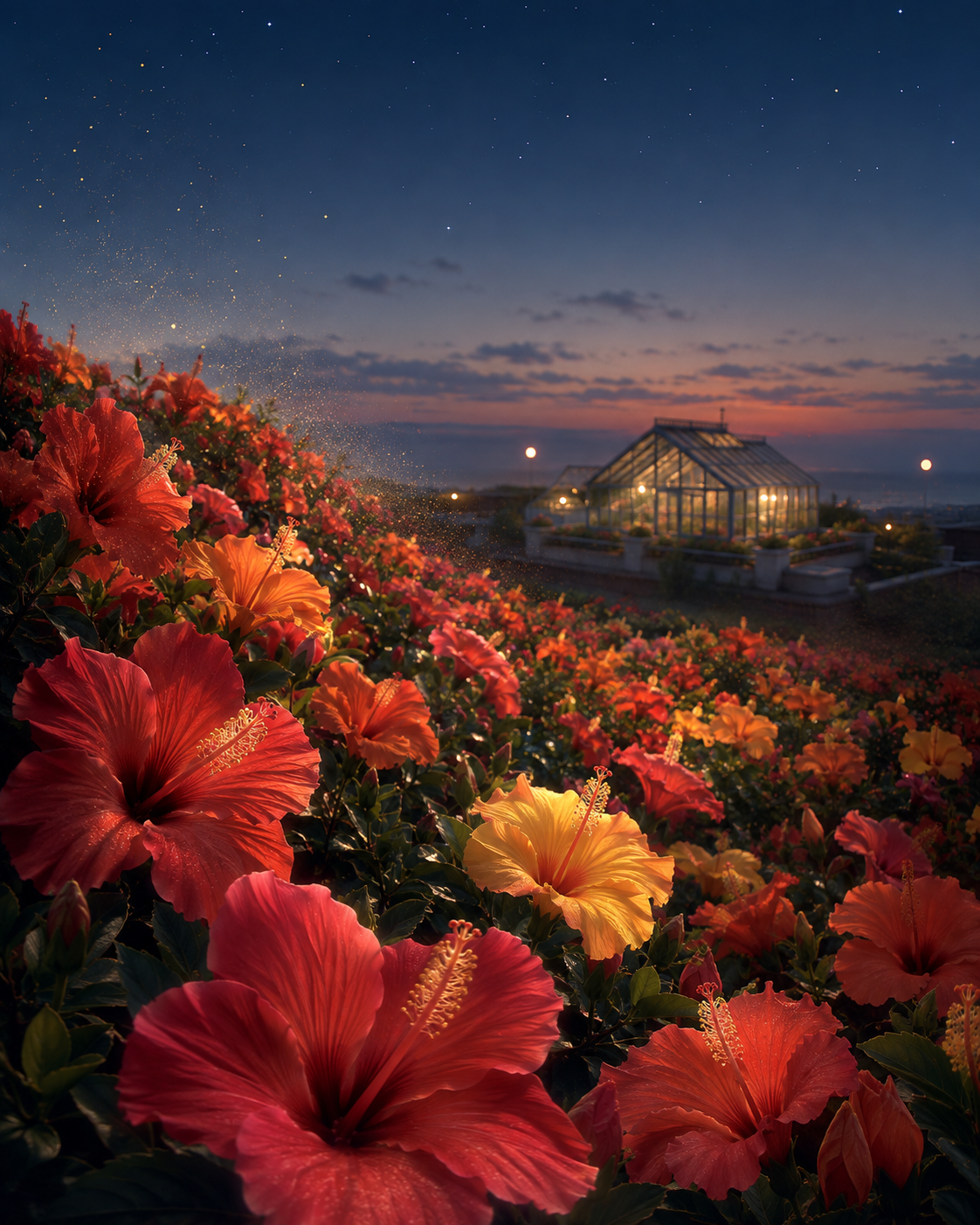
Hibiscus Hill beneath the Twilight Stars
Critique
Introduction This nocturnal hillside transforms cultivation into a luminous continuum. Hibiscus, irrigation droplets, greenhouse lamps, and stars occupy different depths yet share scattered light, joining earthly care to open night. Description Coral and red hibiscus crowd the foreground, punctuated by one golden bloom near center-right. Dark leaves descend across a slope of smaller flowers. At left, spray rises as a glittering cloud. A glass greenhouse stands middle-right, warm lights visible through pitched panes. Round lamps lead toward a dim sea horizon beneath deep blue stars. Analysis The slope creates a diagonal current from lower-left flowers toward the greenhouse. Diminishing blooms convert anatomy into a chromatic field. Warm illumination travels through petals, water, lamps, and glazing; surrounding blue preserves depth. Rectilinear transparency contrasts with folded flowers, but both transmit light. The granular spray mediates between dense vegetation below and dispersed stars above. Interpretation and Evaluation The image presents sustained wonder rather than untouched nature. Irrigation and greenhouse reveal labor and shelter behind abundance, yet their light increases enchantment. The water cloud resembles a temporary constellation created by care, echoing the sky while nourishing the hillside. Saturated coral and highlights approach fantasy, but dark foliage, orderly glazing, and practical watering provide grounding. Infrastructure and organic life remain distinct yet mutually illuminating. Conclusion Through diagonal recession and a finely graded spectrum of light points, the work connects flower, water, architecture, horizon, and star. Its generosity is not merely floral: it celebrates the attentive systems that allow fragile color to persist after daylight has withdrawn.
Same Subcategory
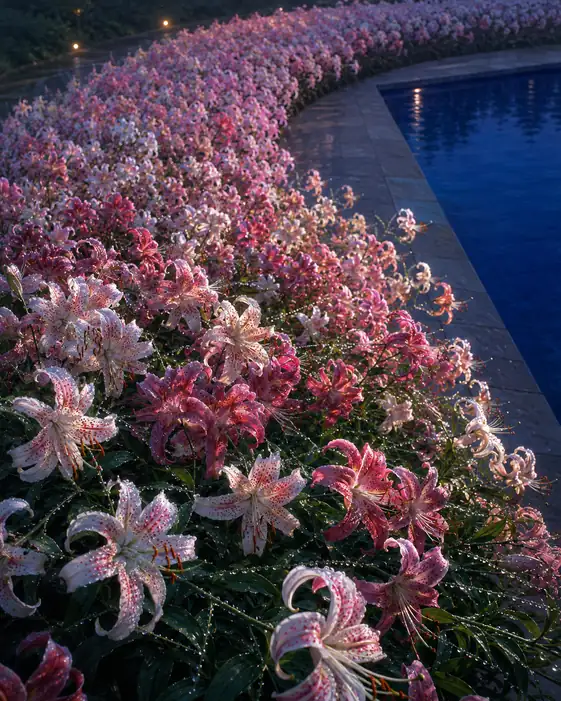 Arching Showy Lilies along the Poolside
Similar Artworks
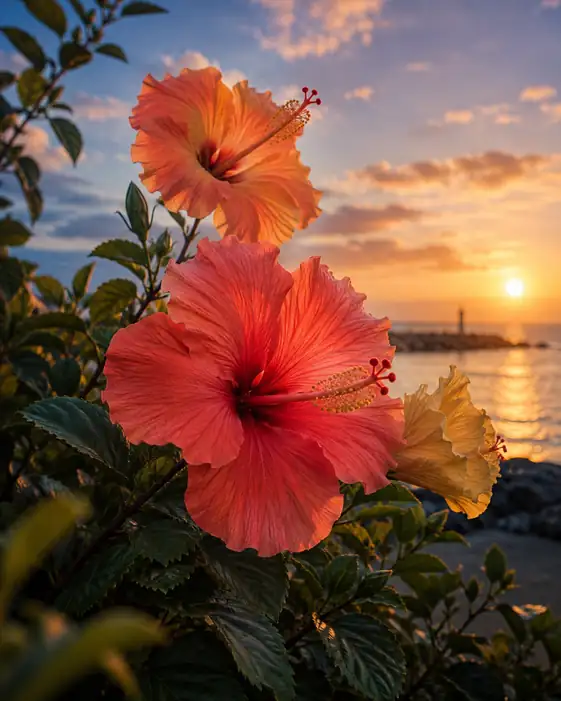 Hibiscus Glowing against the Sunset Harbor
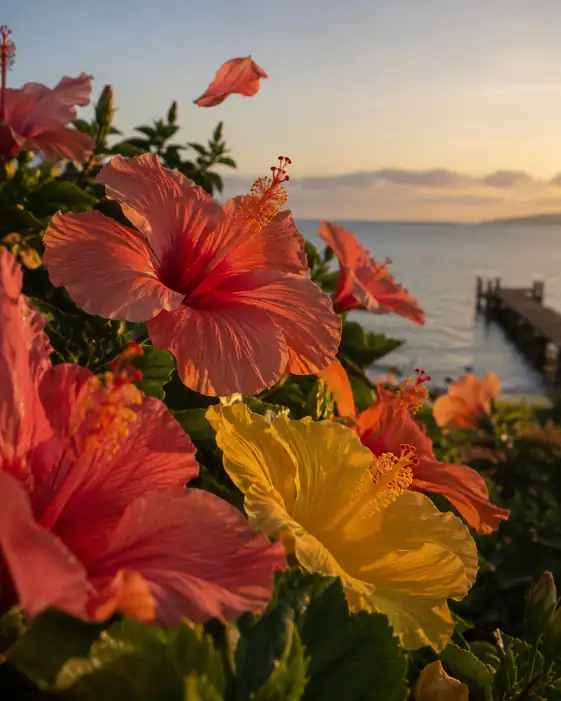 Sunset Breeze and Coastal Hibiscus
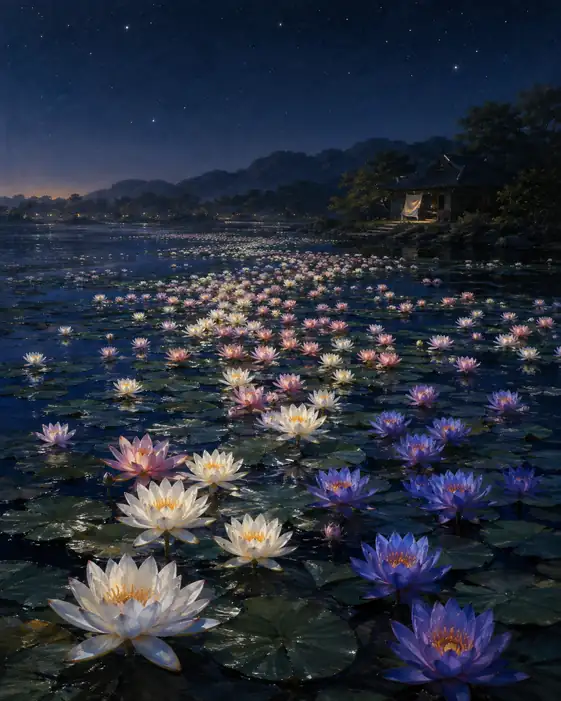 Moonlight Haven and the River of Lilies
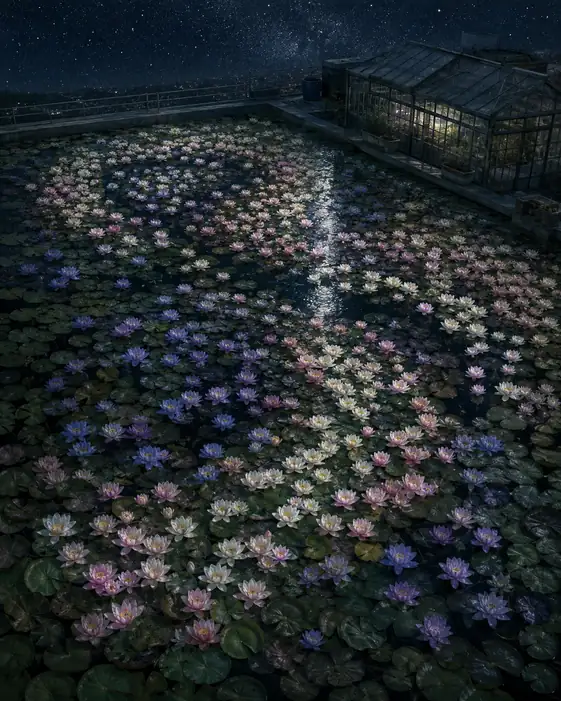 Constellation of Water Lilies on the Rooftop Pool
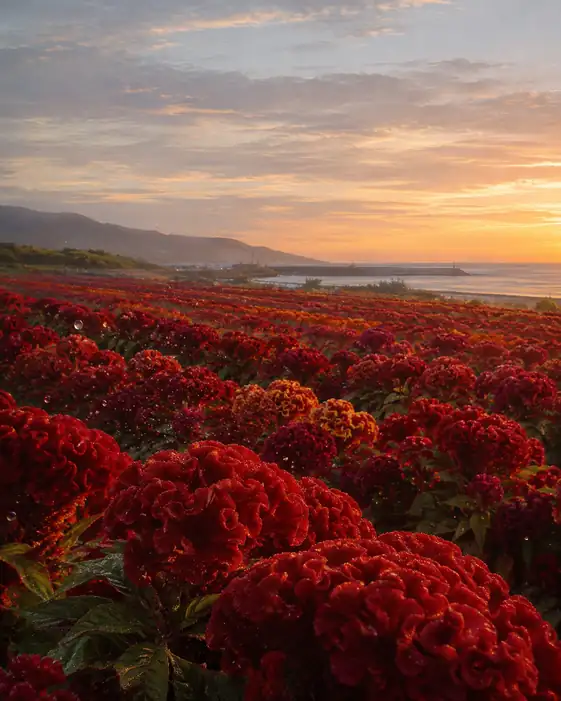 Crimson Slopes of Cockscomb at Sunset
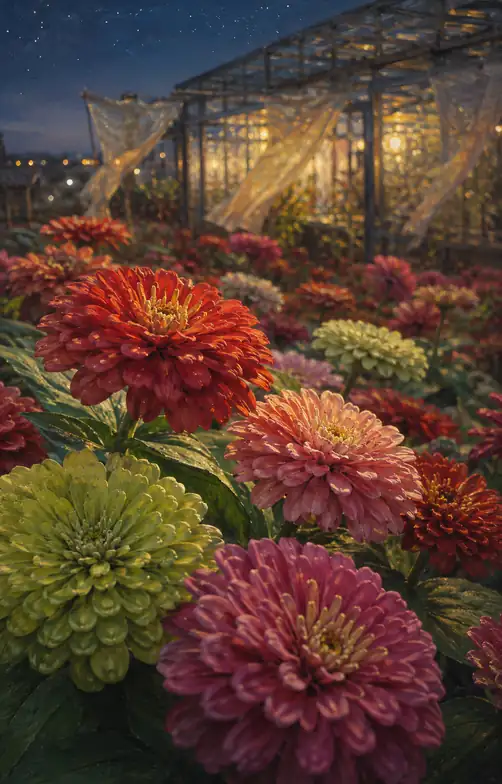 Zinnias in the Greenhouse Twilight
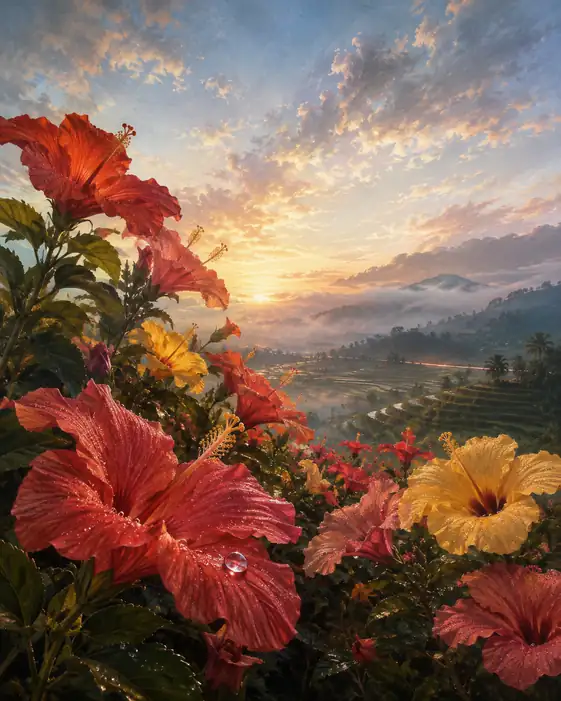 Morning Dew on Hibiscus above the Terraced Valleys
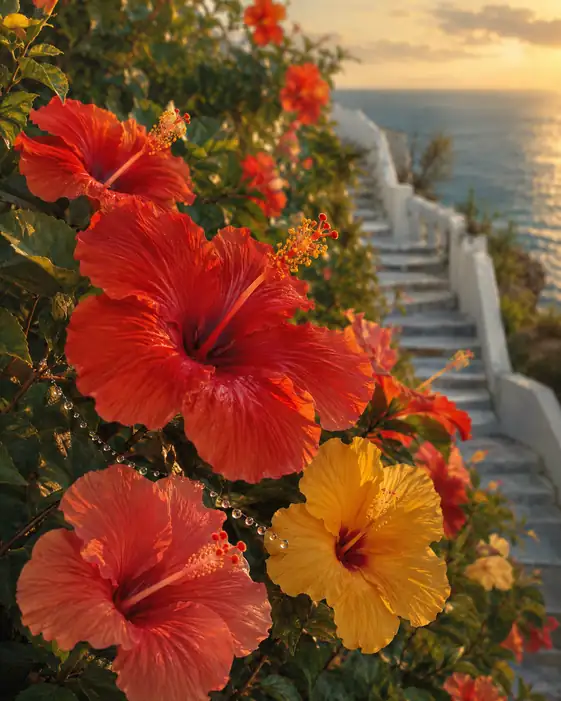 Hibiscus along the Coastal Stairway at Sunset
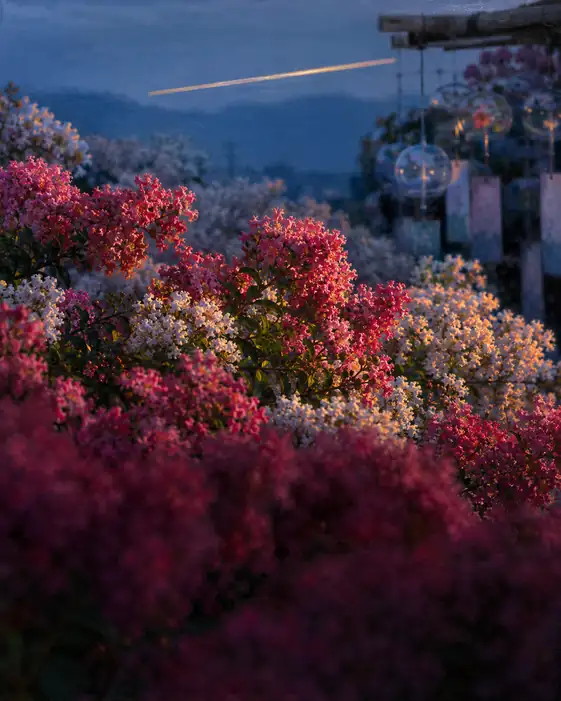 Crape Myrtle and Wind Chimes Beneath the Twilight Trail
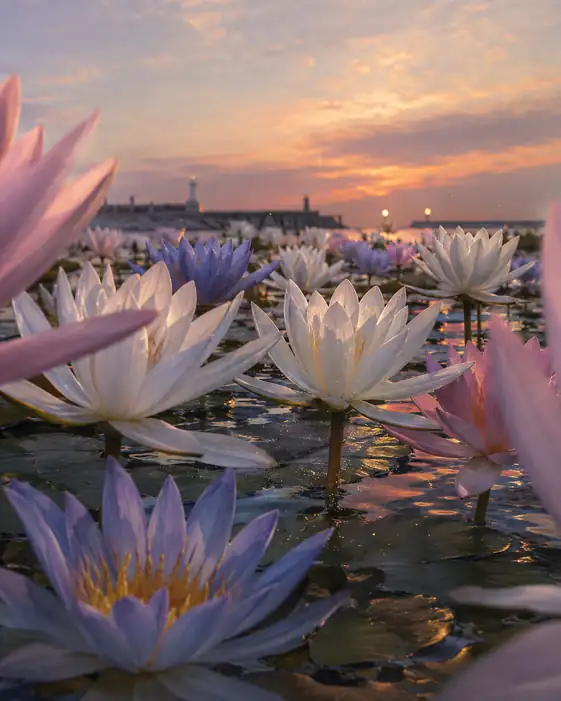 Lilies of the Twilight Harbor