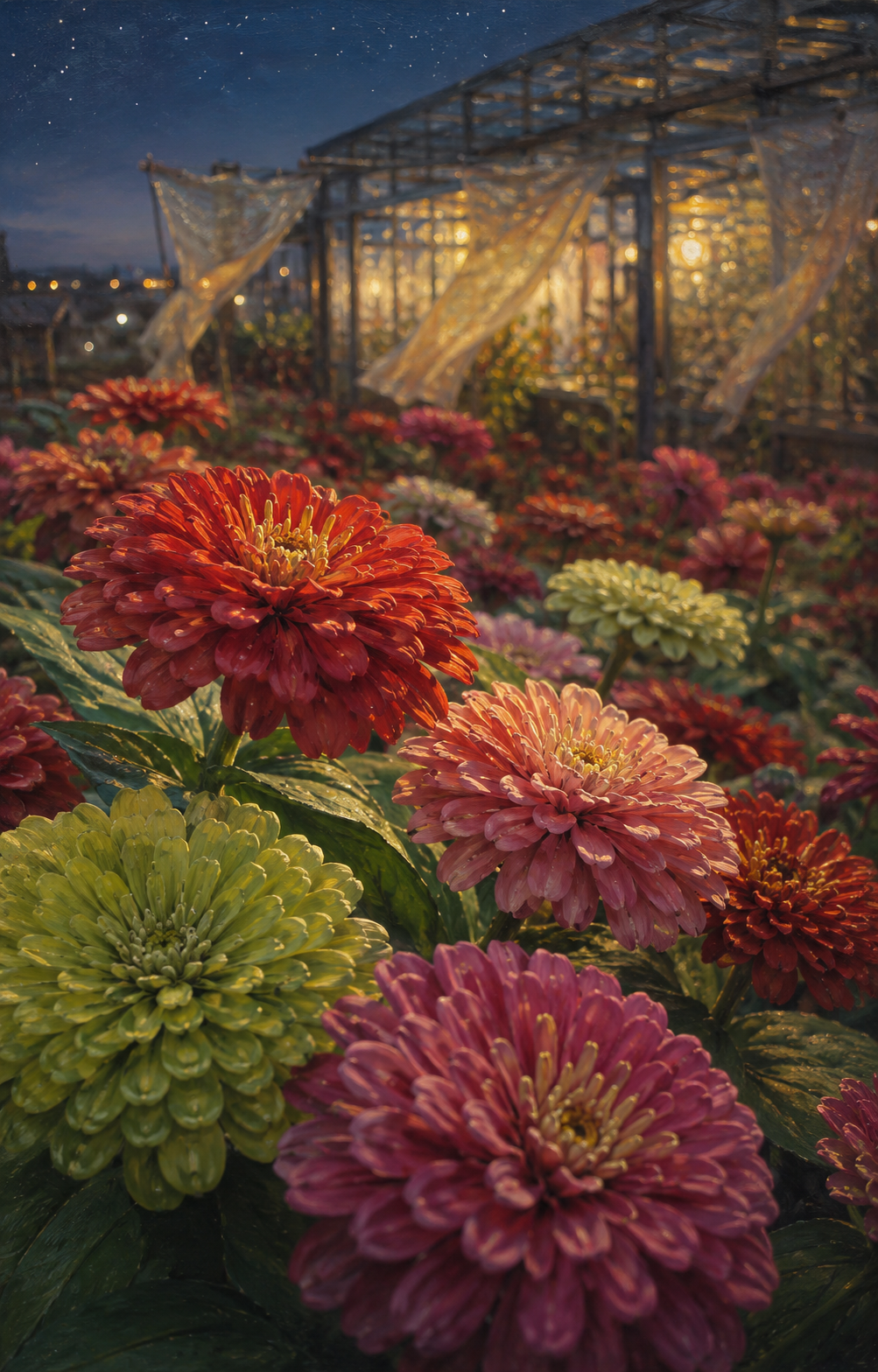
Zinnias in the Greenhouse Twilight
Critique
Introduction This painting sets a dense bed of zinnias against a greenhouse glowing after dusk. The flowers rise close to the viewer, while the glass structure and star-dotted sky occupy the upper half. Description Red, coral, rose, and pale green blossoms appear at different heights among dark leaves. The foremost heads are cropped and sharply modeled, especially a red bloom at upper left and a pink flower near center. Behind them, a greenhouse frame forms repeated dark rectangles. Loose translucent sheets hang from its sides, and amber lamps dissolve into soft circles within the interior. Analysis Overlapping flowers create a stepped recession from the lower edge toward the building. Their rounded, layered forms contrast with the greenhouse's rigid beams, while the hanging sheets introduce broad diagonals that connect the two zones. Warm orange highlights travel across petal tips and wet leaves, opposed by the deep blue sky and cool shadows. Selective focus and softened lights deepen the space without erasing the structural rhythm of the frame. Interpretation and Evaluation The greenhouse reads as both backdrop and source of nurture, turning the flowerbed into evidence of patient cultivation. Depiction is attentive to the waxy leaves, densely folded petals, gauzy coverings, and diffuse interior moisture. The color design balances strong complementary temperatures, and the low viewpoint gives the flowers monumentality. Combining nocturnal architecture with a close floral prospect provides an original variation on the garden subject. Conclusion The work is persuasive through its layered composition, controlled illumination, and varied treatment of surfaces. What initially seems a colorful flower display gradually reveals a relationship between fragile blossoms, protective construction, and sustained human care, all held together by the warm light of the greenhouse.
Same Subcategory
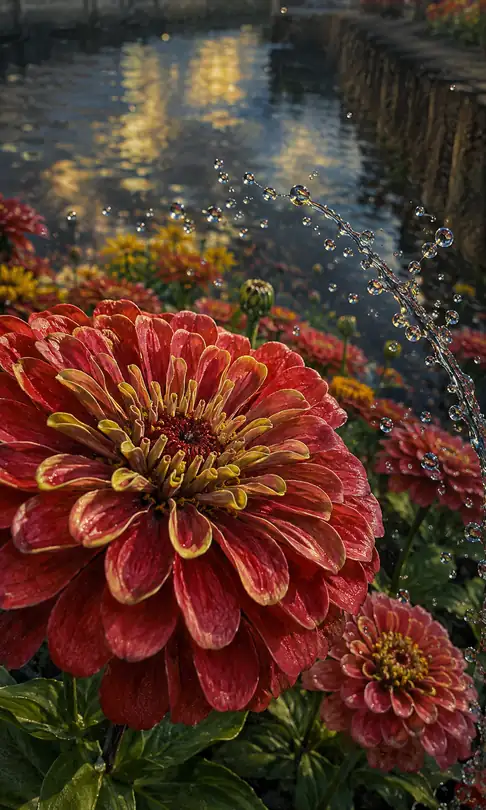 Scarlet Zinnia and the Arc of Droplets
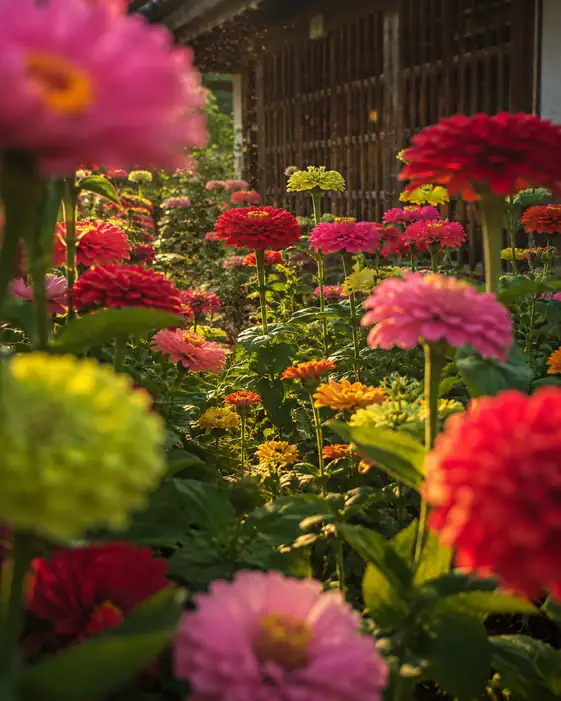 Zinnias before the Lattice Doors at Sunset
Similar Artworks
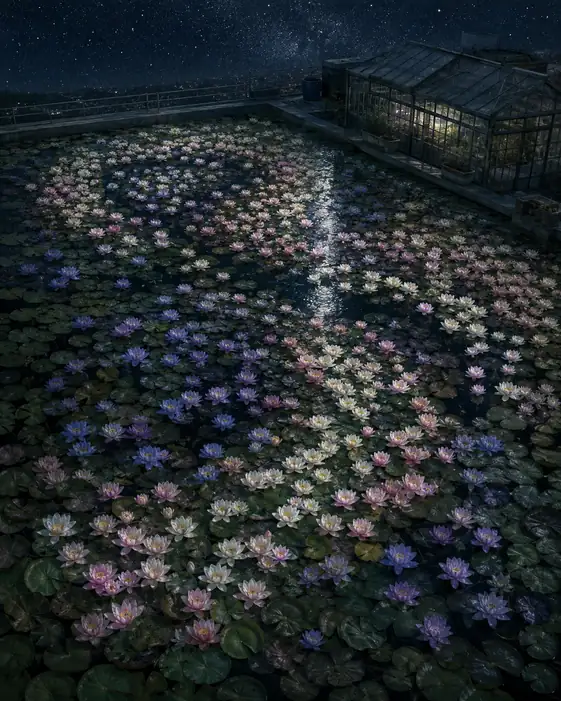 Constellation of Water Lilies on the Rooftop Pool
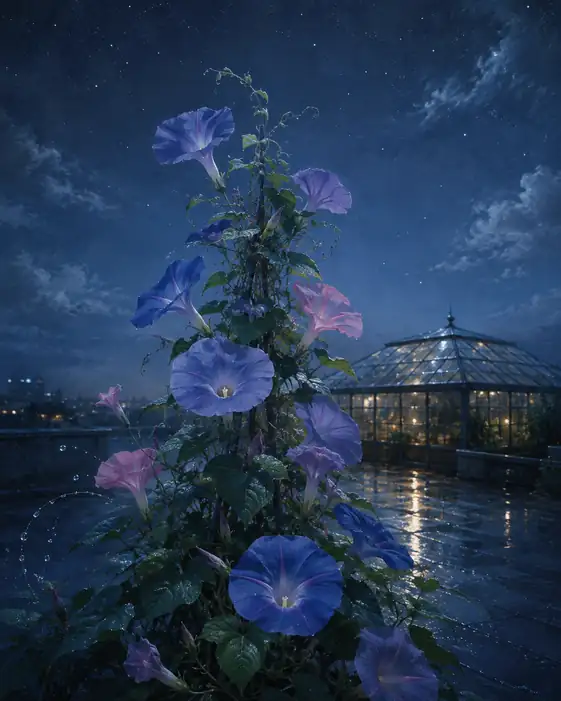 Morning Glory Spire Beneath the Starlit Sky
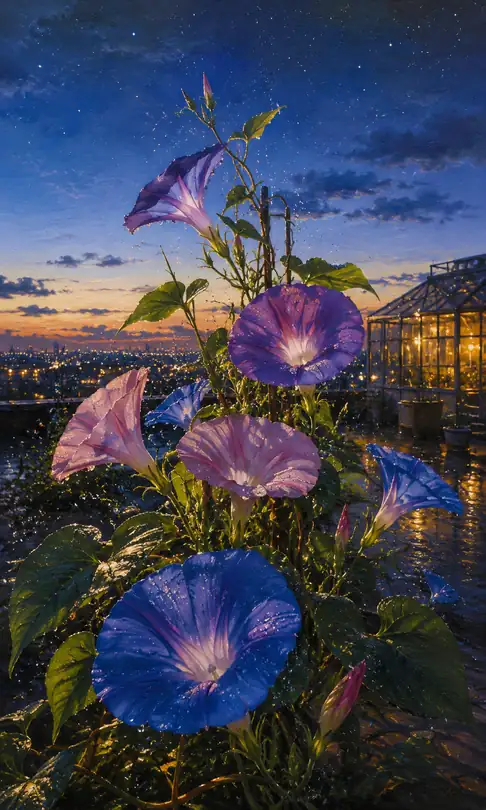 Blooms of the Rooftop Cosmos
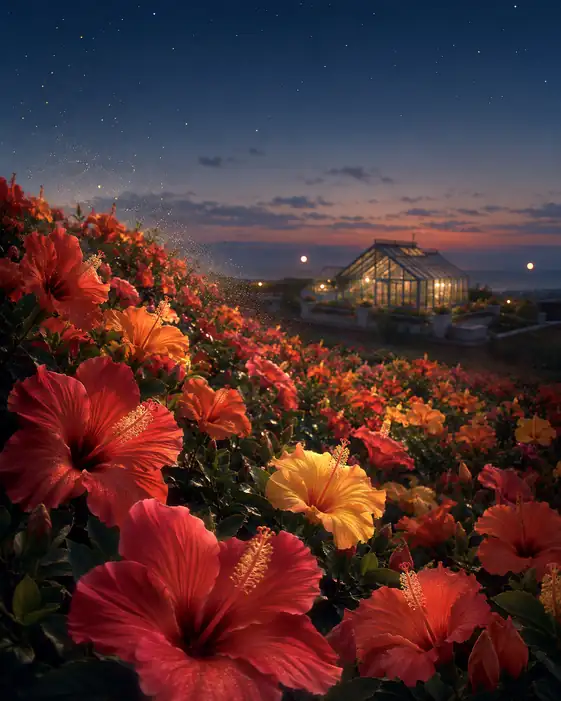 Hibiscus Hill beneath the Twilight Stars
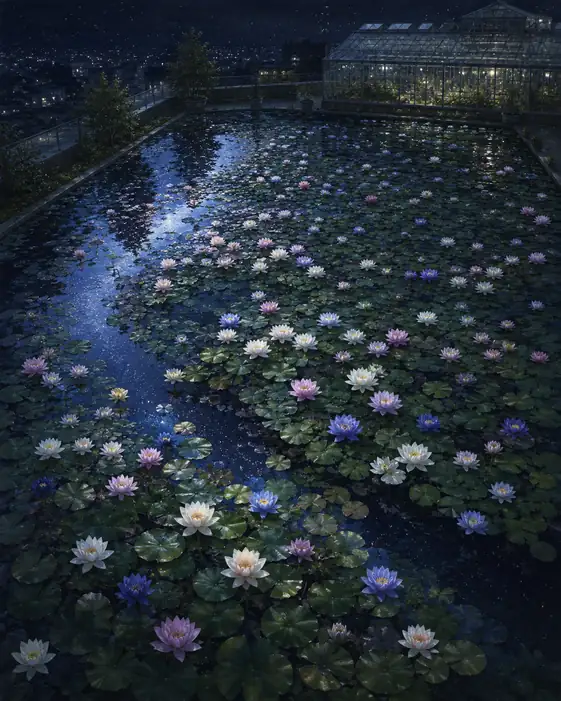 Constellation of Water Lilies on the Rooftop
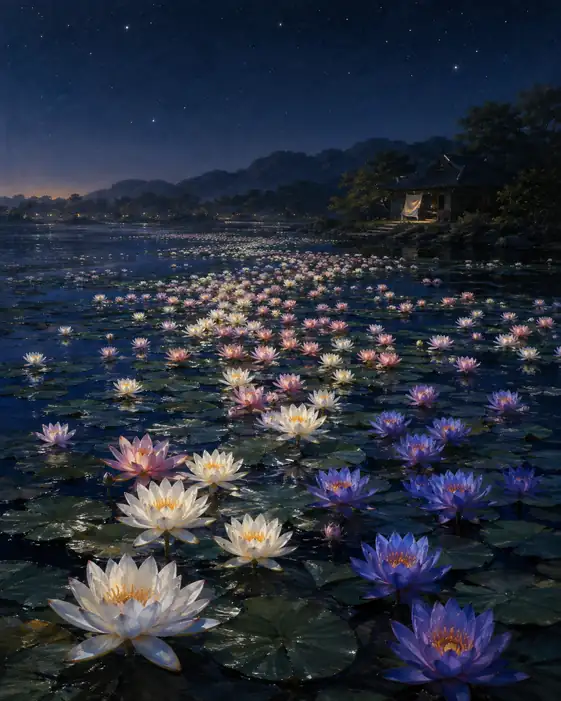 Moonlight Haven and the River of Lilies
 Zinnias beneath the Bamboo Blind at Sunset
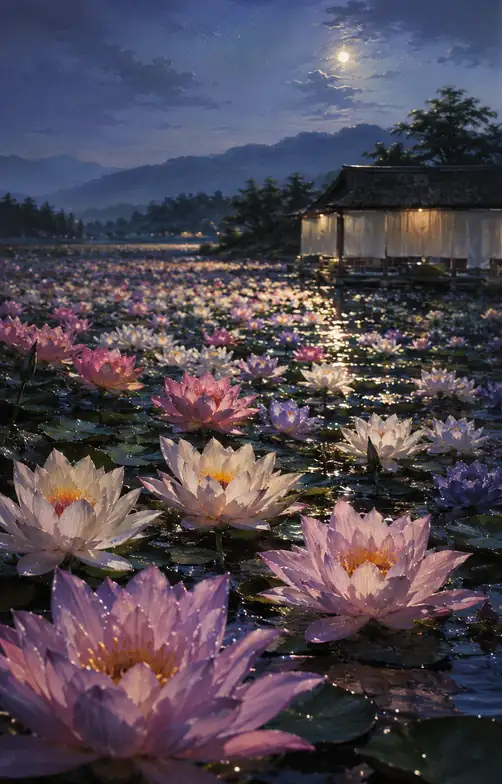 Moonlight Pavilion on the Lily Waters
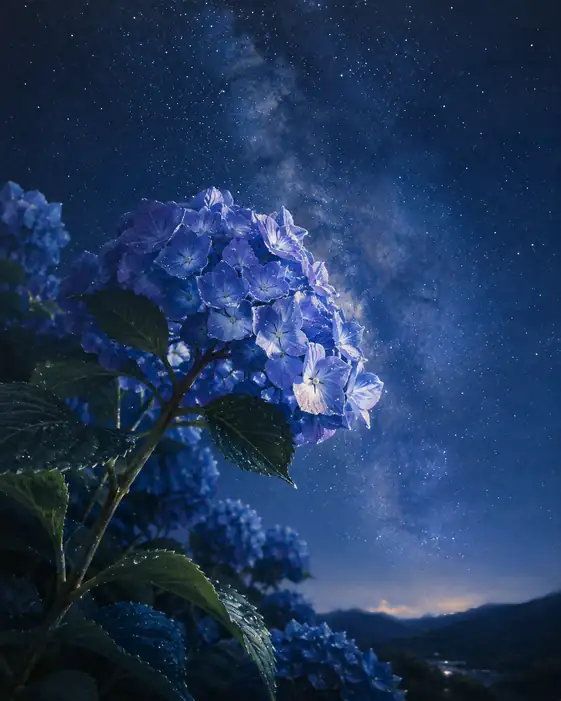 Nocturne of Stars and Azure Petals
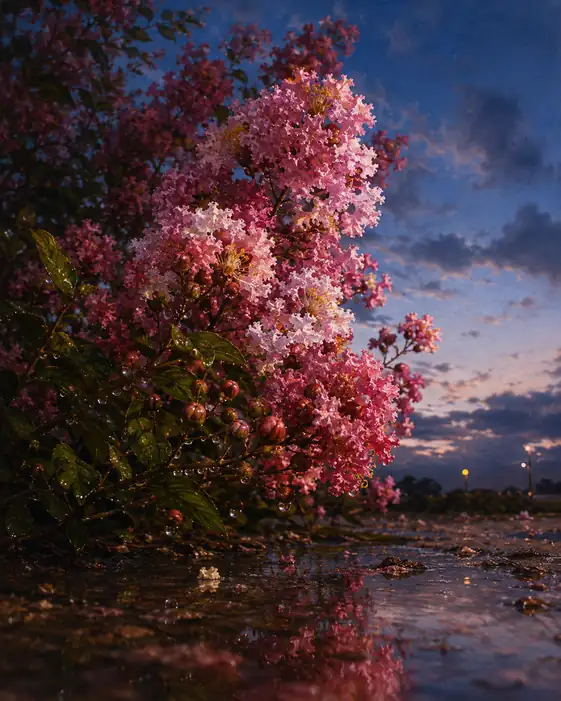 Crape Myrtle Reflected in the Twilight Puddle