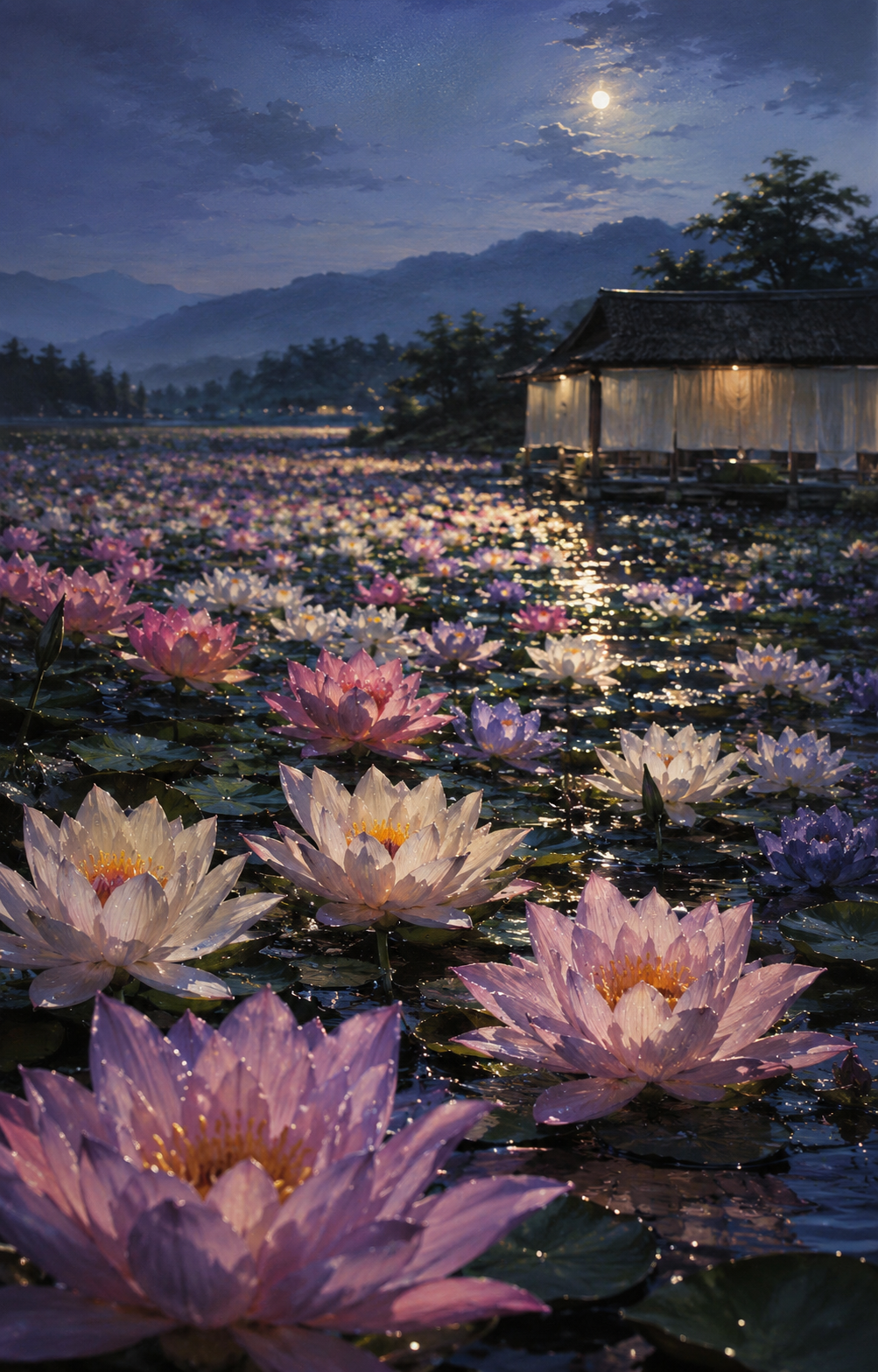
Moonlight Pavilion on the Lily Waters
Critique
Introduction Moonlight passes through a waterside house and scatters across a lily pond. Shelter, reflection, and mountain darkness create inhabited nocturnal calm. Description Large pink, white, and lavender flowers fill the foreground and continue across the pond into the distance. Wet petals and pads sparkle with small highlights. At upper right, a long house stands on posts above the water, its dark roof sheltering pale translucent curtains. Warm lamps glow beneath the eaves and reflect in a bright channel leading toward the viewer. A full moon hangs above layered blue mountains, while trees and distant lights mark the far shore. Analysis The luminous water channel forms a strong diagonal from the house to the lower center, linking architecture and flowers. Large foreground blossoms decrease into a dense dotted field, creating depth. Cool blue-violet dominates the night; pink petals and amber lamps provide warmth. The house's horizontal roof balances vertical reflections and flower stems. Curtains diffuse interior light, contrasting with crisp moonlight on wet surfaces. Mountain layers and dark foliage frame the brighter pond. Interpretation and Evaluation The elevated house appears both protected from and dependent upon water. Its curtains allow light to pass while preserving privacy, making shelter permeable rather than closed. Moon and lamps represent cosmic and domestic illumination, and their reflections mingle without hierarchy. The enormous flower field makes habitation seem embedded in seasonal life. No occupants are visible, yet lit eaves suggest care, wakefulness, and welcome. Conclusion The work achieves romance through relational light rather than ornament alone. Moon, house, water, and flowers continuously exchange radiance. Its calm remains active: reflections travel, petals open, and the inhabited edge participates in the pond's nocturnal rhythm.
Same Subcategory
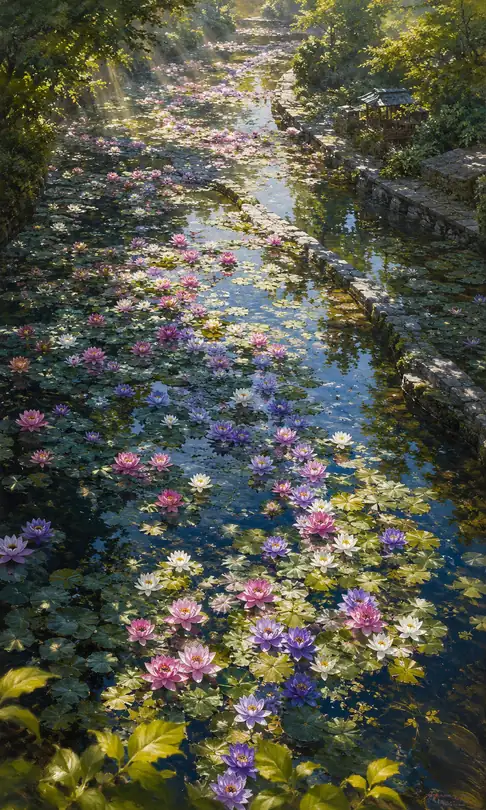 Sunlit Canal of Water Lilies
Similar Artworks
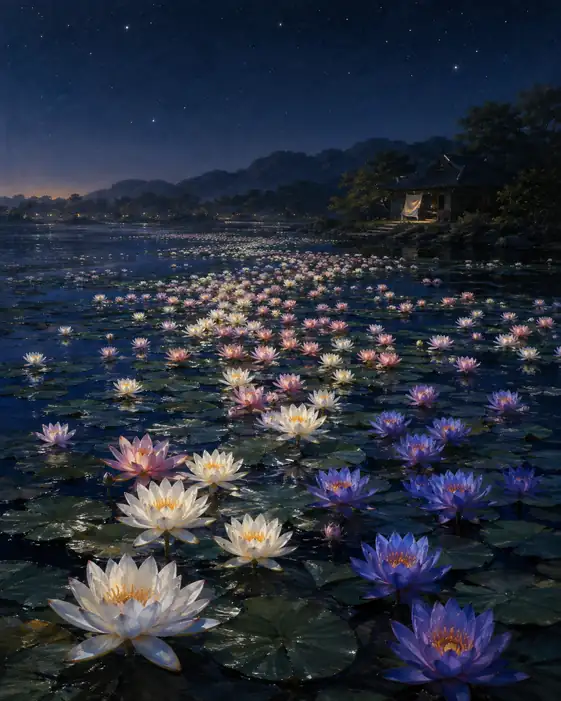 Moonlight Haven and the River of Lilies
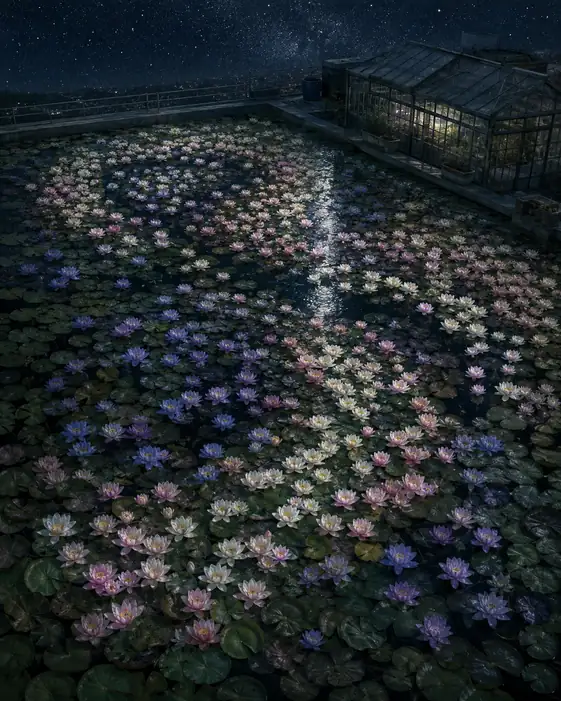 Constellation of Water Lilies on the Rooftop Pool
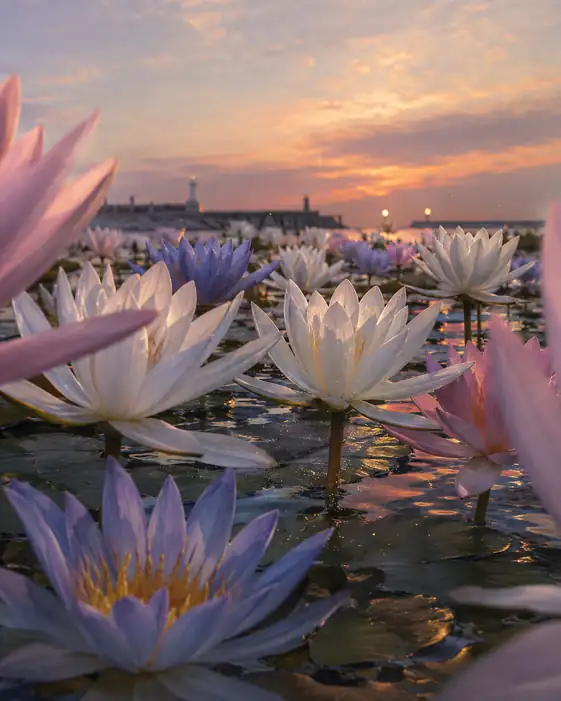 Lilies of the Twilight Harbor
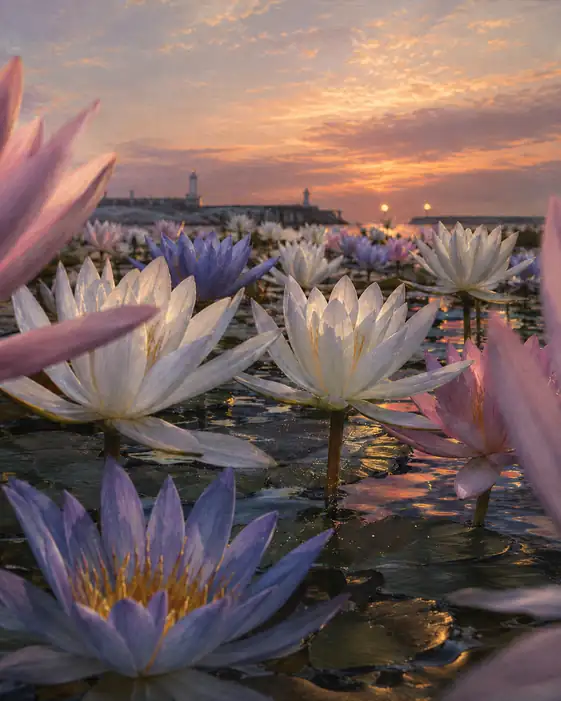 Water Lilies under the Sunset Harbor
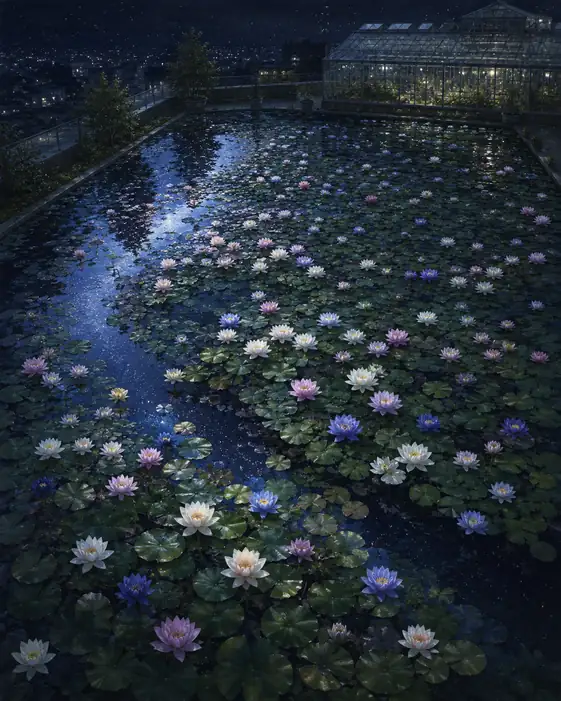 Constellation of Water Lilies on the Rooftop
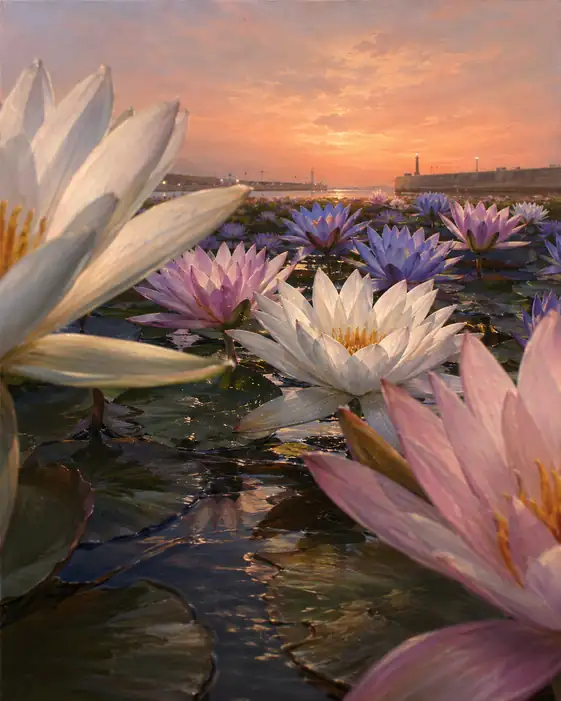 Water Lilies under the Harbor Sunset
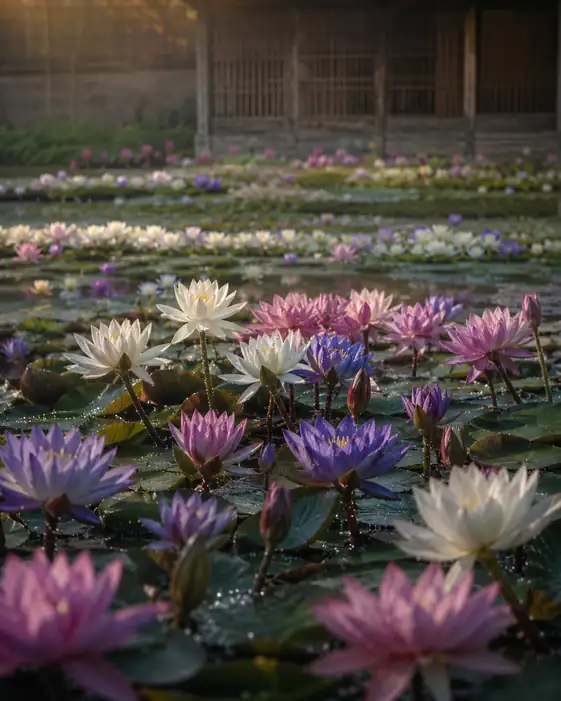 Morning Radiance over the Lily Pavilion
 Golden Dawn over the Lily Pavilion
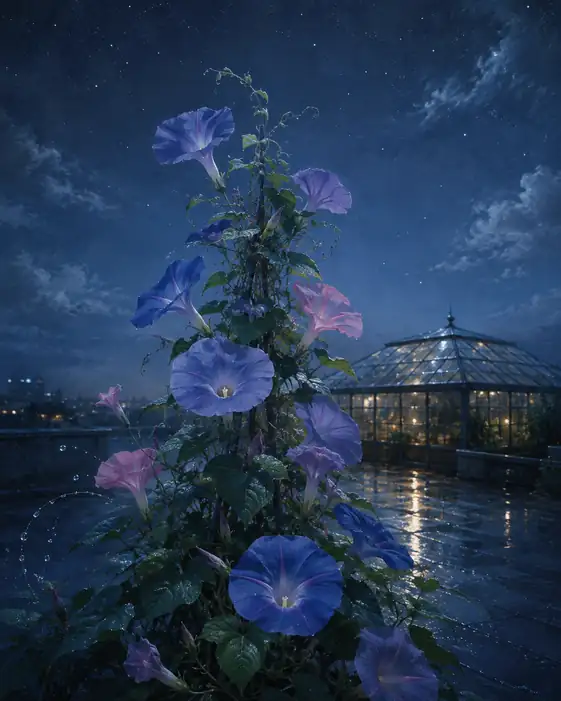 Morning Glory Spire Beneath the Starlit Sky
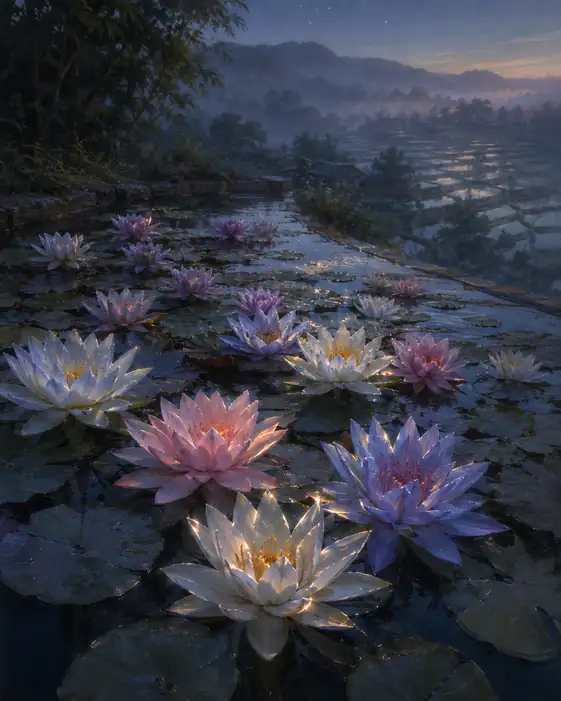 Terraces of Morning Mist and Floating Petals