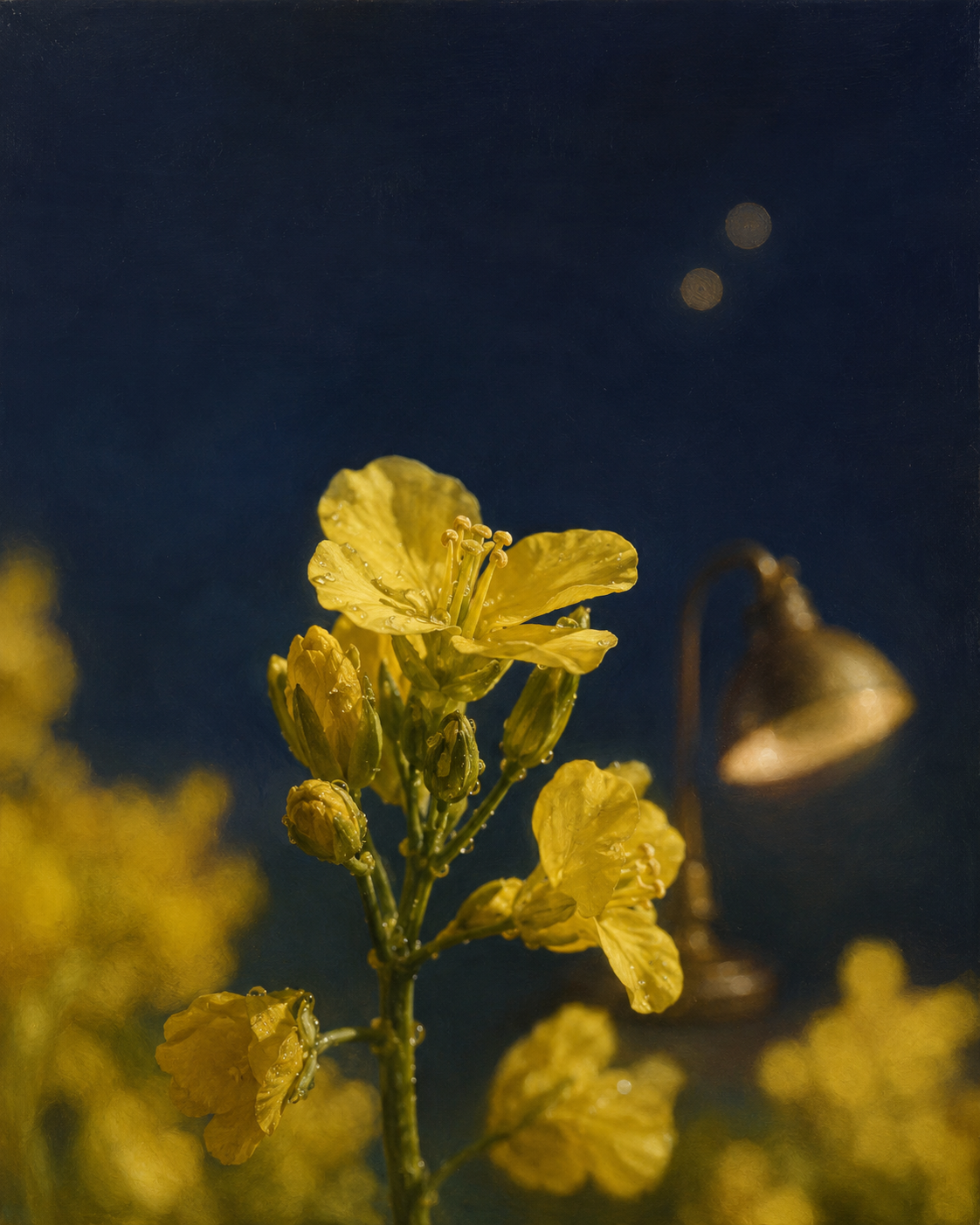
Canola Flower by the Brass Lamp
Critique
Introduction This painting isolates a yellow flowering stalk against a nearly black navy background. Its restricted subject and palette create a concentrated nocturnal still life in which moisture, growth, and artificial light become equally important. Description One upright stem occupies the lower center, supporting open four-petaled flowers, tightly folded buds, and branching green shoots. Clear droplets cling to petals and joints. A brass-colored desk lamp remains out of focus at right, two amber circles hover above, and diffuse yellow clusters surround the lower margins. Analysis The central plant forms a narrow vertical axis, but uneven branches prevent rigidity and move the eye from the low blossom to the top flower. Golden yellow and olive green stand distinctly against blue-black space. Highlights define translucent veins and rounded drops, whereas the lamp is reduced to a soft metallic silhouette. This alternation of precision and blur produces substantial depth. Interpretation and Evaluation The visible lamp makes illumination part of the subject rather than an invisible condition. Its bent neck echoes the plant's branching structure, suggesting a meeting between cultivated nature and a human interior. Accurate rendering of wet surfaces, disciplined color, and a restrained composition show considerable technical control. The hovering light discs add ambiguity without distracting from the flower's fragile structure. Conclusion What first seems a simple flower study becomes an examination of how directed light transforms an ordinary stem. Its quiet originality lies in balancing botanical detail with the subdued presence of the lamp, while focus and texture sustain close viewing.
Same Subcategory
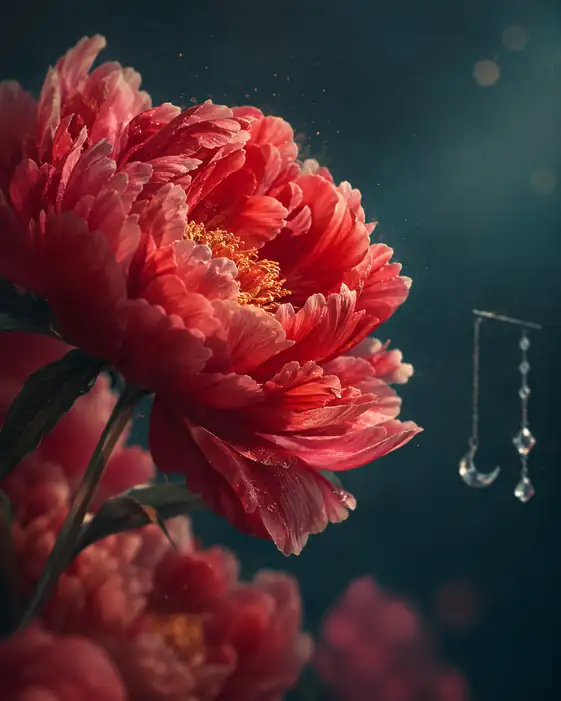 Peony and Crescent Moon Pendant
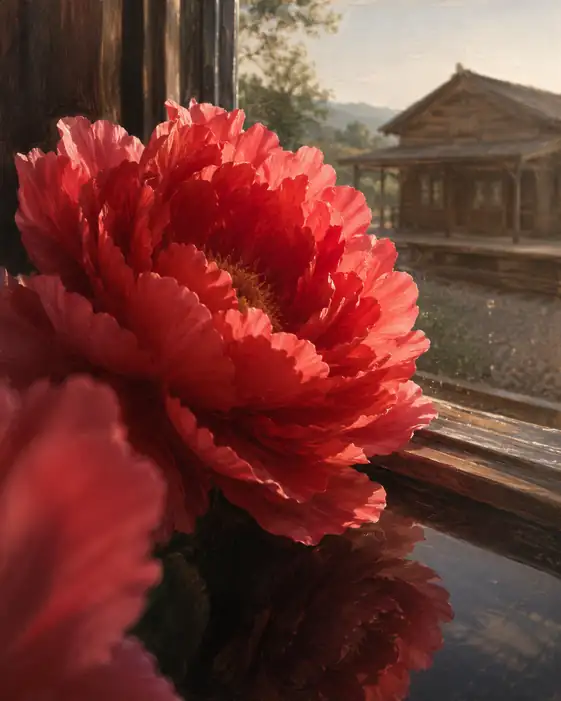 Peony Reflected at Mountain Station Window
Similar Artworks
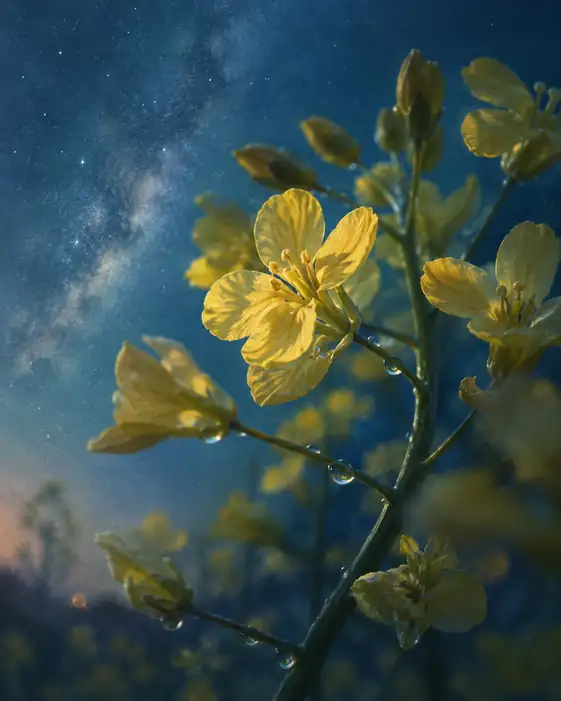 Canola Blossom Beneath Starry Skies
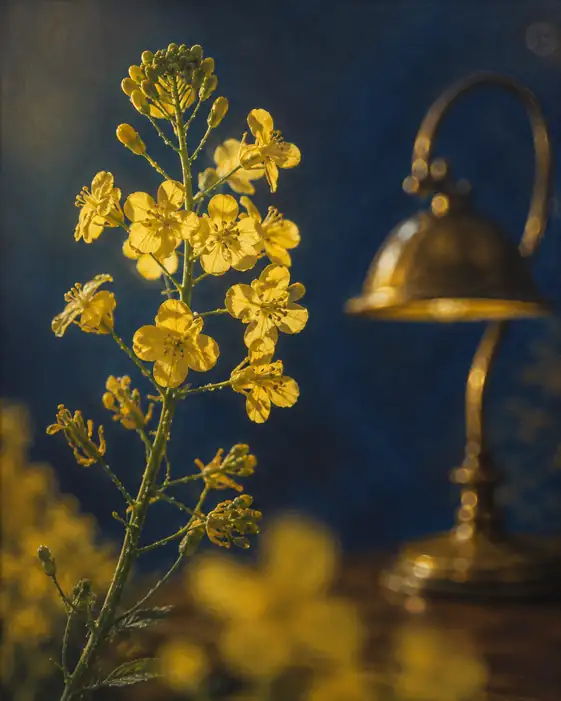 Brass Lamp and Spring Blossom
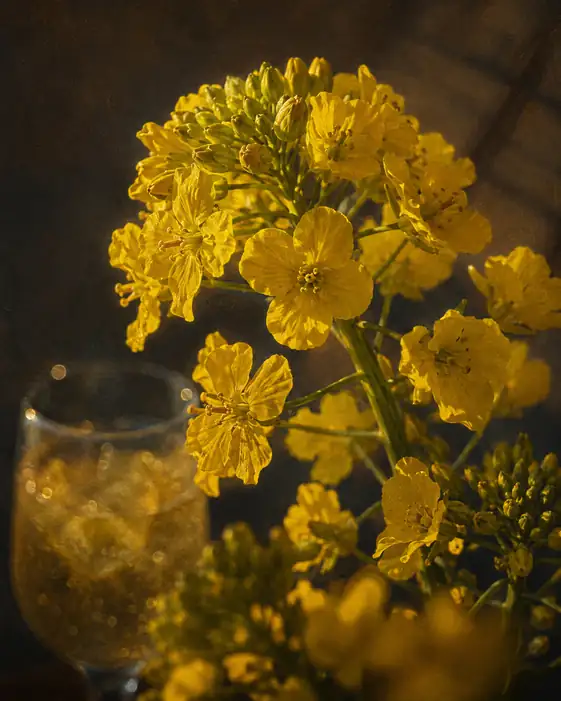 Canola Bouquet by Sparkling Glass
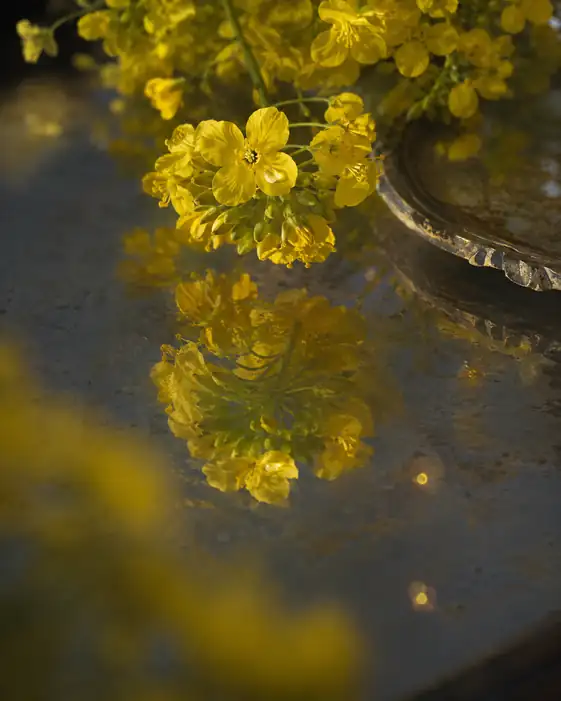 Canola Blossom on Silver Tray
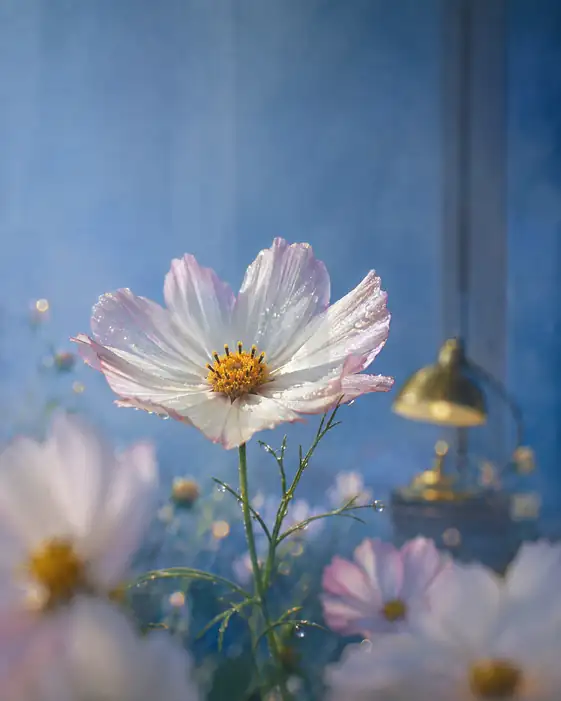 Pink Cosmos and Brass Desk Lamp
 Candlelight Cake and Blue Nemophila
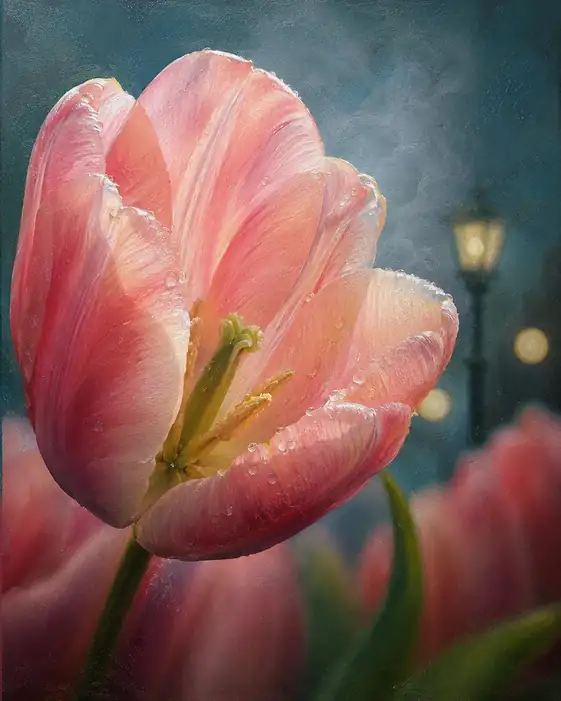 Pink Tulip Beneath the Night Lantern
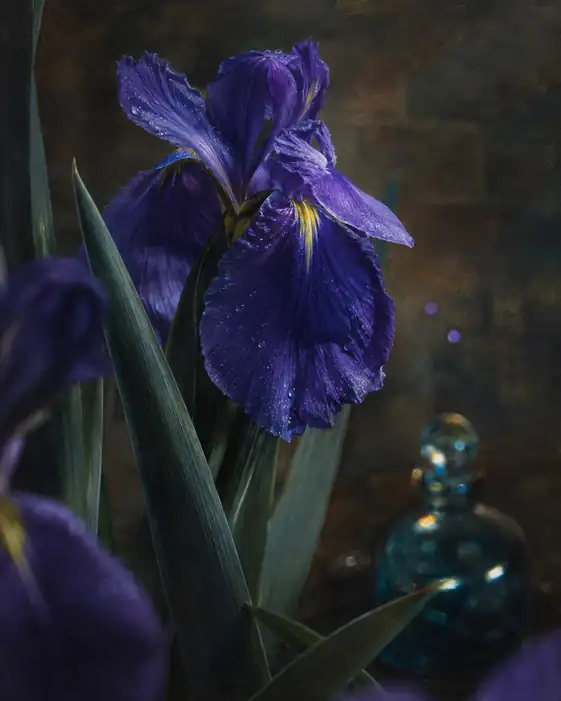 Purple Iris and Vintage Glass Bottle
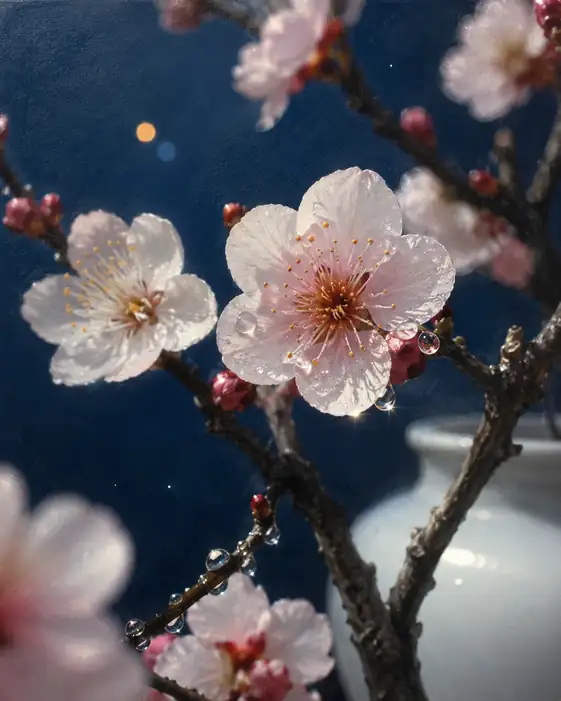 Dew-Kissed Plum Blossoms by White Porcelain
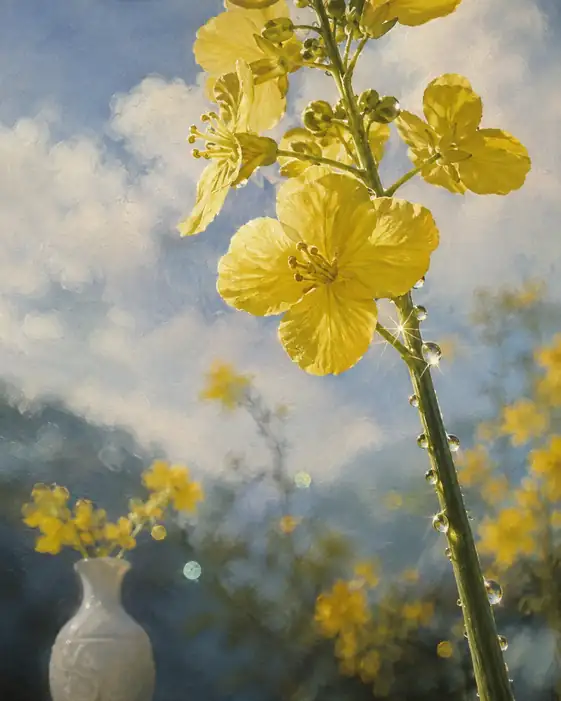 Sparkling Canola and Porcelain Vase