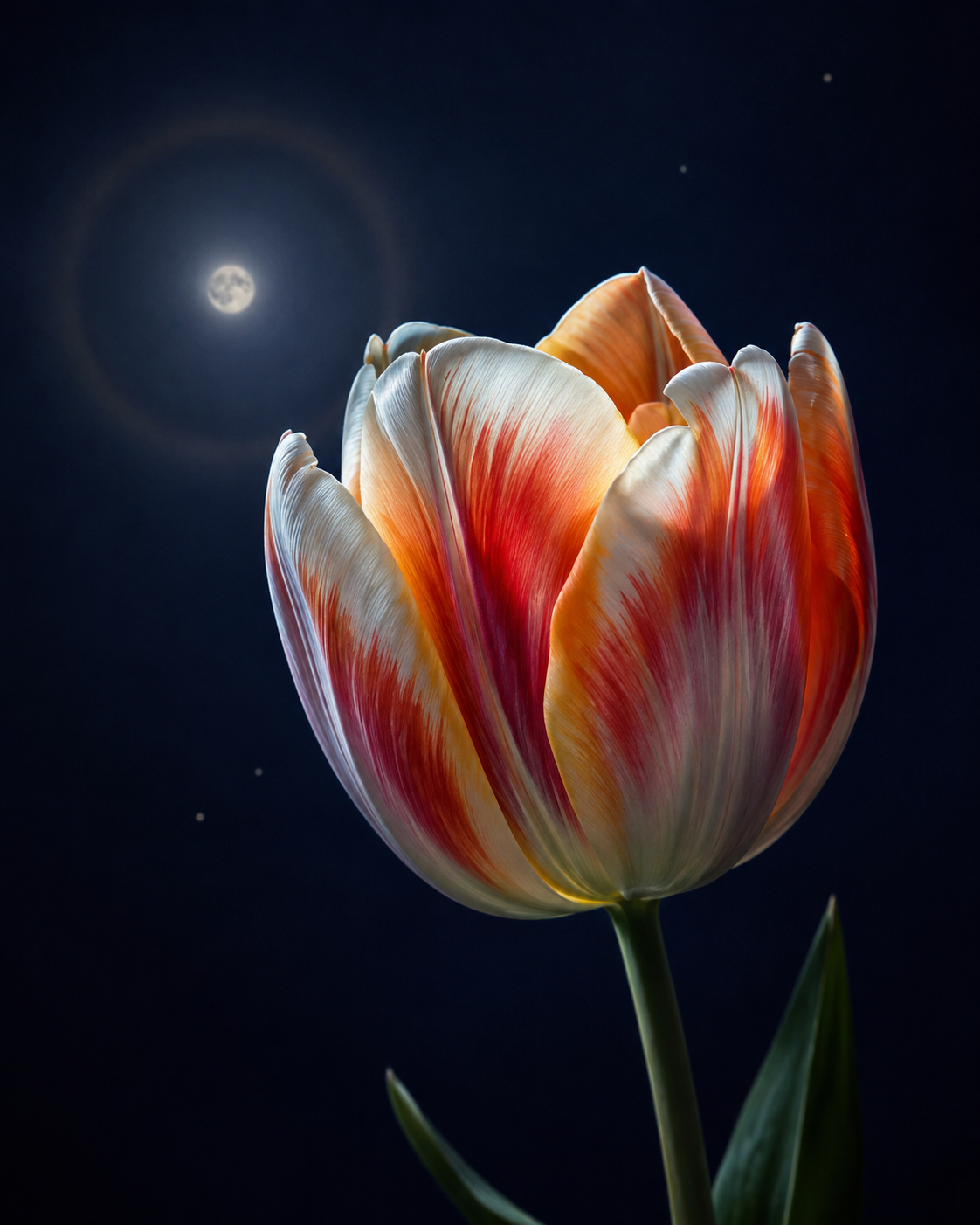
Moonlit Tulip Against the Night
Critique
Introduction This nocturnal floral portrait places a red, orange, and white tulip against a deep blue sky, with the moon positioned far to its upper left. The isolated pairing magnifies the flower while using celestial distance to broaden the otherwise intimate study. Description The tulip rises from the lower center on a smooth green stem, accompanied by two pointed leaves. Its closed-to-partly-open cup fills the right half, formed by overlapping petals striped in white, crimson, orange, and pale green near the base. Bright rim light outlines the upper edges and illuminates inner orange surfaces. The full moon appears as a small detailed disk within a faint circular halo at upper left. Only a few stars punctuate the surrounding darkness. Analysis The bloom’s large oval mass and the moon’s small circle form unequal anchors across ample negative space. Petal seams create vertical arcs that converge toward the stem, while the moon stabilizes the open left field. Cool navy surrounds warm red and orange, heightening their advance. Backlighting reveals fine parallel fibers and separates each overlapping petal. The leaves’ dark diagonals broaden the base and prevent the tall flower from appearing unsupported. Interpretation and Evaluation The radical scale contrast places a seasonal bloom in dialogue with a remote, apparently enduring body. Precise color transitions and petal striations demonstrate strong descriptive skill, while controlled darkness preserves simplicity. The asymmetrical composition is confident, and the warm-cool palette is coherent. Its originality lies in allowing one ordinary tulip to occupy more visual territory than the moon without diminishing the sense of celestial distance. Conclusion An enlarged tulip becomes a reflection on scale and illumination. Spare space, curved structure, and rim light connect botanical form with the breadth of night.
Same Subcategory
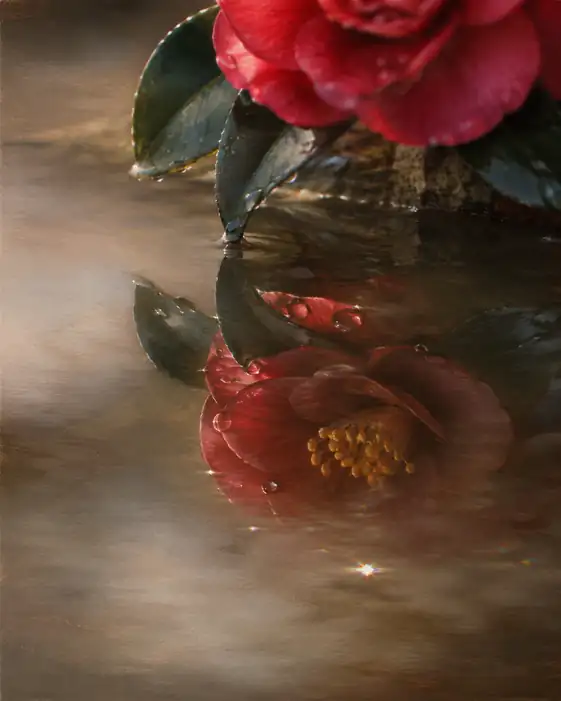 Floating Camellia on Sunlit Stream
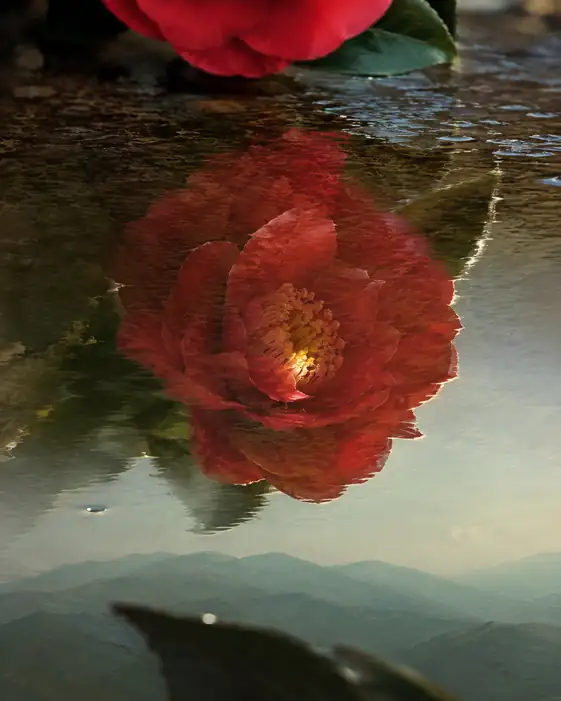 Camellia Mirage on Serene Waters
Similar Artworks
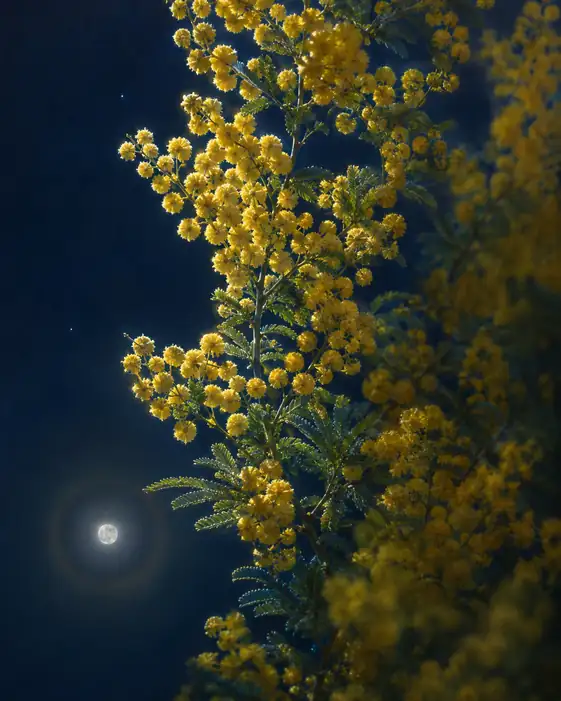 Moonlit Mimosa on a Silent Night
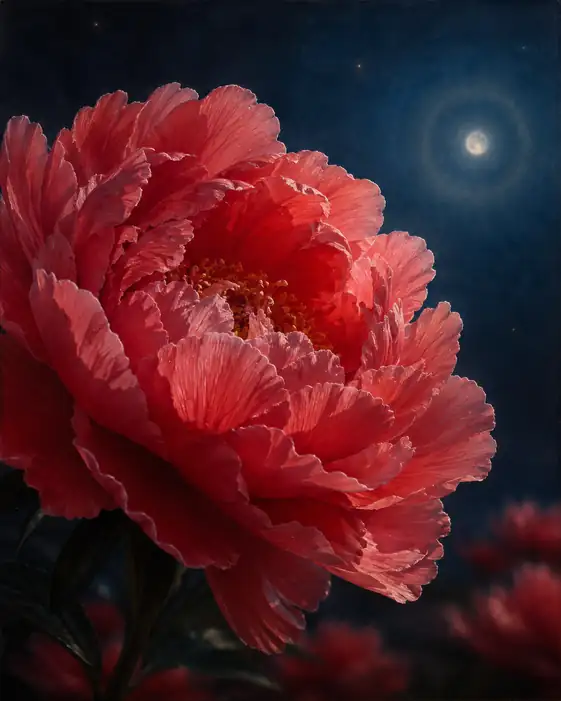 Moonlit Peony in Velvet Night
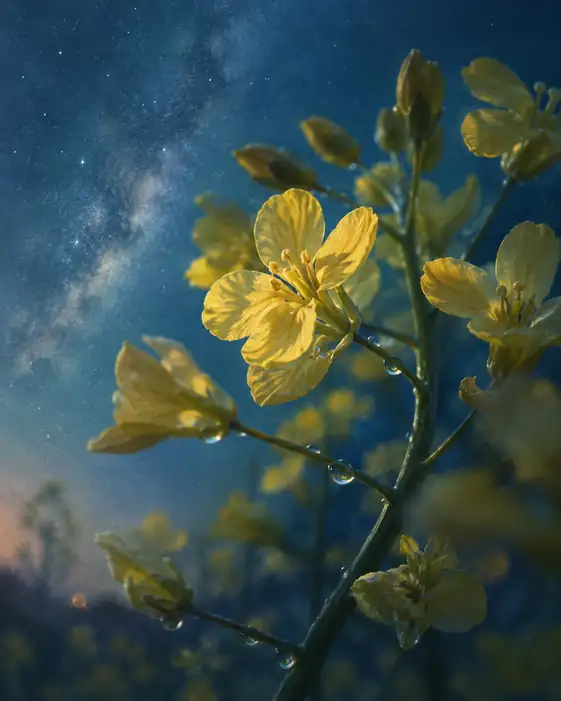 Canola Blossom Beneath Starry Skies
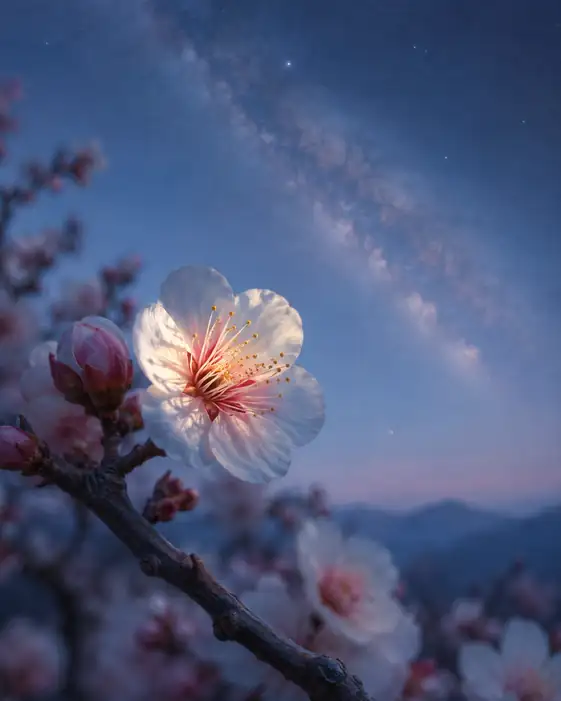 White Plum Beneath the Milky Way
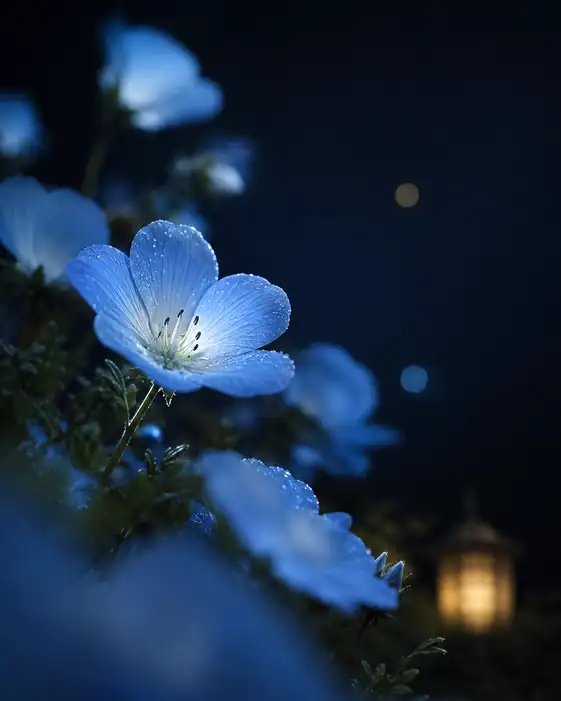 Midnight Nemophila and Garden Lantern
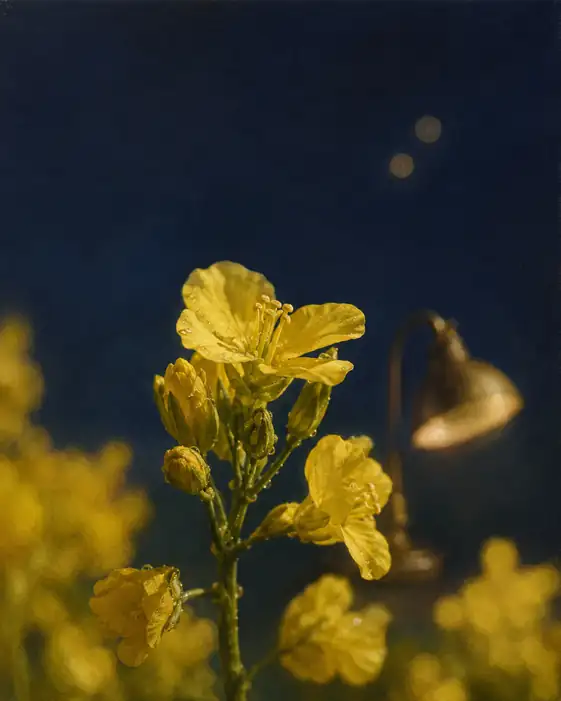 Canola Flower by the Brass Lamp
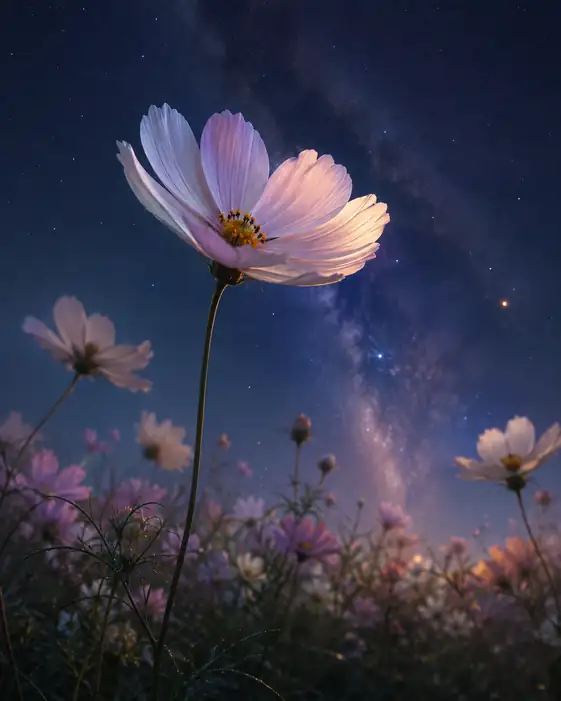 Cosmos Beneath the Starlit Sky
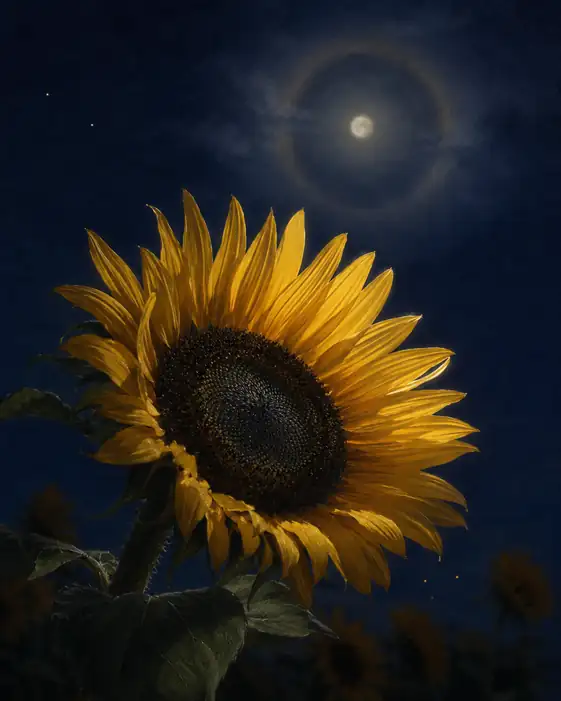 Halo of the Moon and the Golden Disc
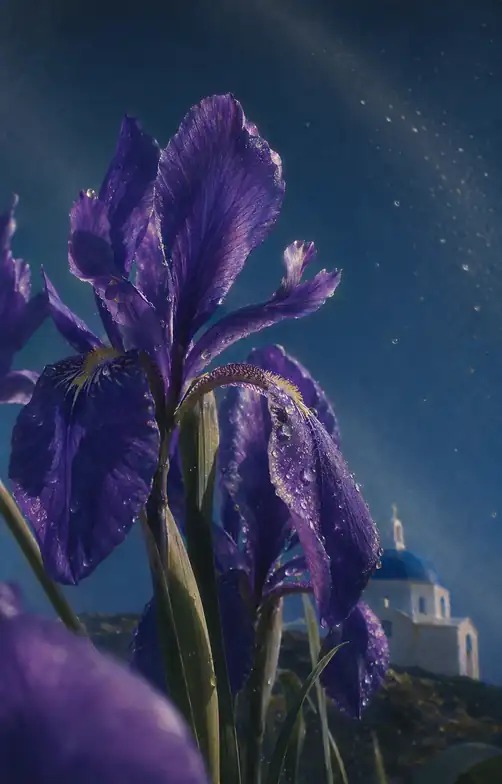 Iris and the Seaside Chapel
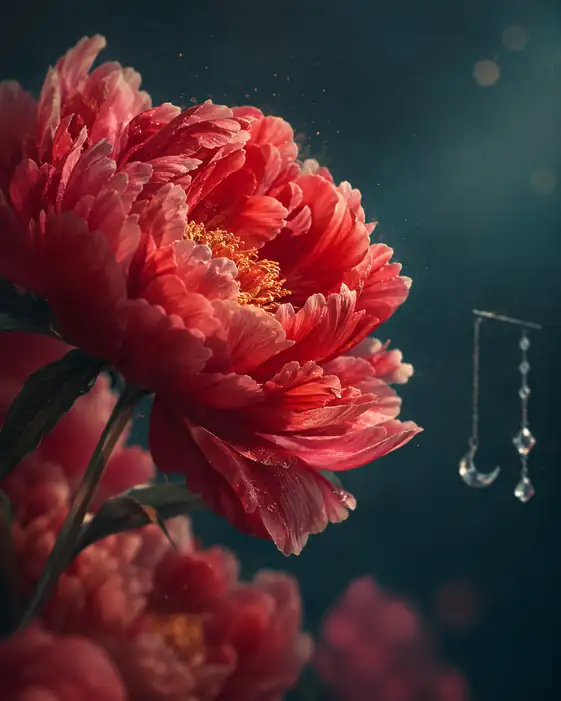 Peony and Crescent Moon Pendant