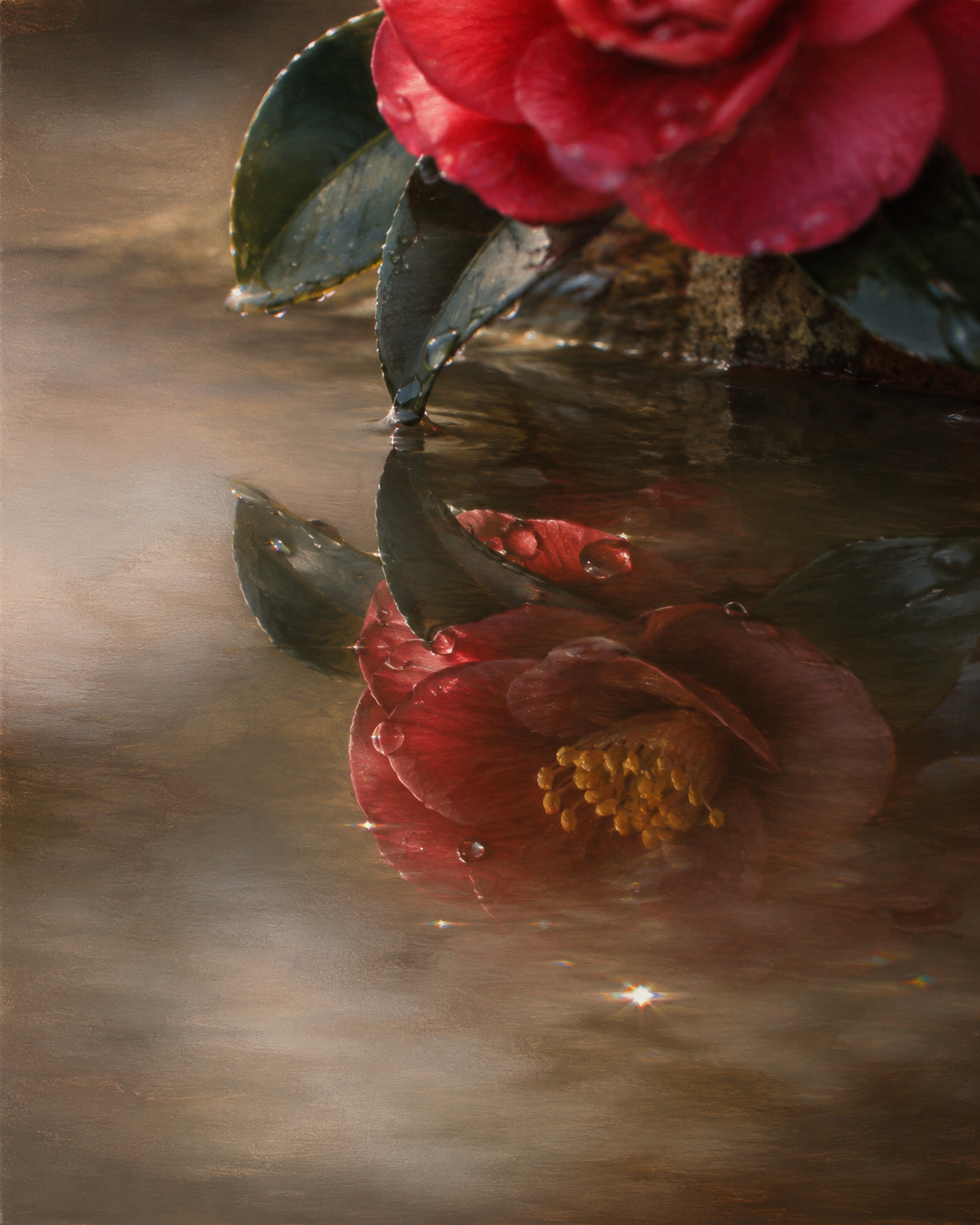
Floating Camellia on Sunlit Stream
Critique
Introduction This reflective close view places a red camellia and glossy leaves above shallow water, where an inverted flower becomes the primary visible bloom. Warm mist and isolated glints soften the boundary between object and image, making the surface itself the central subject. Description The actual flower is cropped heavily along the upper edge, resting above dark wet leaves and a rough stone or bank. Several clear drops hang from leaf tips near the waterline. In the lower center, the camellia appears upside down as a broad red reflection with a muted yellow stamen cluster. Reflected leaves surround it, interrupted by circular droplets. Pale bronze light spreads across the left water, and a sharp star-like sparkle appears below the flower image. Analysis Cropping suppresses the direct bloom and transfers visual authority to its reflection. Upper leaves create pointed diagonals that descend toward corresponding mirrored forms, producing near symmetry disturbed by ripples. Deep red, green-black, and bronze form a restrained palette. Smooth misty water contrasts with leathery leaves and granular stone. The starlike highlight and spherical drops introduce hard points within soft reflected contours, while the bright left field balances the concentrated dark mass above right. Interpretation and Evaluation The image asks whether a transformed image can carry more attention than its source. Convincing wet leaves, hanging droplets, stone, and blurred reflection demonstrate varied descriptive technique. The unusual cropping is purposeful, and the asymmetrical light gives the composition stability. Its originality lies in making indirect vision primary while preserving enough of the actual flower to reveal the terms of comparison. Conclusion A camellia beside water becomes an examination of visibility across a boundary. Inversion, selective clarity, and atmospheric light make reflection an active event rather than a duplicate.
Same Subcategory
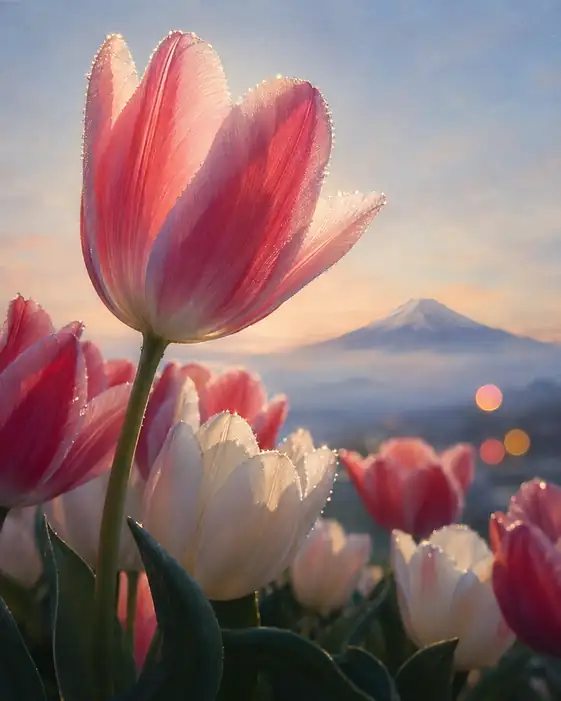 Tulips at Sunrise Before Mount Fuji
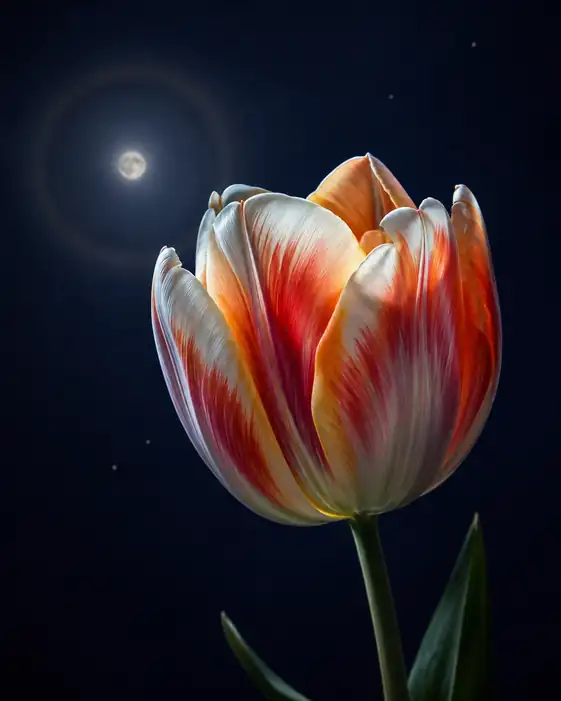 Moonlit Tulip Against the Night
Similar Artworks
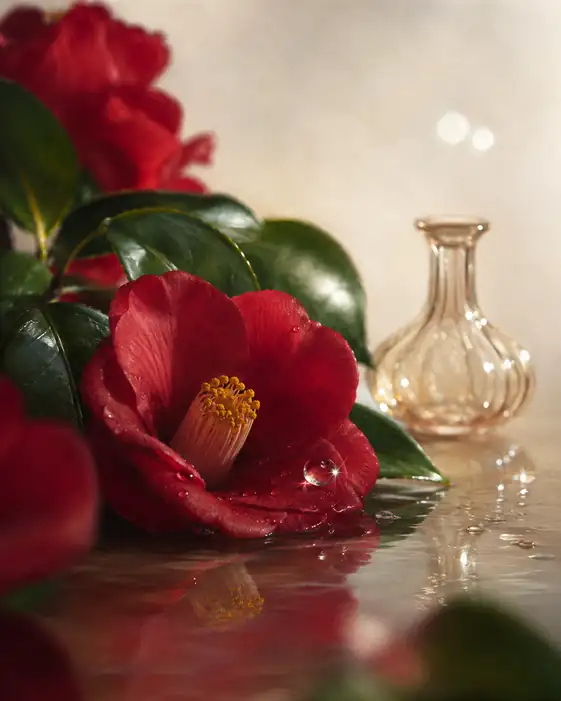 Dewdrop Camellia and Amber Flask
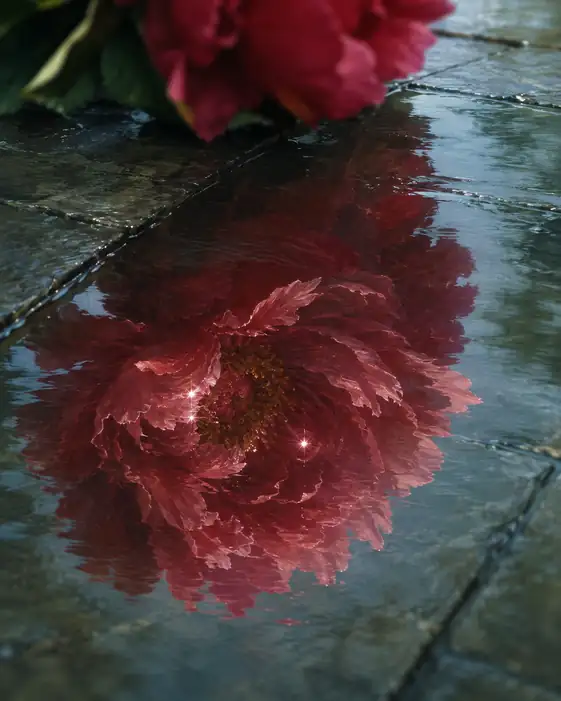 Crimson Peony Reflected in Cobblestone Puddle
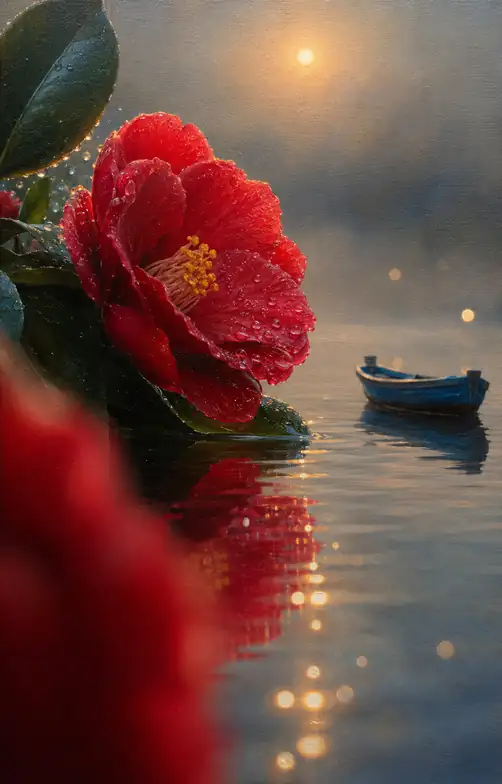 Camellia at Sunset by the Rowboat
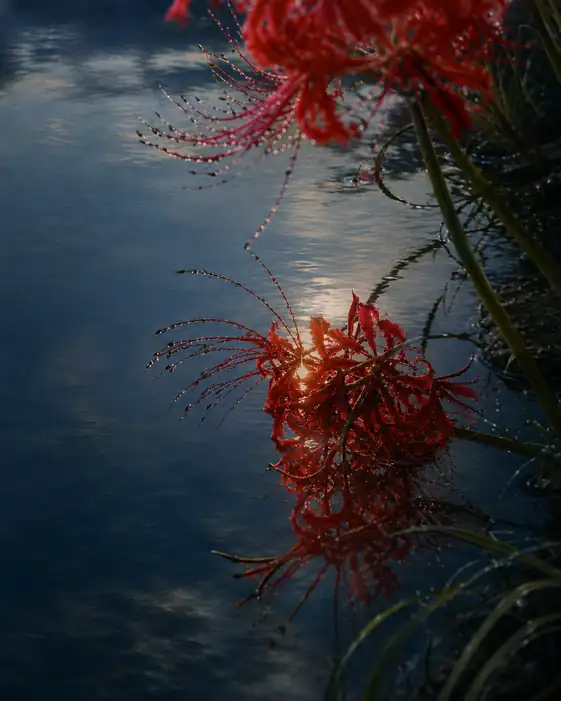 Sunset Sparkle on River Lycoris
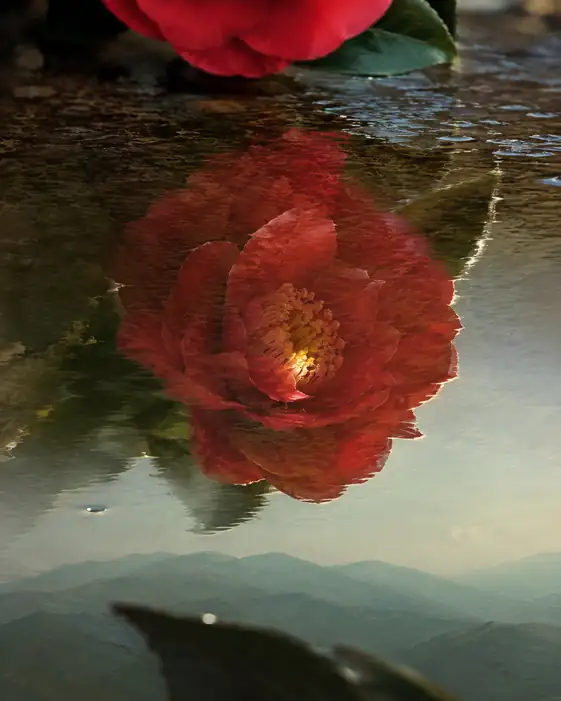 Camellia Mirage on Serene Waters
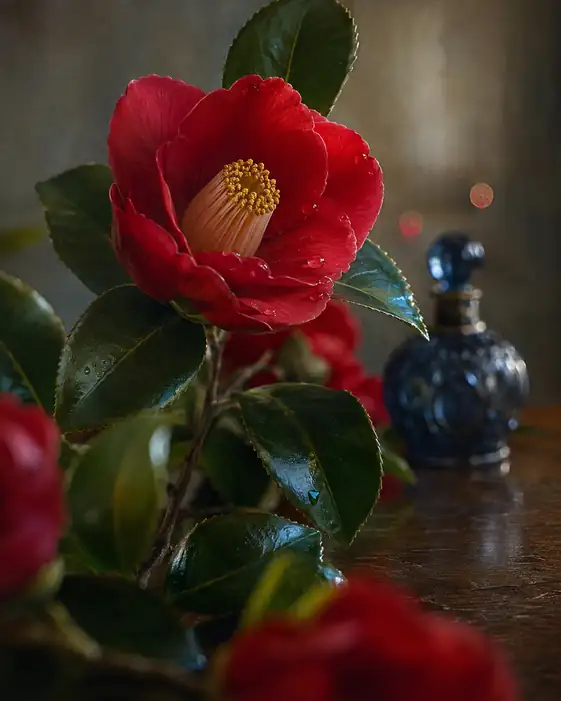 Red Camellia and the Cobalt Bottle
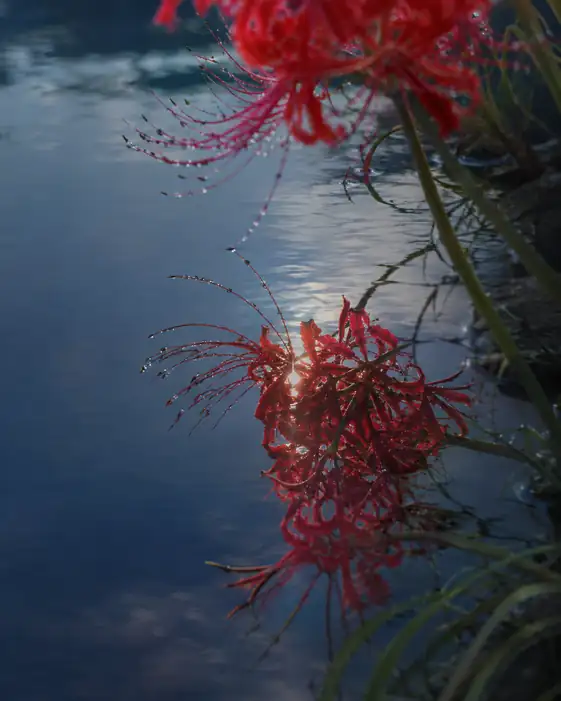 Twilight Solitude by the Waters
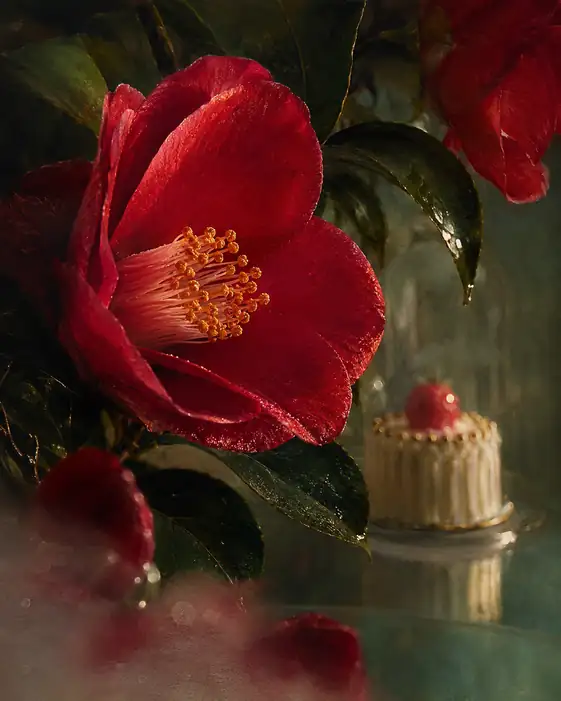 Crimson Camellia and Strawberry Cake
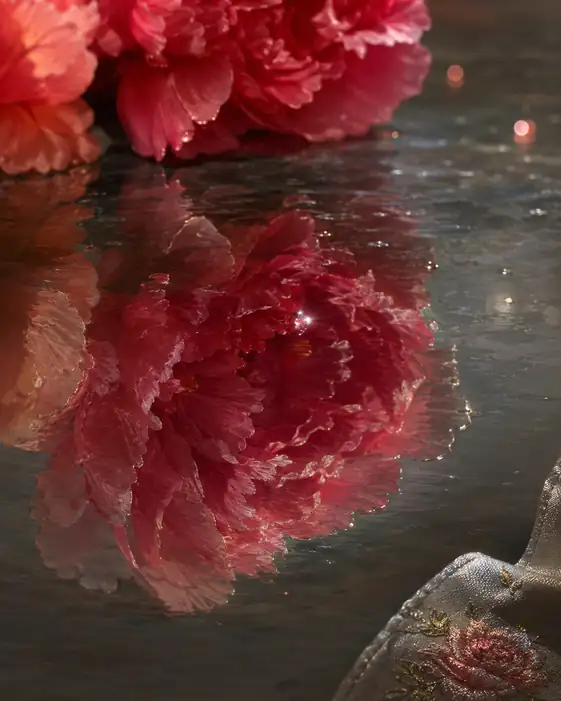 Peony Reflection and Embroidered Silk
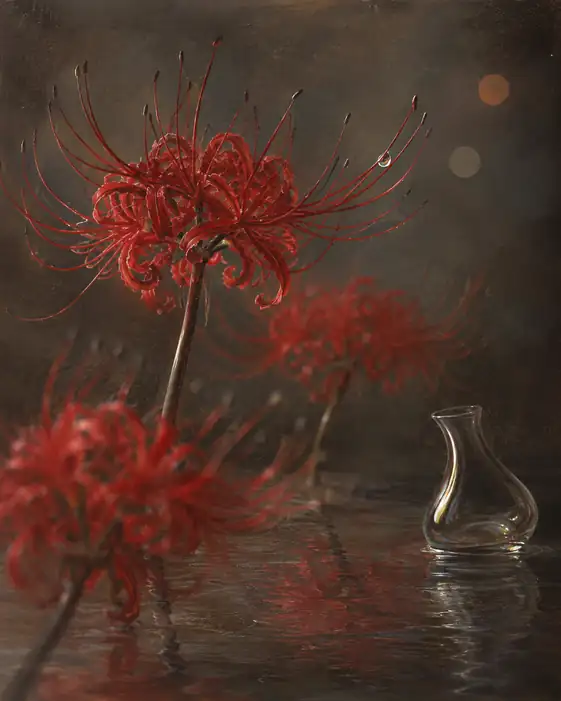 Lycoris and the Empty Glass Vase