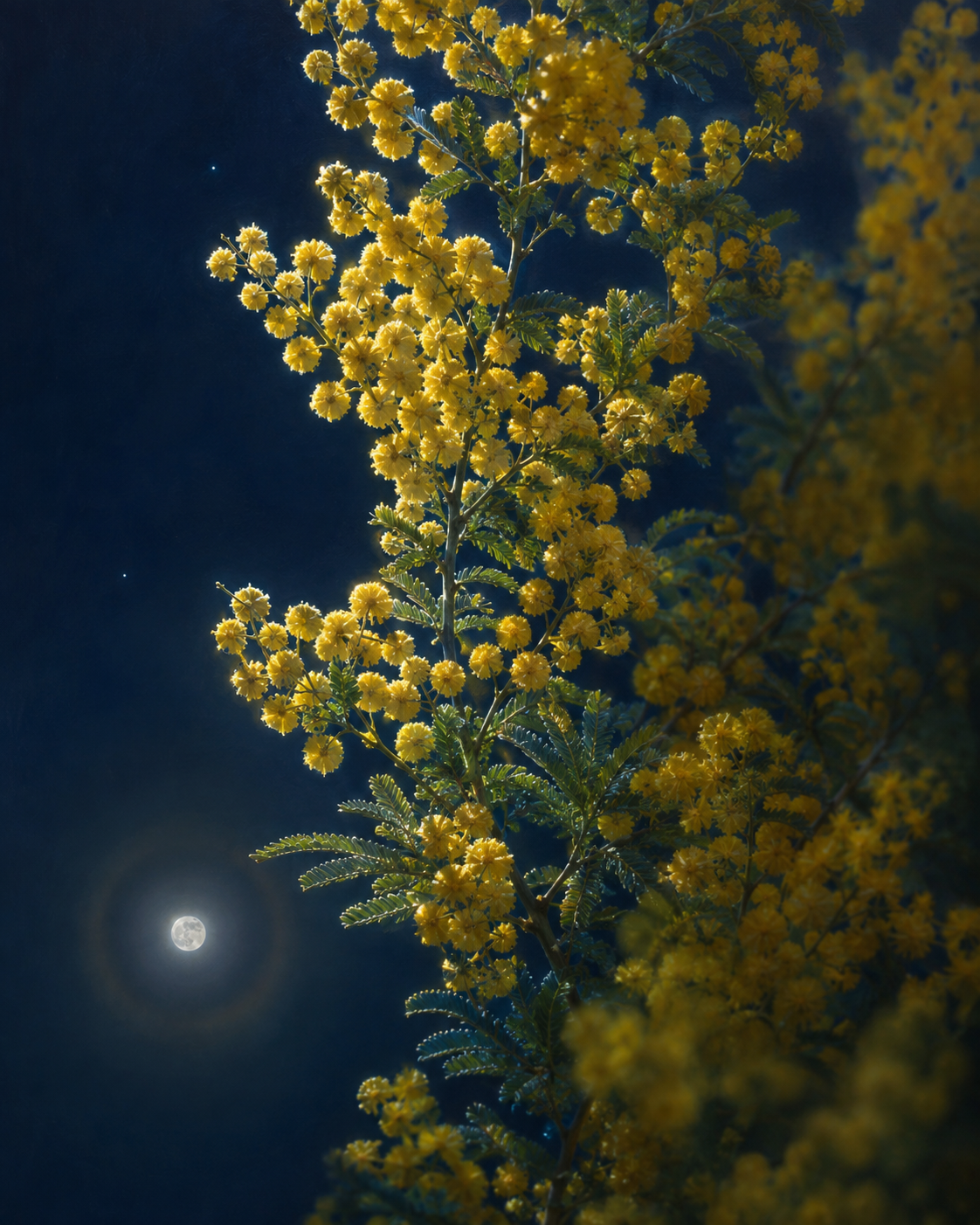
Moonlit Mimosa on a Silent Night
Critique
Introduction This nocturnal floral landscape places a tall yellow-blossomed tree against deep blue sky, with a full moon low at the left. The image replaces daylight abundance with concentrated illumination, allowing the plant’s branching structure to emerge through alternating brightness and shadow. Description A central trunk rises from the lower edge and divides into sprays that extend upward and left. Round, fringed blossoms cluster along the branches among paired, fernlike leaves. Additional foliage forms a soft dark mass along the right edge. The moon appears as a small detailed disk in the open lower-left sky, surrounded by a faint halo. Two tiny stars punctuate the otherwise broad blue-black space. Analysis The main stem creates a vertical axis, while lateral sprays step across it at changing heights. Empty sky on the left balances the denser floral growth on the right. Rim lighting separates petals and leaflets from darkness, producing repeated gold points whose brightness decreases toward the edges. The moon forms a secondary focus and a cool-white counterpoint to the warmer flowers. Crisp central clusters and blurred foreground foliage establish layered depth. Interpretation and Evaluation The shared light of moon and blossoms makes the earthly plant appear responsive to the distant sky. Detailed petals and leaves demonstrate persuasive drawing, yet selective darkness prevents the image from becoming merely botanical. Its asymmetrical composition uses negative space with confidence, and the restricted gold-blue palette is coherent. The placement of the small moon beside the towering branch offers a distinctive reversal of apparent scale. Conclusion A luminous flowering tree becomes a dialogue between separated sources of radiance. Through vertical rhythm, focus, and measured darkness, the work joins botanical specificity to the breadth of night.
Same Subcategory
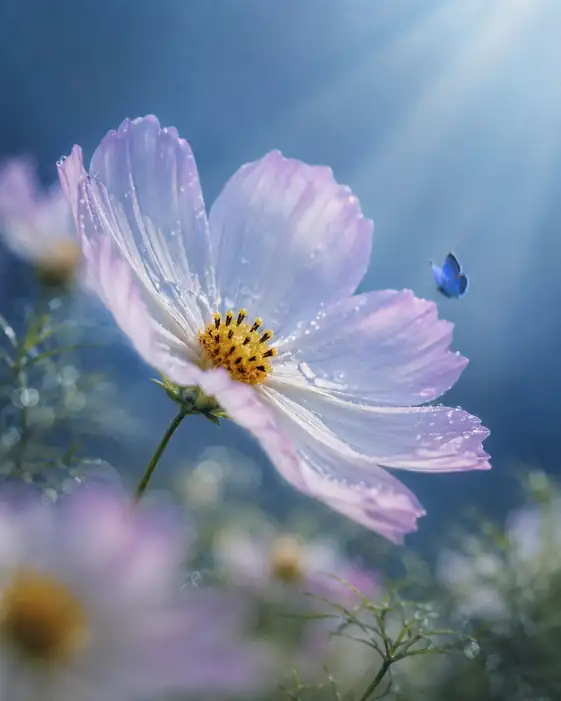 Blue Butterfly and Sunlit Cosmos
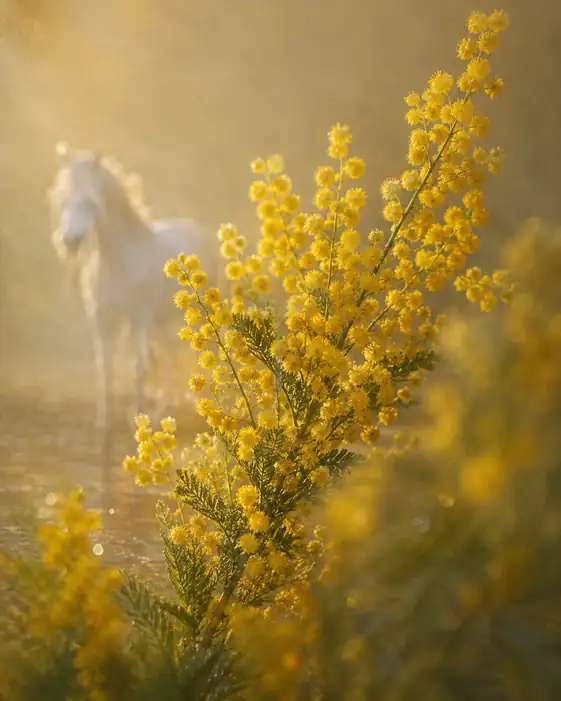 White Steed in Golden Morning Mist
Similar Artworks
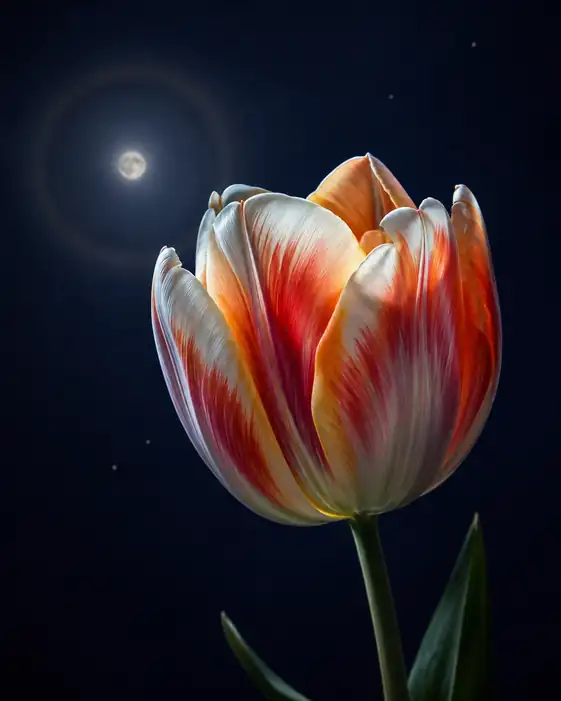 Moonlit Tulip Against the Night
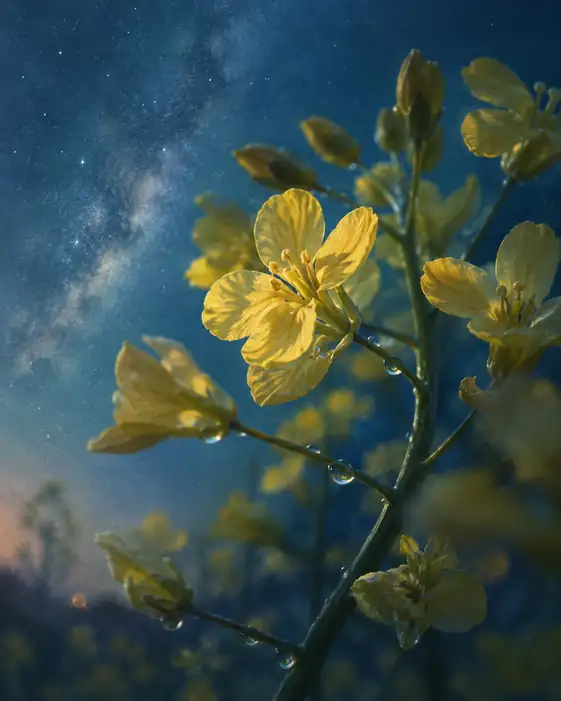 Canola Blossom Beneath Starry Skies
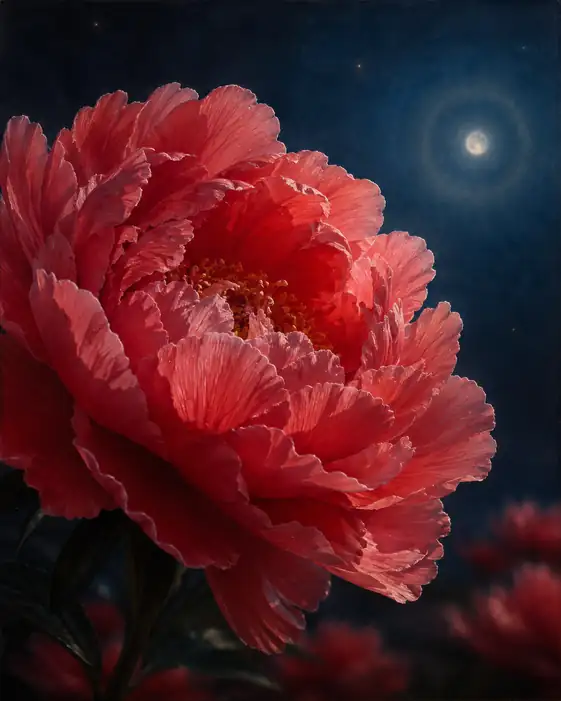 Moonlit Peony in Velvet Night
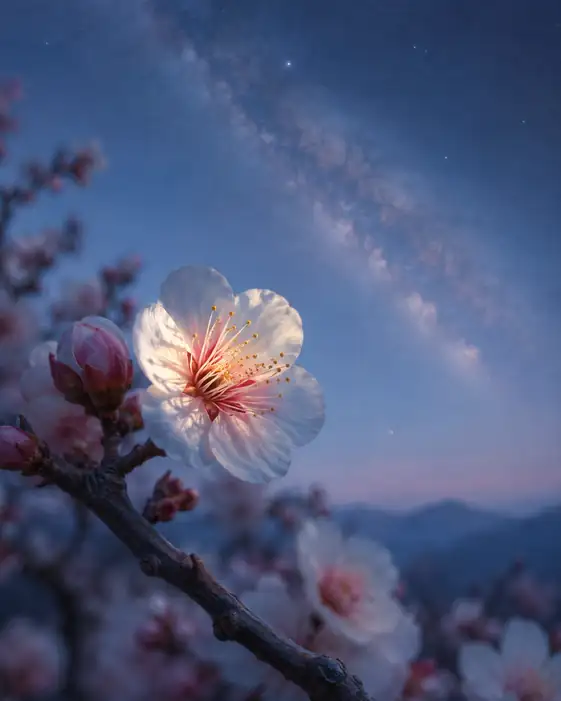 White Plum Beneath the Milky Way
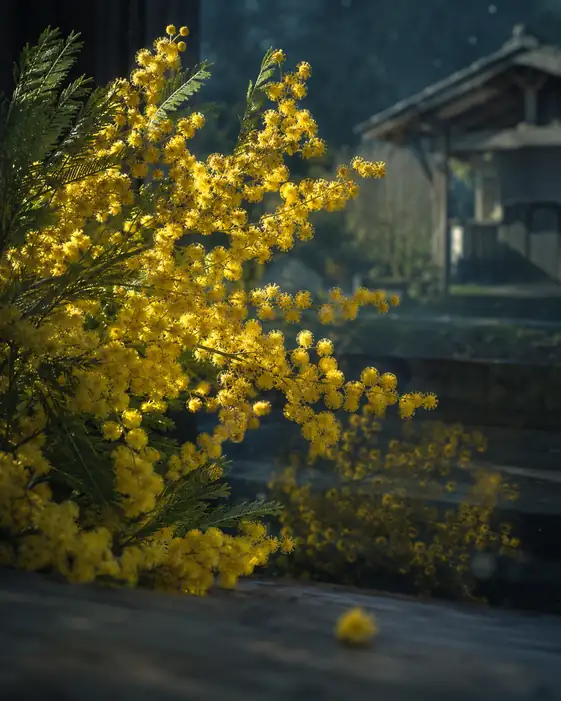 Mimosa in Bloom by the Wooden Station
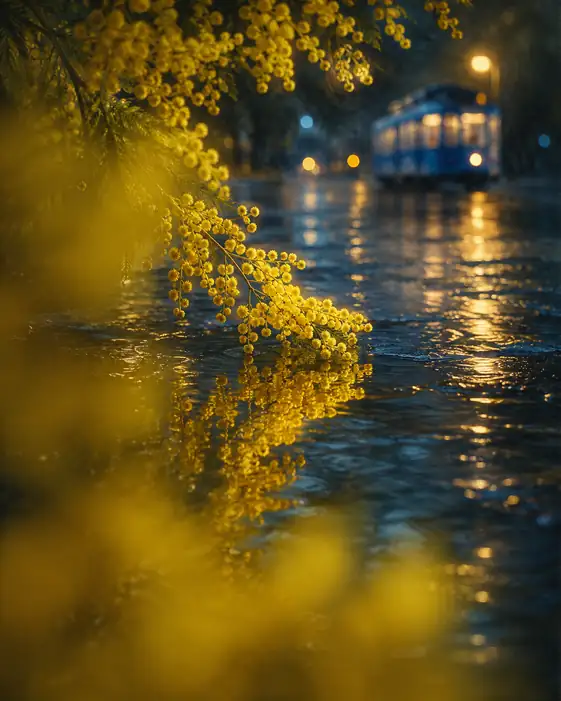 Rainy Night Tram and Mimosa Reflection
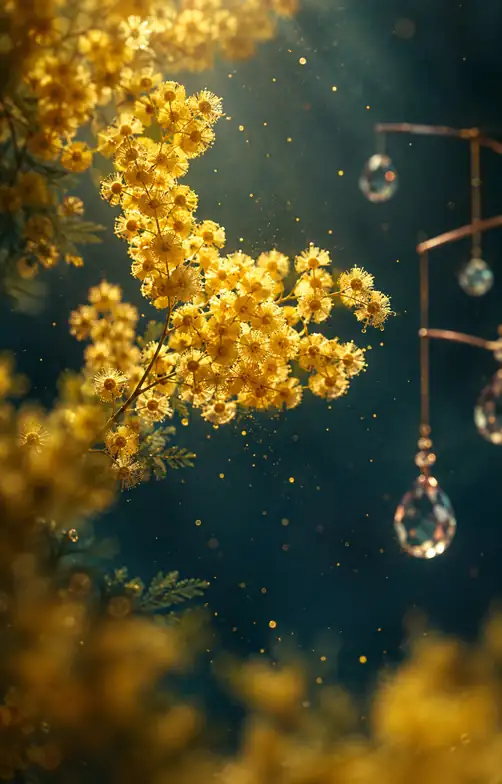 Golden Mimosa and Crystal Suncatcher
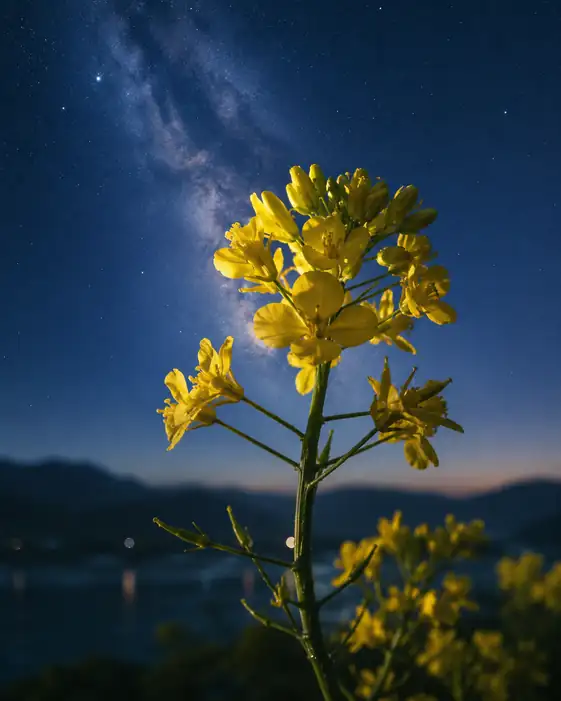 Milky Way and Golden Mustard Blossom
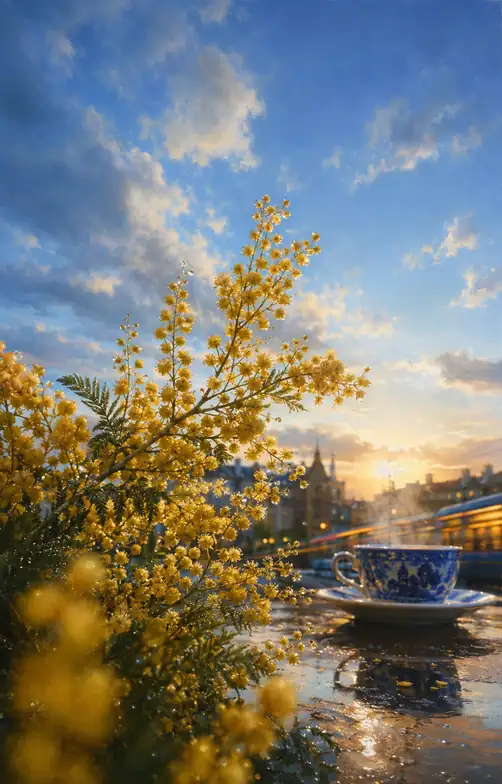 Sunset Tea and Golden Mimosa
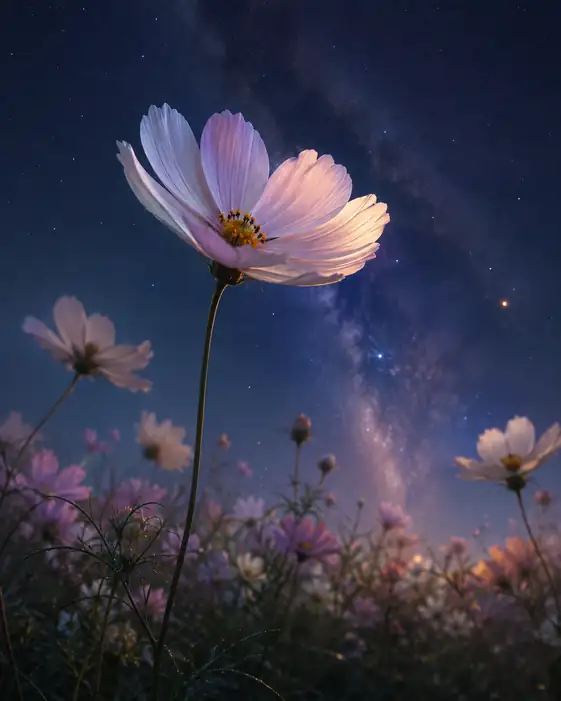 Cosmos Beneath the Starlit Sky