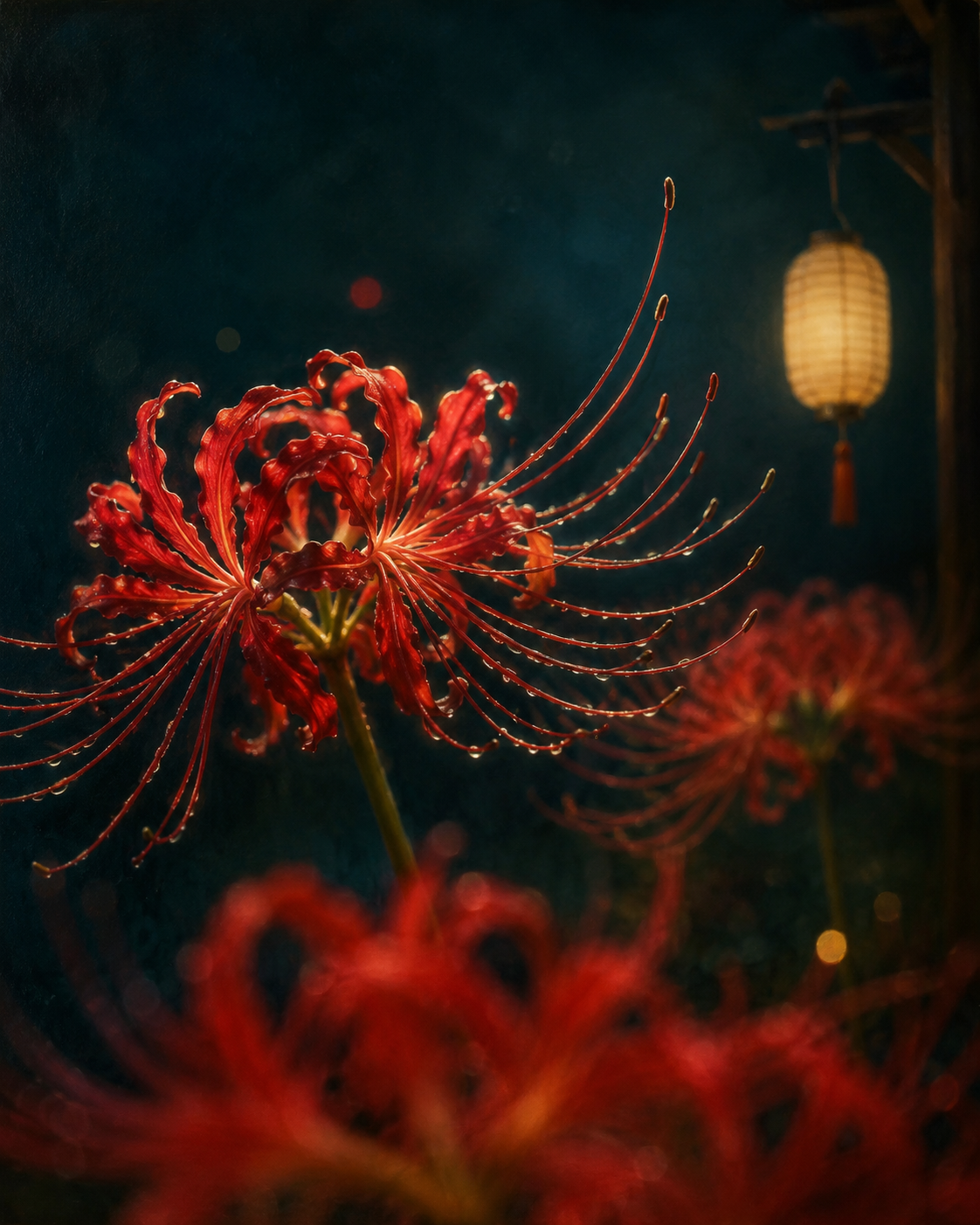
Dew-Kissed Lycoris Beneath the Lantern
Critique
Introduction This portrait sets a spider lily against a paper lantern. One radiates through restless organic lines while the other encloses light. Their dialogue creates ceremony between nature, custom, and memory. Description A vivid red spider lily occupies the left center, its curled petals and long stamens wet with droplets. One green stem rises diagonally from below. Additional red flowers blur across the foreground and right background. At upper right, a warm cream lantern hangs from a dark wooden structure, its horizontal ribs and red tassel visible against a deep teal-black night. Analysis The flower's sweeping filaments create a broad diagonal toward the lantern, linking the two focal zones. Red advances strongly from the dark field, while amber light provides a calmer complement. The crisp primary flower contrasts with blurred companions, establishing depth. Droplets form tiny highlights along each stamen. The lantern's compact oval geometry and regular ribs oppose the flower's open, irregular explosion, producing formal tension without imbalance. Interpretation and Evaluation The lantern suggests human gathering, vigil, or seasonal ritual, while the spider lily carries an atmosphere of threshold through its dramatic form. Together they imply remembrance without requiring a specific narrative. Both preserve light differently: the lantern contains it; the flower seems to release it along red lines. The symbolism is direct, but the flower's exact wet texture and the partially visible wooden support ground the scene in physical experience. Conclusion The work succeeds through enclosure and expansion. Lantern, wet petals, darkness, and red echoes create festive solemnity. Cultivated light and living form become parallel ways of holding memory through night.
Same Subcategory
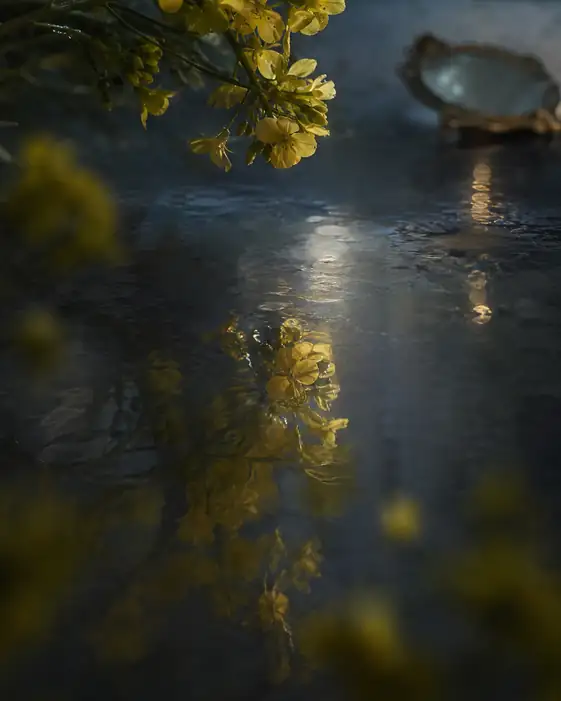 Yellow Blossoms and the Vintage Mirror
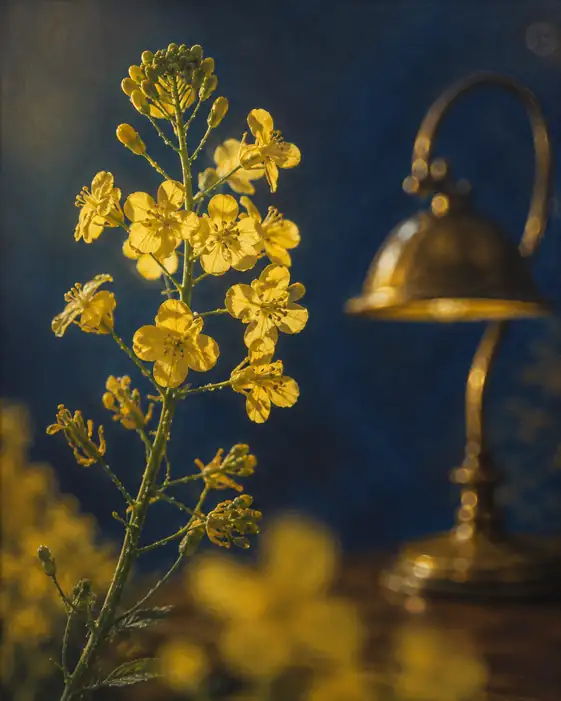 Brass Lamp and Spring Blossom
Similar Artworks
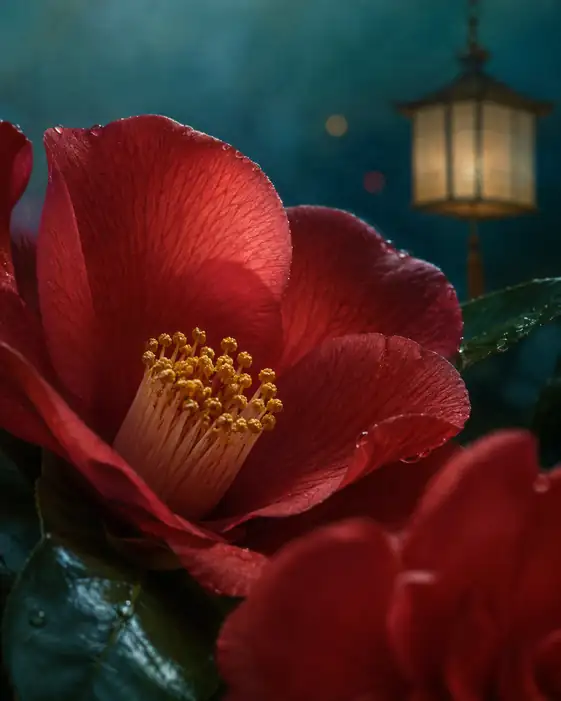 Crimson Camellia Beside the Garden Lantern
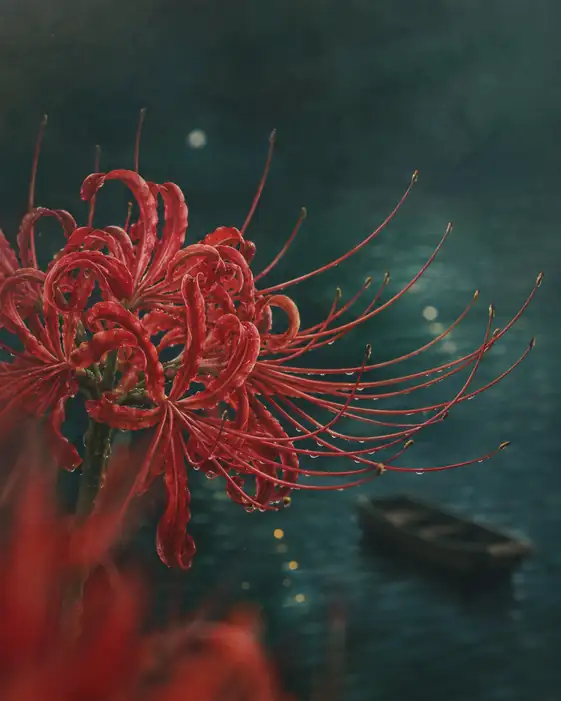 Red Lycoris and the Wooden Skiff
 Spider Lily by Lantern Light
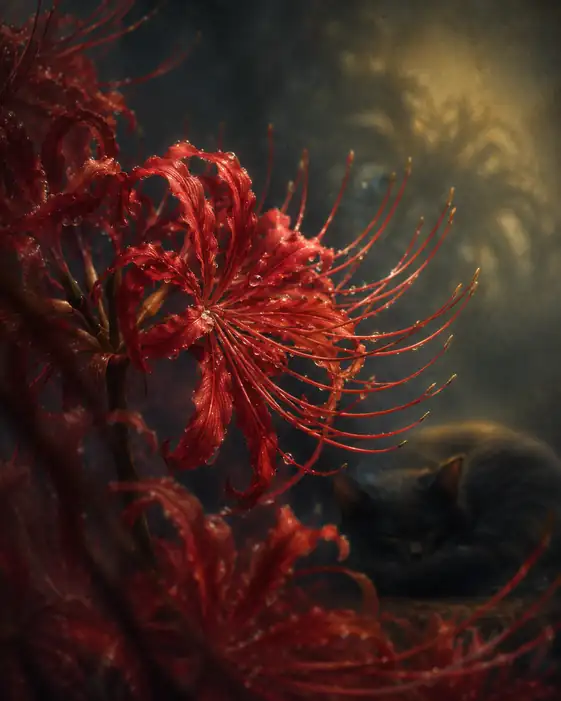 Sleeping Cat in the Lycoris Shade
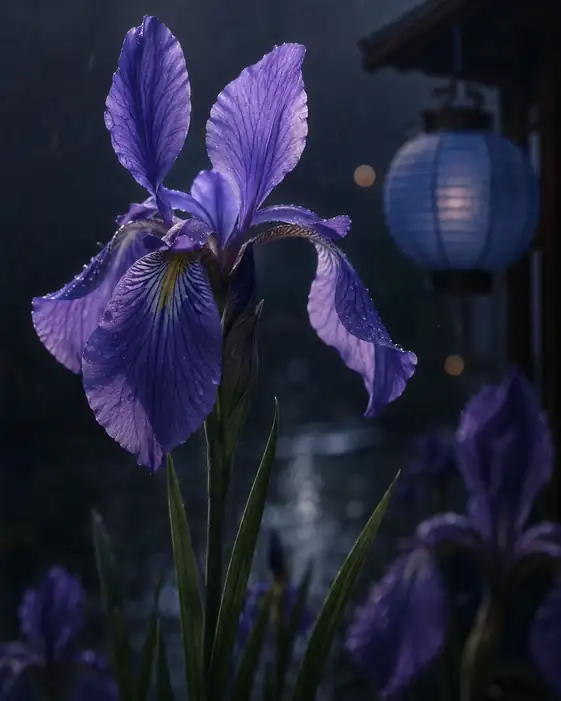 Midnight Iris Beside the Blue Lantern
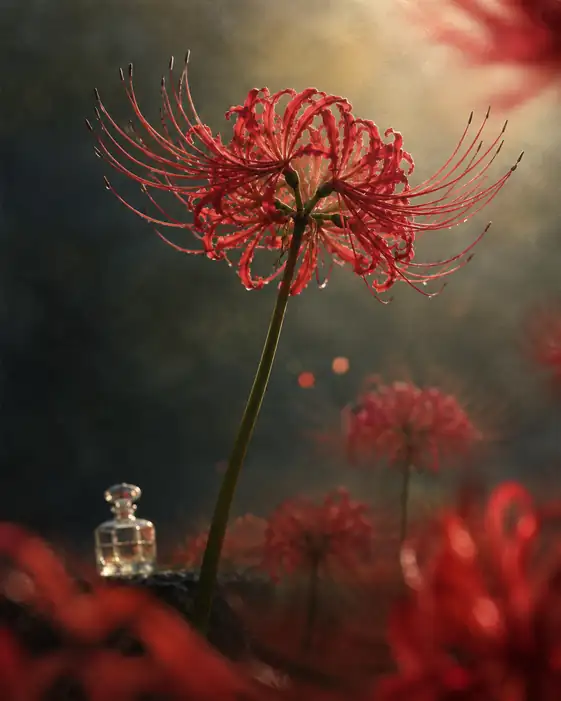 Crimson Flame and Crystal Flacon
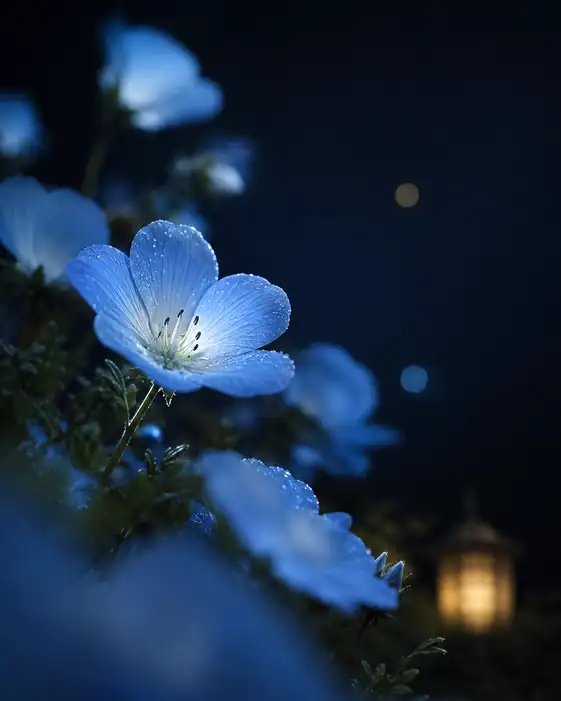 Midnight Nemophila and Garden Lantern
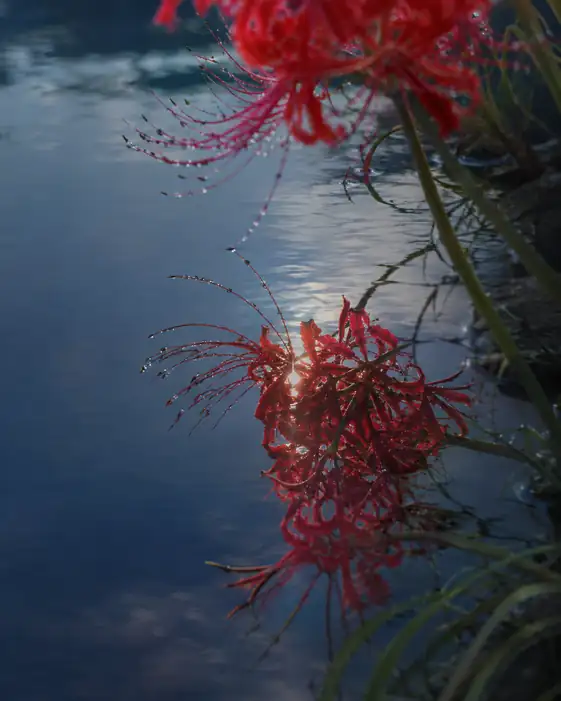 Twilight Solitude by the Waters
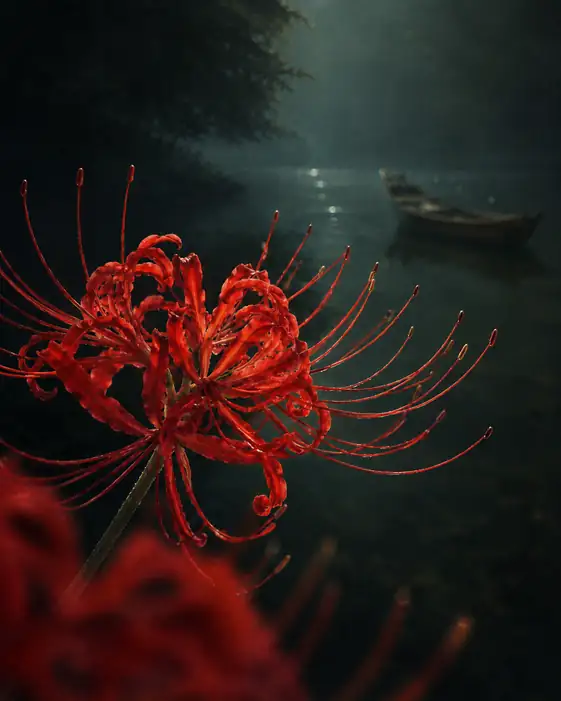 Solitary Boat on Nocturnal River
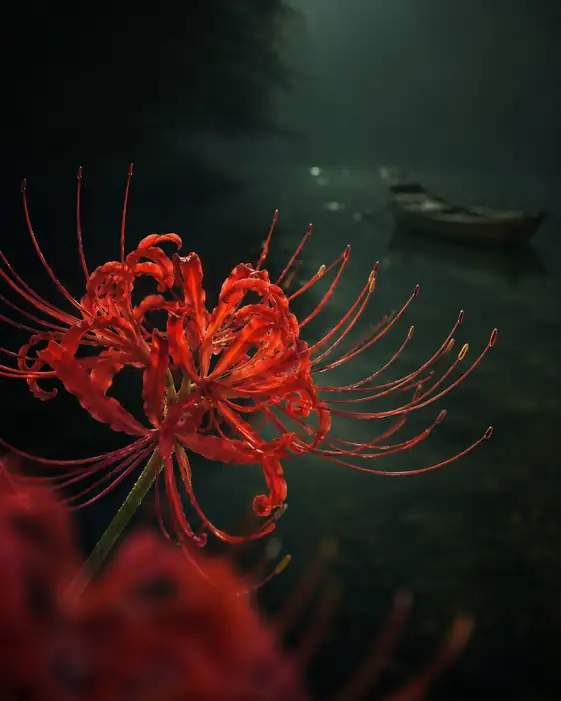 Whispers of the Dark Stream