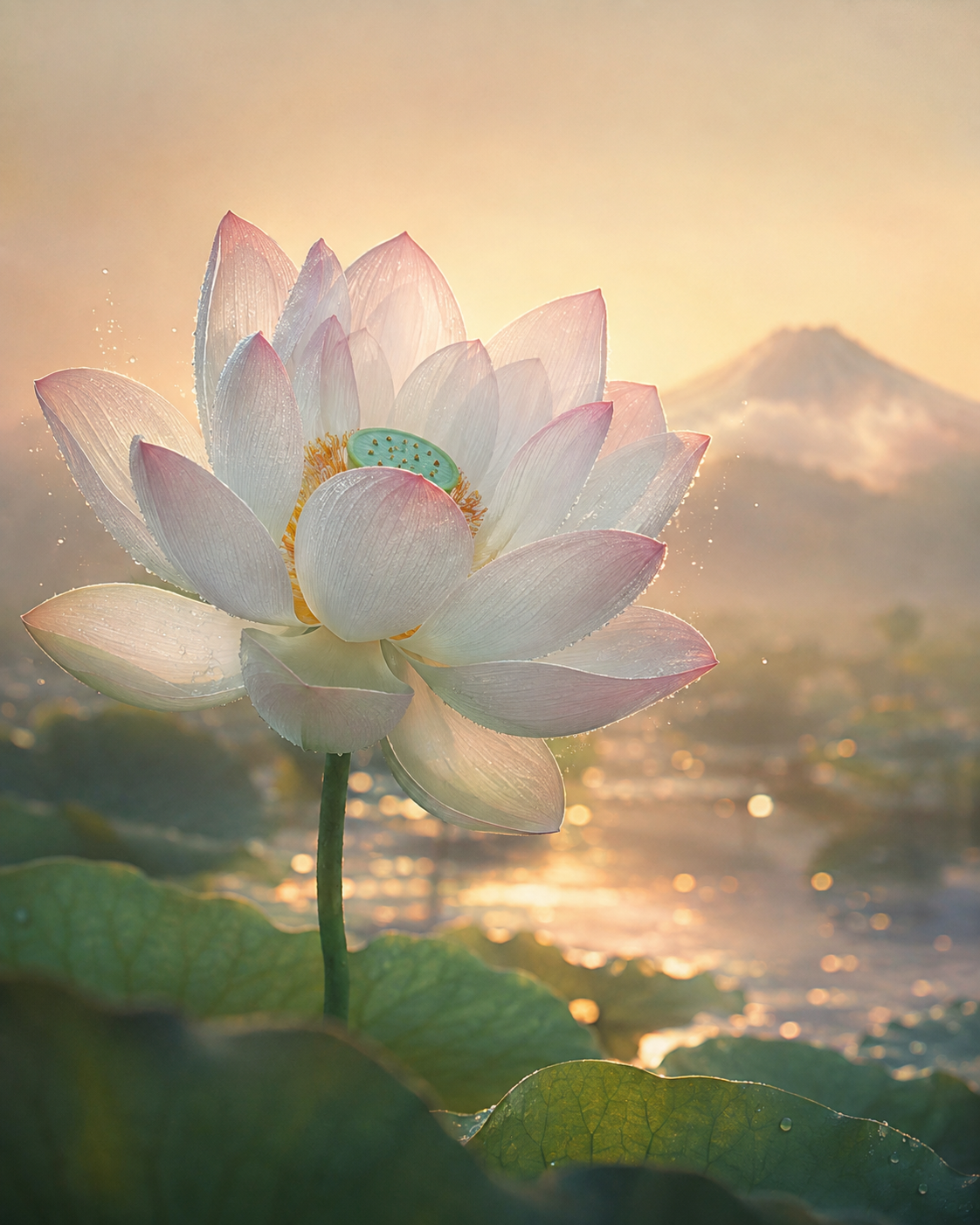
Lotus at Dawn Before Mountain Mist
Critique
Introduction This luminous lotus portrait joins botanical intimacy to an expansive sense of place. The flower dominates the foreground, yet a hazy mountain and glittering water remain legible behind it. Backlighting transforms moisture and translucent petals into radiant matter, making the scene feel both earthly and quietly visionary. Description A large white lotus rises left of center on a dark green stem. Its layered petals carry pink edges, fine veins, and numerous droplets; a green seedpod and golden stamens appear within. Broad leaves fill the lower foreground. Behind them, warm water dissolves into circular highlights, while a soft triangular mountain sits at the upper right beneath a peach-gold sky. Analysis The flower's asymmetrical placement allows the mountain to balance it across a deep spatial interval. Sharp petal detail contrasts with the blurred background, creating emphatic depth without complex perspective. Backlight rims the blossom and reveals its internal translucency. Warm peach and gold surround cooler whites and greens, unifying subject and atmosphere. Diagonal petals radiate outward, while the upright stem provides calm structural support. Interpretation and Evaluation The lotus can signify renewal or clarity, but the painting avoids reducing it to an emblem by emphasizing droplets, veins, and physical weight. The distant mountain echoes the blossom's pointed silhouette, linking transient organic life to enduring landscape. The golden haze risks sentimentality, yet precise botanical detail and the dark foreground anchor it. Spark-like droplets add wonder without obscuring the flower's form. Conclusion The image succeeds as a dialogue between near and far. Intimate texture invites touch, atmospheric depth invites contemplation, and the repeated peaks of petal and mountain bind both scales. Morning light becomes the agent that reveals their shared delicacy.
Same Subcategory
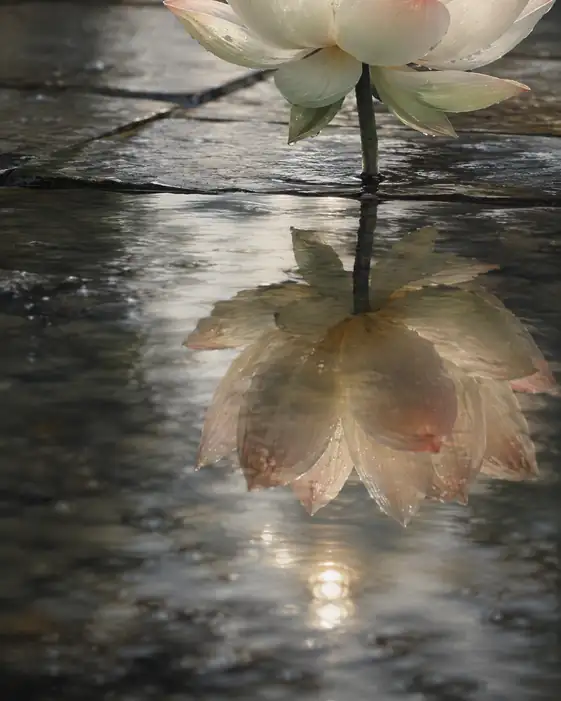 Inverted Lotus on Wet Cobblestones
Similar Artworks
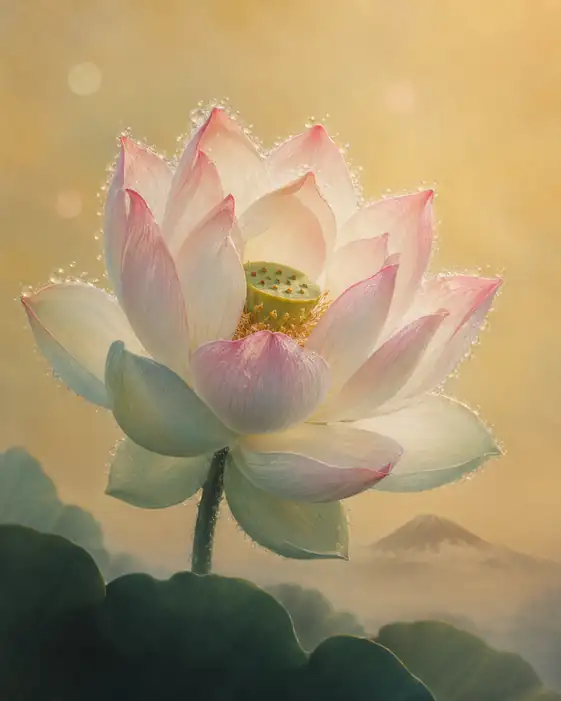 Dewdrops of Grace Before Distant Peaks
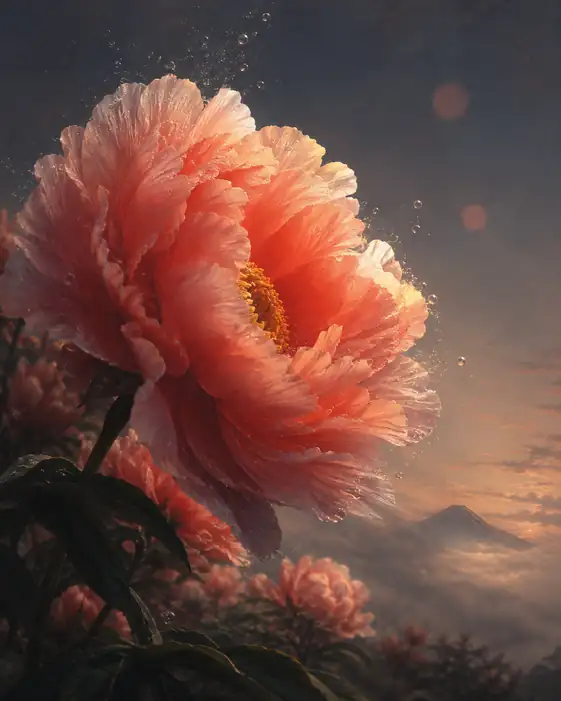 Crimson Peony and Dawn Over Mount Fuji
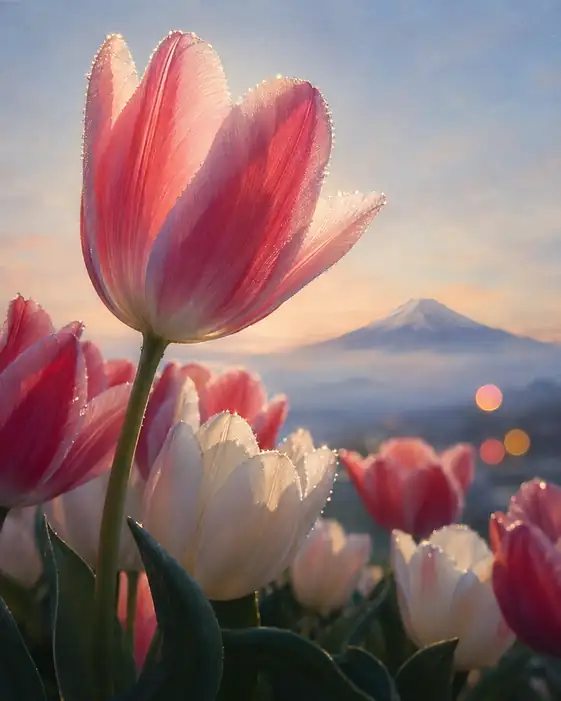 Tulips at Sunrise Before Mount Fuji
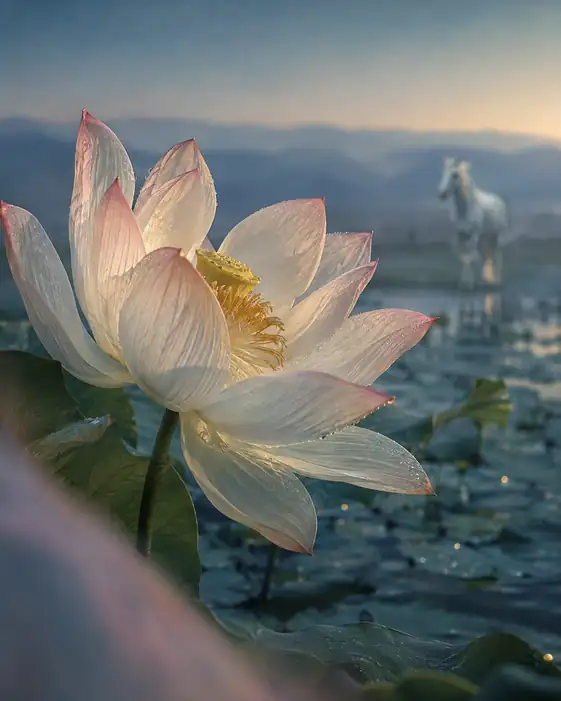 White Steed and the Sacred Lotus
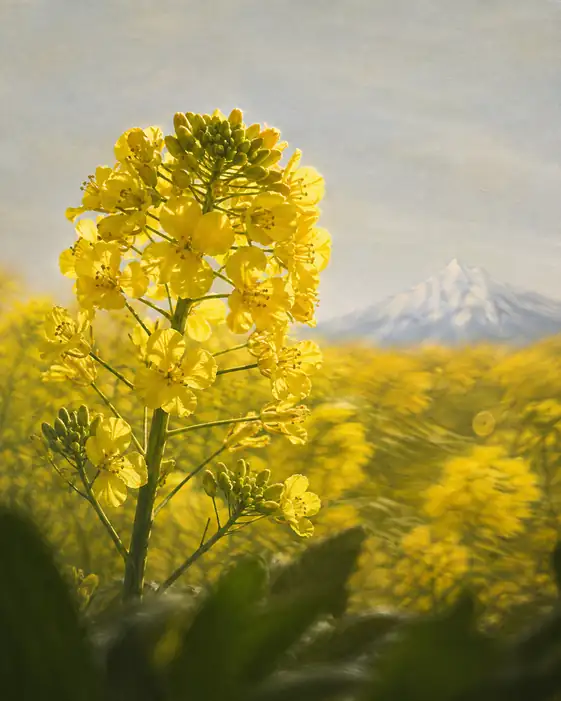 Field of Canola Beneath Snowy Crest
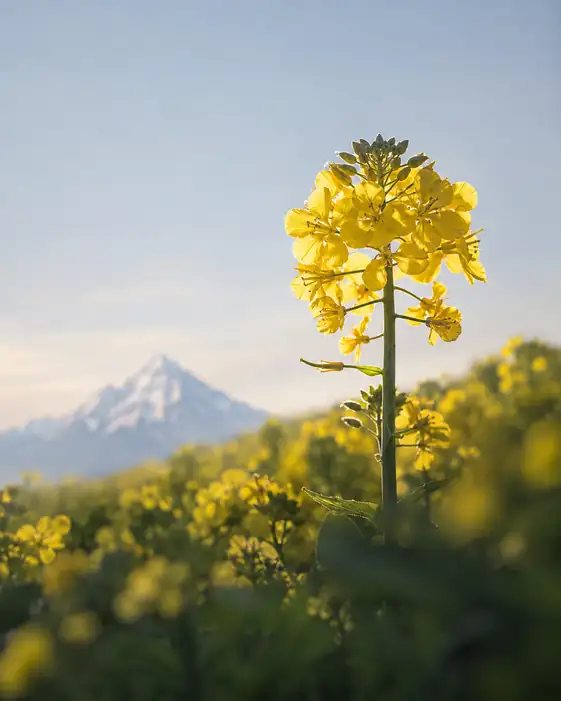 Alone in the Flower Field, Bathed in Light
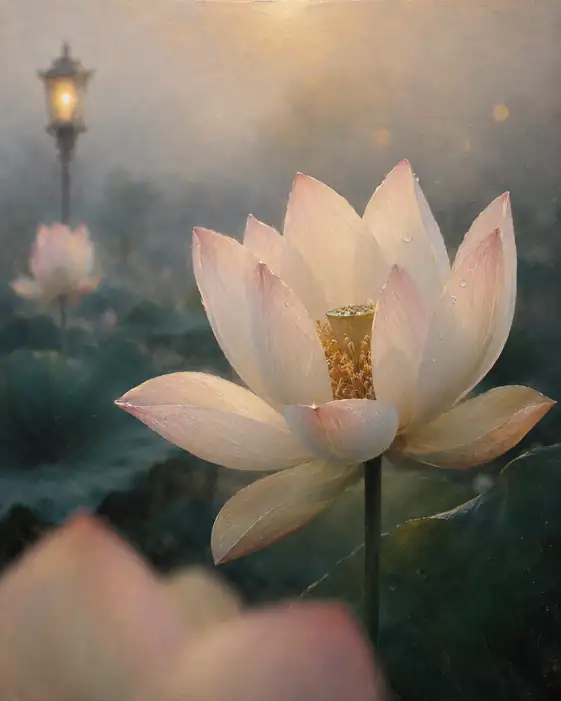 Morning Glow and the Misty Lotus
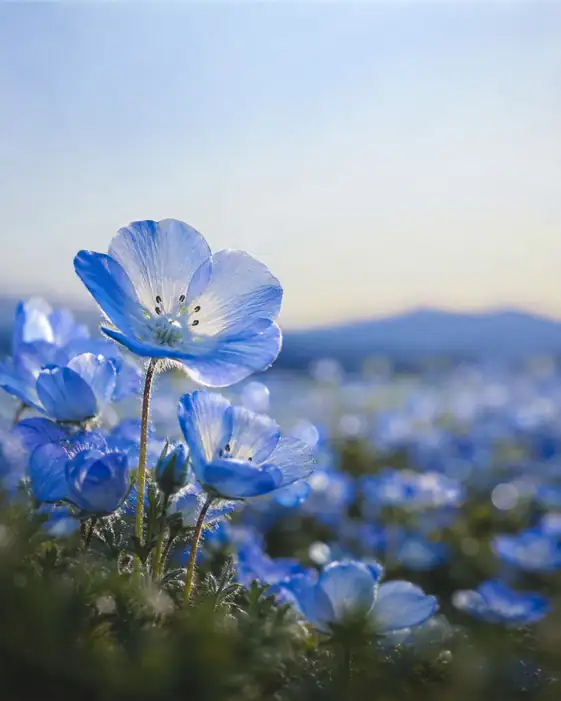 Translucent Blue Petals at Dawn
 Lotus by the Crystal Chime
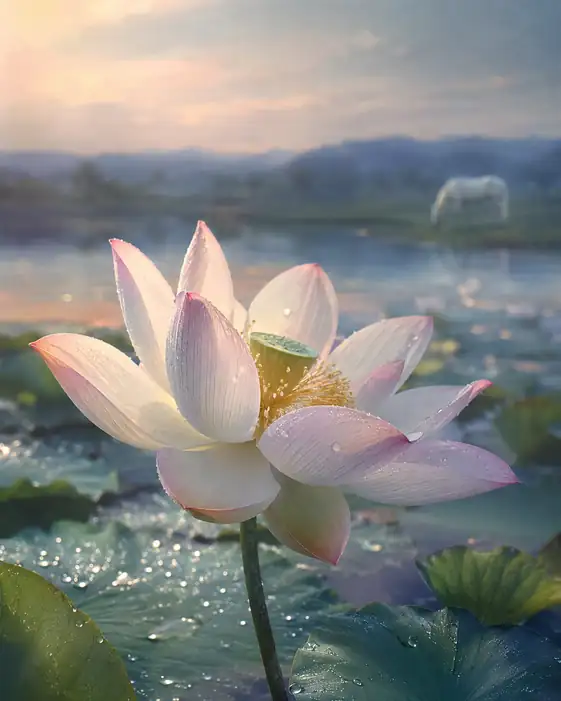 White Horse and Lotus at Dawn