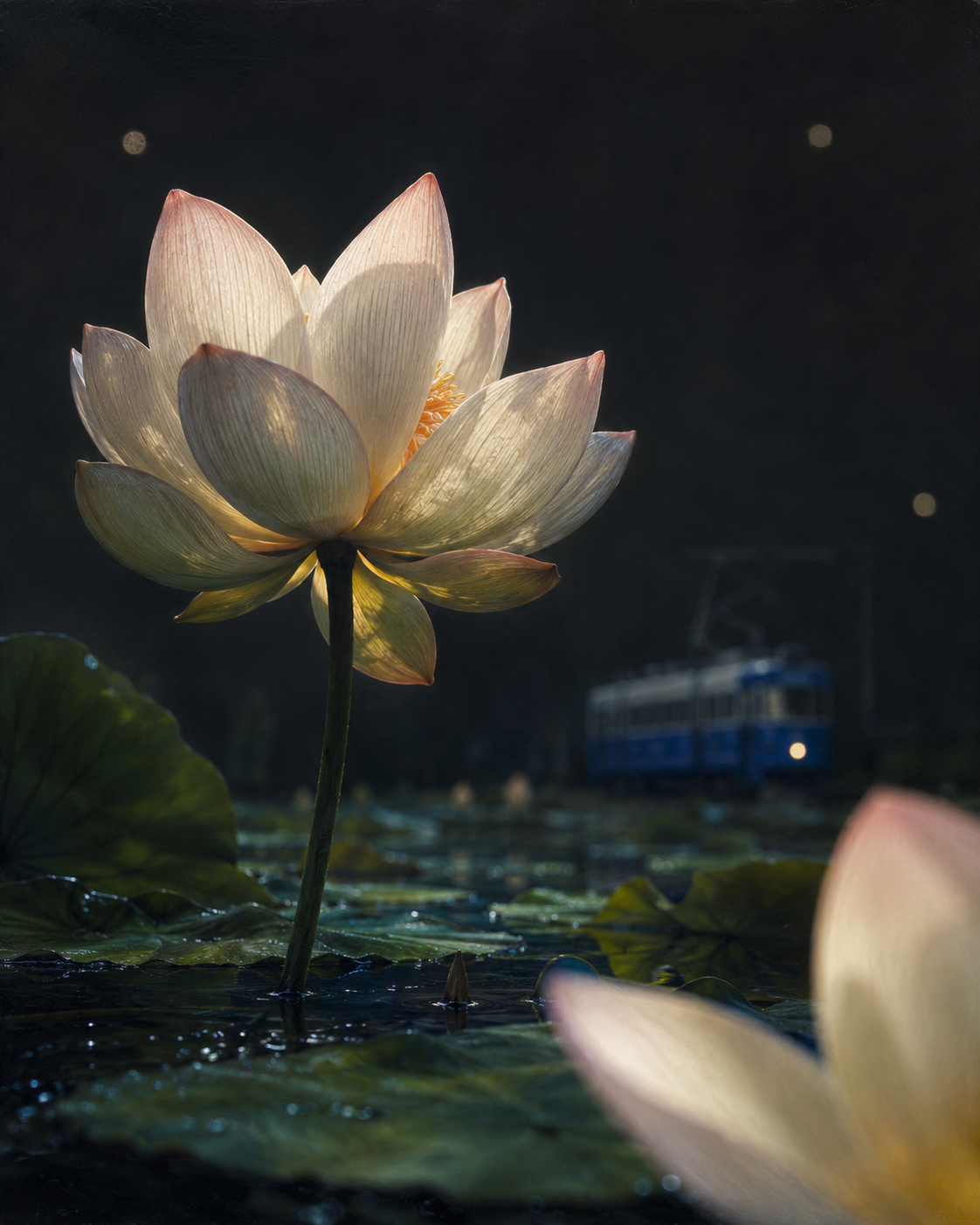
Night Lotus and Distant Tram
Critique
Introduction This night scene places a backlit lotus above a pond, with a blue tram moving at right. The flower stands left of center, while one headlight glows beyond the leaves. Botanical stillness and mechanical transit share the damp environment. Description The lotus opens in layered ivory petals whose pink tips and parallel veins catch light from behind. Lower petals shift toward olive green, and a small area of orange stamens appears between the upright forms. The stem rises from rippling water crowded with broad leaves. At right, the softened vehicle shows pale windows, a blue body, overhead supports, and one amber lamp; blurred petals enter from the lower corner. Analysis The flower’s luminous radial mass is balanced by the compact horizontal vehicle. Its straight stem fixes a vertical axis, while rails and overhead lines imply lateral movement. Cream, green, and blue dominate, with small orange lights connecting flower center and headlamp. Sharp petal ridges contrast with the blurred tram and glossy pond, creating layered distance. Dark negative space above preserves the flower’s silhouette. Interpretation and Evaluation The lotus is rooted in place, whereas the vehicle signifies passage. Focus and scale assign each a distinct spatial level. Translucent petals, wet leaves, and receding machinery are differentiated. The unexpected pairing, controlled backlight, and off-center balance give assurance and understated originality. Conclusion At first the lotus appears isolated in a nocturnal pond, but the distant headlight gradually reveals a larger landscape crossed by human movement. Warm points connect organic and mechanical centers without erasing their contrast. Through disciplined color, selective focus, and a clear interplay of vertical stability and horizontal travel, the work gives a familiar flower a subtle temporal setting.
Same Subcategory
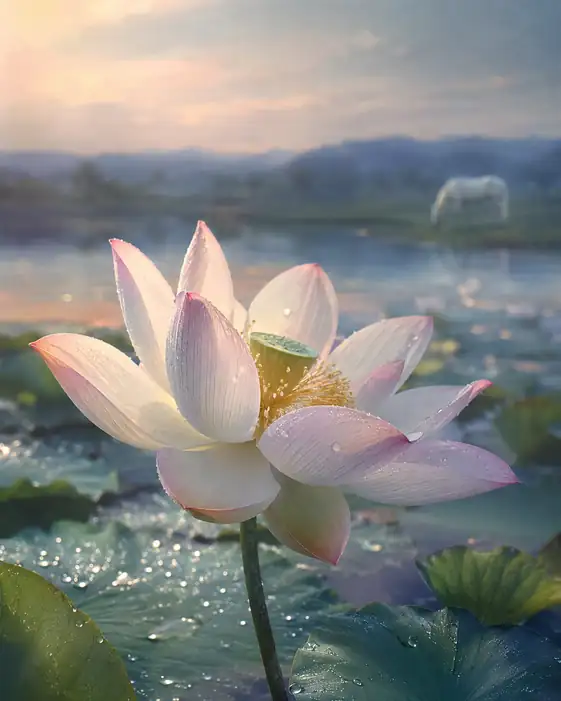 White Horse and Lotus at Dawn
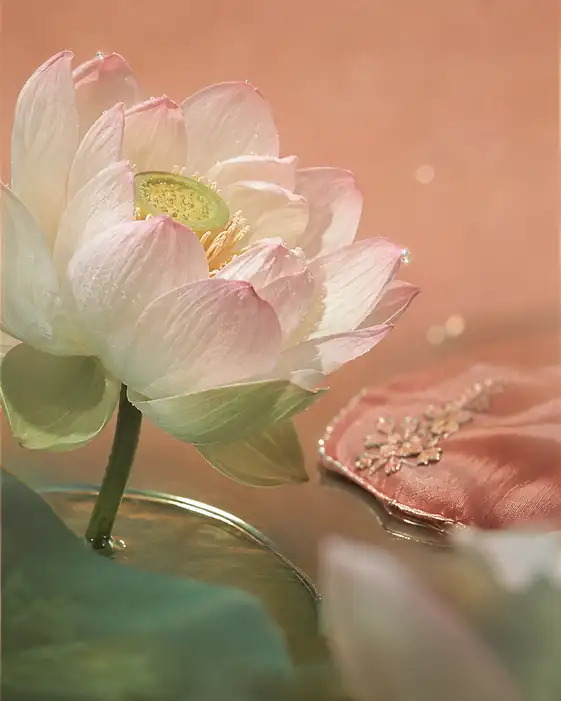 Lotus Bloom and Embroidered Silk
Similar Artworks
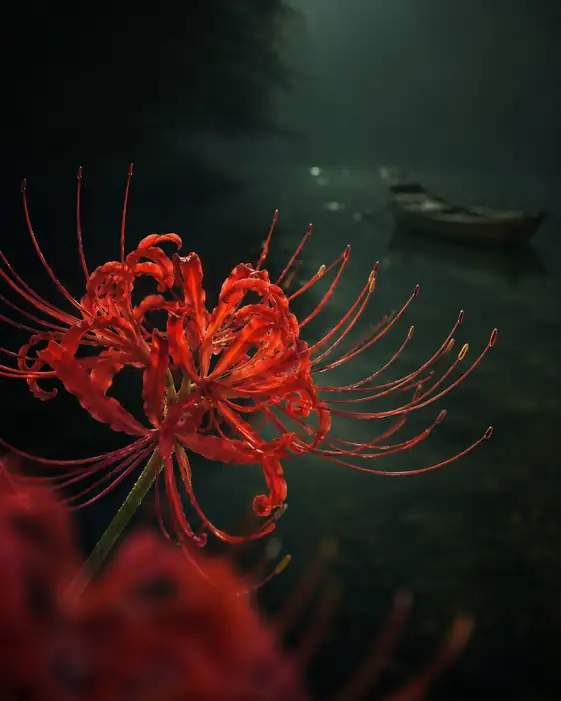 Whispers of the Dark Stream
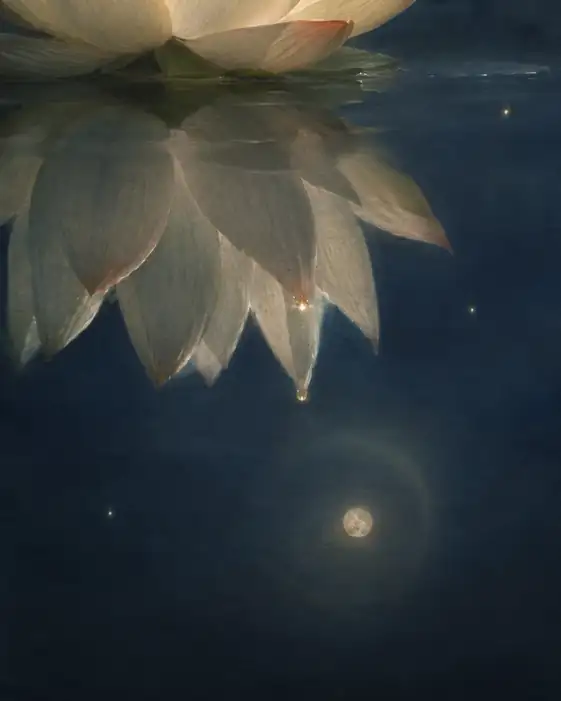 Nocturne of Moon and Lotus Shadow
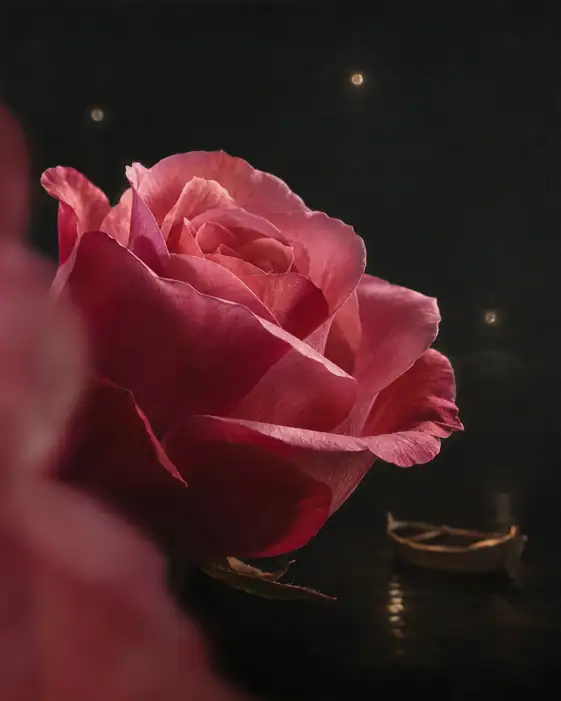 Night Voyage Beneath the Rose-Lit Sky
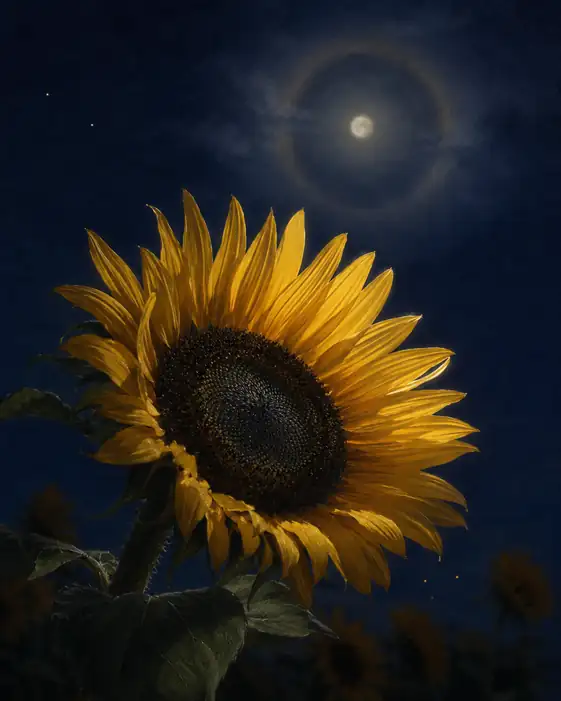 Halo of the Moon and the Golden Disc
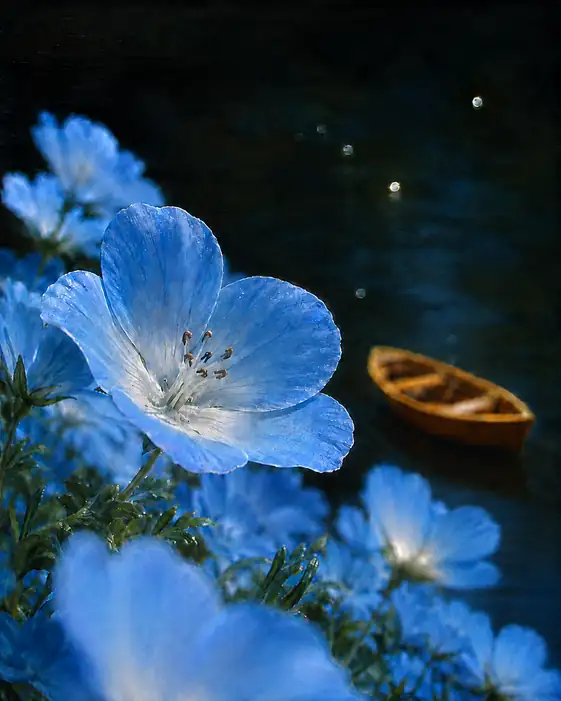 Blue Nemophila and the Lonely Boat
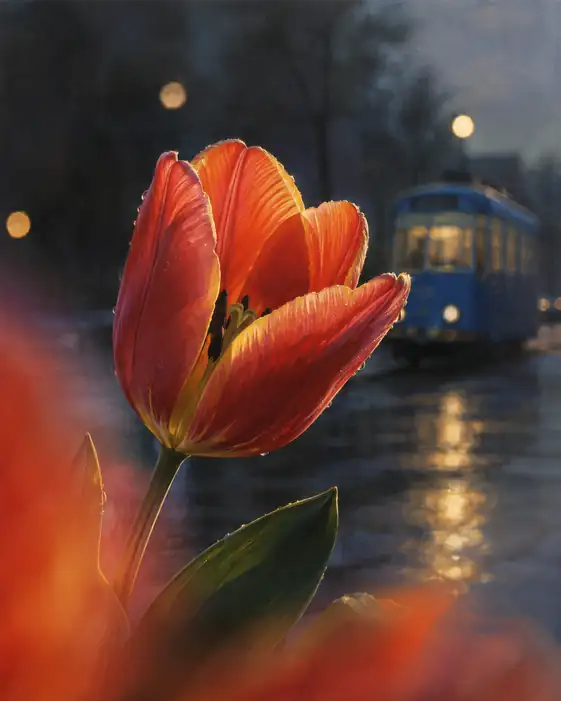 Red Tulip and the Night Tram
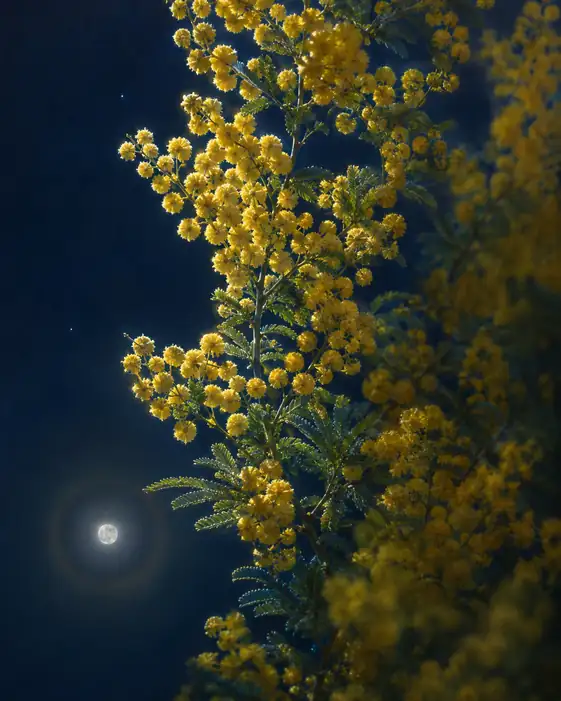 Moonlit Mimosa on a Silent Night
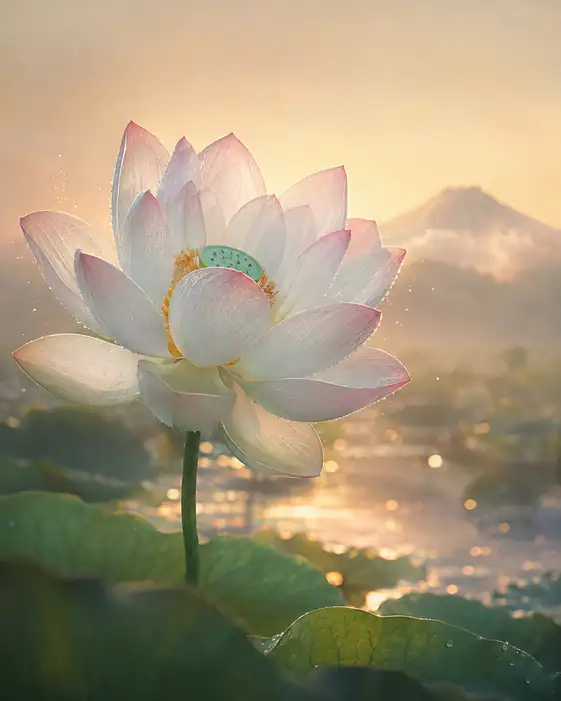 Lotus at Dawn Before Mountain Mist
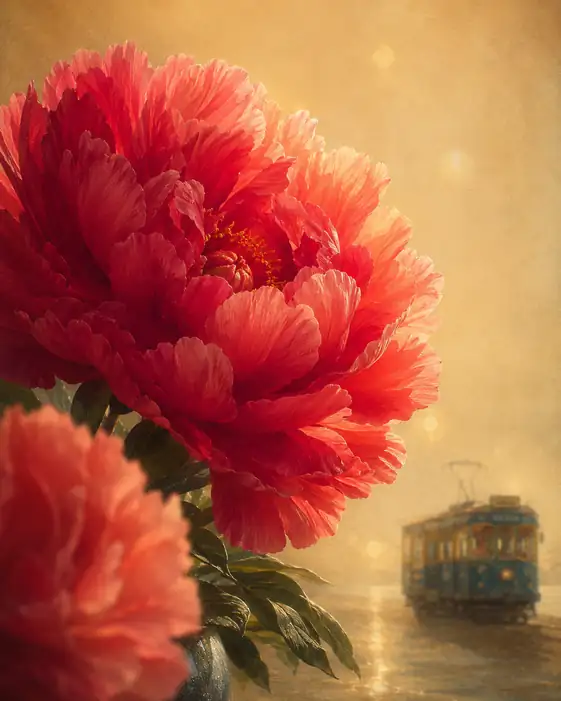 Golden Tram and Twilight Peony
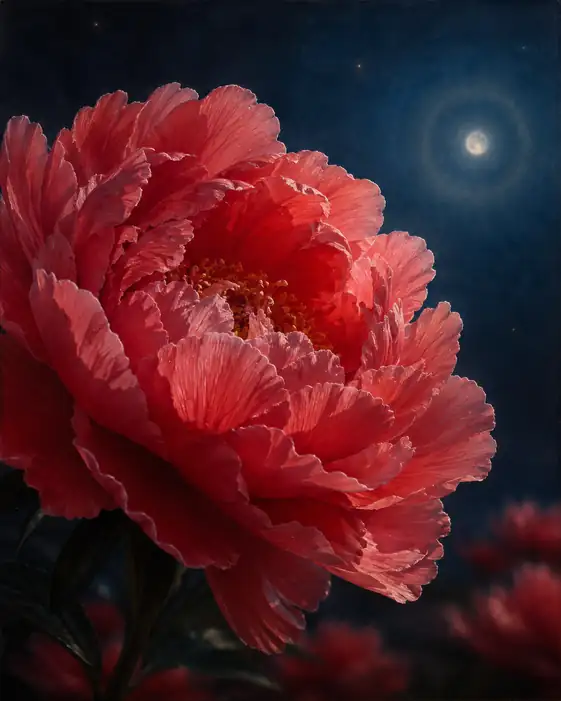 Moonlit Peony in Velvet Night