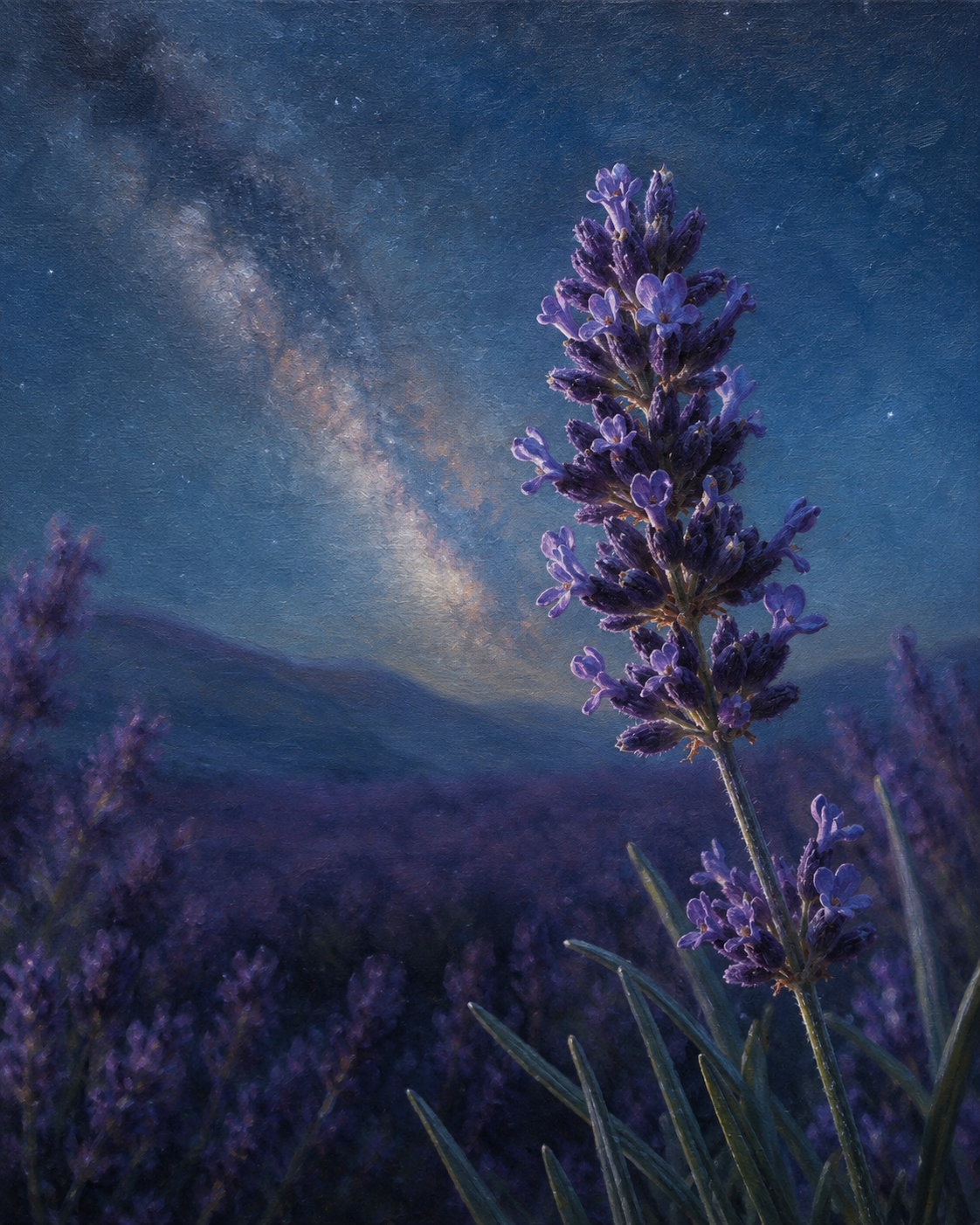
Starry Nocturne Over Lavender Fields
Critique
Introduction This landscape places lavender against the Milky Way and a low mountain ridge. The flower rises on the right, while stars descend from upper left toward the horizon. Intimate field detail meets a broad celestial structure. Description The main stem enters from the lower right and carries several tiers of dark buds and open violet flowers. Narrow leaves fan upward around its base, their edges touched with pale light. A shadowed lavender field fills the lower half, interrupted by softer spikes at both margins. Beyond it, layered blue hills form a low silhouette beneath mottled white, peach, and gray stars. Analysis The flower’s upward diagonal crosses the descending star band, producing a loose visual intersection near the central blossoms. Its sharp, clustered forms contrast with the granular atmosphere of the sky and the broad horizontal mountain layers. Blue governs the image, while violet petals and muted peach starlight create measured variation. Foreground detail, middle-distance darkness, and luminous depth establish a clear spatial sequence. Interpretation and Evaluation The branching flower and galaxy present two accumulations: one organic and bounded, the other remote and continuous. Their crossing suggests connection without erasing differences of material or scale. Petals, hairy buds, and leaves are carefully modeled, while broken sky texture avoids smoothness. Off-center focus and opposing diagonals demonstrate technical and compositional control. Conclusion At first the lavender appears to stand before a decorative night sky, but closer viewing reveals a disciplined comparison of clustered natural forms. The dark field anchors the body, and the galactic band extends perception beyond it. Restrained color, tactile edges, and lucid directional structure unite earthly growth with cosmic distance in a convincing, contemplative image.
Same Subcategory
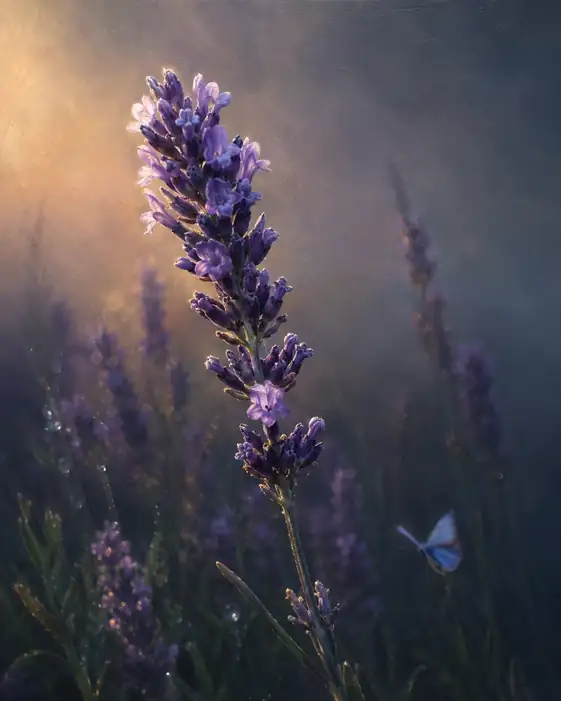 Blue Butterfly in Morning Mist
 Memory of Lavender on a Cobblestone Street
Similar Artworks
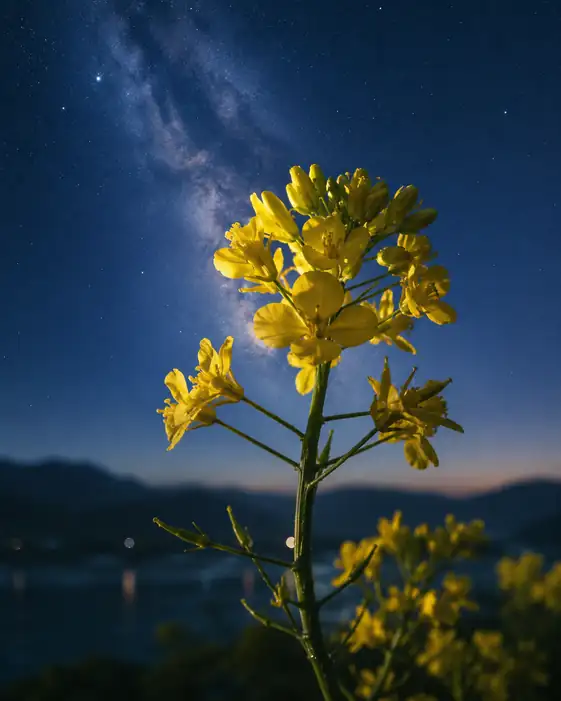 Milky Way and Golden Mustard Blossom
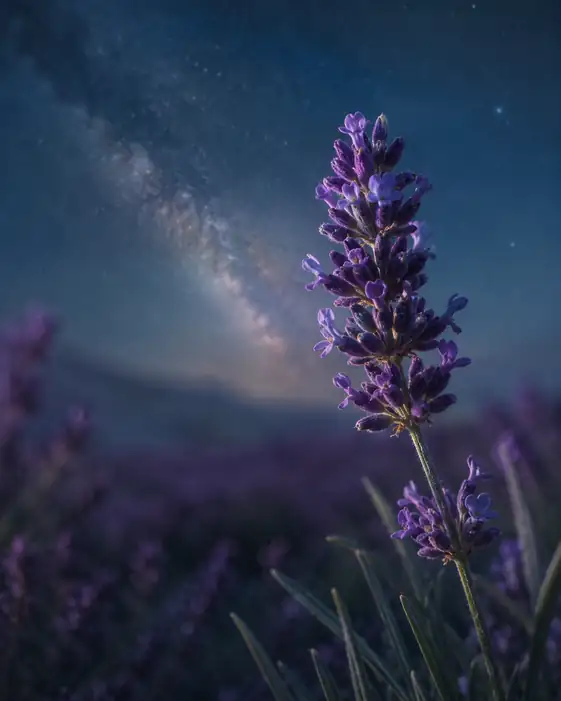 Lavender Beneath the Galaxy
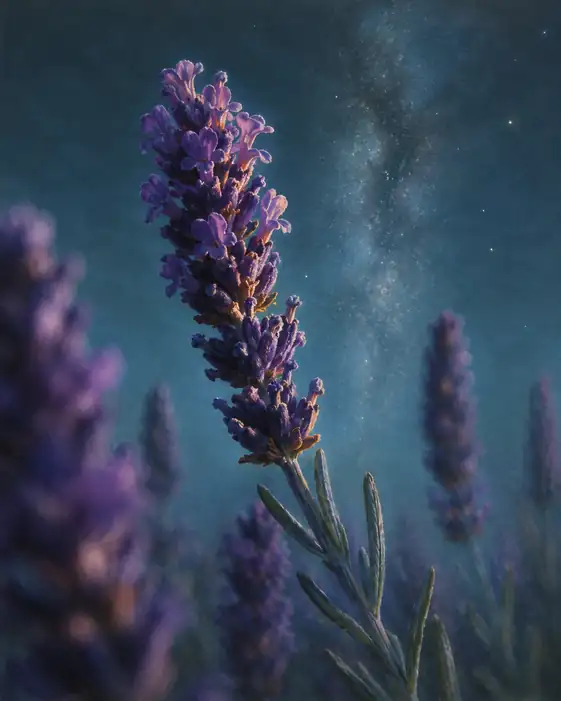 Celestial Melody in Violet
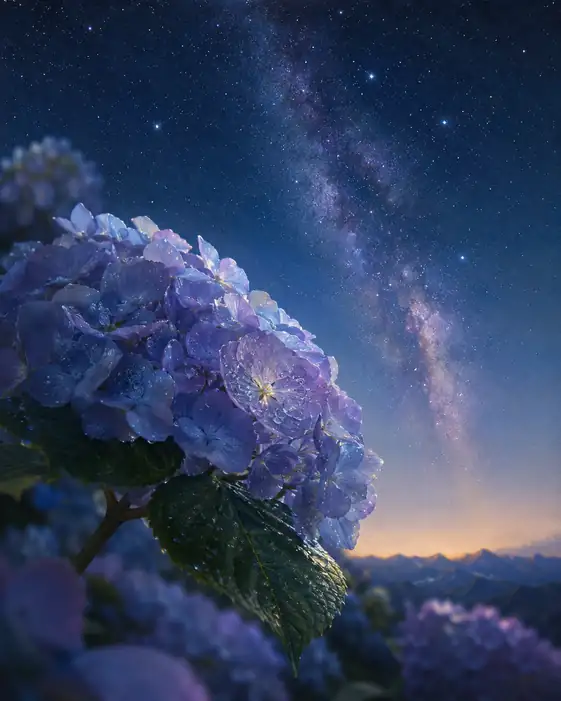 Milky Way Rising Above the Dew
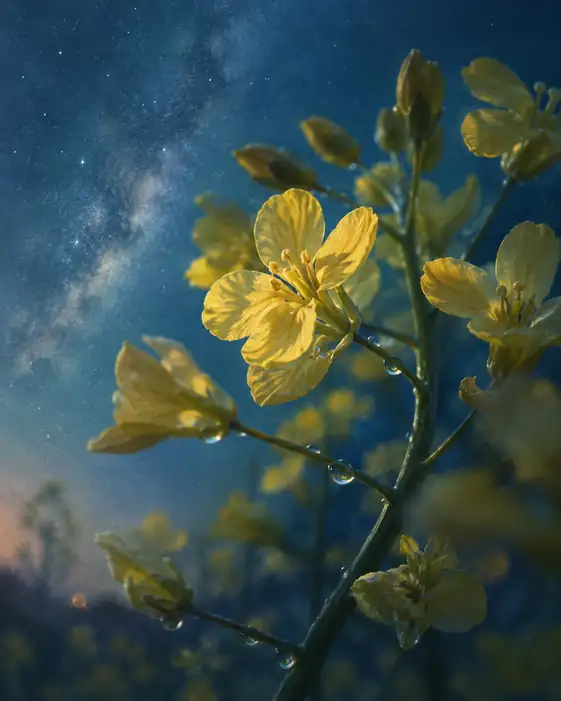 Canola Blossom Beneath Starry Skies
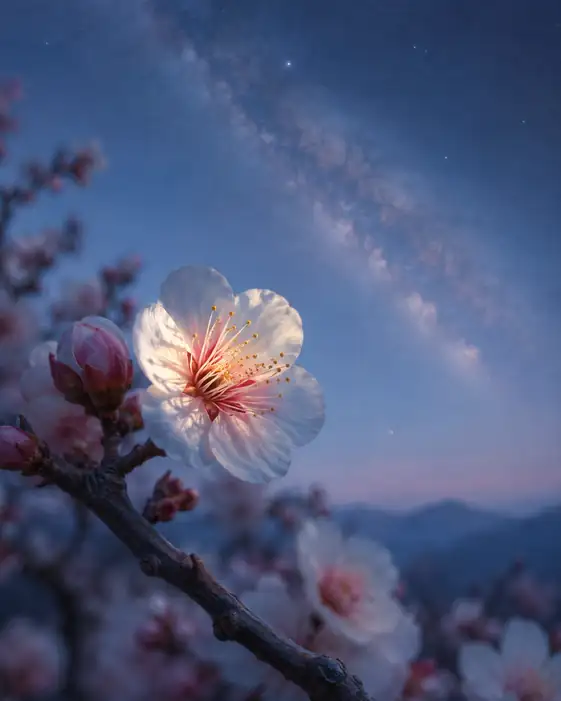 White Plum Beneath the Milky Way
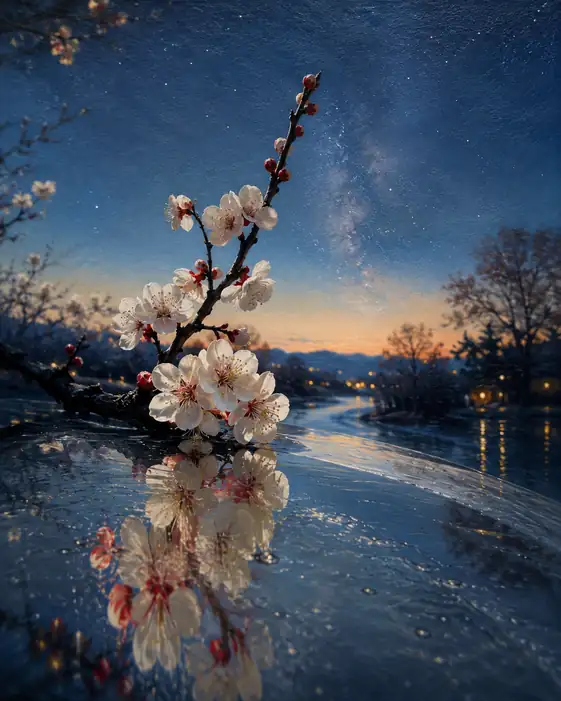 Plum Branch Under the Milky Way
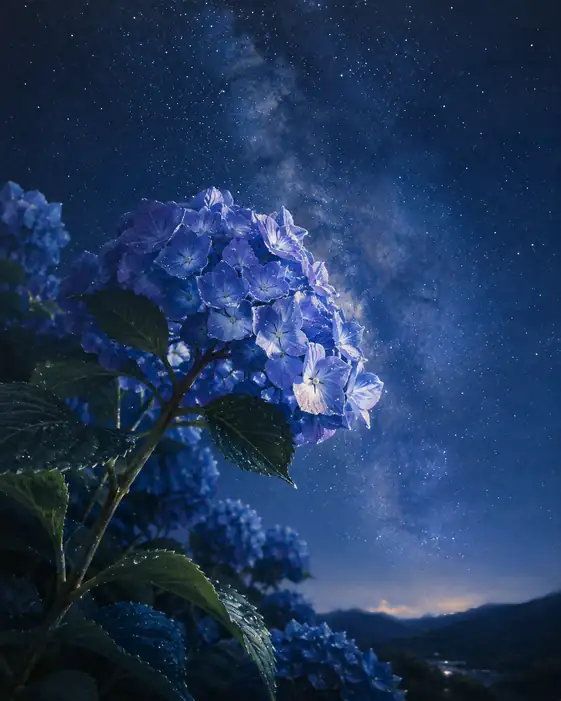 Nocturne of Stars and Azure Petals
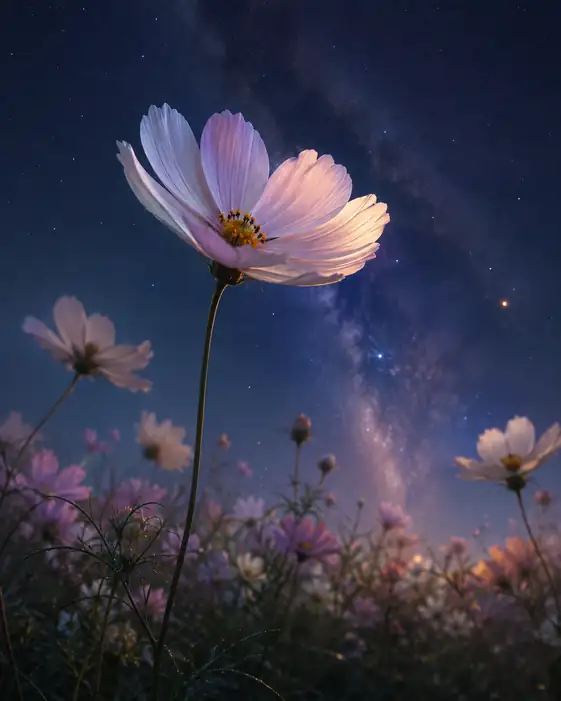 Cosmos Beneath the Starlit Sky
 Lavender Standing Under the Moonlit Mirror