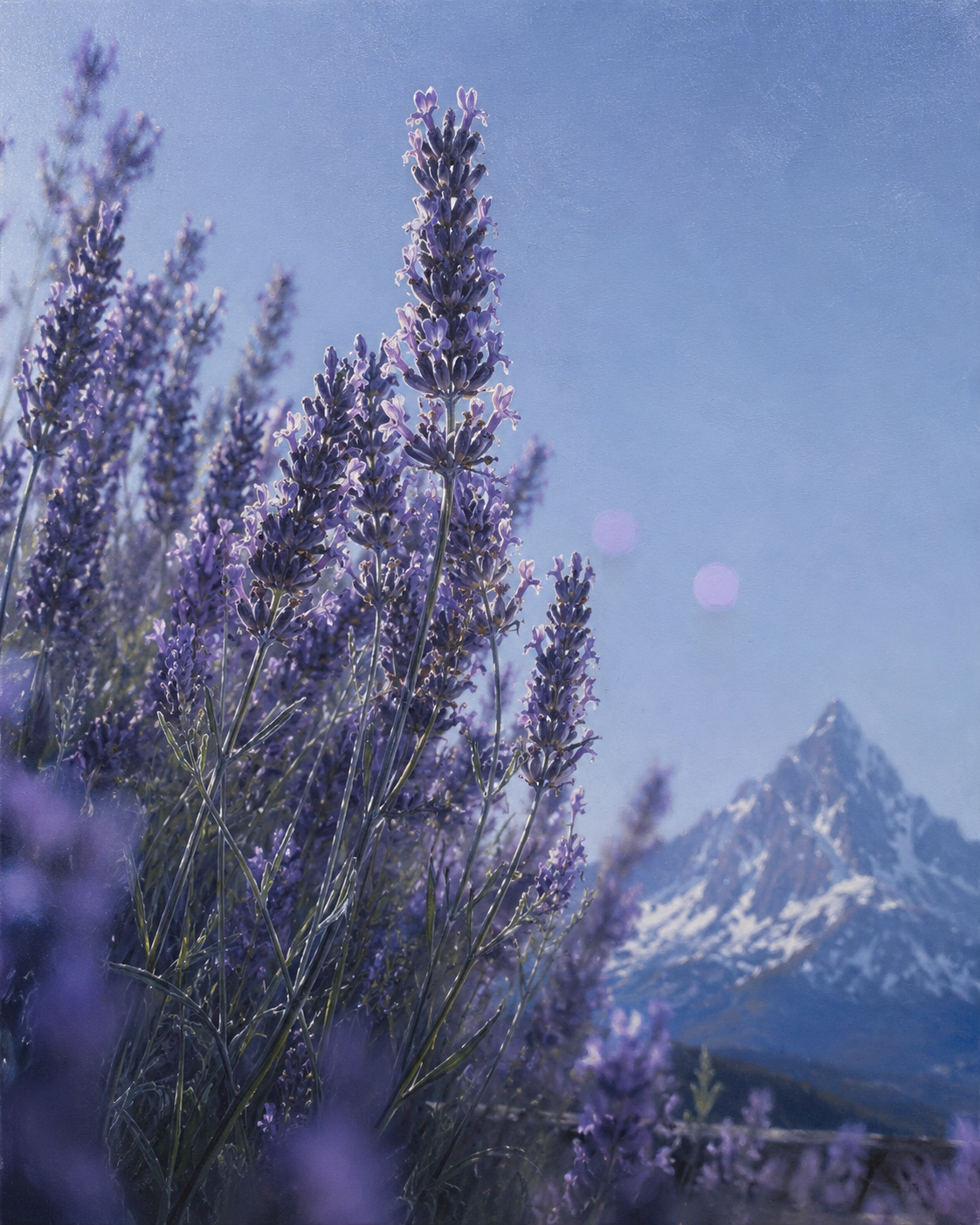
Lavender Slopes Beneath Snow Peaks
Critique
Introduction This landscape pairs dense lavender with a distant snowy mountain. Plants fill the left half, while the triangular peak emerges low on the right. Flowers and terrain become related structures within convincing air and distance. Description Slender stems overlap from lower left, carrying dark buds and pale blossoms. One tall spike is isolated against the sky and ends in two outward-facing flowers. Soft purple masses frame the bottom. Beyond them, the mountain shows blue-gray rock, branching snowfields, and a dark foothill; two faint lavender circles hover above. Analysis The crowded, irregular plant group is balanced by the compact mountain and broad unoccupied sky. Repeated vertical stems generate upward movement, while the mountain’s diagonals redirect the eye downward and right. Cool blues and violets unify near and far zones, with narrow white rim lights clarifying petals, leaves, and snow. Differences in edge sharpness separate the tactile foreground from the atmospheric distance. Interpretation and Evaluation The pointed flower spikes echo the summit without becoming direct replicas, suggesting continuity between small growth and large geological form. The isolated central stem acts as a transition: its height belongs to the floral cluster, but its clear silhouette reaches into the mountain’s open space. Layered drawing, subtle backlight, and restrained color show technical assurance. The unequal distribution of detail gives the composition both originality and calm stability. Conclusion At first the abundant lavender commands attention, but the distant mountain gradually becomes an equal structural presence. Near foliage conveys seasonal vitality, whereas snow and rock suggest endurance. Through coherent color, overlapping depth, and carefully opposed masses, the work expands a garden foreground into a lucid meditation on connected natural scales.
Same Subcategory
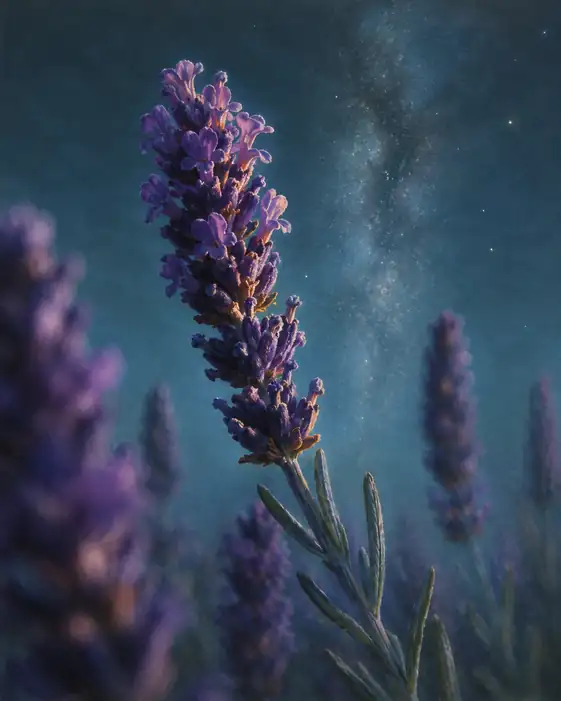 Celestial Melody in Violet
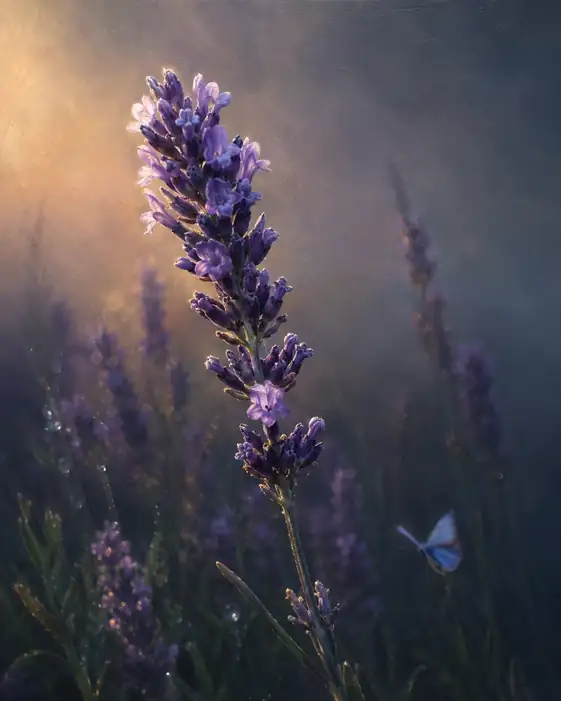 Blue Butterfly in Morning Mist
Similar Artworks
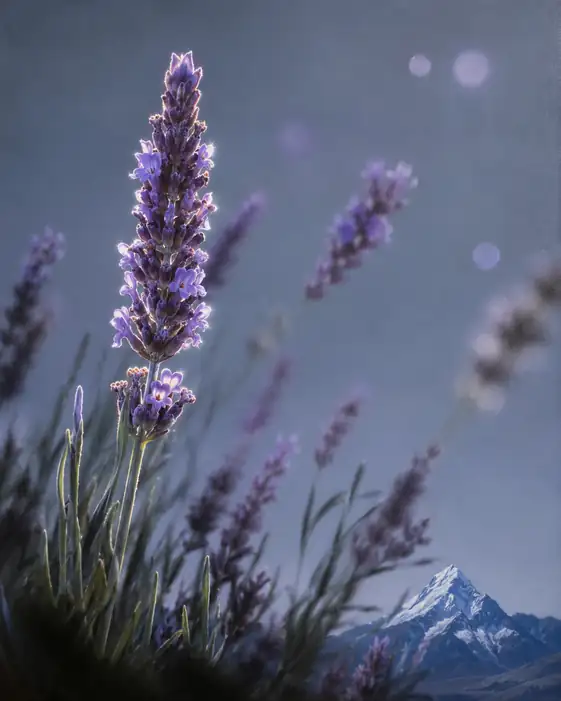 Alpine Breeze on Lavender Crest
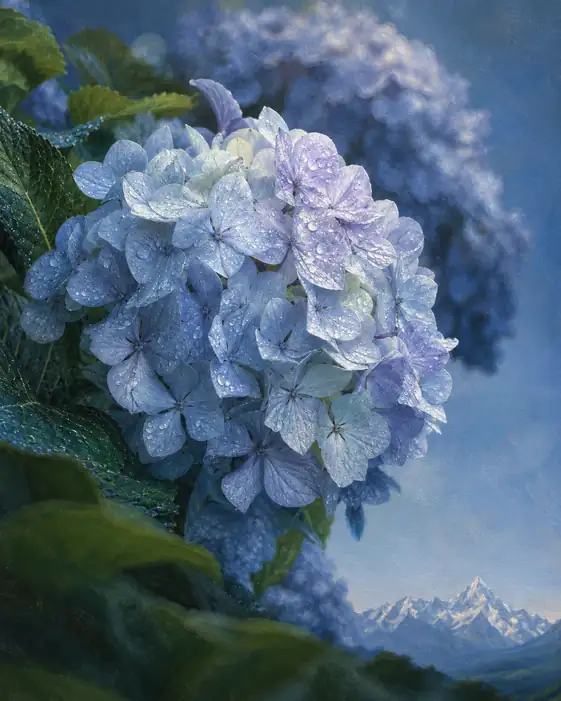 Floating Azure Above the Snowy Peaks
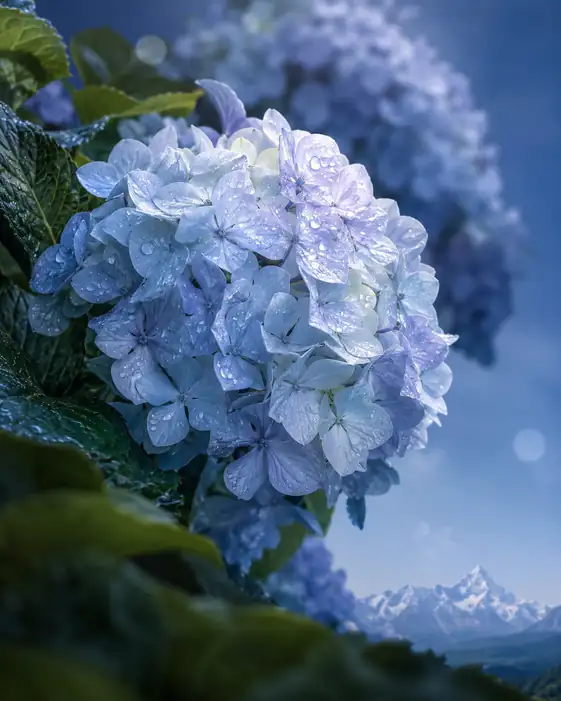 Solitary Summit Framed in Indigo
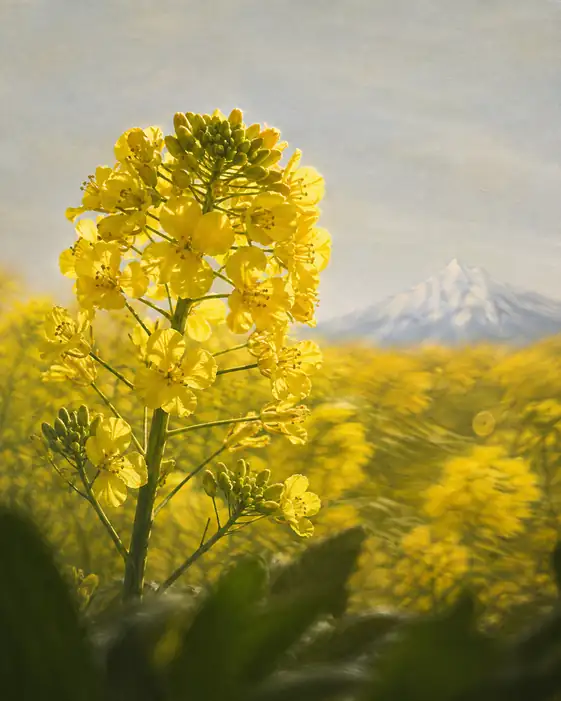 Field of Canola Beneath Snowy Crest
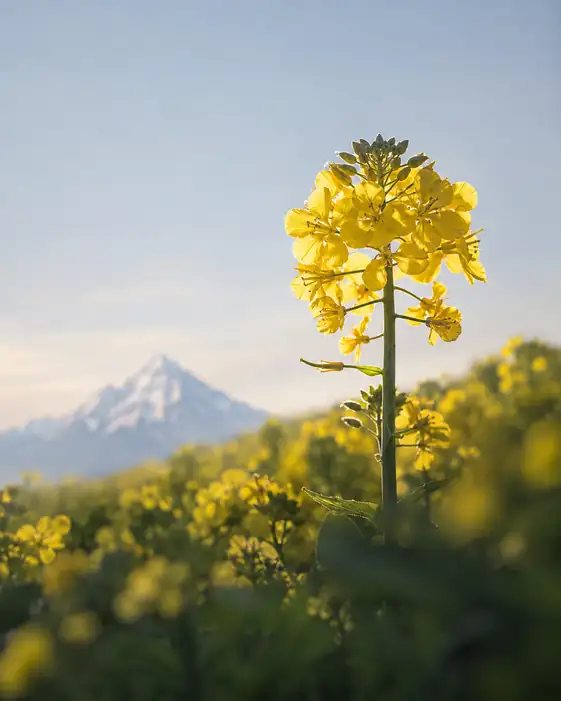 Alone in the Flower Field, Bathed in Light
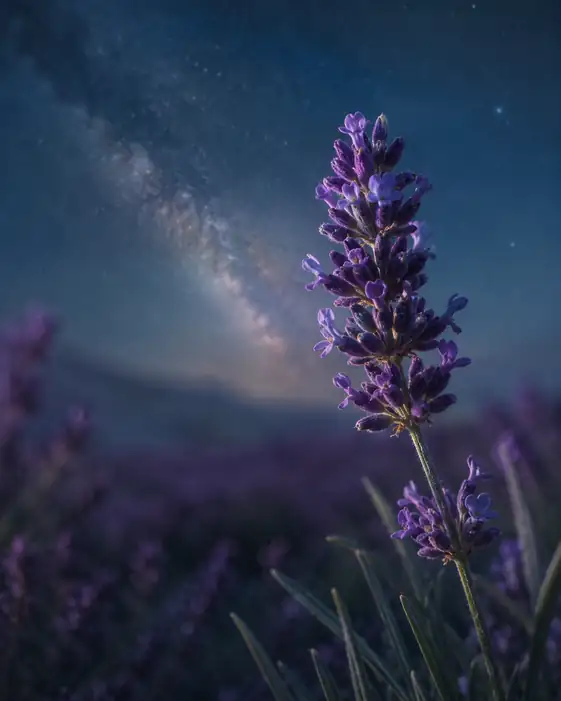 Lavender Beneath the Galaxy
 Moonlit Reflection in Lavender
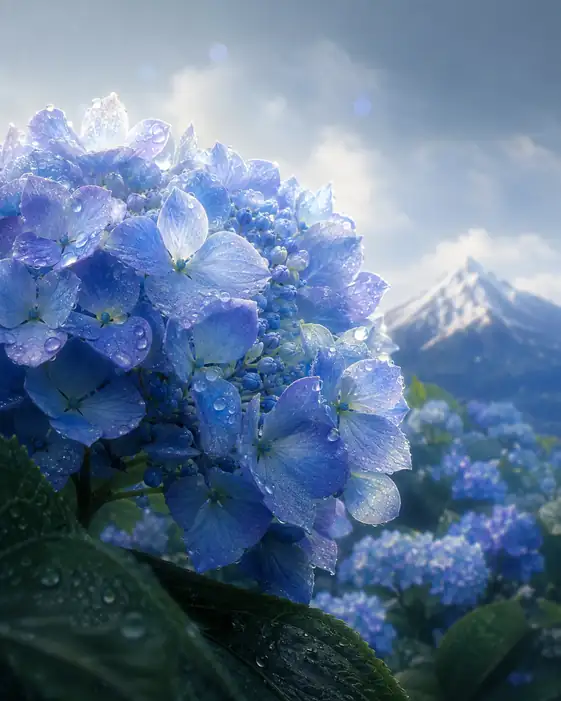 Alpine Horizon and the Dew-Kissed Bloom
 Crimson Peony and Dawn Over Mount Fuji
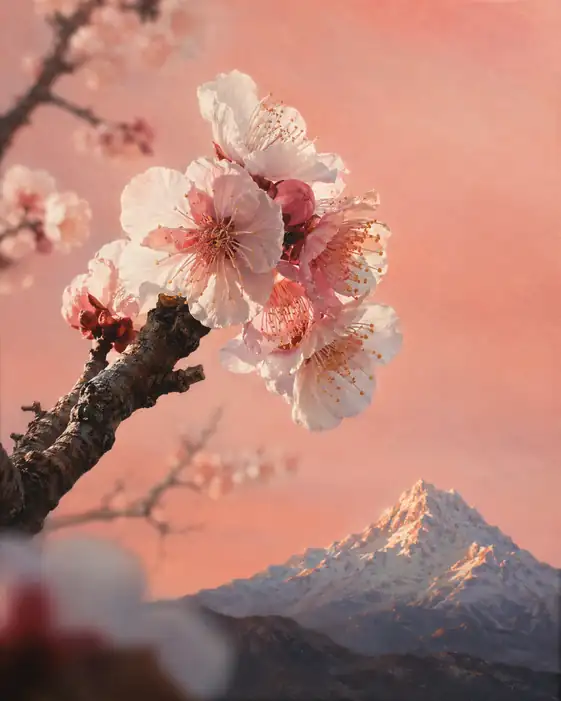 A Bough of Spring Aglow on the Snowy Peaks