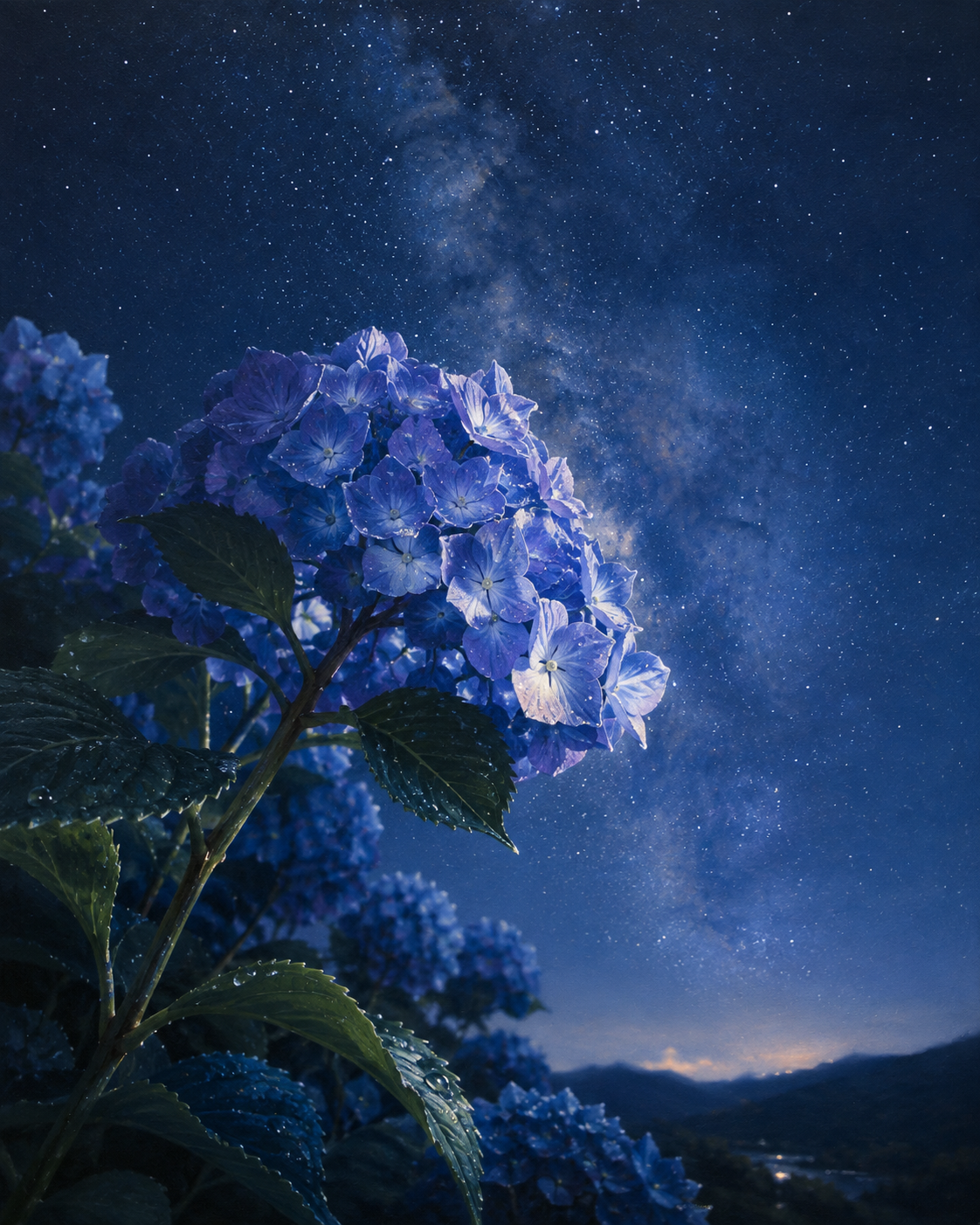
Nocturne of Stars and Azure Petals
Critique
Introduction This nocturne aligns a hydrangea stem with the Milky Way. The plant occupies the left while the galaxy descends at right toward a dark valley. Earthbound growth and celestial scale become parallel. Description A blue-violet cluster leans rightward from a branching stem. Wet serrated leaves spread below, catching highlights. Softer flower heads recede along the edges. Stars fill the navy sky, and a cloudy galactic band runs vertically right of center. Mountains close the horizon, where amber glow and valley lights remain. Analysis Stem and Milky Way establish complementary upward movements. The flower's crown interrupts stars without blocking their deepest passage, and its edge follows the galactic curve. Petal rims and droplets repeat stellar rhythm. Cool blue unifies plant and sky; dark foliage adds weight and amber glow creates depth. The vertical format leads from wet leaves through florets into diffuse cosmic light. Interpretation and Evaluation The visible stem makes growth central. Its branching resembles a terrestrial map of the galaxy, suggesting continuity between organic expansion and cosmic formation. Water beads carry temporary light; stars imply duration. The contrast remains fresh because the flower actively mirrors the sky's structure. Restrained valley lights locate human life between vegetation and cosmos without narrative. Conclusion Paired verticals, repeated light points, and controlled blues turn a garden plant into a measure of the night. Wet leaves and a sturdy stem make cosmic grandeur intimate.
Same Subcategory
 Winged Sapphire in the Sunlit Mist
Similar Artworks
 Celestial Melody in Violet
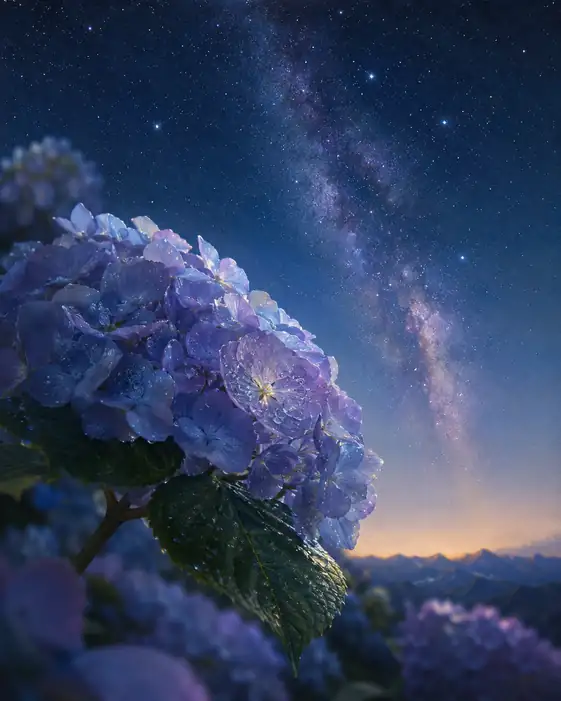 Milky Way Rising Above the Dew
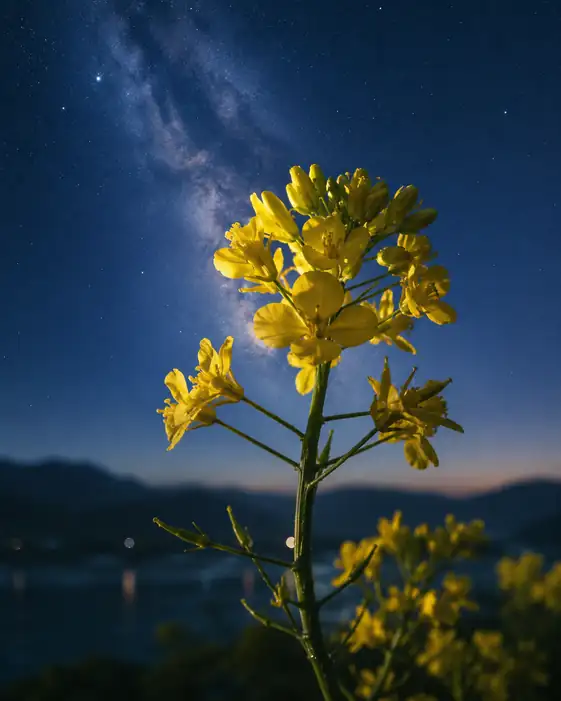 Milky Way and Golden Mustard Blossom
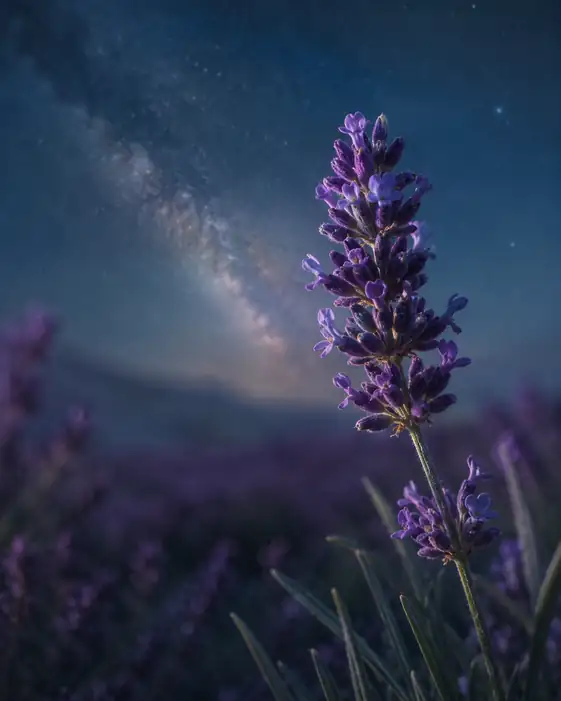 Lavender Beneath the Galaxy
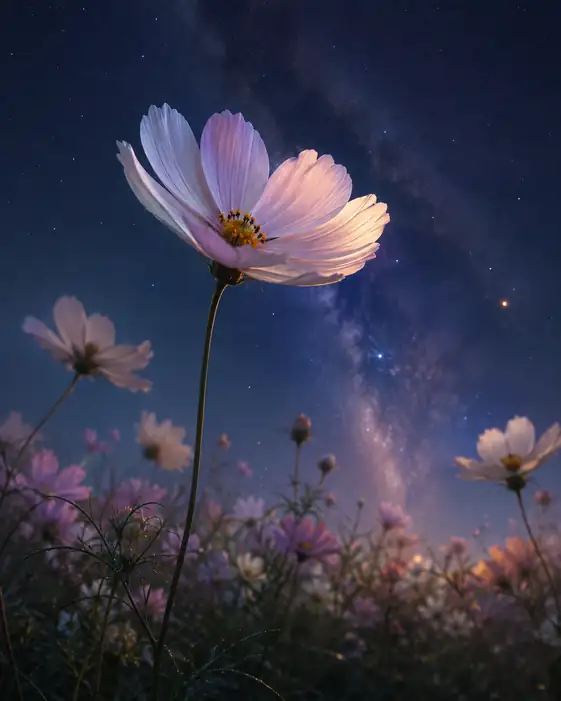 Cosmos Beneath the Starlit Sky
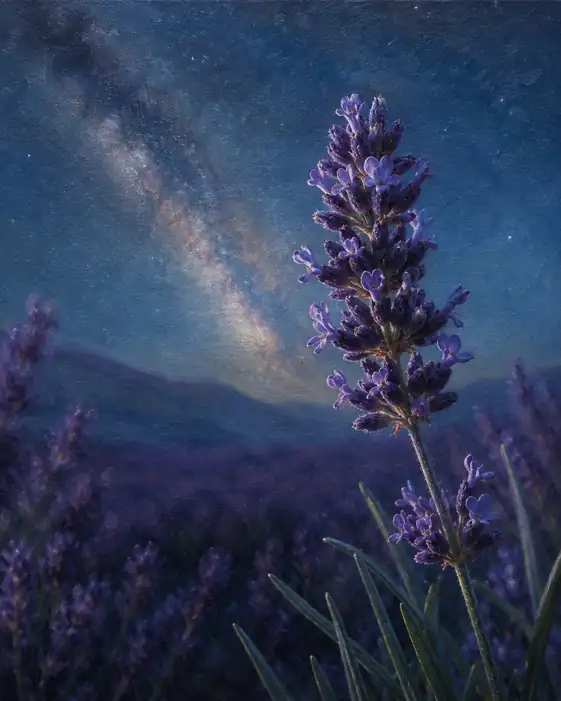 Starry Nocturne Over Lavender Fields
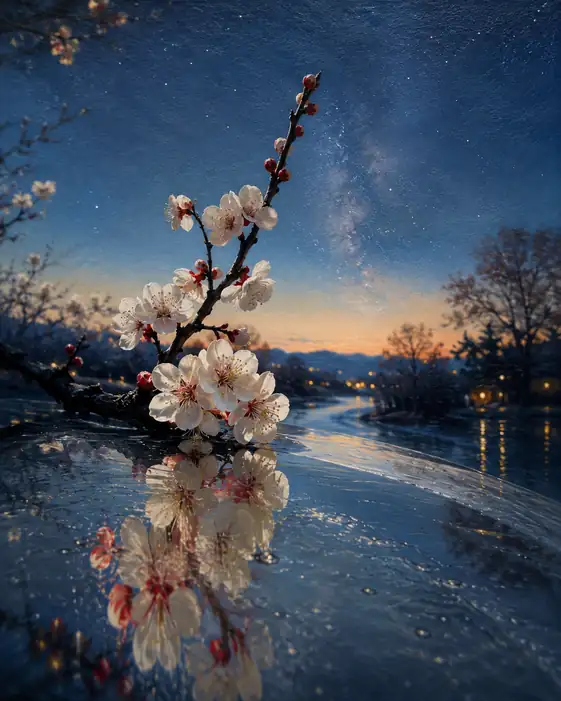 Plum Branch Under the Milky Way
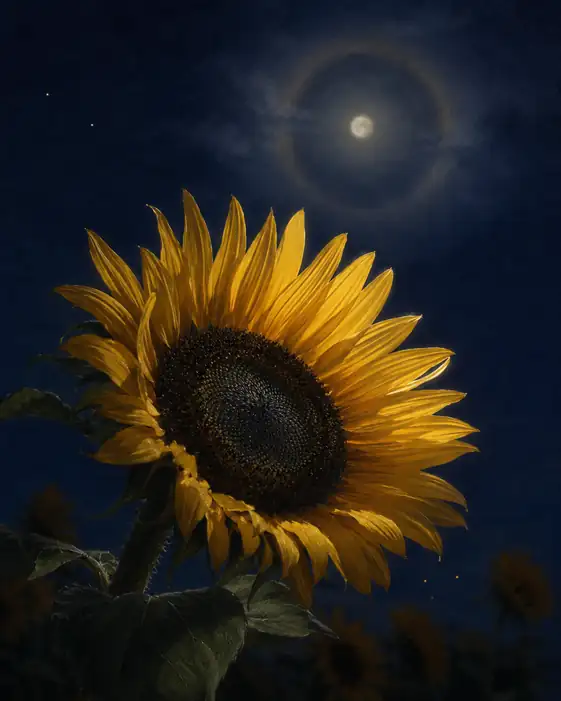 Halo of the Moon and the Golden Disc
 Canola Blossom Beneath Starry Skies
 White Plum Beneath the Milky Way