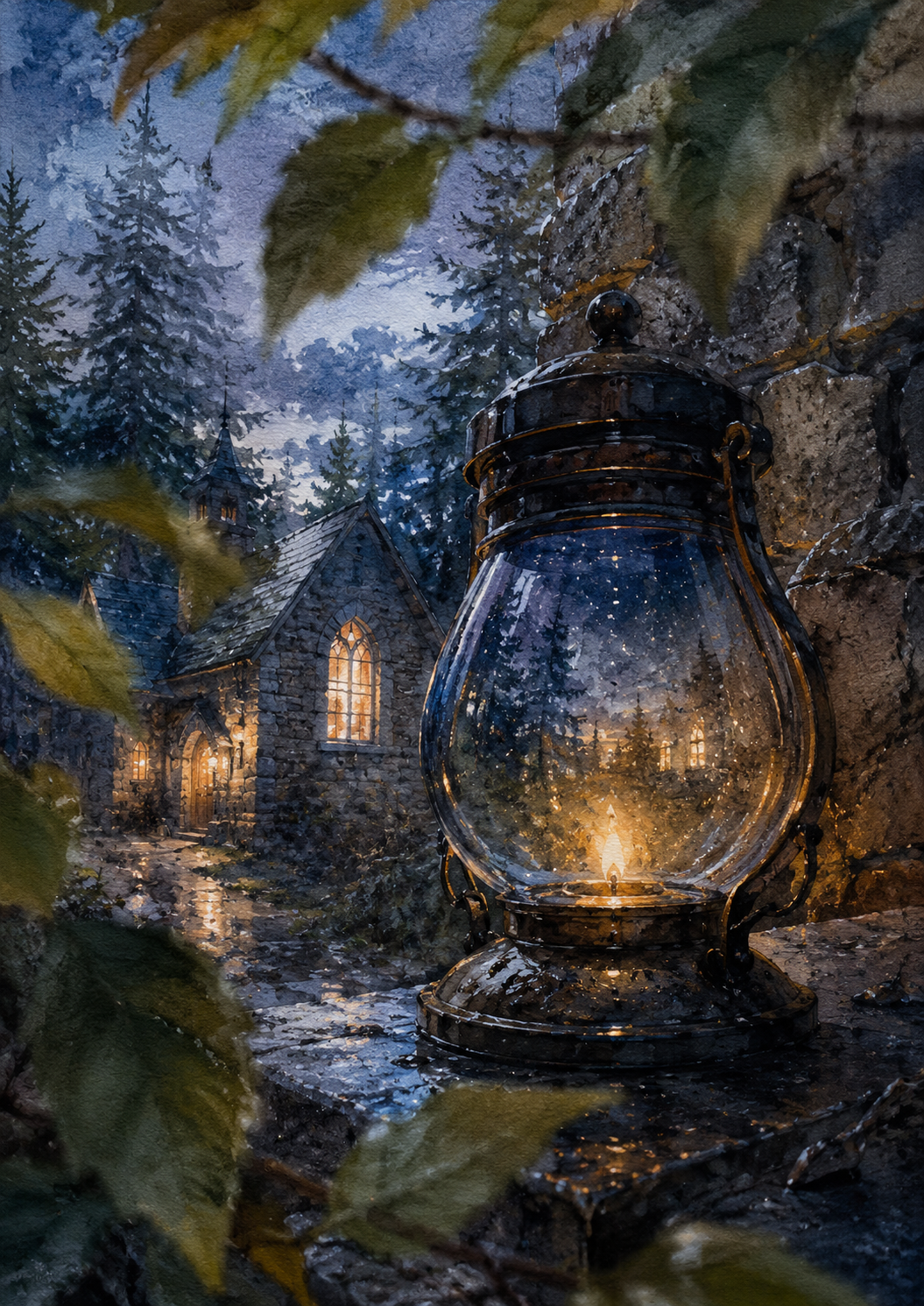
The Chapel Sleeping Inside the Lantern
Critique
Introduction This twilight scene makes an old oil lantern a lens for a stone church and forest. Practical illumination becomes a meditation on perception: the surrounding place reappears, condensed inside curved glass. Description The black metal lantern dominates the right foreground, resting on wet stone against a masonry wall. A small flame burns at its base, while the bulbous glass reflects or seemingly contains fir trees, glowing church windows, and a darkening sky. At left, the actual church stands among tall conifers with a pointed roof, narrow tower, and warm Gothic windows. Damp ground reflects scattered light. Large leaves frame the upper and lower edges. Analysis The lantern's oval glass forms a picture within the picture, countered by the church's angular roof and masonry. Warm points repeat from flame to reflected windows and actual architecture, creating spatial continuity. Cool blue forest and sky surround the orange accents. Strong scale contrast makes the lantern monumental, while blurred leaves establish a concealed viewing position. Curvature subtly distorts the internal scene, distinguishing reflection from direct observation. Interpretation and Evaluation The lantern offers both light and an alternative way of seeing. Its glass gathers church, forest, and sky into a portable world, suggesting that places persist through remembered images as well as physical presence. The flame does not overpower twilight; it preserves a local sphere of attention. Weathered metal and wet stone keep the metaphor grounded in use, exposure, and duration. Conclusion Nested landscapes and repeated illumination make this image intellectually engaging without sacrificing atmosphere. The humble lantern becomes an instrument of memory, holding a transformed version of the sanctuary it helps reveal. Seeing and preserving briefly become the same act.
Same Subcategory
 Where the Sun Sends a Star to the Moon
Similar Artworks
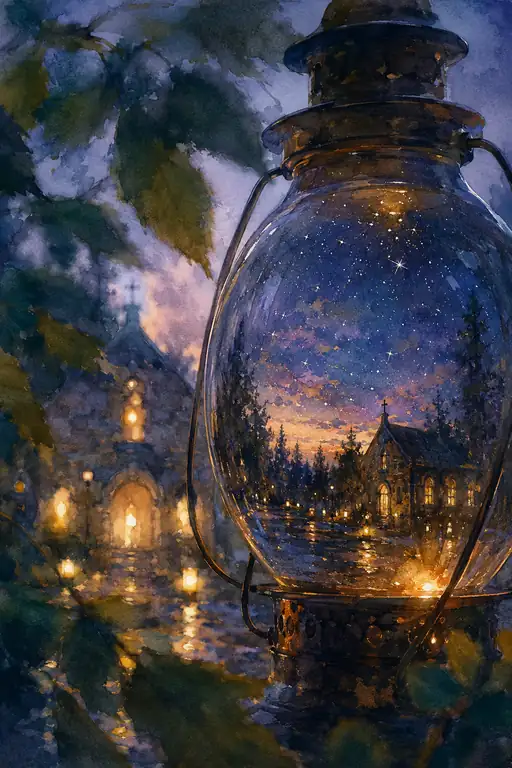 A Village Sky Kept Under Glass
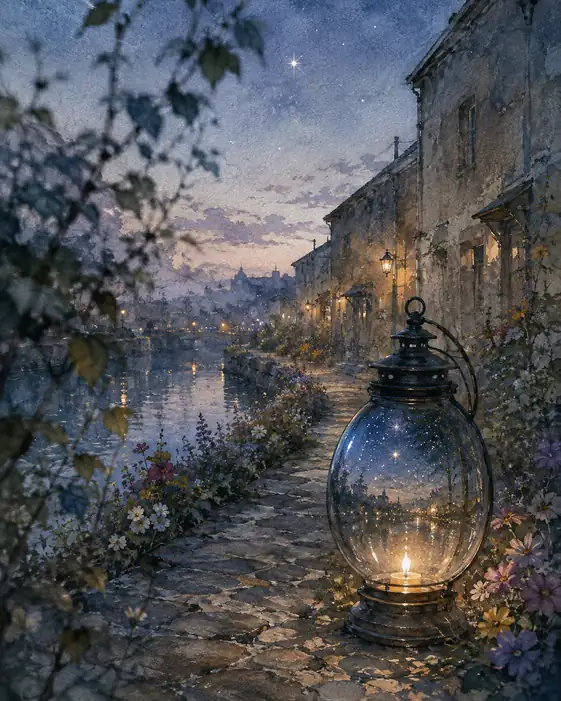 The Lantern That Gathered a Fallen Star
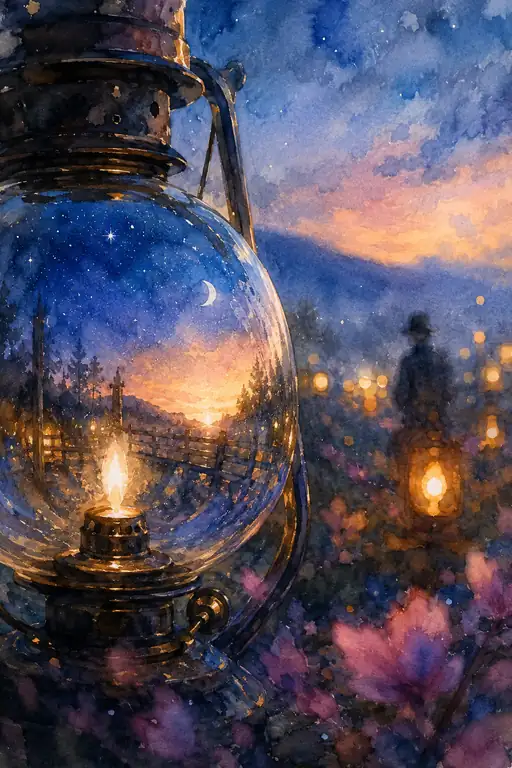 The Lantern Holds Both Crescent and Sunset
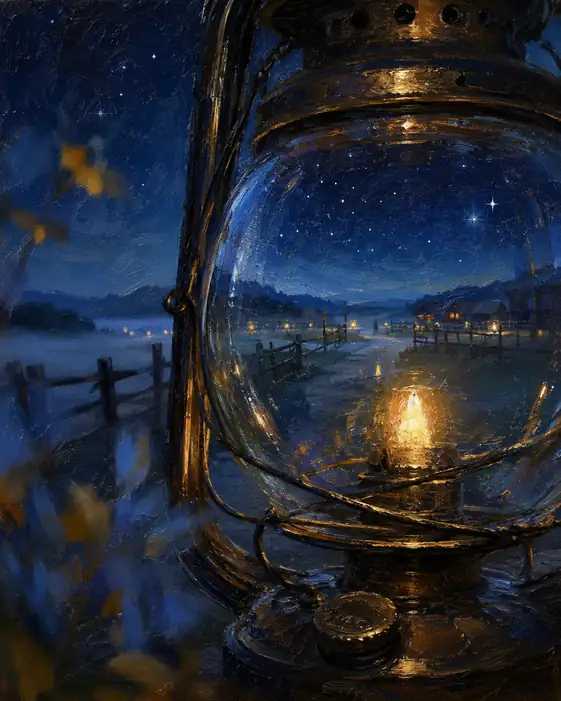 A Village of Stars Inside the Lantern Glass
 Night Shattered into a Thousand Colors
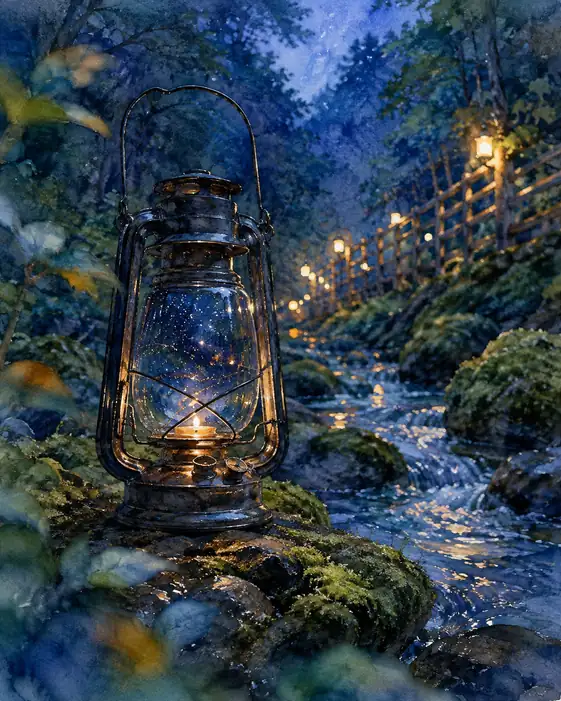 A Lantern Bottles the Forest's Midnight Sky
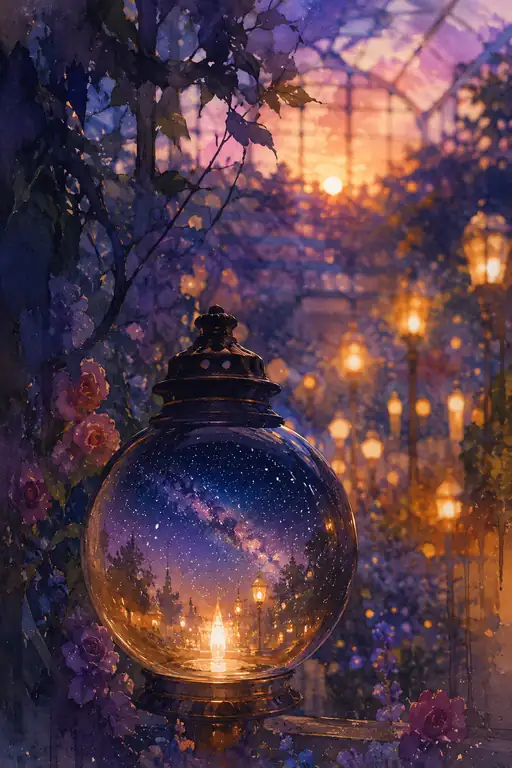 A Starlit Town Dreaming Inside the Garden Lamp
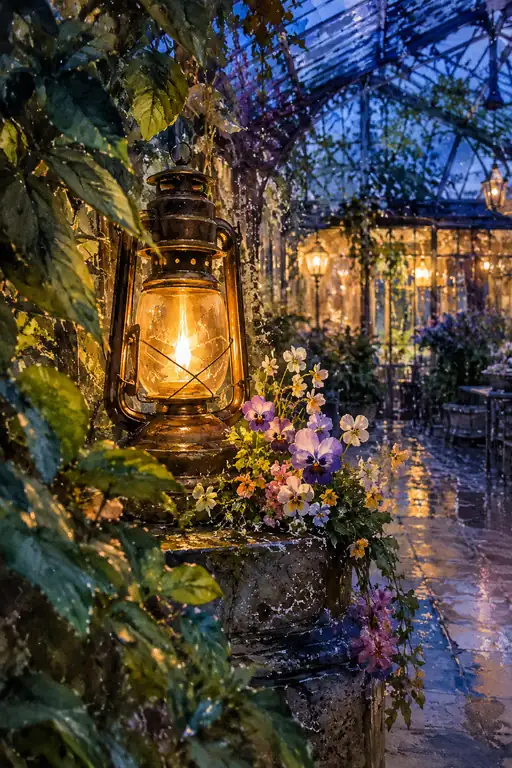 Rain Makes a Garden of Every Lantern
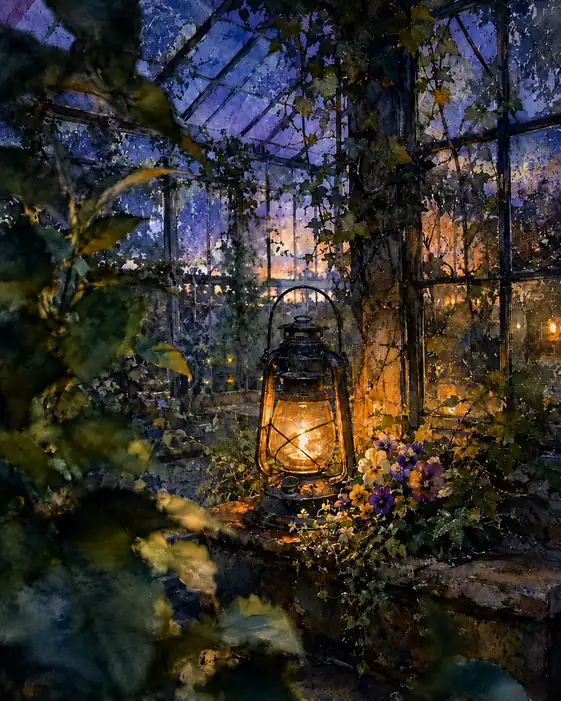 One Lantern Keeps the Greenhouse Dusk
 A Universe of Our Own