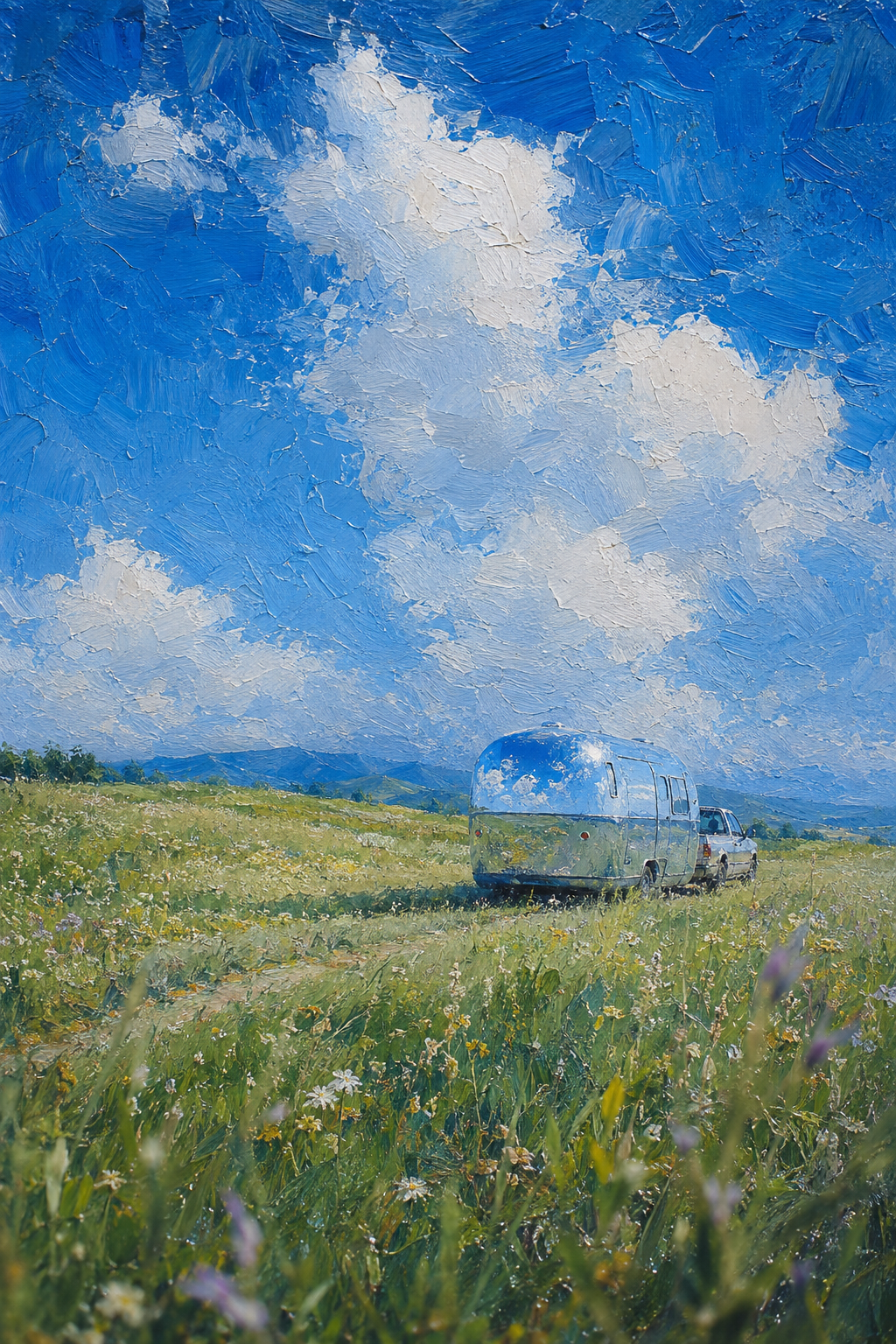
Taking the Wide Blue Sky Along
Critique
Introduction This landscape places a silver trailer and towing vehicle in a wildflower meadow. They occupy little space near the low horizon, while blue sky and white clouds dominate. Human mobility meets open land's scale and stillness. Description The meadow rises toward blue mountains amid white, yellow, and purple flowers. Blurred stems cross the foreground. At right center, a rounded trailer reflects sky, grass, and cloud; a white vehicle extends ahead. Dark wheels and red lights punctuate its body. Thick clouds build in pale blue and white against ultramarine. Analysis The low horizon assigns nearly two thirds of the picture to the sky, making the vehicles appear temporary and modest. The trailer's horizontal axis parallels the ridge, while its rounded profile echoes cloud masses. Reflective metal carries landscape colors into the manufactured surface. Short green and floral marks create rough ground, whereas broad overlapping strokes construct atmospheric volume. Foreground blur, crisp trailer, distant mountains, and towering clouds establish successive depths. Interpretation and Evaluation The trailer suggests travel without departure or arrival. Parked amid flowers, it becomes an instrument for inhabiting rather than conquering landscape. Its mirrorlike shell reduces separation between artifact and setting. Restrained composition, convincing scale, and varied paint give the pastoral subject contemporary specificity. Surrounding space preserves freedom while acknowledging human smallness. Conclusion At first the metallic trailer attracts attention through contrast, but closer viewing reveals how thoroughly it absorbs the meadow and sky. It remains distinct yet carries its environment across its surface. The painting therefore presents mobility as a temporary form of belonging within a landscape whose scale remains dominant.
Same Subcategory
 The Cable Car Crosses the Sea of Clouds
Similar Artworks
 A Summer Meadow in the Silver Mirror
 The Meadow Keeps a Room for the Sky
 Chasing the Golden Horizon
 Sky and Petal Meeting the Wind
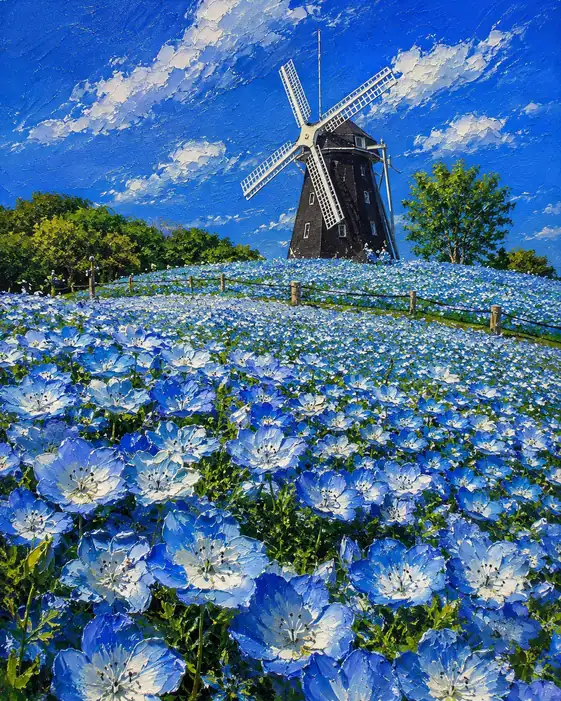 Azure Hillside Under the Turning Sails
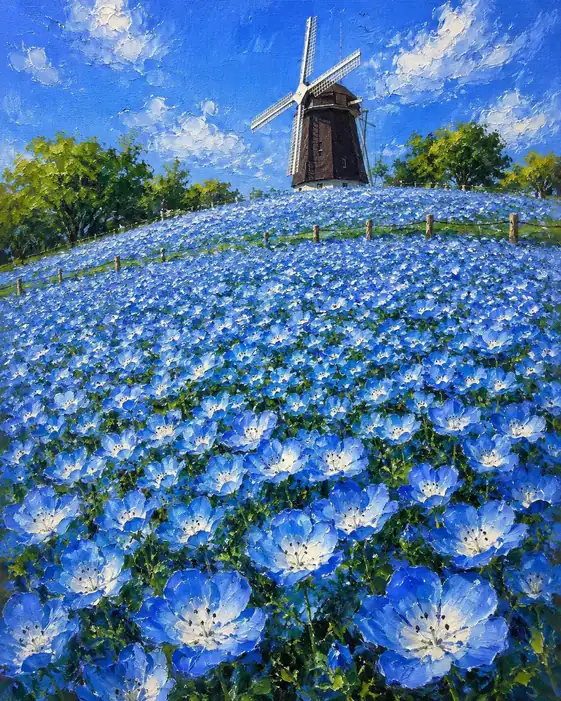 Azure Sea of Blossoms Beneath the Windmill
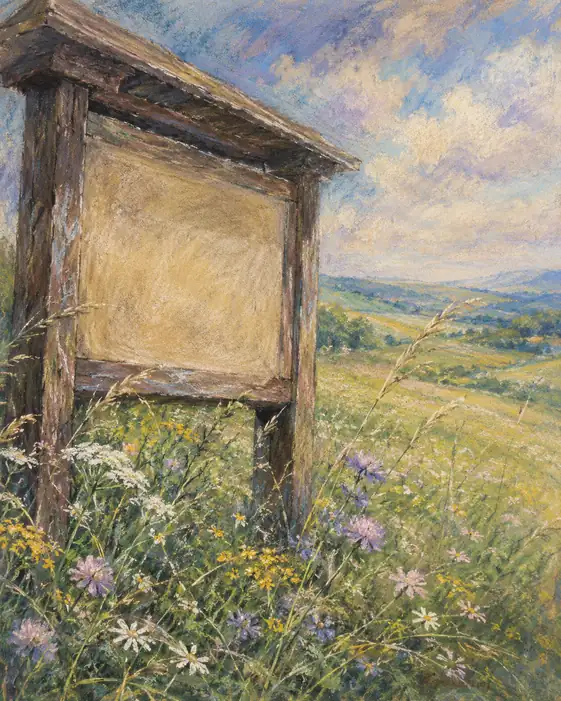 Whispers of the Unwritten Journey
 Summer's Vibrant Pulse
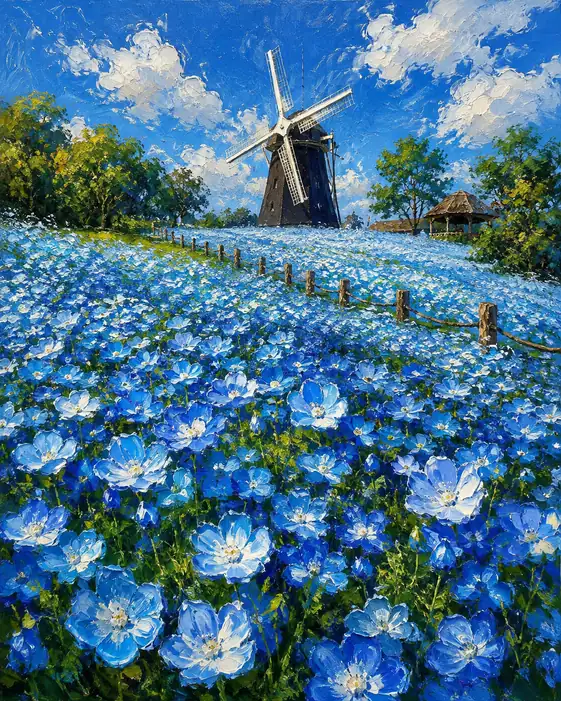 Rising Through the Blue Slope to the Mill
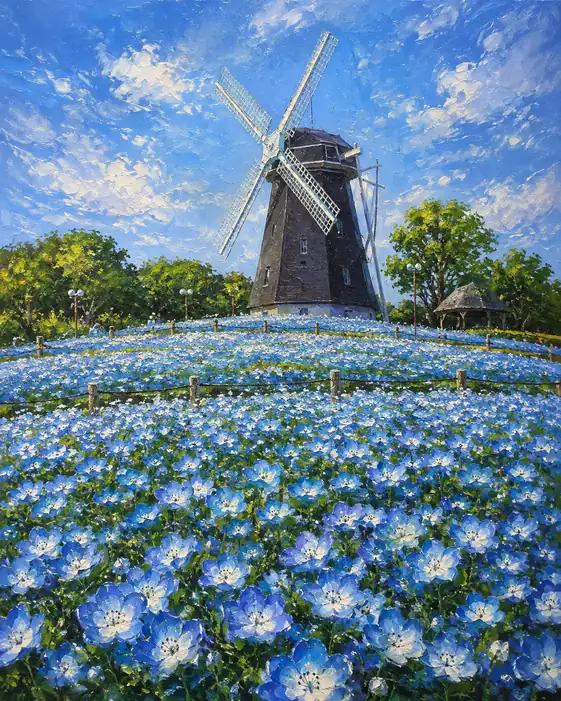 Stepped Horizons of Nemophila and Sky