
The First Light Finds Fuji
Critique
Introduction This painting presents 湖越しの富士山 as a carefully ordered encounter between place, atmosphere, and human perception. The principal focus is 朝日に染まる富士, while the scene avoids anecdotal detail and establishes its subject through visible form. Description The image includes 湖、雲海、山裾. Its arrangement uses 富士を中央に据え、湖と霧を水平層にする構成. These elements move from foreground to distance with enough separation to keep the main motif legible. Analysis The palette of 淡青、薄紫、金の穏やかな色調 gives the scene a coherent visual temperature. 日の出の光が山頂と雲の縁を照らす光 models surfaces, clarifies depth, and creates measured accents without dissolving structural detail. Repeated edges and directional lines guide the eye, while changes in scale make the depicted space convincing. The controlled balance of sharp passages and softer atmosphere demonstrates assured technique. Interpretation and Evaluation The work may be read as 象徴的な山を静かな大気の変化として捉える情景. Its descriptive power rests on recognizable textures, but the composition does more than record a location: it selects and organizes the view into a sustained rhythm. Color is expressive yet disciplined, and the handling of light gives familiar scenery an individual character. The image's originality lies in joining observational clarity with a heightened, painterly atmosphere. Conclusion What first appears to be an attractive scenic view gradually reveals a deliberate study of distance, light, and spatial transition. Through balanced composition, controlled color, and attentive technique, the painting turns a specific motif into a calm and memorable visual experience.
Same Subcategory
 The Road Curves Toward Morning
Similar Artworks
 White Clouds, the Traveler Journeys Beyond the Light
 Dawn Finds the City Beneath Clouds
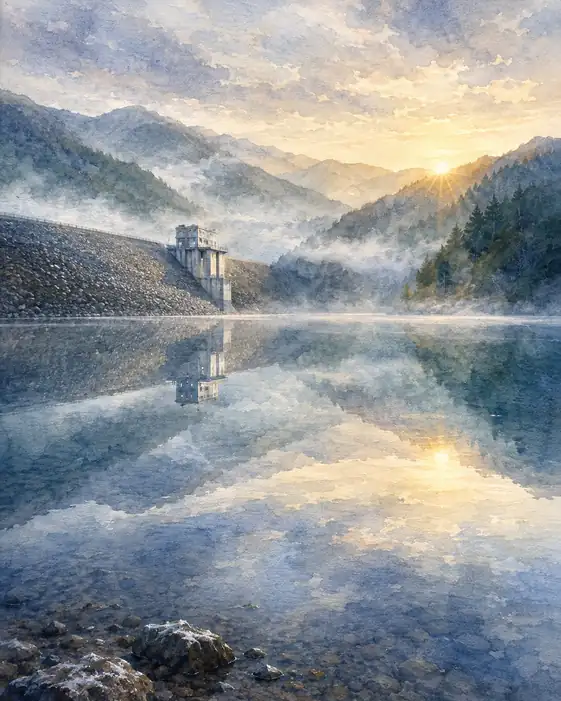 The Mountain's Silence, Engineered
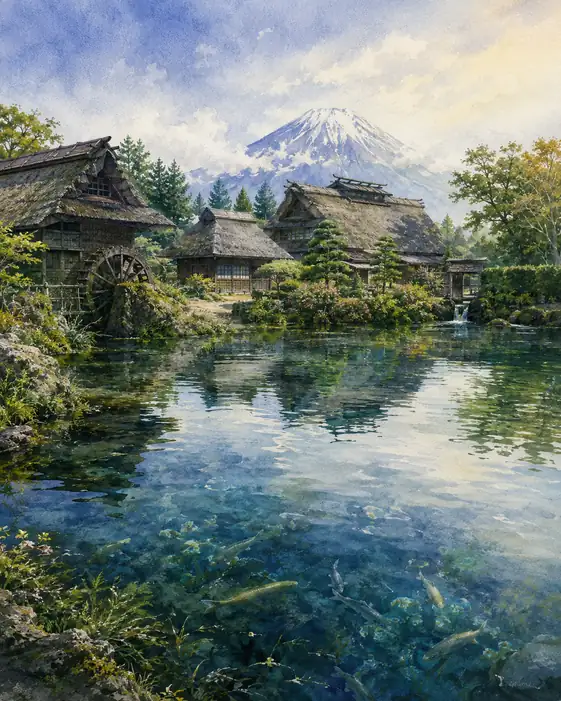 Fuji Drinks the Springs
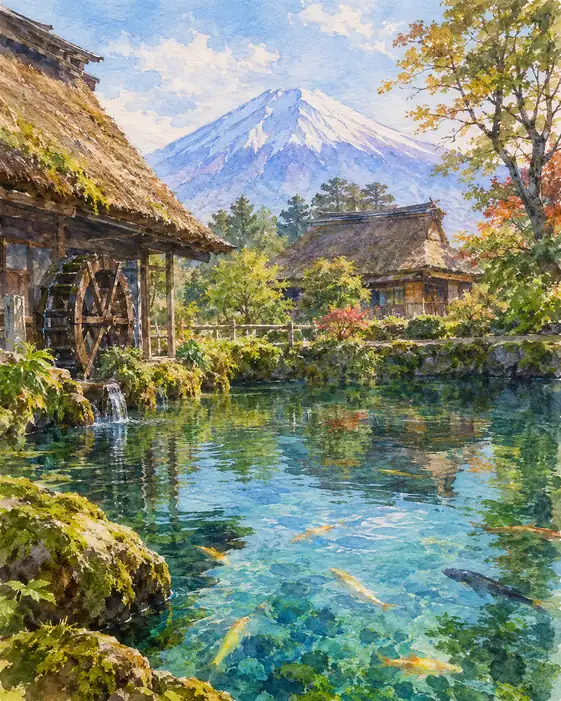 Where Clear Water Holds the Sacred Peak
 Morning Planted in a Thousand Mirrors
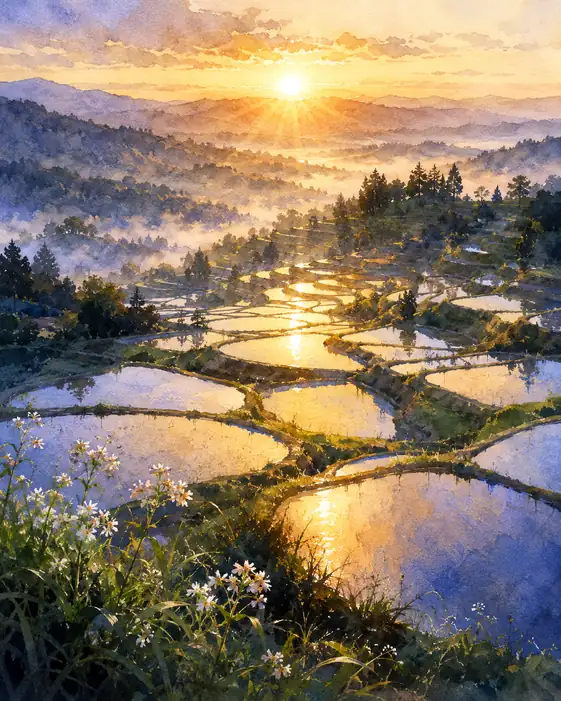 As Stars Fade, the Mountain Mirrors Embrace the Rising Sun
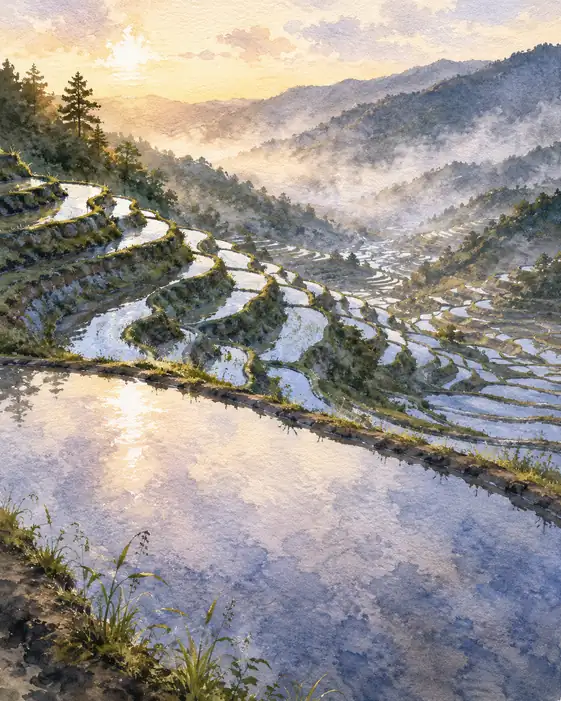 A Thousand Mirrors Gather the Dawn
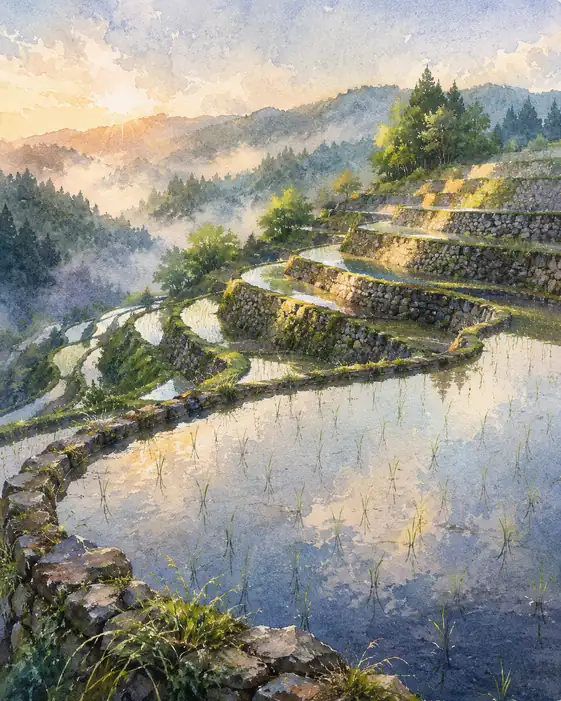 The Hillside Learns the Shape of Sky
 Morgenrot Glow over Mount Rishiri and the Quiet Pond