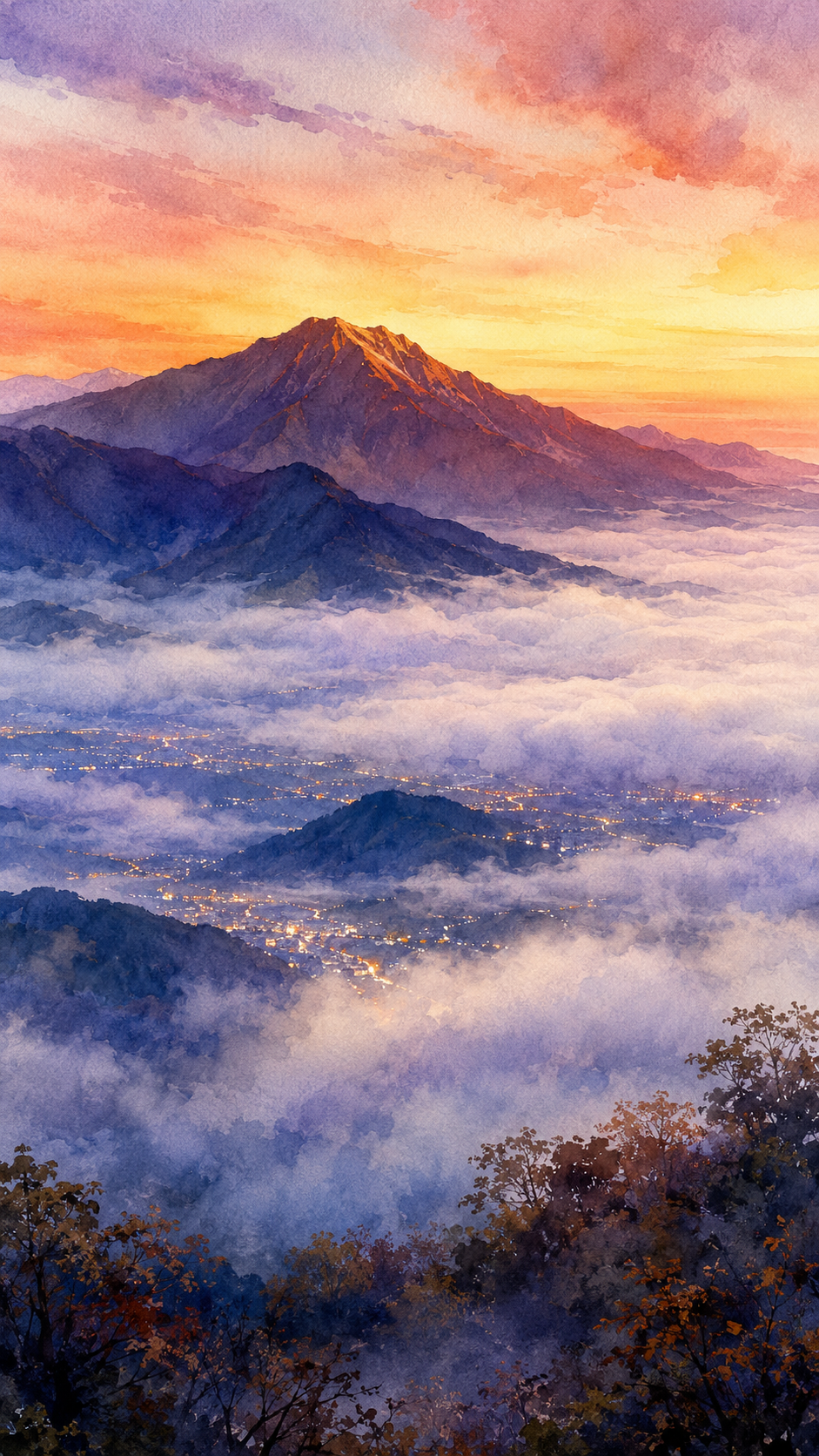
Dawn Finds the City Beneath Clouds
Critique
Introduction Mountains rise above clouds while town lights glimmer through valleys. Pink and gold sky answers terrestrial lights, organizing nature and human activity into deep vertical space. Description A sharp central peak dominates the upper image, orange light touching its violet slopes. Fainter ranges continue behind it beneath a sky shifting through yellow, peach, pink, and purple. White-lavender cloud fills the valleys, leaving dark summits like islands. Through openings, roads and settlements appear as gold points and lines at several depths. Dark autumn trees frame the bottom. Analysis Layers of mountain, cloud, town, and forest create enormous altitude within the vertical format. The peak forms one strong focus; scattered lights below act as many smaller counterpoints. Blue-violet shadow against yellow-orange illumination suggests the temperature difference between high ridge and inhabited valley. Watercolor diffusion conveys continuous cloud, contrasting with hard ridges and precise lamps. Winding strings of light lead the eye inward. Interpretation and Evaluation From this height, the town seems fragile within nature, yet its lights remain persistent through the mist. Natural light touching the summit and artificial light in the valley join different human and geological times. Peaks emerging from cloud resemble an archipelago, temporarily transforming familiar geography into fantasy. Careful attention to tiny lights prevents grandeur from losing intimacy. Conclusion Layered repetition and contrasts of scale make the high viewpoint spatially convincing. Vision rises from dark foliage through settlement, cloud, summit, and luminous sky, suggesting passage from night toward light. Roads resemble constellations, softening the boundary between earth and heaven. Because cloud conceals much of the landscape, what remains visible gains force and imaginative breadth. Sublimity and domestic warmth occupy the same generous view.
Same Subcategory
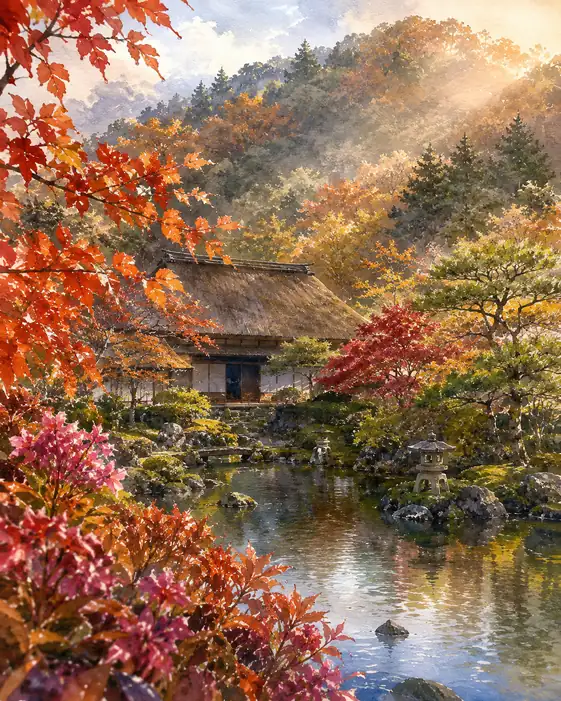 A Thatched House Holds Autumn
Similar Artworks
 The First Light Finds Fuji
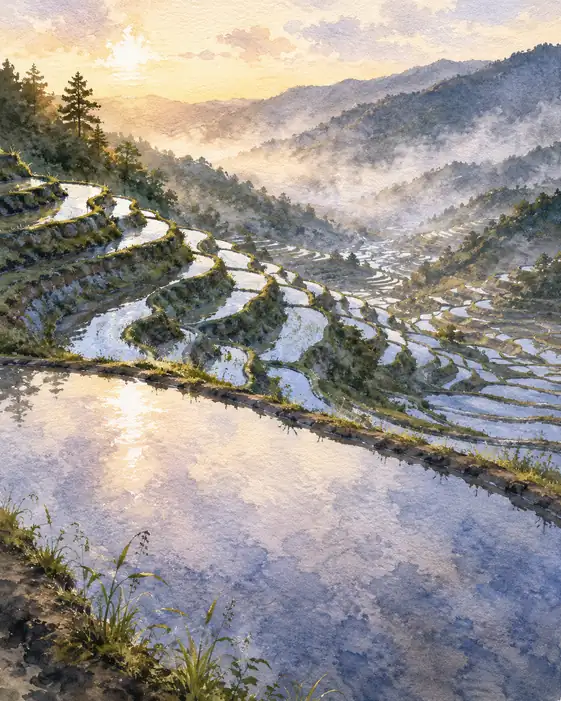 A Thousand Mirrors Gather the Dawn
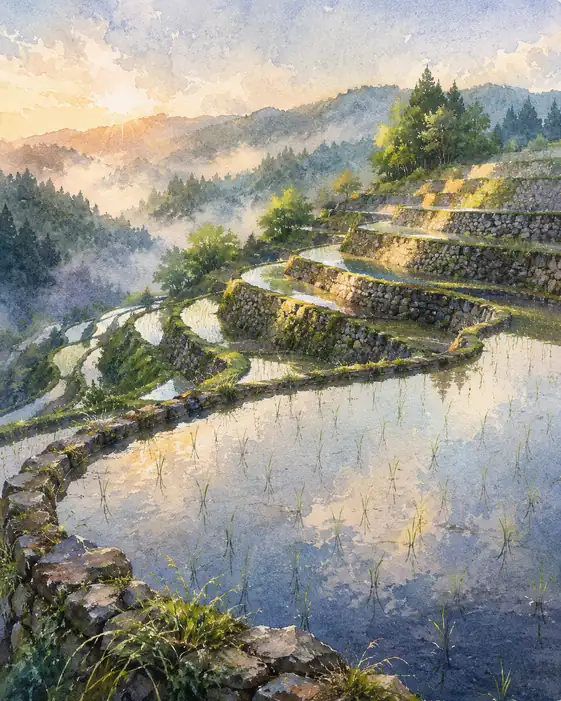 The Hillside Learns the Shape of Sky
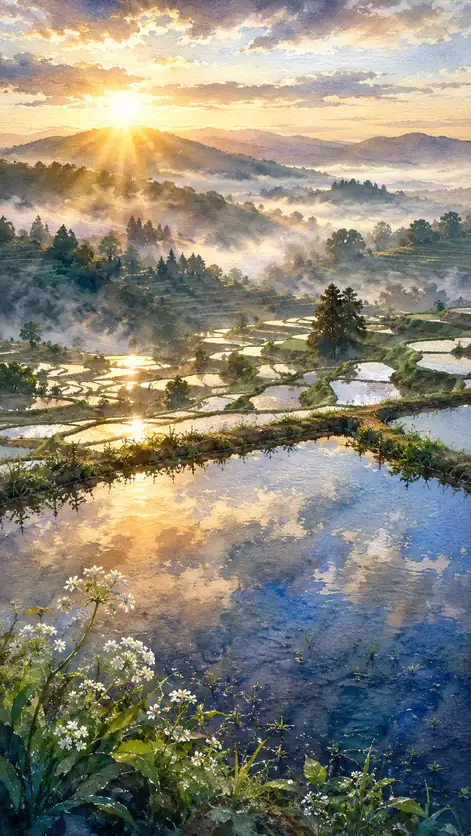 Morning Planted in a Thousand Mirrors
 White Clouds, the Traveler Journeys Beyond the Light
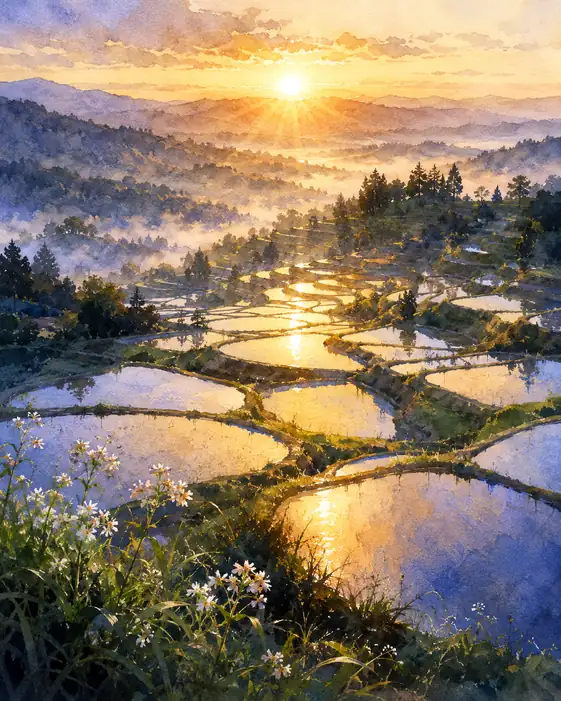 As Stars Fade, the Mountain Mirrors Embrace the Rising Sun
 The Lake Raises a Path for the Gods
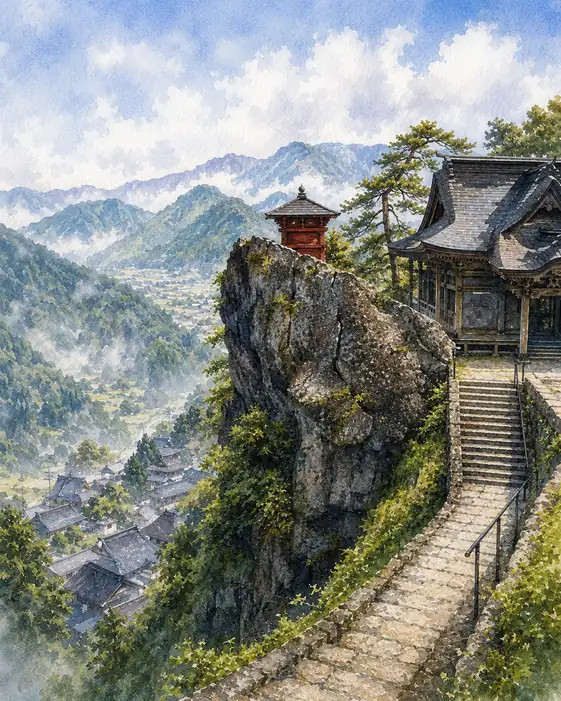 Where Prayer Rests on Stone
 Five Lakes Holding One Sky
 Toward a Shore the Mist Conceals